
Wilhelm Hasemann
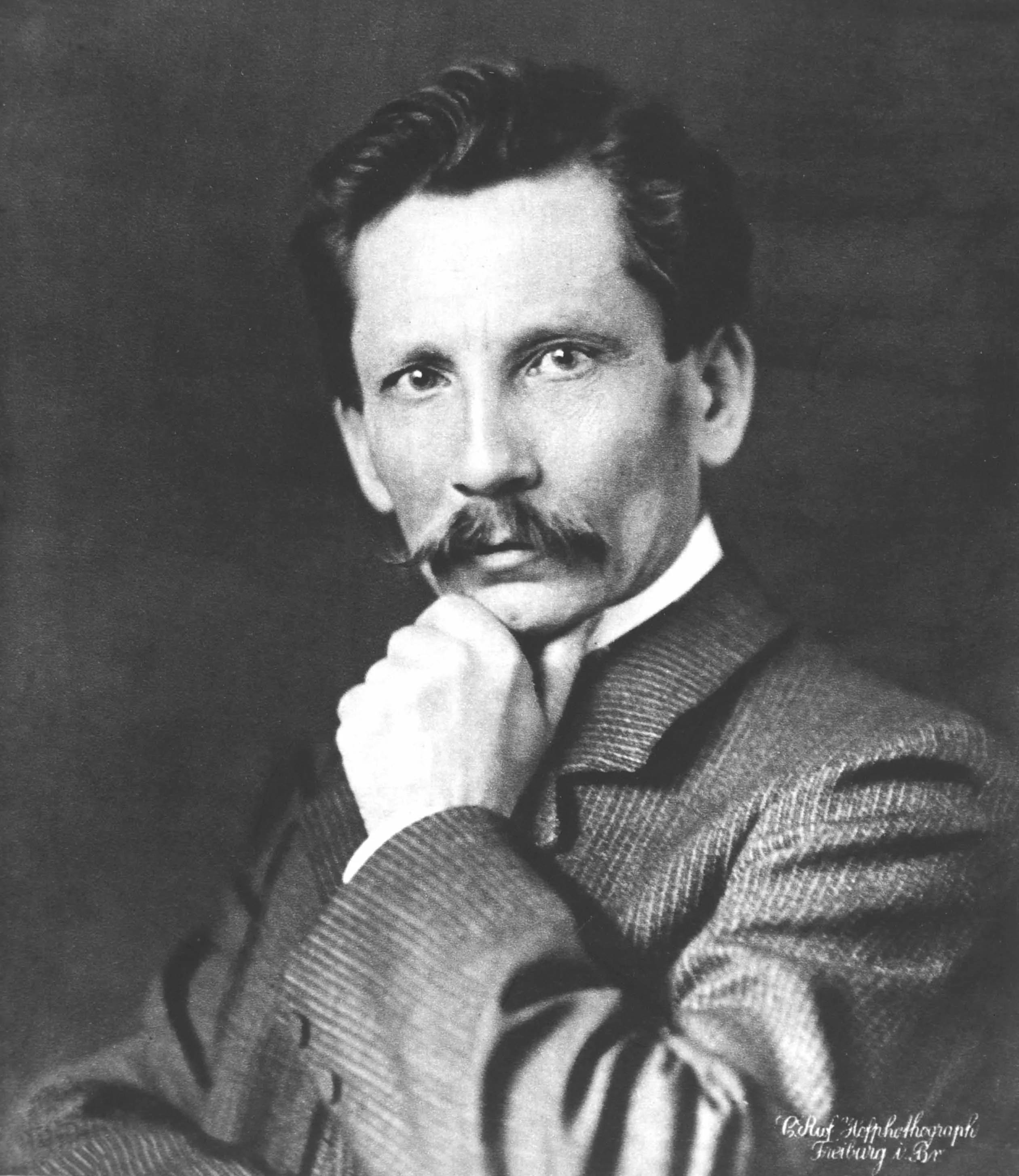
Image from Wikipedia
Image from Wikipedia
Wilhelm Hasemann – The Black Forest Painter between Village Idyl, Genre Image, and Cultural Memory
An artist who made the Black Forest an iconic image
Wilhelm Hasemann (* September 16, 1850 in Mühlberg/Elbe; † November 28, 1913 in Gutach) is counted among the formative German landscape and genre painters of the late 19th century. As a "Black Forest painter," he combined precise observation, lively figure painting, and a strong sense of regional identity into a distinctive oeuvre. His paintings, illustrations, and postcards significantly contributed to the widespread establishment of the image of the Black Forest in art and everyday culture. ([de.wikipedia.org](https://de.wikipedia.org/wiki/Wilhelm_Hasemann))
Early Years and Artistic Formation
Hasemann grew up as the son of a mechanic and initially became acquainted with practical work within his father's environment before turning to art. An early work from 1866 shows that his eye for narrative scenes and movement was already well-developed at a young age. After attending the citizens' school in Mühlberg, he went to the Royal Academy of Arts in Berlin, later to the Grand Ducal Saxon Art School in Weimar, and finally to the Karlsruhe Art School, where Gustav Schönleber was one of his key teachers. ([de.wikipedia.org](https://de.wikipedia.org/wiki/Wilhelm_Hasemann))
This education laid the foundation for a painting style that did not limit itself to landscapes alone. Hasemann developed a sensitivity for the connection between figure, milieu, and space, precisely that pictorial order which lent quiet tension to his later representations of the Black Forest. His studies were also interrupted by service as a nurse in the Franco-German War, a biographical chapter that shaped his generation and endowed his life path with historical depth. ([de.wikipedia.org](https://de.wikipedia.org/wiki/Wilhelm_Hasemann))
The Path to Gutach: Turning Point and Life Center
The decisive breakthrough came in 1880 with an illustration commission from the Cotta Publishing House for Berthold Auerbach's novella "Die Frau Professorin". To seek motifs, Hasemann traveled to Gutach, and this working stay resulted in a lifelong bond with the place and region. The landscape of the Gutach Valley, its distinctive farms, traditional costumes, and rural ways of life became his central image reservoir. ([de.wikipedia.org](https://de.wikipedia.org/wiki/Wilhelm_Hasemann))
For Hasemann, Gutach became not only a motif but an artistic home. He settled there, built a house, and became a co-founder of a painter colony that significantly influenced the Black Forest in art history. Together with his brother-in-law Curt Liebich, he created an intellectual and aesthetic community whose impact extended far beyond the region. Thus, the decision for Gutach marked not only a change of location but an aesthetic resolution: Art derived from direct observation, rooted in landscape and tradition. ([de.wikipedia.org](https://de.wikipedia.org/wiki/Wilhelm_Hasemann))
The Black Forest as Image World
Hasemann's work revolves primarily around rural life, traditional clothing, and the atmosphere of a region he observed with nearly ethnographic attention. His paintings depict farmers, children, women in traditional dress, interiors, and exteriors of the Black Forest in finely balanced compositions. Especially the Gutach costume and the Black Forest farms became cultural symbols with high recognition value through his images. ([de.wikipedia.org](https://de.wikipedia.org/wiki/Wilhelm_Hasemann))
The impact of this visual language was immense because Hasemann not only worked for collectors and exhibitions but reached a broad audience through illustrated magazines and picture postcards. In doing so, his art became part of a visual everyday culture long before modern media dissemination was spoken of. His well-known painting "Kirchgang in Gutach" with Bollenhut-wearing women exemplifies this popularity and the artist's ability to condense regional identity into a memorable image. ([de.wikipedia.org](https://de.wikipedia.org/wiki/Wilhelm_Hasemann))
Illustration, Reproduction, and Reach
Hasemann was not only a painter but also a prominent illustrator. In addition to Auerbach's "Lorle," he illustrated Storm's "Immensee" and Wilhelm Jensen's "Der Schwarzwald," resulting in a larger number of drawings and designs. It was this combination of free painting and book illustration that made him a key figure between art, literature, and publishing. ([meyers.de-academic.com](https://meyers.de-academic.com/57320/Hasemann))
His images were disseminated early in reproduced form, significantly increasing their cultural reach. The Black Forest appeared through Hasemann's works not as an abstract landscape but as a vibrant social space filled with recognizable people, garments, and customs. This was one of his great achievements: He shaped a visual canon from observation that could be inscribed into the collective memory. ([de.wikipedia.org](https://de.wikipedia.org/wiki/Wilhelm_Hasemann))
Style, Technique, and Art Historical Classification
From an art historical perspective, Hasemann represents a realistic, atmospherically rich painting that merges genre and landscape motifs. His works are carefully composed without appearing academically stiff; figures and surroundings enter into a close relationship that densifies the pictorial space. This connection of genre, landscape, and regional typification makes his style unmistakable. ([leo-bw.de](https://www.leo-bw.de/detail/-/Detail/details/PERSON/kgl_biographien/116511656/Hasemann%2BWilhelm))
His development also shows a clear line: from early studies and single motifs to an independent Black Forest aesthetic that he refined increasingly. The move to Gutach signified not a narrowing but a concentrated deepening of his theme. Hasemann drew a remarkable stylistic diversity from the reduction to a geographical and cultural space, manifesting in oil painting, drawing, and illustration. ([leo-bw.de](https://www.leo-bw.de/detail/-/Detail/details/PERSON/kgl_biographien/116511656/Hasemann%2BWilhelm))
Awards, Recognition, and Legacy
Hasemann received an honorary diploma in Dresden in 1887 and was appointed professor in 1899; in the same year, the Hasemann Hut was built on the Farrenkopf near Gutach. These honors not only document personal success but also the institutional recognition of an artist who had developed a lasting artistic program from a regional thematic world. His works can be found today in places such as the Augustinermuseum Freiburg and the State Art Gallery Karlsruhe. ([leo-bw.de](https://www.leo-bw.de/detail/-/Detail/details/PERSON/kgl_biographien/116511656/Hasemann%2BWilhelm))
The impact of his work is also evident in today's museum landscape. The Kunstmuseum Hasemann-Liebich in Gutach preserves the artistic heritage of the Gutach painter colony, and the Freiburg museum environment has highlighted Hasemann's role in shaping the image of the Black Forest. Thus, Hasemann remains present not only as a painter but as a cultural historical figure whose influence extends to the present day. ([kunstmuseum-hasemann-liebich.de](https://kunstmuseum-hasemann-liebich.de/hasemann-liebich/?utm_source=openai))
Current Projects and Publications
Since Wilhelm Hasemann passed away in 1913, there are no current projects, albums, singles, tours, or collaborations. His contemporary relevance arises not from new publications but from exhibitions, museum work, art historical research, and the ongoing presence of his images in cultural memory. This museum and scholarly rediscovery keeps his work alive. ([de.wikipedia.org](https://de.wikipedia.org/wiki/Wilhelm_Hasemann))
Conclusion: Why Wilhelm Hasemann Fascinates to This Day
Wilhelm Hasemann is compelling because he created a lasting visual world from a specific place. His art connects observation, regional history, and emotional closeness to a form of painting that is more than mere representation: it establishes identity. Those who view his works see not just Black Forest romanticism but a precisely constructed visual archive of rural life around 1900. ([de.wikipedia.org](https://de.wikipedia.org/wiki/Wilhelm_Hasemann))
For this reason, it is worthwhile to look at his paintings, illustrations, and museum holdings even today. Hasemann invites us to experience the Black Forest not as a cliché but as a historically grown cultural region. His works deserve to be rediscovered in museums and in art historical reading. ([museen.freiburg.de](https://museen.freiburg.de/%2CLde/wilhelm-hasemann?utm_source=openai))
Official Channels of Wilhelm Hasemann:
- Instagram: No official profile found
- Facebook: No official profile found
- YouTube: No official profile found
- Spotify: No official profile found
- TikTok: No official profile found
Sources:
- Wikipedia – Wilhelm Hasemann
- LEO-BW – Hasemann Wilhelm, Detail page
- Freiburg Museums – Hasemann / Wilhelm Hasemann and the Invention of the Black Forest
- Kunstmuseum Hasemann-Liebich – Wilhelm Hasemann
- City Museums Freiburg – In Herrgottswinkel, Wilhelm Hasemann
- Meyers Konversations-Lexikon – Hasemann, Wilhelm