
Martin Schulz
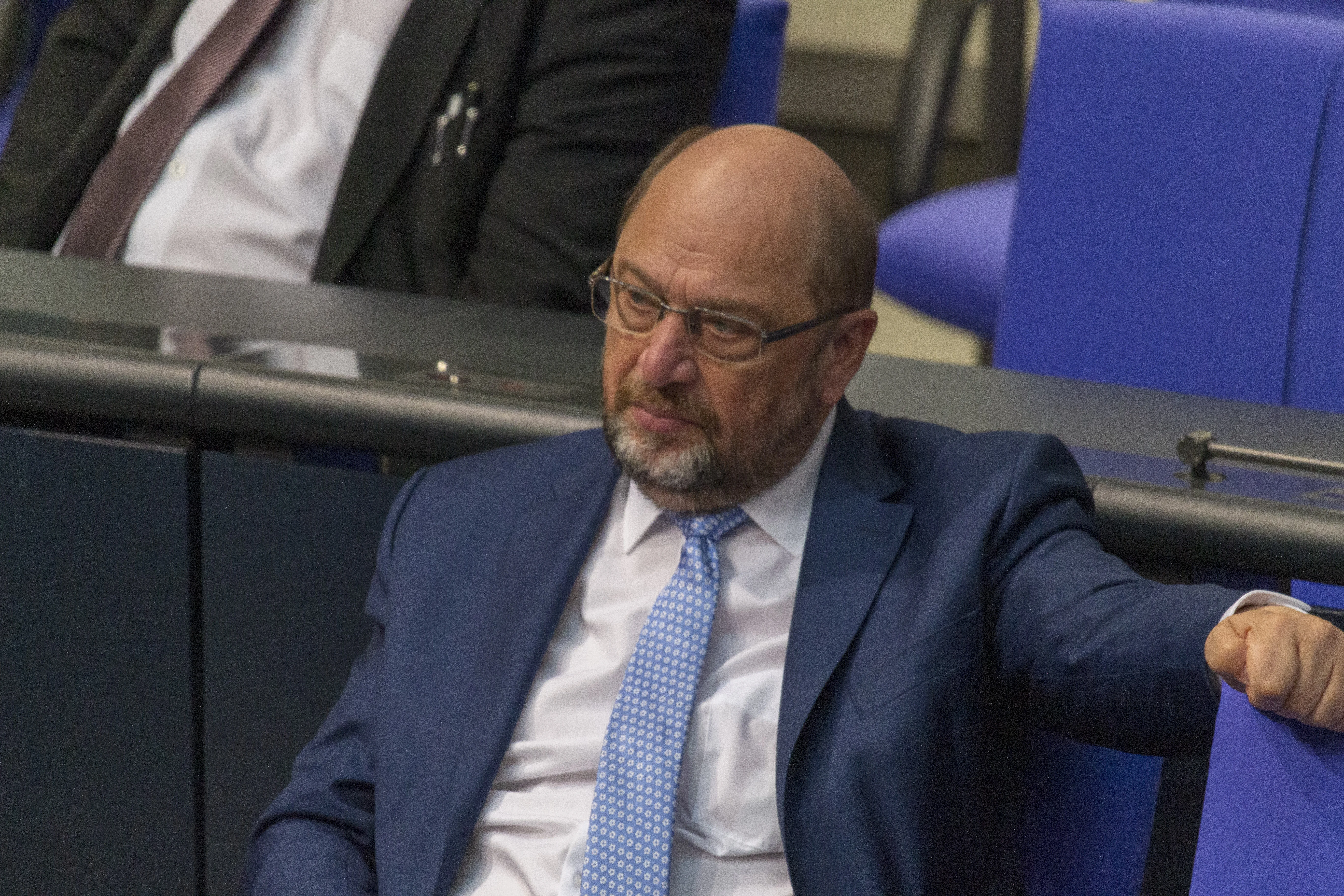
Image from Wikipedia
Image from Wikipedia
Martin Schulz: The European Political Professional Between Würselen, Strasbourg, and Berlin
A Life for Politics, Europe, and the Grand Stage
Martin Schulz was born on December 20, 1955, in Kinzweiler-Hehlrath and is considered one of the defining German Social Democrats of recent times. His career did not begin on a musical or artistic stage, but in municipal and European politics, where he developed a significant public presence over decades. To understand Martin Schulz, one must encounter a politician who worked his way up from bookseller to mayor, from Member of the European Parliament to President of the European Parliament, and finally to chairman of the SPD. His biography stands for persistence, public influence, and a career closely tied to the political upheavals in Europe. ([de.wikipedia.org](https://de.wikipedia.org/wiki/Martin_Schulz))
Early Years: Books, Education, and the Path to Politics
After finishing school, Schulz chose an apprenticeship as a bookseller and turned his passion for books into a profession. In 1982, he opened his own bookstore in Würselen, which he successfully managed for over twelve years. This early phase shaped his style to this day: analytical, eloquent, and strongly oriented towards social issues. His political career began at the age of 19 with his entry into the SPD, at an age when others are still searching for their professional direction. ([europarl.europa.eu](https://www.europarl.europa.eu/former_ep_presidents/president-schulz-2014-2016/en/president/biography.html?utm_source=openai))
The rise was not abrupt, but gradual and with clear milestones. At 31, Schulz was elected the youngest mayor of North Rhine-Westphalia, a position he held for eleven years. This municipal political experience provided him with practical know-how in directly dealing with citizen interests, administration, and local responsibility. At the same time, it laid the foundation for the political authority that would later distinguish him in Brussels and Strasbourg. ([europarl.europa.eu](https://www.europarl.europa.eu/former_ep_presidents/president-schulz-2014-2016/en/president/biography.html?utm_source=openai))
The European Breakthrough: From MEP to Parliament President
Since 1994, Martin Schulz was a Member of the European Parliament, initially working in committees such as the Subcommittee on Human Rights and later in the Committee on Civil Liberties, Justice, and Home Affairs. From 2000, he led the SPD members in the European Parliament and quickly rose to become one of the most visible figures in European social democracy. In 2004, he took charge of the second-largest group in Parliament and positioned himself as a staunch advocate for social justice, employment policy, climate protection, and democratic reforms. His European political signature was clear: institutional stability, social balance, and a more integrated Europe. ([europarl.europa.eu](https://www.europarl.europa.eu/former_ep_presidents/president-schulz-2014-2016/en/president/biography.html?utm_source=openai))
On January 17, 2012, Schulz was elected President of the European Parliament with 387 votes. In 2014, he was re-elected with 409 votes, making him the first President in the Parliament's history to serve a second term. This dual role of political leadership and institutional representation made him one of the most well-known German European politicians of his time. Particularly his rhetorical presence, confrontational tone towards political opponents, and clear commitment to Europe gave his profile a high degree of recognizable visibility. ([europarl.europa.eu](https://www.europarl.europa.eu/former_ep_presidents/president-schulz-2014-2016/en/president/biography.html?utm_source=openai))
SPD Leadership, Chancellor Candidate, and Political Trial
From 1999 to 2018, Schulz continuously served on the Federal Board and the Party Presidency of the SPD. In 2017, he additionally took over the party leadership and ran as his party's chancellor candidate in the federal elections. The election ended for the SPD with 20.5 percent, resulting in the worst outcome in post-war history. This phase was a tough political trial for Schulz, but it also reaffirmed his central role in the German political landscape. ([de.wikipedia.org](https://de.wikipedia.org/wiki/Martin_Schulz))
After the 2017 federal elections, he entered the Bundestag via the North Rhine-Westphalian state list and remained a member until 2021. His time as SPD party chairman ended in 2018. In December 2020, he took chairmanship of the Friedrich-Ebert-Stiftung, the traditional SPD-affiliated political foundation. Thus, Schulz remained an important figure in the social democratic environment and political education even after the significant election campaigns. ([de.wikipedia.org](https://de.wikipedia.org/wiki/Martin_Schulz))
Style, Rhetoric, and Public Impact
In his best moments, Schulz resembled an old-school parliamentarian: direct, combative, and mindful of institutional impact. His famous confrontation with Silvio Berlusconi in 2003 significantly contributed to his recognition across Europe. In such moments, his instinct for political drama, the power of words, and the symbolic dimension of public appearances shone through. The former bookseller evolved into a politician with high recognition and a distinct stage presence. ([de.wikipedia.org](https://de.wikipedia.org/wiki/Martin_Schulz))
In terms of content, Schulz focused on themes that are central to European social democracy: social justice, jobs, financial market reforms, climate policy, equality, and a more democratic union. This thematic line connected his municipal roots with his European perspective. His career demonstrates how political authority arises not only from positions but also from the ability to articulate complex European issues understandably and contentiously. ([europarl.europa.eu](https://www.europarl.europa.eu/former_ep_presidents/president-schulz-2014-2016/en/president/biography.html?utm_source=openai))
Public Perception and Cultural Influence
Martin Schulz was frequently described in the media as a symbolic figure of a new, combative European. In the German public, he particularly gained substantial attention in 2017 when the so-called "Schulz Effect" initially revitalized party dynamics. Social media and media reports momentarily turned him into a political projection figure, embodying hopes for renewal as well as sharp criticism of campaign strategy and governing ability. His significance thus lies not only in his offices but also in his role as a media-effective political brand. ([tagesspiegel.de](https://www.tagesspiegel.de/gesellschaft/medien/robin-hood-gottkanzler-5248120.html?utm_source=openai))
Even after the end of his top positions, Schulz remains a relevant figure in the memory of German and European politics. He represents the rise of a politician from simple, citizen-oriented circumstances to the highest institutions in Europe. This blend of down-to-earth character, fighting spirit, and institutional experience keeps his name present to this day. His biography reads as a case study of political mobility and the power of public performance in the 21st century. ([europarl.europa.eu](https://www.europarl.europa.eu/former_ep_presidents/president-schulz-2014-2016/en/president/biography.html?utm_source=openai))
Voices of Fans
Verifiable fan quotes from official social media channels for Martin Schulz are not reliably available in the current search results. Public resonance for him primarily took place in political debates, media commentary, and campaign reports. Therefore, this section deliberately remains free of fabricated voices and unverified attributions. ([tagesspiegel.de](https://www.tagesspiegel.de/gesellschaft/medien/robin-hood-gottkanzler-5248120.html?utm_source=openai))
Conclusion: Why Martin Schulz Remains an Interesting Figure
Martin Schulz is intriguing because his career traces the rare path from bookseller through municipal politics to the top of the European Parliament. He embodies political experience, rhetorical clarity, and a keen sense of the larger narratives of European politics. Those interested in German contemporary history, social democracy, and the institutional development of the EU will find rich material in his biography. Particularly impressive is the consistency with which he has taken on public responsibility over decades. ([europarl.europa.eu](https://www.europarl.europa.eu/former_ep_presidents/president-schulz-2014-2016/en/president/biography.html?utm_source=openai))
Experiencing Martin Schulz live means witnessing a political professional with extensive experience in debate, institutions, and the public sphere. His biography illustrates how much political impact depends on personality, language, and historical circumstance. This connection of ascent, conflict, and European perspective is where his lasting fascination lies. ([europarl.europa.eu](https://www.europarl.europa.eu/former_ep_presidents/president-schulz-2014-2016/en/president/biography.html?utm_source=openai))
Official Channels of Martin Schulz:
- Instagram: no official profile found
- Facebook: no official profile found
- YouTube: no official profile found
- Spotify: no official profile found
- TikTok: no official profile found
- Twitter/X: https://twitter.com/MartinSchulz
Sources:
- Wikipedia – Martin Schulz
- European Parliament – Biography of Martin Schulz
- European Parliament – Martin Schulz elected President of the European Parliament
- Friedrich-Ebert-Stiftung – Organigramm und Gremien
- Friedrich-Ebert-Stiftung – Impressum
- Tagesspiegel – Martin Schulz and the network: "Robin Hood," "God Chancellor"
- Deutsche Welle – Martin Schulz in profile
- Wikipedia: Image and text source