Lina Wertmüller
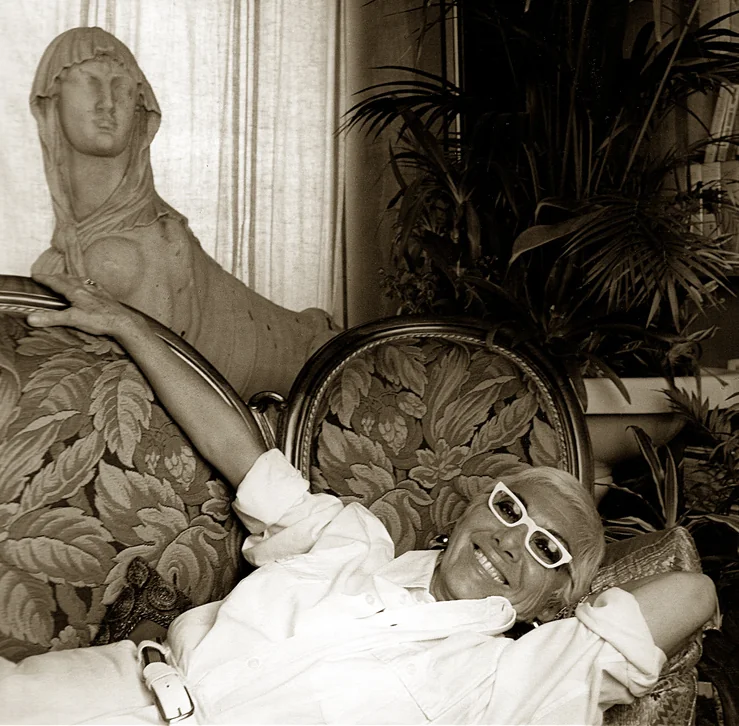
Image from Wikipedia
Image from Wikipedia
Lina Wertmüller – the uncompromising architect of Italian auteur cinema
A director who shaped European cinema with wit, anger, and style
Lina Wertmüller was one of the most distinctive voices in Italian and international cinema. Born on August 14, 1928, in Rome and passing away there on December 9, 2021, she made film history as a director, screenwriter, and influential storyteller of social tensions. Her name is synonymous with biting satire, political sharpness, and a signature style that intertwines comedy and bitterness, melodrama and class analysis. ([de.wikipedia.org](https://de.wikipedia.org/wiki/Lina_Wertm%C3%BCller?utm_source=openai))
Wertmüller belonged to that rare generation of filmmakers who not only told stories but also made societal friction visible. Her works oscillate between chronicle and grotesque, between anarchic humor and keen observations of contemporary Italy. This is precisely where her enduring fascination lies: she staged conflicts not in a neutral way, but with attitude, rhythm, and an unmistakable sense of theatrical escalation. ([treccani.it](https://www.treccani.it/enciclopedia/lina-wertmuller/?utm_source=openai))
Early Years: Theater, Television, and the Path to Directing
Wertmüller’s artistic journey did not begin in the classic film milieu, but in theater and television directing. In 1945, she decided to study at the Accademia d’arte drammatica in Rome against her father's wishes, graduating in 1951. She gained early experience in avant-garde stage forms and worked with a puppet troupe before increasingly turning to directing. ([de.wikipedia.org](https://de.wikipedia.org/wiki/Lina_Wertm%C3%BCller?utm_source=openai))
These beginnings are crucial for understanding her later films. Theater taught her precise character direction, witty dialogue, and an instinct for performance and counter-performance. Her interest in popular forms and popular cultural codes, which she later distilled into a highly original cinematic language, was already evident in her television work. ([treccani.it](https://www.treccani.it/enciclopedia/lina-wertmuller_%28Enciclopedia-del-Cinema%29/?utm_source=openai))
The Breakthrough: From Satire to International Recognition
Wertmüller had her breakthrough in the early 1970s with a series of films that featured actor Giancarlo Giannini. Key works include “Mimì metallurgico ferito nell’onore” (“Mimì, the Metalworker”), “Travolti da un insolito destino nell’azzurro mare d’agosto” (“The Unusual Destiny of an Italian Millionaire on Vacation”), and especially “Seven Beauties” or “Sieben Schönheiten.” These films made her well-known beyond Italy's borders. ([de.wikipedia.org](https://de.wikipedia.org/wiki/Lina_Wertm%C3%BCller?utm_source=openai))
The Academy of Motion Picture Arts and Sciences highlights that Wertmüller was nominated for an Oscar in 1976 as the first woman ever to receive a nomination for directing a film. The nomination was for “Seven Beauties,” which was also recognized in the screenplay category. This was not just a personal triumph, but a historic turning point in film history. ([oscars.org](https://www.oscars.org/governors-awards/2019/lina-wertmuller?utm_source=openai))
The Filmography: Political Satire, Physical Comedy, and Social Friction
Even her early works demonstrate the breadth of her interests. Treccani points to works like “I basilischi” and the television project “Il giornalino di Gian Burrasca,” before she further developed her directorial signature with episodic films and musicals. Wertmüller combined social observation with vivid comedy and utilized the surface of entertainment films to expose class relations, machismo, and political contradictions. ([treccani.it](https://www.treccani.it/enciclopedia/lina-wertmuller_%28Enciclopedia-del-Cinema%29/?utm_source=openai))
Her films from the 1970s mark the artistic peak of her career. Treccani describes them as works situated between chronicle and comedy, between caricature and satire of Italian society. Her collaboration with Giannini and Mariangela Melato significantly defined this phase; the characters are often loud, exaggerated, and yet psychologically accurately portrayed. It was this blend of excess and precision that made Wertmüller’s cinema so distinctive. ([treccani.it](https://www.treccani.it/enciclopedia/lina-wertmuller/?utm_source=openai))
Even after her international breakthrough, she remained productive. Wikipedia and Treccani note her continued versatile career into the 2000s, although she could not replicate the immense successes of the 1970s to the same extent. Still, her work remains a reference point for political auteur cinema, which operates with both irony and toughness. ([de.wikipedia.org](https://de.wikipedia.org/wiki/Lina_Wertm%C3%BCller?utm_source=openai))
Style and Signature: Why Lina Wertmüller Remains Unmistakable
Wertmüller’s style thrives on contrasts. Her stagings merge operational sharpness, melodramatic escalation, and often burlesque, almost operatic energy. Characters not only speak; they fight for interpretative authority; the camera observes this struggle with a mix of closeness and mockery. This is precisely how the tone is created that makes her films so vivid and recognizable. ([oscars.org](https://www.oscars.org/governors-awards/2019/lina-wertmuller?utm_source=openai))
In terms of content, her cinema focused on power, class, gender, and politics. The Academy describes her explicitly as a filmmaker who focused on political and societal themes. This sharp focus also explains why her works continue to be discussed today: they are not merely historical documents, but finely honed commentaries on a transforming Italy. ([oscars.org](https://www.oscars.org/governors-awards/2019/lina-wertmuller?utm_source=openai))
Her direction is also strongly characterized by rhythm. Scenes often build up like dialogue duels, in which body language, emphasis, and social posture are as important as the content of what is said. This creates films that can be viewed not only as narratives but as choreographed confrontations with power and desire. ([treccani.it](https://www.treccani.it/enciclopedia/lina-wertmuller/?utm_source=openai))
Awards and Cultural Significance
The late honorary Oscar marked the official recognition of a lifetime achievement that had long achieved canonical status. In 2019, Wertmüller was awarded the Honorary Award at the Governors Awards; the Academy honored her exceptional contributions to the art of film. In the Oscar activities of the Academy, she is cited as one of the honorees of 2019, and the award was seen as a recognition of her lifetime's work. ([oscars.org](https://www.oscars.org/governors-awards/2019/lina-wertmuller?utm_source=openai))
Her influence extends far beyond Italy. Wertmüller opened doors for later female directors with her nomination and success, permanently shaping the perception of female authorship in international cinema. The fact that her name still appears in discussions about gender equality in filmmaking shows the cultural significance of her work. ([oscars.org](https://www.oscars.org/governors-awards/2019/lina-wertmuller?utm_source=openai))
At the same time, her work remains attractive to film fans because it does not offer convenient answers. Her films are uncomfortable, comedic, polemical, and full of energy. This is precisely what makes Lina Wertmüller exciting to this day: she was not a director of smooth consensus, but an artist of resistance, irony, and uncompromising observation. ([treccani.it](https://www.treccani.it/enciclopedia/lina-wertmuller/?utm_source=openai))
Conclusion: A Great Author of Cinema Worth Rediscovering
Lina Wertmüller represents a cinema that is both popular, intellectual, and political. Her films combine narrative power with social analysis, and for this reason, they remain vibrant. Those who discover her work encounter a director who shaped insight from humor and turned conflict into art. ([oscars.org](https://www.oscars.org/governors-awards/2019/lina-wertmuller?utm_source=openai))
Her oeuvre belongs to the defining chapters of European auteur cinema. Anyone interested in film history, strong characters, and a clear artistic stance should see and reevaluate her works. Lina Wertmüller remains an invitation to experience cinema as a contentious, passionate, and profoundly personal art form. ([treccani.it](https://www.treccani.it/enciclopedia/lina-wertmuller/?utm_source=openai))
Official Channels of Lina Wertmüller:
- Instagram: No official profile found
- Facebook: No official profile found
- YouTube: No official profile found
- Spotify: No official profile found
- TikTok: No official profile found