Jura Margulis
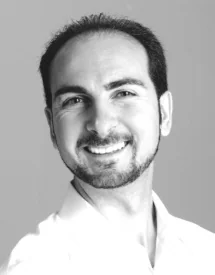
Image from Wikipedia
Image from Wikipedia
Jura Margulis: The Pianist Bridging Russian School, Bold Transcription, and International Pedagogy
An Artist Profile Full of Sonic Depth, Virtuosity, and Pedagogical Authority
Jura Margulis, born on June 14, 1968, in Leningrad, is one of those pianists whose name in classical music signifies interpretive sovereignty, stylistic curiosity, and a profound awareness of tradition. As a pianist and music educator, he is present in the international piano landscape not only as a soloist but also as a sought-after teacher, chamber music partner, and transcription artist. His career combines the Russian piano school with American university practice and a concert activity that has left its mark on several continents. ([de.wikipedia.org](https://de.wikipedia.org/wiki/Jura_Margulis))
Biographical Roots: Leningrad, the Russian Piano School, and Early Influences
Margulis comes from a family of musicians and was trained according to C. Bechstein by his father, Vitaly Margulis, a notable pianist and educator. His classification as a "worthy representative of the significant Russian piano school in the third generation" refers to a background where technique, sound culture, and analysis have been interconnected from an early age. This heritage continues to shape his playing today: not as a museum-like reproduction but as a vibrant transmission of a school that takes expression, clarity, and tonal differentiation seriously. ([bechstein.com](https://www.bechstein.com/die-welt-von-bechstein/pianisten/jura-margulis/))
His education also led him to Leon Fleisher in Baltimore and to the Fondazione per il Pianoforte in Cadenabbia, Italy. Margulis's training across Russia, the USA, and Europe explains the breadth of his repertoire as well as his international presence. His biography reflects not only countries but also musical mindsets: Russian sound power, American structural discipline, and European tradition preservation. ([bechstein.com](https://www.bechstein.com/die-welt-von-bechstein/pianisten/jura-margulis/))
Career Profile: International Competitions, Concerts, and a Clearly Defined Artistic Identity
Margulis is a prizewinner of twelve international competitions and received the Pro-Europa Prize from the European Cultural Foundation. Such awards not only mark an early phase of his career but also confirm an artistic identity that has asserted itself in concert life. His performances have taken him to festivals such as the Schleswig-Holstein Music Festival, the Berlin Festivities, the Verbier Festival, and the Beppu-Argerich Festival in Japan. Collaborations with orchestras such as the SWF Orchestra Baden-Baden, the Montreal Symphony Orchestra under Charles Dutoit, and the Russian National Orchestra document the reach of his music career. ([bechstein.com](https://www.bechstein.com/die-welt-von-bechstein/pianisten/jura-margulis/))
A special aspect of his career is chamber music. Margulis is a permanent member of the Fulbright Trio and forms a piano duo with Martha Argerich, one of the most influential pianists of today. Such partnerships are not merely a matter of prestige in classical music but an artistic distinction: they demand mutual trust, alertness in chamber music, and a tone that is as sustainable in dialogue as it is in solo recital. His appearances in 2024 and 2025 in programs with Argerich and the Margulis Trio confirm this enduring presence in the upper echelons of concert life. ([bechstein.com](https://www.bechstein.com/die-welt-von-bechstein/pianisten/jura-margulis/))
Current Projects and Concert Presence: Margulis Remains an Active Performer
Even in recent performance seasons, Margulis remains visible in the concert scene. For the 2024/2025 season, the Margulis Trio will perform at the Duisburg Philharmonic with a program that connects Turina, Bach, Saint-Saëns, Shostakovich, and Mussorgsky. The program design shows the stylistic agility that characterizes his profile: from Spanish impressionism to the baroque chaconne to orchestral color in piano arrangements. This is not a random crossover but repertoire work with historical depth and tonal dramaturgy. ([duisburger-philharmoniker.de](https://duisburger-philharmoniker.de/Konzerte/margulis-trio-kako07-2024-2025/?utm_source=openai))
In 2026, an appearance by Martha Argerich & Jura Margulis is scheduled in the Freiburg concert calendar. Such event announcements demonstrate that Margulis is not just a name of the past but continues to play a role in current concert series. His presence in program booklets and season previews underscores the ongoing relevance of a pianist who possesses a distinct voice both in duo and trio settings as well as in solo performances. ([zmf.de](https://zmf.de/wp-content/uploads/ZMF2026-Programmheft.pdf?utm_source=openai))
Discography: Repertoire Range from Schumann to Bach, from Transcription to Solo Concerts
The recordings of Jura Margulis depict a remarkably wide repertoire. Documented CDs include releases featuring Schumann, Chopin, Rachmaninoff, Liszt, and Moszkowski, later also Ravel and Prokofiev, Schubert, Scriabin, Medtner, Stravinsky, as well as a focus on transcriptions of Bach, Gluck, Wagner, Saint-Saëns, and Caplet. This discography demonstrates that Margulis does not pursue a narrow specialist career but takes the great piano literature seriously, as well as the arrangement and re-listening of music across eras. ([de.wikipedia.org](https://de.wikipedia.org/wiki/Jura_Margulis))
His approach to transcription is particularly influential. The recording "Transcriptions: Bach, Gluck, Schubert, Wagner, Saint-Saëns, Caplet" and the later CD featuring Bach, Beethoven, Brahms, and Berg highlight an aesthetic concept that deliberately keeps the boundaries between original and adaptation open. Margulis sees transcription not as a secondary form but as a creative field where the piano emerges as an orchestral instrument. This is part of his artistic development: he expands the repertoire not through volume but through musical intelligence and sonic imagination. ([de.wikipedia.org](https://de.wikipedia.org/wiki/Jura_Margulis))
Critical Reception: High Recognition in Specialized Press and Music Journalism
The reception of his recordings is notably positive. Fono Forum described his 2001 CD as "highly recommended" and included it as one of twelve reference recordings in the field of piano in its Classical Yearbook. Another recording with Russian repertoire was included in the 2004 Best List of the German Record Critics. Klassik-Heute awarded the highest score for a recent CD featuring piano transcriptions in the "artistic quality" category. These are not casual praise but clear signals of an acknowledged level of interpretation. ([de.wikipedia.org](https://de.wikipedia.org/wiki/Jura_Margulis))
Individual reviews also underscore his presence at the instrument. Peter Cossé praised Margulis’ version of Saint-Saëns’ "Danse macabre" in highly emphatic terms and highlighted the vividness of his arrangement. Klassik.com wrote about the same production that his "clear, penetrating, pleading tone" captivates from the first to the last second. Such formulations indicate more than technical reliability: they describe a pianist with a distinctive tone, dramatic awareness, and a refined sense of musical atmosphere. ([de.wikipedia.org](https://de.wikipedia.org/wiki/Jura_Margulis))
Musical Style: Sound Culture, Structure, and a Sense of Dramatic Form
Margulis's playing is closely linked to the Russian tradition but is never reduced to mere virtuosity. The programs he records and performs reveal a preference for contrasting works with strong character: Schumann, Liszt, Debussy, Brahms, Berg, Bach, and Mussorgsky form an aesthetic cosmos where romantic expression, structural rigor, and color thinking intersect. Critics regularly highlight his clear phrasing, imagination, and originality. This creates the image of an artist who does not simply play but makes musical architecture audible. ([de.wikipedia.org](https://de.wikipedia.org/wiki/Jura_Margulis))
Additionally, his affinity for arrangements and personal transcriptions is evident. This demonstrates his historical thinking in music: he treats the piano as an instrument capable of articulating entire sonic worlds. When he places works by Saint-Saëns, Caplet, or Mussorgsky in new contexts, it does not result in mere effect aesthetics but in a productive extension of the repertoire. Margulis thereby belongs to a tradition that understands interpretation as a creative act. ([de.wikipedia.org](https://de.wikipedia.org/wiki/Jura_Margulis))
Teaching Activity and Authority: An Educator of International Reach
Since 1999, Jura Margulis has been a professor of piano at the University of Arkansas, serving as a foundation professor since 2008. Additionally, he offers masterclasses worldwide in the USA, Germany, Austria, Italy, Spain, Portugal, Slovenia, Russia, Japan, and other countries. The University of Music and Performing Arts Vienna describes him as an internationally sought-after educator of the third generation, and Wikipedia mentions lectures on his pedagogical concept "The Unified Piano School." This portrays Margulis not only as an interpreter but also as a systematically thinking music educator. ([de.wikipedia.org](https://de.wikipedia.org/wiki/Jura_Margulis))
His pedagogical significance arises from the combination of concert practice and teaching. Someone who remains active on international stages and in chamber music formations conveys not only technique but experiential knowledge about repertoire, sound balance, and musical responsibility. This is where the authority of a pianist like Margulis lies: his teaching is fueled by a vibrant music career, not by distant theory. ([de.wikipedia.org](https://de.wikipedia.org/wiki/Jura_Margulis))
Cultural Influence: Between Russian Heritage, American Academia, and European Concert Culture
Jura Margulis embodies an artist biography that connects multiple music spaces. His origins from Leningrad, his training in the USA and Italy, his professorship in Arkansas, and his presence at European festivals make him an interpreter with a transnational perspective. Classical music thrives on such mediators who not only preserve repertoire tradition but render it newly interpretable across national borders. Margulis belongs to that generation of pianists who combine historical depth with international mobility. ([de.wikipedia.org](https://de.wikipedia.org/wiki/Jura_Margulis))
His influence is also evident in the choice of repertoire. Through his focus on transcriptions, rarely performed works, and sonically demanding programs, he contributes to the expansion of the concert canon. The combination of solo repertoire, chamber music, and pedagogical work creates a profile that holds significant weight in the classical scene. Especially in collaboration with Martha Argerich and in the Fulbright Trio, it becomes clear that his music career is conceived not only individually but dialogically. ([bechstein.com](https://www.bechstein.com/die-welt-von-bechstein/pianisten/jura-margulis/))
Conclusion: A Pianist with Stance, Depth, and Lasting Relevance
Jura Margulis remains exciting because he combines technique, stylistic awareness, and pedagogical authority in a rarely dense form. His discography shows a breadth of repertoire and intellectual curiosity, his reviews attest to artistic substance, and his teaching makes him a shaping figure far beyond the concert hall. Those who experience him live hear not just a mere virtuoso but a musician who imbues works with memory, structure, and expression. That is precisely why every performance by Jura Margulis is worthwhile: as an encounter with a pianist who embodies classical music with a clear profile and great inner tension. ([de.wikipedia.org](https://de.wikipedia.org/wiki/Jura_Margulis))
Official Channels of Jura Margulis:
- Instagram: No official profile found
- Facebook: No official profile found
- YouTube: No official profile found
- Spotify: No official profile found
- TikTok: No official profile found