
Johannes Völz
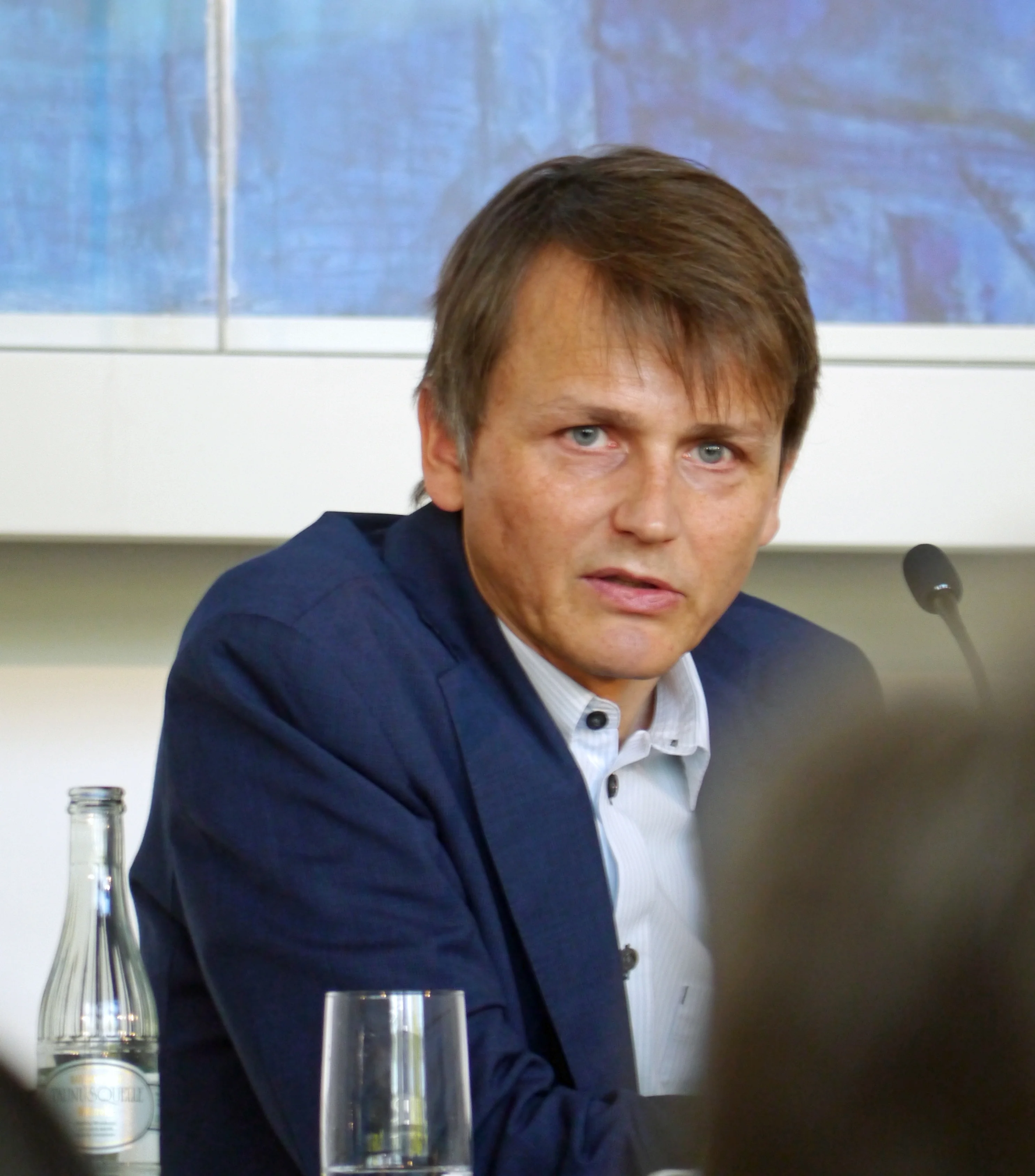
Image from Wikipedia
Image from Wikipedia
Johannes Völz: American Studies, Democracy, and the Aesthetics of Political Culture
A prominent cultural scientist at the intersection of American literature, political theory, and public debate
Johannes Völz, born in 1977 in Berlin, is among the distinguished German Americanists of today. He combines literary studies, cultural theory, and the history of political ideas into a research profile that extends far beyond traditional university teaching. His work at Goethe University Frankfurt focuses on democracy, aesthetics, authoritarianism, and the cultural forms of political publicness. ([de.wikipedia.org](https://de.wikipedia.org/wiki/Johannes_V%C3%B6lz))
Biographical Roots and Academic Path
Völz studied American Studies, philosophy, and political science at Ludwig Maximilians University Munich, Free University Berlin, and the University of California, Berkeley. After working as a research assistant at the John F. Kennedy Institute, he moved to Goethe University Frankfurt, where he obtained his habilitation in 2015 and was appointed Heisenberg Professor of American Studies with a focus on "Democracy and Aesthetics" in 2016. Since 2021, he has been a full professor of American Studies. ([de.wikipedia.org](https://de.wikipedia.org/wiki/Johannes_V%C3%B6lz))
This academic development shows a consistent specialization: from transatlantic training through research on American literature to the systematic analysis of democratic culture. Particularly, the connection of theoretical precision and public relevance shapes his profile. Völz does not work as a scholar in an ivory tower, but as a researcher who actively engages his topics in institutional and societal debates. ([de.wikipedia.org](https://de.wikipedia.org/wiki/Johannes_V%C3%B6lz))
Research Focus: Democracy as a Cultural Form
His central research areas include transcendentalism, American literature, the history of political ideas, political aesthetics, democratic culture, and authoritarianism. This spectrum is complemented by work at the intersection of literature and security, as well as more recent studies on the aesthetics of populism. Thus, Völz operates in a field that considers literary texts, political orders, and cultural perceptions together. ([de.wikipedia.org](https://de.wikipedia.org/wiki/Johannes_V%C3%B6lz))
Particularly significant is his interest in how democracy becomes visible in everyday life and in forms of coexistence. In recent contributions, he emphasizes that democracy must be understood not just as a system of government but as a way of life and as a sensually experienced practice. This perspective lends a distinct cultural-critical sharpness to his research while also situating it within current international discussions. ([aktuelles.uni-frankfurt.de](https://aktuelles.uni-frankfurt.de/english/how-democracy-is-anchored-in-everyday-life/))
Institutional Role and Scientific Authority
Völz holds several key positions at Goethe University and within the broader Frankfurt research community. He is a member of the scientific directorate of the Research College for Human Sciences in Bad Homburg, founder and co-spokesperson of the research program "Democratic Vistas: Reflections on the Atlantic World," and co-spokesperson of the John McCloy Transatlantic Forums. He is also the spokesperson for the DFG Graduate School 3113 "Aesthetics of Democracy." ([de.wikipedia.org](https://de.wikipedia.org/wiki/Johannes_V%C3%B6lz))
These roles underscore his authority in a research field that demands interdisciplinary perspectives. His work links American Studies, literary studies, philosophy, political theory, and democracy research into a robust scientific framework. His participation in a prestigious editorial board and his coordination of research programs further emphasize his institutional presence. ([normativeorders.net](https://normativeorders.net/en/member/prof-dr-johannes-voelz/))
Current Projects and Publications
In recent years, Völz has aligned his research noticeably with current debates about democracy. In 2024, the edition "Aesthetics of Democracy," which he co-edited, will be published as part of WestEnd. New Journal for Social Research. Also in May 2024, the volume "Horizons of Democracy. Open Forms of Life after Walt Whitman," co-edited by Till van Rahden and Johannes Völz, will be released, opening a new book series on "Democratic Vistas / Democratic Horizons." ([ifs.uni-frankfurt.de](https://www.ifs.uni-frankfurt.de/newsleser/neue-ausgabe-der-westend-erschienen.html))
In 2025, he was confirmed as the spokesperson for a newly approved DFG Graduate School that examines democracy as a way of life from a humanities perspective, set to start in April 2026. Goethe University emphasizes that 18 international partner institutes on five continents will cooperate with this graduate school. Völz remains anchored in research that is both internationally connectable and socially visible. ([aktuelles.uni-frankfurt.de](https://aktuelles.uni-frankfurt.de/english/how-democracy-is-anchored-in-everyday-life/))
Style, Method, and Intellectual Signature
What distinguishes Johannes Völz is the combination of precise text analysis with a broad cultural theoretical horizon. His research engages with the concepts of democracy, publicness, representation, and aesthetics without losing itself in pure theory. Instead, it demonstrates how literary and cultural forms make political orders visible, stabilize them, or call them into question. ([de.wikipedia.org](https://de.wikipedia.org/wiki/Johannes_V%C3%B6lz))
His engagement with Walt Whitman and the transatlantic connection particularly highlights this approach. For Völz, democracy does not appear as an abstract concept but as a historically developed practice with an aesthetic dimension. This gives his work relevance both for American Studies and for research in political culture and the debate over authoritarianism, populism, and public freedom. ([aktuelles.uni-frankfurt.de](https://aktuelles.uni-frankfurt.de/english/how-democracy-is-anchored-in-everyday-life/))
Cultural Influence and Public Relevance
The cultural influence of Johannes Völz lies less in popular visibility and more in the lasting impact on a field of research. He brings American literature, democratic theory, and contemporary political questions into a productive relationship. In doing so, he provides a model for how humanities research can engage in societal discussions without losing its methodological rigor. ([aktuelles.uni-frankfurt.de](https://aktuelles.uni-frankfurt.de/unireport/wie-die-demokratie-im-leben-verankert-ist/))
His work on the relationship between democracy and everyday life, authoritarian dynamics, and the public dimension of science makes him an important voice in the German-speaking academic landscape. His commitment to "public humanities" particularly demonstrates that cultural studies today should not only interpret but also communicate and intervene. This is where the special relevance of his work lies. ([aktuelles.uni-frankfurt.de](https://aktuelles.uni-frankfurt.de/unireport/wie-die-demokratie-im-leben-verankert-ist/))
Fan Voices
As no verified official social media profiles for Johannes Völz could be found, this section is omitted entirely. There are no reliable, publicly attributable fan comments that could be quoted here. ([de.wikipedia.org](https://de.wikipedia.org/wiki/Johannes_V%C3%B6lz?utm_source=openai))
Conclusion: Why Johannes Völz Remains Relevant
Johannes Völz is fascinating because he connects the larger themes of American literature, democratic theory, and political culture with the present. His research possesses analytical depth, institutional authority, and a clear societal perspective. Those interested in American Studies, history of democracy, and contemporary cultural diagnostics will find a demanding and highly relevant voice here. ([de.wikipedia.org](https://de.wikipedia.org/wiki/Johannes_V%C3%B6lz))
His ability to bring together historical texts and current political questions in an open space of thought makes him a formative figure in the humanities debate. Those who follow his lectures, publications, and research projects experience science as a vibrant contribution to democratic culture. ([ifs.uni-frankfurt.de](https://www.ifs.uni-frankfurt.de/newsleser/neue-ausgabe-der-westend-erschienen.html))
Official Channels of Johannes Völz:
- Instagram: No official profile found
- Facebook: No official profile found
- YouTube: No official profile found
- Spotify: No official profile found
- TikTok: No official profile found
Sources:
- Wikipedia – Johannes Völz
- Normative Orders – Prof. Dr. Johannes Völz
- Goethe University Frankfurt – New Heisenberg Professor Researching Democratic Culture of the USA
- Goethe University Frankfurt – How Democracy Is Anchored in Everyday Life
- Goethe University Frankfurt – How Democracy Is Anchored in Everyday Life
- Institute for Social Research – New Issue of WestEnd Published
- Research College for Human Sciences – Archive / Horizons of Democracy
Upcoming Events
The Future of Democracy
An evening for smart minds: Johannes Völz speaks in Erlangen about democracy and the present. May 5, 2026, free admission. #Democracy #Erlangen
The Future of Democracy - Lecture with Johannes Völz
An evening for intelligent minds in Erlangen: Johannes Völz discusses the future of democracy in the atmospheric courtyard. #Literature
Various about Climate Change, Democracy and the Universe
An evening for intelligent minds in Erlangen: climate change, democracy, and the universe meet strong thoughts in the courtyard of the city library. #Erlangen