
Ilse Helbrecht
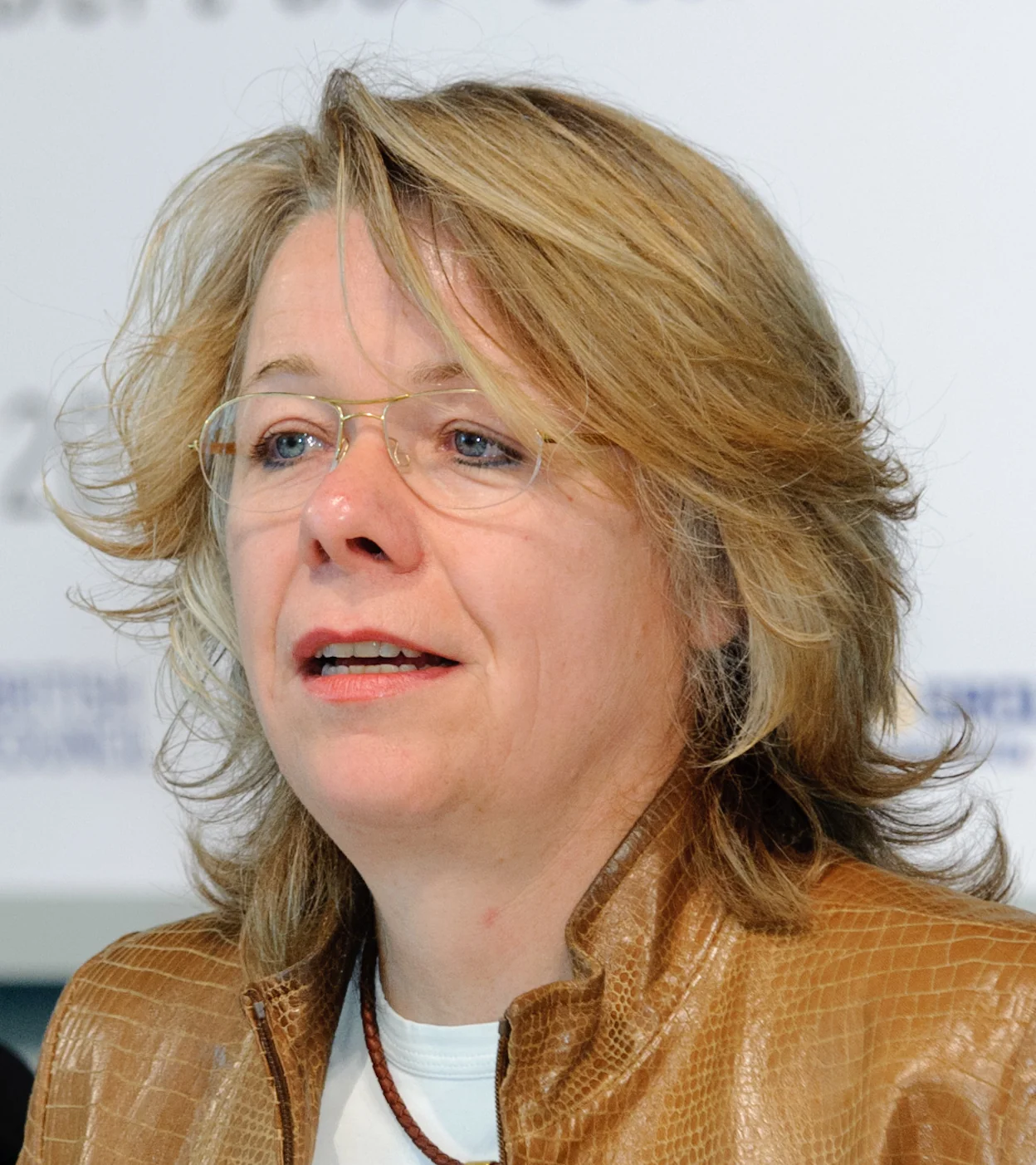
Image from Wikipedia
Image from Wikipedia
Ilse Helbrecht – a Pivotal Voice in Cultural and Social Geography in Berlin
From Stuttgart to Münster and on to Humboldt University: An Academic Career with an Urban Focus
Ilse Helbrecht, born on February 27, 1964, in Stuttgart and raised in Osnabrück, is one of the influential female geographers and urban researchers in the German-speaking world. Her academic career is closely linked to questions of urban change, housing, and the social dimension of space. Since 2009, she has been teaching at Humboldt University of Berlin, where she shapes the chair of Cultural and Social Geography. ([de.wikipedia.org](https://de.wikipedia.org/wiki/Ilse_Helbrecht))
Biographical Roots and Academic Training
Ilse Helbrecht's journey into geography began at the University of Münster, where she studied geography, sociology, as well as spatial planning and administrative law starting in 1983. In 1990, she completed her diploma in geography and then moved on to the Technical University of Munich, where she worked as a research associate. In 1993, she earned her doctorate there with a thesis on urban marketing, a topic that reveals her early sensitivity to urban development, municipal strategies, and the symbolic significance of cities. ([de.wikipedia.org](https://de.wikipedia.org/wiki/Ilse_Helbrecht))
After her doctorate, she held a Post-Doctoral Fellowship at the University of British Columbia from 1994 to 1996. Upon returning to Germany, she became a research assistant at the Technical University of Munich in 1997 and habilitated in 1999 with the work "The Creative Metropolis." These stages mark an academic development that is not based on routine but on research with a clear thematic signature. Early on, the question was central to her work of how cities are designed economically, culturally, and socially. ([de.wikipedia.org](https://de.wikipedia.org/wiki/Ilse_Helbrecht))
Career Between Munich, Bremen, and Berlin
From 1999 to 2002, Helbrecht served as a private lecturer at the Technical University of Munich, before becoming a full professor of human geography at the University of Bremen after a visiting professorship at the University of Amsterdam in 2002. There, she took on additional leadership roles: from 2003 to 2005, she was the deputy dean of the social sciences department, and from 2005 to 2008, she served as vice-rector of the university. These functions demonstrate a scholar who not only researches and teaches but also actively shapes academic institutions. ([de.wikipedia.org](https://de.wikipedia.org/wiki/Ilse_Helbrecht))
In 2009, she moved to Humboldt University of Berlin and took over the chair of Cultural and Social Geography. Later, she headed the Institute of Geography, and from 2014 to 2019, she also led the Georg Simmel Center for Metropolitan Research at Humboldt University. She is also listed as a professor at the Georg Simmel Center for Urban Research and is named as a representative of the Geography Institute. Thus, her career signifies continuity in urban research and institutional authority in the field of urban geography. ([de.wikipedia.org](https://de.wikipedia.org/wiki/Ilse_Helbrecht))
Research Focus: Housing, Property, and Urban Insecurities
Ilse Helbrecht primarily concentrates on urban geography, human and social geography, as well as questions of housing and property relations. This thematic orientation links empirical urban research with socio-political debates about distribution, belonging, and urban quality of life. Her work operates at the intersection of space, social difference, and political planning. ([de.wikipedia.org](https://de.wikipedia.org/wiki/Ilse_Helbrecht))
The research profiles at Humboldt University indicate that Helbrecht is currently involved in projects examining highly relevant urban and social transformations. These include, among others, the project "Transformations of Housing and Intergenerational Contracts in Europe (THICE)," the second phase of the Collaborative Research Center project on "Geographical Imaginations," as well as an EXIST founding grant titled "Flags." Previously, she was engaged in research projects related to aging cities, super-diversity, and the insecurities of urban spaces. Her academic practice thus connects theory, contemporary analysis, and societal relevance. ([fis.hu-berlin.de](https://fis.hu-berlin.de/converis/portal/detail/Person/400108397%3Bjsessionid%3DGMpkRsJepdYlvHhuYAICd9JGhEm7ZFHjdrJdJF9v.fisprodcvr2?lang=de_DE&utm_source=openai))
Publications and Scholarly Signature
Helbrecht's written work reflects the breadth of her research. Among her early and significant publications are "The End of Shapeability? On Function Change and Future Perspectives of Spatial Planning" from 1991 and "Urban Marketing: Outlines of a Communicative Urban Development Policy" from 1994, her dissertation. Later, she published further works on homeownership in Europe and served as the editor of the volume "Gentrification in Berlin: Displacement Processes and Staying Strategies" from 2016. These titles highlight a consistent engagement with the city as a political, economic, and social space. ([de.wikipedia.org](https://de.wikipedia.org/wiki/Ilse_Helbrecht))
Especially remarkable is the connection between analytical precision and public relevance. Helbrecht is interested not only in how cities function but also in how they feel in everyday life, to whom they belong, and how displacement, property, and urban identity intertwine. Her research thus addresses central questions of the present: Who can stay in a city, who is displaced, and how do demographic processes alter urban order? In this perspective lies the true strength of her scholarly profile. ([de.wikipedia.org](https://de.wikipedia.org/wiki/Ilse_Helbrecht))
Awards, Academic Recognition, and Public Visibility
In 2018, Ilse Helbrecht was awarded the Caroline von Humboldt Professorship, endowed with €80,000. In 2019, she was also named a Thomas Mann Fellow of the Federal Republic of Germany. Such awards underscore not only her professional reputation but also her significance as a voice in debates about cities, society, and culture. The connection of academic rank and public visibility particularly characterizes her profile. ([de.wikipedia.org](https://de.wikipedia.org/wiki/Ilse_Helbrecht))
Helbrecht is also present in university communication formats, such as as a moderator and discussion partner in events at Humboldt University. Her role thus extends beyond classical research: she conveys geography as a socially relevant discipline that responds to current crises, urban transformations, and social inequalities. This is precisely where her authority as a scholar with a clear thematic line lies. ([metis.hu-berlin.de](https://www.metis.hu-berlin.de/archive_posts/womens-assembly-does-digitalisation-have-a-gender/?utm_source=openai))
Style, Influence, and Significance for Urban Research
Ilse Helbrecht represents a geography that is neither abstract nor self-referential. Her topics are concrete: housing, property, gentrification, urban insecurity, and socio-spatial inequality. At the same time, she thinks these issues in larger contexts of culture, society, and metropolis. Thus, a research style arises that connects analytical depth with social urgency. ([de.wikipedia.org](https://de.wikipedia.org/wiki/Ilse_Helbrecht))
Her influence is especially evident in how she establishes and develops urban research as an interdisciplinary field. The combination of human geography, social geography, and cultural geography makes her work relevant for science, politics, and urban planning. Especially in a time of increasing housing insecurity and accelerated urban upheavals, her research approach is particularly pertinent. Those who wish to understand how cities are socially constructed and contested will find important guidance in Helbrecht's work. ([de.wikipedia.org](https://de.wikipedia.org/wiki/Ilse_Helbrecht))
Conclusion: A Scholar with a Clear Perspective on the City
Ilse Helbrecht is fascinating because she does not merely describe the city, but makes it visible as a living space of conflicts and experiences. Her biography leads from Stuttgart through Münster and Munich to Bremen and Berlin, her research covers urban marketing and creative metropolises to housing, property, and urban insecurity. Thus, she is one of the pivotal voices in a geography that accurately observes and critically contextualizes societal developments. Those who wish to understand the urban future should follow her work. ([de.wikipedia.org](https://de.wikipedia.org/wiki/Ilse_Helbrecht))
Official Channels of Ilse Helbrecht:
- Instagram: No official profile found
- Facebook: No official profile found
- YouTube: No official profile found
- Spotify: No official profile found
- TikTok: No official profile found
Sources:
- Wikipedia – Ilse Helbrecht
- Humboldt University of Berlin – Chair/Staff Page of Ilse Helbrecht
- Humboldt University of Berlin – Research Portal Prof. Ilse Helbrecht
- Georg Simmel Center for Urban Research – Prof. Dr. Ilse Helbrecht
- Humboldt University of Berlin – Superdiversity and aging cities
- Humboldt University of Berlin – Seminar Page Geographies of Insecurity