
Hugo von Hofmannsthal
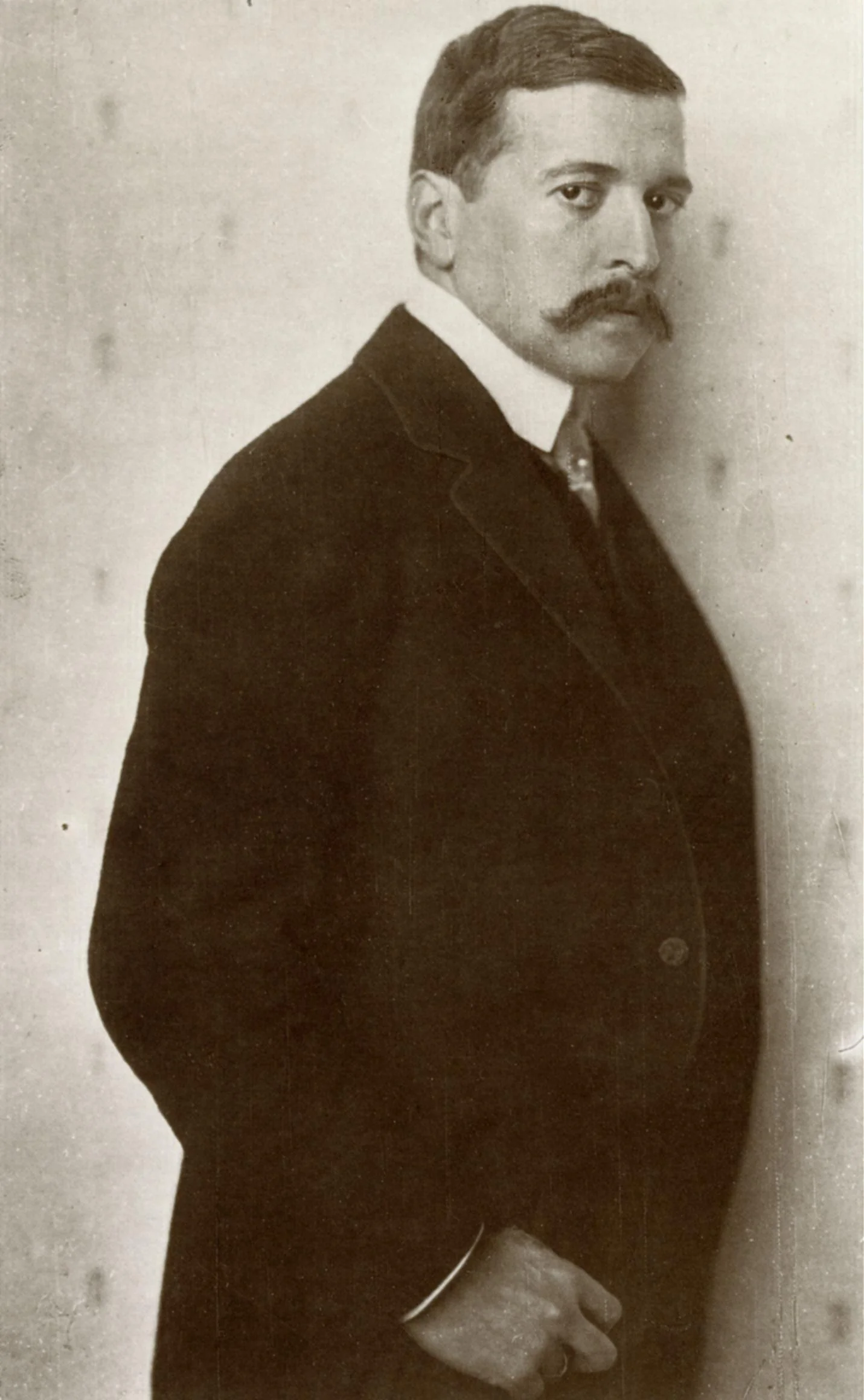
Image from Wikipedia
Image from Wikipedia
Hugo von Hofmannsthal: The Linguistic Artist of Viennese Modernism Who Reinvented Music Theater
A Genius of the Century Between Poetry, Drama, and Opera Libretto
Hugo von Hofmannsthal is one of the defining voices of the German-speaking Fin de Siècle and Viennese Modernism. Born on February 1, 1874, in Vienna, and died on July 15, 1929, in Rodaun near Vienna, he combined literary elegance, psychological depth, and an extraordinary sense of form, sound, and stage presence. As a writer, dramatist, poet, librettist, and co-founder of the Salzburg Festival, he became a key figure of cultural Europe around 1900 and beyond. ([de.wikipedia.org](https://de.wikipedia.org/wiki/Hugo_von_Hofmannsthal?utm_source=openai))
Early Influence: Education, Language, and the Viennese Atmosphere
Hofmannsthal's artistic development began early and under particularly favorable intellectual conditions. The Hofmannsthal Society describes him as the only, sheltered child, whose daily life was shaped by books, theater visits, and an intensive education; from this arose the extraordinary knowledge of European literature that influenced his later writing. Even as a teenager, he moved in an environment where language was not only a means of expression but also a form of thought. This early maturity quickly made him a prominent figure in the Viennese literary scene. ([gesellschaft.hofmannsthal.de](https://gesellschaft.hofmannsthal.de/biographie/?utm_source=openai))
At a young age, he connected with the literary network of Jung-Wien, where he met Hermann Bahr, Arthur Schnitzler, Richard Beer-Hofmann, and Felix Salten. Equally formative was his encounter with Stefan George in 1891, whose aesthetic demands and symbolist tone profoundly influenced Hofmannsthal. His early texts reveal an author experimenting with formal rigor, musical language, and inner condensation, before embarking on the path to grand dramatic and later music-theatrical forms. ([de.wikipedia.org](https://de.wikipedia.org/wiki/Hugo_von_Hofmannsthal?utm_source=openai))
The Breakthrough: From Lyrical Talent to the Grand Stage
Hofmannsthal achieved literary breakthrough as a very young author. The Hofmannsthal Society and British and American reference sources emphasize that he reached an astonishing level of maturity with early verse dramas such as Der Tod des Tizian and Der Tor und der Tod. These works not only signaled the rise of an exceptional talent but also a turn towards a language that mediates between symbolist condensation and dramatic effect. His writing was quickly perceived as artful, sensitive, and trendsetting. ([gesellschaft.hofmannsthal.de](https://gesellschaft.hofmannsthal.de/biographie/?utm_source=openai))
Particularly important was the transition from lyrical writing to the stage. With the reinterpretations of ancient themes and a deep engagement with psychological and mythological motifs, such as in Elektra, Hofmannsthal found the dramatic concentration that would permanently shape his work. The biography by the Hofmannsthal Society refers to a breakthrough to the "grand stage," and this is precisely where his historical significance lay: He made drama a place of intellectual density, where tradition and modernity productively collided. ([gesellschaft.hofmannsthal.de](https://gesellschaft.hofmannsthal.de/biographie/?utm_source=openai))
The Music Theater as a Life’s Work: Collaboration with Richard Strauss
Hofmannsthal's fame as a librettist is inseparable from Richard Strauss. The Poetry Foundation highlights that after 1900 he increasingly turned away from poetry and focused on drama, prose, and especially libretti; together with Strauss, he created six opera texts, including Elektra, Der Rosenkavalier, and Die Frau ohne Schatten. This collaboration is one of the most productive partnerships in the history of opera and had a lasting impact on the aesthetics of the early 20th century. ([poetryfoundation.org](https://www.poetryfoundation.org/poets/hugo-von-hofmannsthal-56d205ddb2619?utm_source=openai))
Particularly, Der Rosenkavalier is considered the work that definitively sealed Hofmannsthal's status as an author of music theater. The press highlights that his collaboration with Strauss led opera history into a late blossoming and that Hofmannsthal reformulated the middle act of the work with an awareness of musical flow. In this, his genius is evident: He did not think against the music but emerged from it. His libretto is not just a mere text under a score, but a dramatic framework of the highest musical intelligence. ([diepresse.com](https://www.diepresse.com/18052210/der-rosenkavalier-besiegelte-ein-dichterschicksal?utm_source=openai))
Salzburg: The Foundation of a Cultural Myth
Hofmannsthal was effective not only as a poet but also as an architect of institutions. Alongside Max Reinhardt and Richard Strauss, he is among the co-founders of the Salzburg Festival, one of the most prestigious cultural events in Europe. Official Salzburg sources emphasize that the vision of a city as a stage was closely associated with Hofmannsthal and that Jedermann has been at the heart of the festival since 1920. He thus made theater history that remains alive to this day. ([salzburg.info](https://www.salzburg.info/en/salzburg/salzburg-festival?utm_source=openai))
Jedermann is much more than a successful piece. The mystery play, based on the tradition of the medieval Everyman, combines religious allegory, existential drama, and bourgeois social critique. The official festival chronicle recalls that the world premiere took place in 1911 in Berlin, and the Salzburg performance of 1920 marked the true beginning of the festival's history. Hofmannsthal thus created a stage work that continues to act as a cultural ritual today, shaping the city of Salzburg worldwide. ([salzburg.info](https://www.salzburg.info/en/salzburg/salzburg-festival/jedermann?utm_source=openai))
Style, Language, and Artistic Development
Hofmannsthal's style combines musical language, symbolic density, and a pronounced sensitivity to formal changes. His early poems and dramas still carry the brilliance of the Fin de Siècle, but his later works exhibit a more complex, reflective, and at the same time more sober language. In essays as well as in dramatic texts, he circles around cultural crises, identity issues, and the dissolution of European certainties, securing him a firm place among the most precise diagnosticians of his epoch. ([britannica.com](https://www.britannica.com/biography/Hugo-von-Hofmannsthal?utm_source=openai))
Prose also showcases this artistic development. Texts such as the famous Brief des Lord Chandos negotiate language crisis and perceptual rupture with extraordinary modernity. Hofmannsthal was not an author of a single tone, but a master of transition: from lyrical youth work to grand tragedy, from essay to opera, from personal reflection to cultural diagnosis. This very range makes him equally fascinating for literature and music lovers. ([en.wikipedia.org](https://en.wikipedia.org/wiki/Hugo_von_Hofmannsthal?utm_source=openai))
Discography of the Works: Canonical Dramas, Libretti, and Key Texts
Hofmannsthal does not possess a classical discography in the music journalistic sense; however, his body of work fulfills a comparable function in the realm of literary and music-theatrical repertoire. Key landmarks include the early dramas Der Tod des Tizian and Der Tor und der Tod, the major stage works Elektra, Jedermann, and Der Schwierige, as well as the opera libretti for Richard Strauss. These titles form the foundation of his posthumous reputation and are still regularly present on stages and in editions. ([britannica.com](https://www.britannica.com/biography/Hugo-von-Hofmannsthal?utm_source=openai))
Additionally, essays, speeches, and prose pieces attest to his intellectual breadth. Titles such as Poesie und Leben, Der Dichter und diese Zeit, Krieg und Kultur, or Die Idee Europa show that Hofmannsthal thought not only aesthetically but also in terms of cultural politics. His oeuvre thus encompasses a wide spectrum of poetry, drama, prose, and libretto, which count among the indispensable reference points in literature and opera history. ([en.wikipedia.org](https://en.wikipedia.org/wiki/Hugo_von_Hofmannsthal?utm_source=openai))
Cultural Influence and Impact
Hofmannsthal's cultural influence extends far beyond his lifetime. As a co-founder of the Salzburg Festival, as a renewer of German drama, and as a world-class librettist, he left behind a work that interweaves theater, opera, and literary modernity. The official portrayal of the festival still acknowledges his contribution; at the same time, literary and opera sources show that his texts enjoy international attention and are part of the core repertoire. ([salzburg.info](https://www.salzburg.info/de/salzburg/salzburger-festspiele/chronik/hugo-von-hofmannsthal?utm_source=openai))
His impact also lies in the way he reshaped cultural tradition. Hofmannsthal took old themes, transformed them into modern art, and showed that the historical legacy can be not a burden, but material for artistic rejuvenation. That is precisely why he remains so compelling for today's readers and audiences: His texts connect spirit, stage, and sound into a form of art that continues to shine into the present. ([gesellschaft.hofmannsthal.de](https://gesellschaft.hofmannsthal.de/biographie/?utm_source=openai))
Conclusion: An Author Who Transformed Language into Music
Hugo von Hofmannsthal is intriguing because he crossed the boundaries between literature and music theater with a rare sovereignty. His artistic development led from the precocious Viennese poet to the architect of grand stage art, from symbolist to modern classic, from dramatist to co-founder of a world-class festival. Those who read his works or experience them on stage meet an author who translated the European crises of his time into language of lasting beauty. Experiencing him live means feeling the full tension of spirit, drama, and musical thought directly. ([britannica.com](https://www.britannica.com/biography/Hugo-von-Hofmannsthal?utm_source=openai))
Official Channels of Hugo von Hofmannsthal:
- Instagram: No official profile found
- Facebook: No official profile found
- YouTube: No official profile found
- Spotify: No official profile found
- TikTok: No official profile found
Sources:
- Hugo von Hofmannsthal: Portal ([hofmannsthal.de](https://www.hofmannsthal.de/?utm_source=openai))
- Hugo von Hofmannsthal Society – Biography ([gesellschaft.hofmannsthal.de](https://gesellschaft.hofmannsthal.de/biographie/?utm_source=openai))
- Britannica – Hugo von Hofmannsthal ([britannica.com](https://www.britannica.com/biography/Hugo-von-Hofmannsthal?utm_source=openai))
- Poetry Foundation – Hugo von Hofmannsthal ([poetryfoundation.org](https://www.poetryfoundation.org/poets/hugo-von-hofmannsthal-56d205ddb2619?utm_source=openai))
- Salzburg.info – Hugo von Hofmannsthal ([salzburg.info](https://www.salzburg.info/de/salzburg/salzburger-festspiele/chronik/hugo-von-hofmannsthal?utm_source=openai))
- Salzburg.info – Jedermann at the Salzburg Festival ([salzburg.info](https://www.salzburg.info/en/salzburg/salzburg-festival/jedermann?utm_source=openai))
- Salzburg.info – Salzburg Festival ([salzburg.info](https://www.salzburg.info/en/salzburg/salzburg-festival?utm_source=openai))
- Süddeutsche Zeitung – Critical Edition on Hugo von Hofmannsthal ([sueddeutsche.de](https://www.sueddeutsche.de/kultur/hugo-von-hofmanntshal-kritische-ausgabe-literatur-s-fischer-verlag-1.5534948?utm_source=openai))
- Wikipedia – Hugo von Hofmannsthal