
Angelika Klüssendorf
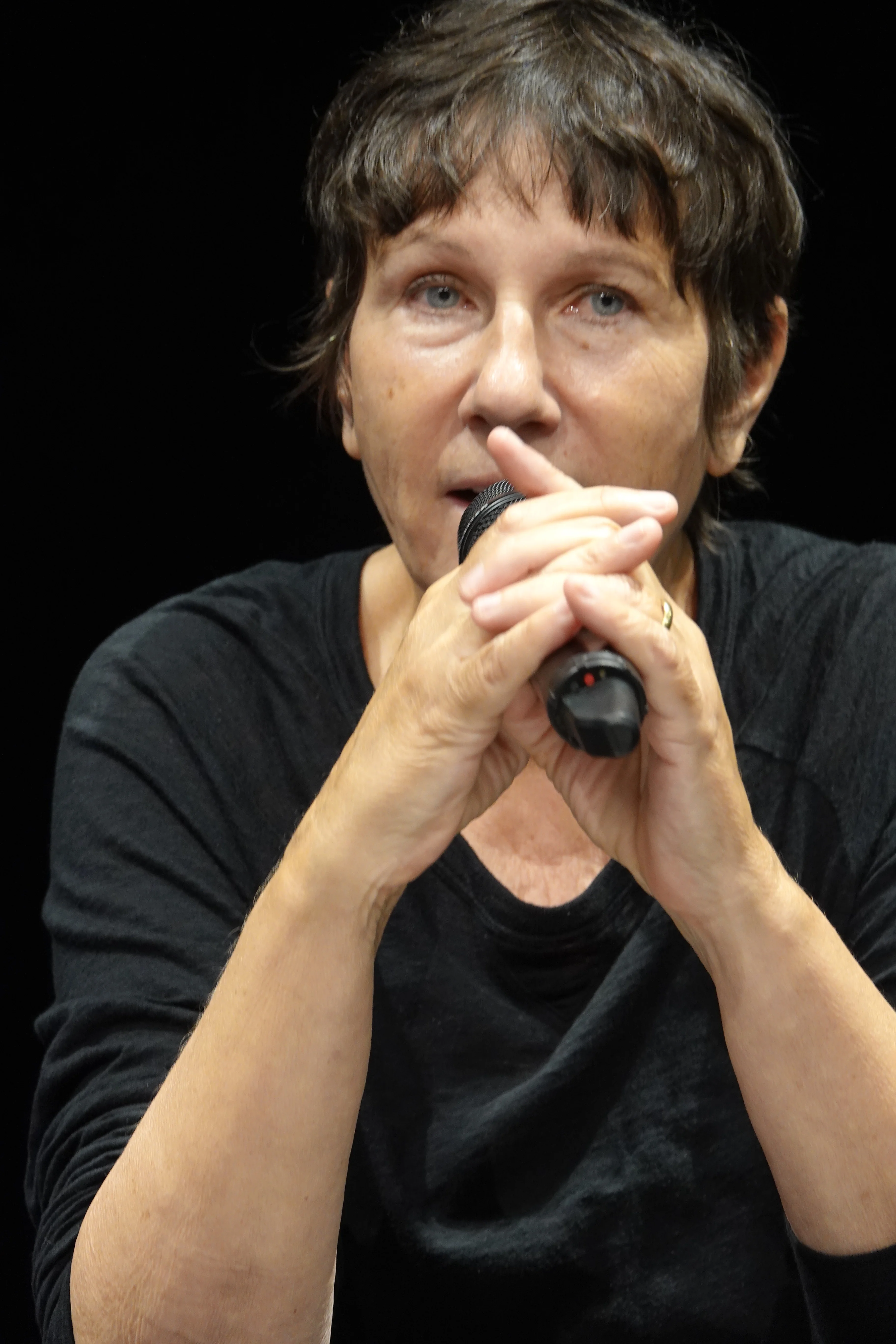
Image from Wikipedia
Image from Wikipedia
Angelika Klüssendorf – one of the most precise voices in contemporary German-language literature
An author who derives literary form from biographical weight
Angelika Klüssendorf, born on October 26, 1958, in Ahrensburg, is one of the most striking German writers of her generation. The tension in her literature does not arise from grand gestures but from a concentrated, often unflinching precision, with which she distills childhood, violence, social constriction, and self-assertion into poignant novels. Particularly formative for her work are the autobiographically tinted books surrounding Das Mädchen, April, and Jahre später, in which she literarily transforms experiences from her time in the GDR. ([de.wikipedia.org](https://de.wikipedia.org/wiki/Angelika_Kl%C3%BCssendorf?utm_source=openai))
Biographical roots and literary origin
Klüssendorf’s life path is closely tied to the fractures of post-war German history. She grew up in the GDR, lived in Leipzig from 1961 to 1985, and initially worked in agriculture after finishing school before turning to literature. Early experiences of instability, institutional care, and familial overwhelm have shaped her perspective on characters who must assert themselves in precarious situations. This existential awareness of social reality grants her prose a distinctive credibility. ([munzinger.de](https://www.munzinger.de/register/portrait/biographien/Angelika%2BKl%C3%BCssendorf/00/28863?utm_source=openai))
In reflecting on her interviews and portraits, it becomes clear that Klüssendorf does not view writing as decorative storytelling but as a condensation of lived experience. In conversations, she describes how closely literature and memory are intertwined for her, without intending to depict her life one-to-one. The result is a form of autofiction that intertwines personal history, artistic distance, and precise observation. ([deutschlandfunkkultur.de](https://www.deutschlandfunkkultur.de/das-genre-der-autofiktion-angelika-kluessendorf-und-martina-wagner-egelhaaf-dlf-kultur-f7d716dc-100.html?utm_source=openai))
The breakthrough: From narrating injury to literary authority
A significant step in her career was the publication of Das Mädchen in 2011. The novel about a twelve-year-old girl in the GDR garnered considerable attention because it does not rely on mere retelling but translates the harshness of childhood into a sober, literarily controlled language. Critics highlighted that Klüssendorf had found her own voice, which connects the harshness of experience with stylistic precision. ([deutschlandfunkkultur.de](https://www.deutschlandfunkkultur.de/mein-papa-ist-ein-saeufer-100.html?utm_source=openai))
With April, she continued the narrative and sharpened the focus on the main character as a young woman navigating self-assertion, relational dynamics, and the aftereffects of her background. Jahre später was published in 2018 as a continuation and was received by critics as a complex coming-of-age and artist's novel, in which literature serves as a lifeline. The trilogy not only garnered Klüssendorf wide acclaim but also established her reputation as one of the most consistent literary voices addressing female self-determination and vulnerability. ([deutschlandfunk.de](https://www.deutschlandfunk.de/angelika-kluessendorf-jahre-spaeter-bilanz-einer-toxischen-100.html?utm_source=openai))
Language style, composition, and narrative signature
Klüssendorf's style is devoid of excess, direct, and highly controlled. Deutschlandfunk describes her language as precise and concentrated; other reviews highlight that she builds the inner tension of her characters with great discipline. This aesthetic is unsentimental but never cold: it compels readers to look more closely, as no emotional gesture is unnecessarily displayed. ([bilder.deutschlandfunk.de](https://bilder.deutschlandfunk.de/3f/3b/de/cf/3f3bdecf-0926-412f-af04-d8ced0cbf2cd/angelika-kluessendorf-risse-100.pdf?utm_source=openai))
In the novels about April, this language gives rise to a particular literary music: short scenes, abrupt cuts, recurring motifs, and a composition that shapes an inner dramaturgy from memory and present. Critics have emphasized that Klüssendorf does not exploit the possibilities of autofictional writing as confessional literature but as an artistic form with its own tension and structural consistency. This makes her books texts that transcend the private. ([deutschlandfunkkultur.de](https://www.deutschlandfunkkultur.de/das-genre-der-autofiktion-angelika-kluessendorf-und-martina-wagner-egelhaaf-dlf-kultur-f7d716dc-100.html?utm_source=openai))
Critical reception and literary award
Angelika Klüssendorf was taken seriously early in her career and has been awarded multiple honors. Among the sources, the literature prize of the Jürgen Ponto Foundation, the shortlist position for the German Book Prize with April, and other recognitions are mentioned. The longlist of the Prix Femina for Vierunddreißigster September also demonstrates that her work is recognized not only in German literary circles but also internationally. ([stag.upol.cz](https://stag.upol.cz/StagPortletsJSR168/PagesDispatcherServlet?pp_destElement=%23ssSouboryStudentuDivId_570&pp_locale=en&pp_nameSpace=G12178&pp_page=souboryStudentuDownloadPage&pp_portlet=souboryStudentuPagesPortlet&pp_reqType=render&soubidno=244027&utm_source=openai))
Literary criticism has repeatedly positioned Klüssendorf's work within the tension field of autobiographical truth, social observation, and literary form. Deutschlandfunk Kultur and other media have emphasized that her novels gain artistic independence from their experiential closeness, consciously opposing simplistic self-revelation. Precisely therein lies her authority: she does not write about suffering to evoke effect but to make structure, cause, and resonance visible. ([deutschlandfunkkultur.de](https://www.deutschlandfunkkultur.de/das-genre-der-autofiktion-angelika-kluessendorf-und-martina-wagner-egelhaaf-dlf-kultur-f7d716dc-100.html?utm_source=openai))
Current projects and new presence in the literary scene
Even in the 2020s, Angelika Klüssendorf remains prominent. With Trost, she reentered the literary discourse; broadcasting and cultural media accompanied the publication with discussions and events. In 2026, she was a guest at a radio3 cultural salon, where her new novel and the question of truthfulness in autofictional literature were the focal points. This demonstrates that Klüssendorf is not an author from a completed past but a voice that continues her poetic development. ([swr.de](https://www.swr.de/kultur/literatur/angelika-kluessendorf-trost-100.html?utm_source=openai))
Recent contributions further emphasize that her themes remain highly relevant: memory, social shaping, familial violence, and the search for solace in uncertain times. Precisely because her books emerge from concrete life realities, they maintain a contemporary relevance that extends beyond each publication. In her artistic development, experience combines with formal clarity to create literature of lasting significance. ([swr.de](https://www.swr.de/kultur/literatur/angelika-kluessendorf-trost-100.html?utm_source=openai))
Cultural influence and importance for German-language literature
Klüssendorf's significance lies not only in individual titles but in the consistency of her literary project. She has demonstrated how biographical wounds can be transformed into precisely composed literature without succumbing to sentimentality or mere documentation. Her novels thus provide an important counter-model to superficial cultures of memory: they insist on form, perception, and linguistic reduction. ([deutschlandfunkkultur.de](https://www.deutschlandfunkkultur.de/das-genre-der-autofiktion-angelika-kluessendorf-und-martina-wagner-egelhaaf-dlf-kultur-f7d716dc-100.html?utm_source=openai))
For many readers, the fascination with Angelika Klüssendorf arises precisely from this interplay of hardness and tenderness, of social reality and artistic control. Her characters do not fight for grand theses but for dignity, self-determination, and a place in life. This makes her books important texts of contemporary literature and a lasting reference for autofictional writing in the German-speaking world. ([de.wikipedia.org](https://de.wikipedia.org/wiki/Angelika_Kl%C3%BCssendorf?utm_source=openai))
Conclusion: Why Angelika Klüssendorf remains so captivating
Angelika Klüssendorf is compelling because she shapes literature of extraordinary precision from biographical sharpness. Her novels connect experience, language, and structure into a distinctive signature that is immediately recognizable in the literary field. Those who wish to experience contemporary literature as a serious art form should read Angelika Klüssendorf and closely follow her appearances in the literary scene. ([deutschlandfunk.de](https://www.deutschlandfunk.de/angelika-kluessendorf-jahre-spaeter-bilanz-einer-toxischen-100.html?utm_source=openai))
Official channels of Angelika Klüssendorf:
- Instagram: No official profile found
- Facebook: No official profile found
- YouTube: No official profile found
- Spotify: No official profile found
- TikTok: No official profile found
Sources:
- Wikipedia – Angelika Klüssendorf
- Deutschlandfunk Kultur – Autofiction: What is true and what is invented?
- Deutschlandfunk – “Jahre später” - The balance of a toxic marriage
- Deutschlandfunk Kultur – “Ludwig is Ludwig, Frank Schirrmacher is Frank Schirrmacher”
- Deutschlandfunk Kultur – “In the grip of a prosperous misfit”
- Deutschlandfunk Kultur – “My dad is a drunk”
- SWR Culture – Angelika Klüssendorf on “Trost”
- rbb / radio3 – Cultural Salon 2026
- Piper Publishing – Angelika Klüssendorf
- Munzinger Biography – Angelika Klüssendorf
- LovelyBooks – Angelika Klüssendorf
- Wikipedia: Image and text source
Upcoming Events
TROST – Reading with Angelika Klüssendorf
An evening for great literature: Angelika Klüssendorf reads TROST in Schwerin. Linguistic power, closeness, and contemporary prose on 19.10.2026 at 19:30. #LiteraryDays
TROST – Reading with Angelika Klüssendorf
A literary evening full of intensity: Angelika Klüssendorf reads Trost in Schwerin. Novel, discussion, and contemporary literature on 10/19/2026. #Literaturtage