
Cleanliness Offensive and Greening in Freiburg
Freiburg Central Station Becomes a Model Location: Cleaning Robots and Greening to Make Cleanliness Visible
A spring cleaning is currently underway at Freiburg Central Station, which, according to Deutsche Bahn (DB), goes well beyond the daily standard cleaning. The program relies on more staff, additional cleaning intervals, and technical support – and is also intended to demonstrate how the railway company practically implements its cleanliness and safety initiative at heavily frequented stations.
Spring Cleaning at Freiburg Central Station
According to DB, more than 40 staff members are deployed at the site. Platforms, stairs, and underpasses are being cleaned, as well as elevators, glass surfaces, ticket machines, furniture, and display cases. The package also includes the removal of graffiti and stuck chewing gum – tasks that are particularly time-consuming during ongoing operations. Shops and restaurants in the station hall are also participating in the campaign.
50 Million Euros Extra – Freiburg as Part of a Larger Program
Beyond the individual case of Freiburg, the spring cleaning is part of a larger financial and organizational framework: Deutsche Bahn plans to invest around 50 million euros additionally in safety and cleanliness at stations by 2026. According to DB, this budget will also finance a major cleaning at a total of 200 stations in Baden-Württemberg. Freiburg thus stands as a representative of a strategy that does not only rely on isolated actions, but aims to achieve visible improvements across the board – at places that shape the first impression of a city for many travelers.
Cleaning Robots as Relief: Automation Only for Part of the Work
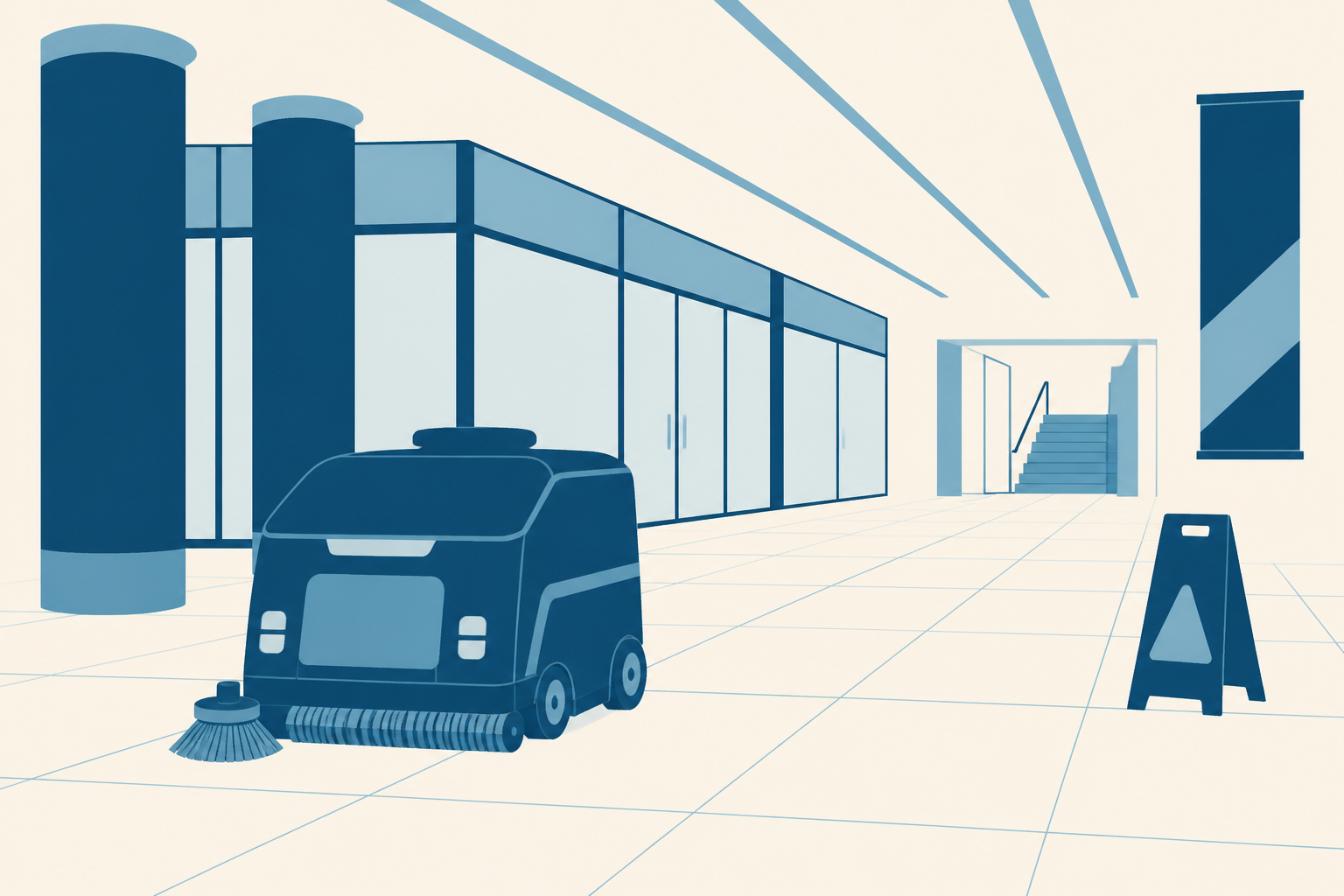
Parallel to the spring cleaning, the railway company has introduced a cleaning robot in Freiburg that is intended to autonomously clean the floors in the station hall and underpasses. Sensors are supposed to help detect objects and people and avoid them in time; the robot is intended to be used both during the day and at night.
Station manager Rolf Band classifies the robot as a supplement, not a replacement. From the railway's perspective, the practical benefit lies in taking over routine tasks so that employees have time for tasks that cannot be automated – such as cleaning corners, edges, and hard-to-reach areas. This very limitation makes it clear what the railway is aiming for in Freiburg: not a "fully automated" station hall, but a division of labor in which technology covers the area and people take care of the detailed work, control, and special cases.
More Than Cleaning: Palms, Geraniums, and an Upgraded West Exit
The measures in Freiburg are also visibly aimed at the quality of stay. The station is to become not only cleaner but also greener: tubs with palms and olive trees have already been set up, and flower boxes with geraniums hang on the stairs to the underpasses. In addition, the west exit is being redesigned and planted.
Band justifies the approach with the goal of "strengthening togetherness in the social space of the station." In practice, this means: The station is not just a transport hub, but a public place where commuters, travelers, employees, people in need of support, and security services come together in a confined space. Upgrading and maintenance are therefore more than just cosmetic – they are intended to help reduce conflicts, make orientation easier, and lower the threshold for vandalism, because a well-maintained environment is empirically perceived less as a "lawless space."
The planting campaign is being implemented by the Freiburg Qualification and Employment Company (FQB). The organization is municipally anchored in Freiburg and works on qualification and employment; according to DB, it is also supposed to take care of the plants in the long term. In this way, the railway combines the visual enhancement of the station with a local employment approach – a detail that anchors the project more firmly in the city than pure service provider solutions often do.
Coordination with the City – and a Look at Order Issues in the Surroundings
During the spring cleaning, the station management also coordinates with the city of Freiburg. The municipality is responsible for adjacent areas such as the bus station, the city railway bridge, and sidewalks towards the city center. Peter Krause from Freiburg Waste Management and City Cleaning describes the station as the "main gateway to the city" – and thus gets to the heart of why investments in cleanliness and appearance are worthwhile for both sides: The condition around the building also determines how visitors perceive Freiburg.
The responsibilities of the station management also include monitoring the bicycle parking lot behind track 8. Abandoned bicycles are marked; if they are not picked up after three months and are not reported as stolen, the railway can auction them off. The next auction is scheduled for Saturday, May 9.
All in all, Freiburg shows how the railway translates its additional funding for cleanliness and safety into concrete measures: more staff for major cleaning, technical relief through a robot, visible greening, and close coordination with municipal authorities. The example also clearly shows the limits of automation – and why the quality at the station ultimately depends not only on machines, but on reliable processes, presence, and cooperation on site.
Frequently Asked Questions
Sources
- https://www.swr.de/swraktuell/baden-wuerttemberg/freiburg/deutsche-bahn-freiburg-putzroboter-100.html, SWR Aktuell Baden-Württemberg, 08.05.2026 16:46
- Deutsche Bahn AG
- Freiburger Qualifizierungs- und Beschäftigungsgesellschaft
- Sozialraum Bahnhof