
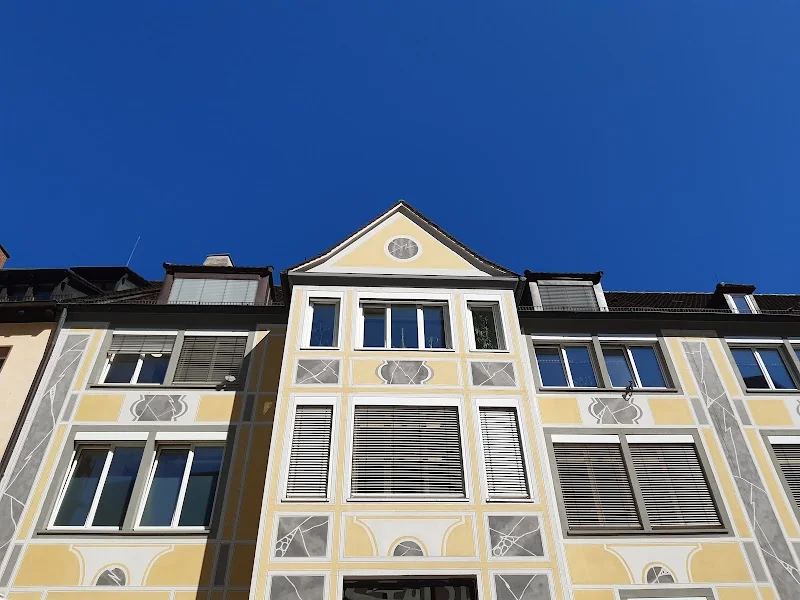
Münsterplatz 17, Freiburg im Breisgau
Münsterplatz 17, 79098 Freiburg im Breisgau, Germany
City Library Freiburg | Opening Hours & Catalog
The City Library Freiburg is much more than a place to borrow books. It sees itself as a cultural and educational institution of the city of Freiburg, as a space for reading and language promotion, literature, media competence, and digital topics. The main branch at Münsterplatz serves as the central point of contact, complemented by the district libraries in Haslach, Mooswald, and Rieselfeld, as well as the mobile library. Those looking for opening hours, login, catalog, online borrowing, library card, or extensions will find here not just a library, but a coordinated network of analog and digital offerings. Particularly practical is that many services function online, while on-site, short distances, clear structures, and easily accessible locations facilitate library visits. The City Library combines classic borrowing, quiet workspaces, internet access, and modern online services with a clear connection to the everyday lives of people in Freiburg. This blend makes it interesting for families, students, working professionals, and readers of all ages. ([stadtbibliothek.freiburg.de](https://www.stadtbibliothek.freiburg.de/unsere-bibliotheken))
Opening Hours, Locations, and Directions to the City Library Freiburg
The most important address is the main branch at Münsterplatz 17 in the heart of the old town. Currently, it is open from Tuesday to Friday from 10 AM to 7 PM and Saturday from 10 AM to 3 PM; it is closed on Mondays and Sundays. For directions, the City Library mentions the tram stops Bertoldsbrunnen and Europaplatz, making the location in the middle of Freiburg easily accessible by public transport. Those using the main branch also benefit from its central location in close proximity to Münsterplatz, in an area suitable for both short visits and longer library stays. The City Library describes itself as a place of knowledge and being, which summarizes the character of the main branch well: Here, not only is borrowing done, but also reading, learning, researching, and working. The opening hours are deliberately kept clear and straightforward, allowing for good planning of visits. This is a significant advantage for those seeking a quiet morning or afternoon for work or reading. ([stadtbibliothek.freiburg.de](https://www.stadtbibliothek.freiburg.de/unsere-bibliotheken))
The branch libraries are also well-structured and accessible by public transport. The Haslach district library is located at Staudingerstr. 10 b and can be reached by bus line 14 to Markgrafenstraße and tram line 5 to Haslach Bad. Current opening hours there are from Tuesday to Friday from 9:30 AM to 12 PM and from 1 PM to 6 PM. The Mooswald district library is located at Falkenbergerstr. 21; it can be reached via tram line 4 towards Messe to Elsässer Straße, with a transfer to bus line 10 towards Paduaallee or bus line 36 towards Hochdorf to the Falkenbergerstraße stop. It is open on Mondays from 10 AM to 4 PM, Tuesdays to Thursdays from 10:30 AM to 1:30 PM and from 3 PM to 6 PM, and Fridays from 10:30 AM to 1:30 PM. The Rieselfeld media library is located at Maria-von-Rudloff-Platz 2, accessible via tram line 5 to Maria-von-Rudloff-Platz. This clear location logic particularly helps users who are not only looking for the main branch but specifically a district library nearby. ([stadtbibliothek.freiburg.de](https://www.stadtbibliothek.freiburg.de/unsere-bibliotheken))
Also practical are the return options. At the main branch at Münsterplatz, media can be returned outside of opening hours via the return machine from Monday to Sunday between 6 AM and 11 PM. Haslach also has a return station accessible from Monday to Sunday from 6 AM to 11 PM. In Mooswald, the return box is open continuously, while in Rieselfeld, the return box can be used outside of opening hours from Tuesday morning until Friday at 1 PM. This is especially helpful for working professionals and families who want to return media flexibly. The City Library makes it clear that it is not only convincing through its spaces but also through its reliable services in everyday life. Those who know the opening hours, return times, and routes well can plan their visit efficiently and avoid unnecessary trips. Especially for a library with multiple locations, this transparency is a real plus. ([stadtbibliothek.freiburg.de](https://www.stadtbibliothek.freiburg.de/faq))
Login, Library Card, and Costs: How the Library Account Works
To use the City Library Freiburg, the library card is the central key. Adults aged 18 and over need a personal identification card or passport to register; the annual fee is 15 euros, reduced to 10 euros. Children and young people under 18 can borrow media for free. Additionally, there is a day pass for 2 euros if one wants to use the library only temporarily. Reduced annual fees are available for students, trainees, volunteers, recipients of certain social benefits, and holders of a Freiburg Pass, family card, or Baden-Württemberg volunteer card. A replacement card for lost library cards is issued for 3.50 euros. This pricing structure is clear and makes the library attractive for both occasional and regular users. Importantly: The City Library makes it clear that visiting the library is free for everyone; fees apply mainly for certain cards, extensions, and additional services like reservations or reminder fees. ([stadtbibliothek.freiburg.de](https://www.stadtbibliothek.freiburg.de/-/gebuhren))
Access to digital offerings is done through the same library card, but with a PIN or password and an account ID. Those who register online for digital services receive an email with the customer ID after successful registration; this seven-digit combination of letters and numbers is needed for all logins. Self-registration is possible for adults aged 18 and over with a registered address in Germany. After registration, digital services can be used by the next working day at the latest. For payment, online payment via PayPal or credit card is available. If you were a user before, the registration should not simply be repeated, but contact with the library should be made. This clarifies account management: physical media, digital media, and fees can be managed in a single system. This makes the login not just a technical process, but a real service center for borrowing, extending, reserving, and fee accounts. ([stadtbibliothek.freiburg.de](https://www.stadtbibliothek.freiburg.de/selbstregistrierungneu/))
If you forget your password, there is also a simple solution: According to the FAQ, the password immediately after the initial registration corresponds to the date of birth in the format ddmmyyyy. Through the link 'Change or Forgot Password', a new password can be set if an email address is provided. This shows that access to the City Library is not unnecessarily complicated. At the same time, the library card is personal and non-transferable, which is especially important for using digital services and allocating media. An active user account is thus more than just a card or a number; it connects the user with borrowing history, reservations, fees, and the digital reading and listening offerings of the library. Particularly for families, the ability to manage multiple accounts in the app and keep track of return deadlines is interesting. ([stadtbibliothek.freiburg.de](https://www.stadtbibliothek.freiburg.de/faq))
Catalog, Extension, and Reservation in the Online Portal
The online catalog is the heart of research. On the City Library's website, books, films, music, and other media can be searched; additionally, the orientation aids on-site show how the signatures are structured and what abbreviations the various departments have. Ki stands for the children's library in the main branch at Münsterplatz, Ha for Haslach, Mo for Mooswald, Mu for the music library, F for the mobile library, and Ri for Rieselfeld. This is particularly useful if you want to know which location a title is in. In the City Library, a total of 40 media can be recorded on a user account, while Tonies or items can be a maximum of four at the same time. The loan period is four weeks, and for magazines, it is two weeks. This structure is very pleasant for everyday life, as it allows sufficient time for novels, non-fiction books, learning materials, and family media. The catalog thus serves not only for searching but also for planning the next library visit. ([stadtbibliothek.freiburg.de](https://www.stadtbibliothek.freiburg.de/faq))
Extensions are uncomplicated. Media can be extended up to three times as long as they are not reserved. The new loan period begins on the day of the extension. Extensions can be done online in the logged-in account, at the catalog stations in the library, at the self-checkout terminals, in the City Library app, as well as by phone or in person during opening hours. This is an important search term in user behavior, as many readers want to not only borrow media but also keep them longer flexibly. The City Library offers a very clear regulation that avoids unnecessary fees. Those who extend in time keep their accounts clean and their reading lists relaxed. However, if a medium is already reserved, an extension is not possible. This rule protects other users and ensures a fair distribution of stocks. ([stadtbibliothek.freiburg.de](https://www.stadtbibliothek.freiburg.de/-/so-funktioniert-s))
Reservations and holds are also clearly regulated. A reservation costs 1 euro per medium and is paid upon collection. As soon as the desired title is available, the library informs by mail or, upon request, by email; the medium is then available for collection for one week. Those using the app can check availability, reserve media, and monitor the pickup status. This saves time and reduces unnecessary trips. Additionally, the City Library is well-equipped for questions about the catalog: there are information desks in the libraries where help is provided in searching. This combination of online portal and personal support is particularly helpful for those looking for a specific title, age group, department, or branch. The catalog is thus not just a search field but a tool for targeted media work, whether for leisure, study, school, or family life. ([stadtbibliothek.freiburg.de](https://www.stadtbibliothek.freiburg.de/-/so-funktioniert-s))
Online Borrowing, App, and Digital Services Around the Clock
The digital offerings of the City Library Freiburg are an essential part of the overall package. With online borrowing, electronic media can be borrowed around the clock from home or on the go. All you need is the library card number and password. According to the library, online borrowing can be used via a web browser with an integrated reader; there is also a free app for smartphones and tablets. Additionally, the library provides access to film and music platforms with the library card, including video-on-demand and music streaming. The digital offering is thus significantly broader than just e-books. This availability is a great advantage, especially for users who commute, travel, or want to read at unusual times. The library also emphasizes that electronic media can be conveniently used from anywhere and that digital services also work on mobile devices. Thus, the classic library card becomes an access point to a digital media world that sensibly complements analog borrowing. ([stadtbibliothek.freiburg.de](https://www.stadtbibliothek.freiburg.de/faq))
The City Library app brings the most important functions directly to the smartphone. It displays return deadlines with one click, allows switching between multiple accounts, such as for children, and sends push notifications to remind of returns. Additional features include a wishlist, availability checks, pre-orders, and information on opening hours and general details. For iPhone users, there is also the advantage that return dates can be directly entered into the calendar. The app is thus not just an addition but a real everyday helper for families, avid readers, and anyone who does not want to constantly check their deadlines manually. In conjunction with the online account, catalog, and extension function, a closed system is created that makes library visits modern and convenient. Those who regularly use the City Library Freiburg save time with the app, reduce deadline oversights, and always keep an eye on their media inventory. ([stadtbibliothek.freiburg.de](https://www.stadtbibliothek.freiburg.de/-/stadtbibliothek-freiburg))
The digital registration is also sensibly set up. Adults residing in Germany can register online for digital services, pay the fee online, and then quickly access online borrowing. The library points out that all valid library accounts can automatically be used for digital services. So, if you already have a classic card, you do not need to register twice. This connection is particularly relevant for search queries regarding login, online borrowing, app, and online catalog, as it shows how closely the systems are interconnected. The advantage for users is clear: once registered, you can not only borrow media but also research, reserve, extend, stream, and use mobile notifications. This makes the City Library Freiburg a hybrid service platform that is as strong on-site as it is digitally. ([stadtbibliothek.freiburg.de](https://www.stadtbibliothek.freiburg.de/onleihe))
Haslach, Mooswald, and Rieselfeld: The Key Branches at a Glance
The Haslach district library is currently the largest branch of the City Library and was relocated in 2025 to new, modern rooms in the new building of the Staudinger Comprehensive School. The final move to the new premises took place in August and September 2025. The new library features a bright light atrium, attractive usage areas, a reading café, and barrier-free access. It is located on the south side towards the center, making it spatially and functionally much more open. At the same time, its social role remains significant: The library has been and is a meeting place for young and old, a school library, and a place for art and culture. It is explicitly described as a third place, a space that goes beyond mere media lending. For inquiries about Haslach, opening hours, and seating, this is particularly important because the library not only offers stocks but also quality of stay, educational proximity, and a clear community character. ([stadtbibliothek.freiburg.de](https://www.stadtbibliothek.freiburg.de/-/die-stadtteilbibliothek-haslach-zieht-um))
Mooswald shows the compact, neighborhood-friendly side of the City Library. The district library is located with its own entrance in the Wentzinger Schools and operates with a manageable, clearly structured schedule. Additionally, there are FlexiBib times without specialized staff, on Mondays from 10 AM to 4 PM. Access there is possible from the age of 18 with a valid library card. The library offers its own return box, which is open continuously from Tuesday morning until Friday at 1:30 PM. The fact that the City Library utilizes the Mooswald location with its own entrance, fixed hours, and additional FlexiBib makes it particularly attractive for those seeking a smaller, everyday library with short distances. The official overview also indicates that there are internet places available; the City Library mentions two places for Mooswald. This is practical for research, applications, school, and simple digital tasks directly in the neighborhood. ([stadtbibliothek.freiburg.de](https://www.stadtbibliothek.freiburg.de/unsere-bibliotheken))
The Rieselfeld media library is the third important district location. It is centrally located at Maria-von-Rudloff-Platz 2 in the glass house and is easily accessible by tram line 5. The opening hours with staff are Tuesday from 1 PM to 6 PM, Wednesday from 10 AM to 6 PM, and Thursday and Friday from 1 PM to 6 PM. Additionally, there are FlexiBib times from Monday to Saturday between 8 AM and 8 PM, without specialized staff and with access from the age of 18 with a valid library card. The return box is open outside of opening hours from Tuesday morning until Friday at 1 PM. The library also emphasizes that the media library is centrally located and not to be missed in the glass house. This combination of location, FlexiBib, and return option makes Rieselfeld a strong location for flexible users. Those looking for Rieselfeld, FlexiBib, or opening hours will find here a modern model of access, self-service, and classic advice. ([stadtbibliothek.freiburg.de](https://www.stadtbibliothek.freiburg.de/unsere-bibliotheken))
History, Facilities, and Special Offers of the City Library Freiburg
The history of the City Library Freiburg goes back a long way. On August 15, 1901, Mayor Dr. Otto Winterer opened the municipal people's library and reading hall at Münsterplatz 25 on the ground floor of the former Schneckenwirtshaus. In 1963, the main branch at Münsterplatz celebrated its reconstruction after destruction from bombing raids, and in the same year, the new building at Münsterplatz was opened. The library also refers to its 50th anniversary of reconstruction in 2013 and documents this development with historical photos. For the main branch, this history is not just a historical background but part of its identity: The location at Münsterplatz has been a central place of urban education and culture for over a century. Thus, those who enter the library today are using an institution with a long tradition that has continually evolved without losing its core. This historical depth is a strong distinguishing feature compared to purely functional lending locations. ([stadtbibliothek.freiburg.de](https://www.stadtbibliothek.freiburg.de/documents/433043/675539/Stadtbibliothek_im_Wandel.pdf/73e13deb-e6bd-8153-b956-5a5175214a72))
The facilities also show that the City Library Freiburg offers more than just shelves and lending. In the main branch, there is, among other things, a music library, an information library, a children's and youth library, and an adult library. Additionally, there are free internet places available; the main branch mentions ten internet places. The library also offers free Wi-Fi at all locations and states that computer workstations can also be used for free. According to the FAQ, over 20,000 new media are available annually in the main and branch locations, and there are more than 180 subscribed printed magazines and daily and weekly newspapers. These numbers clearly show how broad the offering is. The range includes novels, non-fiction books, picture books, scores, CDs, DVDs, BluRays, eBooks, eAudio, and Tonies, as well as digital platforms. Therefore, those looking for facilities, media inventory, internet, or special offers will find in Freiburg a library that consistently thinks about classical and digital use together. ([stadtbibliothek.freiburg.de](https://www.stadtbibliothek.freiburg.de/unsere-bibliotheken))
Another special aspect is its role as a place of stay and encounter. The City Library describes itself as a space for networking, creativity, and experiences and emphasizes that an attractive ambiance and competent staff are part of it. This aligns with the offerings on-site: learning spaces, youth work, music library, digital support, open office hours, and events like StadtLesen at Münsterplatz. The open-air literature festival particularly shows that the library not only manages but also sets cultural impulses. The mix of quiet learning areas, children’s and youth offerings, digital services, and community presence makes Freiburg's library a very versatile institution. Those searching for reviews often read very different impressions about noise levels, size, or atmosphere; the official site, on the other hand, clearly shows that the library deliberately aims to address diverse target groups. For search intentions like public reading, learning, online borrowing, app, library card, and opening hours, this presents a rounded overall picture. ([stadtbibliothek.freiburg.de](https://www.stadtbibliothek.freiburg.de/unsere-bibliotheken))
Sources:
Show moreShow less
City Library Freiburg | Opening Hours & Catalog
The City Library Freiburg is much more than a place to borrow books. It sees itself as a cultural and educational institution of the city of Freiburg, as a space for reading and language promotion, literature, media competence, and digital topics. The main branch at Münsterplatz serves as the central point of contact, complemented by the district libraries in Haslach, Mooswald, and Rieselfeld, as well as the mobile library. Those looking for opening hours, login, catalog, online borrowing, library card, or extensions will find here not just a library, but a coordinated network of analog and digital offerings. Particularly practical is that many services function online, while on-site, short distances, clear structures, and easily accessible locations facilitate library visits. The City Library combines classic borrowing, quiet workspaces, internet access, and modern online services with a clear connection to the everyday lives of people in Freiburg. This blend makes it interesting for families, students, working professionals, and readers of all ages. ([stadtbibliothek.freiburg.de](https://www.stadtbibliothek.freiburg.de/unsere-bibliotheken))
Opening Hours, Locations, and Directions to the City Library Freiburg
The most important address is the main branch at Münsterplatz 17 in the heart of the old town. Currently, it is open from Tuesday to Friday from 10 AM to 7 PM and Saturday from 10 AM to 3 PM; it is closed on Mondays and Sundays. For directions, the City Library mentions the tram stops Bertoldsbrunnen and Europaplatz, making the location in the middle of Freiburg easily accessible by public transport. Those using the main branch also benefit from its central location in close proximity to Münsterplatz, in an area suitable for both short visits and longer library stays. The City Library describes itself as a place of knowledge and being, which summarizes the character of the main branch well: Here, not only is borrowing done, but also reading, learning, researching, and working. The opening hours are deliberately kept clear and straightforward, allowing for good planning of visits. This is a significant advantage for those seeking a quiet morning or afternoon for work or reading. ([stadtbibliothek.freiburg.de](https://www.stadtbibliothek.freiburg.de/unsere-bibliotheken))
The branch libraries are also well-structured and accessible by public transport. The Haslach district library is located at Staudingerstr. 10 b and can be reached by bus line 14 to Markgrafenstraße and tram line 5 to Haslach Bad. Current opening hours there are from Tuesday to Friday from 9:30 AM to 12 PM and from 1 PM to 6 PM. The Mooswald district library is located at Falkenbergerstr. 21; it can be reached via tram line 4 towards Messe to Elsässer Straße, with a transfer to bus line 10 towards Paduaallee or bus line 36 towards Hochdorf to the Falkenbergerstraße stop. It is open on Mondays from 10 AM to 4 PM, Tuesdays to Thursdays from 10:30 AM to 1:30 PM and from 3 PM to 6 PM, and Fridays from 10:30 AM to 1:30 PM. The Rieselfeld media library is located at Maria-von-Rudloff-Platz 2, accessible via tram line 5 to Maria-von-Rudloff-Platz. This clear location logic particularly helps users who are not only looking for the main branch but specifically a district library nearby. ([stadtbibliothek.freiburg.de](https://www.stadtbibliothek.freiburg.de/unsere-bibliotheken))
Also practical are the return options. At the main branch at Münsterplatz, media can be returned outside of opening hours via the return machine from Monday to Sunday between 6 AM and 11 PM. Haslach also has a return station accessible from Monday to Sunday from 6 AM to 11 PM. In Mooswald, the return box is open continuously, while in Rieselfeld, the return box can be used outside of opening hours from Tuesday morning until Friday at 1 PM. This is especially helpful for working professionals and families who want to return media flexibly. The City Library makes it clear that it is not only convincing through its spaces but also through its reliable services in everyday life. Those who know the opening hours, return times, and routes well can plan their visit efficiently and avoid unnecessary trips. Especially for a library with multiple locations, this transparency is a real plus. ([stadtbibliothek.freiburg.de](https://www.stadtbibliothek.freiburg.de/faq))
Login, Library Card, and Costs: How the Library Account Works
To use the City Library Freiburg, the library card is the central key. Adults aged 18 and over need a personal identification card or passport to register; the annual fee is 15 euros, reduced to 10 euros. Children and young people under 18 can borrow media for free. Additionally, there is a day pass for 2 euros if one wants to use the library only temporarily. Reduced annual fees are available for students, trainees, volunteers, recipients of certain social benefits, and holders of a Freiburg Pass, family card, or Baden-Württemberg volunteer card. A replacement card for lost library cards is issued for 3.50 euros. This pricing structure is clear and makes the library attractive for both occasional and regular users. Importantly: The City Library makes it clear that visiting the library is free for everyone; fees apply mainly for certain cards, extensions, and additional services like reservations or reminder fees. ([stadtbibliothek.freiburg.de](https://www.stadtbibliothek.freiburg.de/-/gebuhren))
Access to digital offerings is done through the same library card, but with a PIN or password and an account ID. Those who register online for digital services receive an email with the customer ID after successful registration; this seven-digit combination of letters and numbers is needed for all logins. Self-registration is possible for adults aged 18 and over with a registered address in Germany. After registration, digital services can be used by the next working day at the latest. For payment, online payment via PayPal or credit card is available. If you were a user before, the registration should not simply be repeated, but contact with the library should be made. This clarifies account management: physical media, digital media, and fees can be managed in a single system. This makes the login not just a technical process, but a real service center for borrowing, extending, reserving, and fee accounts. ([stadtbibliothek.freiburg.de](https://www.stadtbibliothek.freiburg.de/selbstregistrierungneu/))
If you forget your password, there is also a simple solution: According to the FAQ, the password immediately after the initial registration corresponds to the date of birth in the format ddmmyyyy. Through the link 'Change or Forgot Password', a new password can be set if an email address is provided. This shows that access to the City Library is not unnecessarily complicated. At the same time, the library card is personal and non-transferable, which is especially important for using digital services and allocating media. An active user account is thus more than just a card or a number; it connects the user with borrowing history, reservations, fees, and the digital reading and listening offerings of the library. Particularly for families, the ability to manage multiple accounts in the app and keep track of return deadlines is interesting. ([stadtbibliothek.freiburg.de](https://www.stadtbibliothek.freiburg.de/faq))
Catalog, Extension, and Reservation in the Online Portal
The online catalog is the heart of research. On the City Library's website, books, films, music, and other media can be searched; additionally, the orientation aids on-site show how the signatures are structured and what abbreviations the various departments have. Ki stands for the children's library in the main branch at Münsterplatz, Ha for Haslach, Mo for Mooswald, Mu for the music library, F for the mobile library, and Ri for Rieselfeld. This is particularly useful if you want to know which location a title is in. In the City Library, a total of 40 media can be recorded on a user account, while Tonies or items can be a maximum of four at the same time. The loan period is four weeks, and for magazines, it is two weeks. This structure is very pleasant for everyday life, as it allows sufficient time for novels, non-fiction books, learning materials, and family media. The catalog thus serves not only for searching but also for planning the next library visit. ([stadtbibliothek.freiburg.de](https://www.stadtbibliothek.freiburg.de/faq))
Extensions are uncomplicated. Media can be extended up to three times as long as they are not reserved. The new loan period begins on the day of the extension. Extensions can be done online in the logged-in account, at the catalog stations in the library, at the self-checkout terminals, in the City Library app, as well as by phone or in person during opening hours. This is an important search term in user behavior, as many readers want to not only borrow media but also keep them longer flexibly. The City Library offers a very clear regulation that avoids unnecessary fees. Those who extend in time keep their accounts clean and their reading lists relaxed. However, if a medium is already reserved, an extension is not possible. This rule protects other users and ensures a fair distribution of stocks. ([stadtbibliothek.freiburg.de](https://www.stadtbibliothek.freiburg.de/-/so-funktioniert-s))
Reservations and holds are also clearly regulated. A reservation costs 1 euro per medium and is paid upon collection. As soon as the desired title is available, the library informs by mail or, upon request, by email; the medium is then available for collection for one week. Those using the app can check availability, reserve media, and monitor the pickup status. This saves time and reduces unnecessary trips. Additionally, the City Library is well-equipped for questions about the catalog: there are information desks in the libraries where help is provided in searching. This combination of online portal and personal support is particularly helpful for those looking for a specific title, age group, department, or branch. The catalog is thus not just a search field but a tool for targeted media work, whether for leisure, study, school, or family life. ([stadtbibliothek.freiburg.de](https://www.stadtbibliothek.freiburg.de/-/so-funktioniert-s))
Online Borrowing, App, and Digital Services Around the Clock
The digital offerings of the City Library Freiburg are an essential part of the overall package. With online borrowing, electronic media can be borrowed around the clock from home or on the go. All you need is the library card number and password. According to the library, online borrowing can be used via a web browser with an integrated reader; there is also a free app for smartphones and tablets. Additionally, the library provides access to film and music platforms with the library card, including video-on-demand and music streaming. The digital offering is thus significantly broader than just e-books. This availability is a great advantage, especially for users who commute, travel, or want to read at unusual times. The library also emphasizes that electronic media can be conveniently used from anywhere and that digital services also work on mobile devices. Thus, the classic library card becomes an access point to a digital media world that sensibly complements analog borrowing. ([stadtbibliothek.freiburg.de](https://www.stadtbibliothek.freiburg.de/faq))
The City Library app brings the most important functions directly to the smartphone. It displays return deadlines with one click, allows switching between multiple accounts, such as for children, and sends push notifications to remind of returns. Additional features include a wishlist, availability checks, pre-orders, and information on opening hours and general details. For iPhone users, there is also the advantage that return dates can be directly entered into the calendar. The app is thus not just an addition but a real everyday helper for families, avid readers, and anyone who does not want to constantly check their deadlines manually. In conjunction with the online account, catalog, and extension function, a closed system is created that makes library visits modern and convenient. Those who regularly use the City Library Freiburg save time with the app, reduce deadline oversights, and always keep an eye on their media inventory. ([stadtbibliothek.freiburg.de](https://www.stadtbibliothek.freiburg.de/-/stadtbibliothek-freiburg))
The digital registration is also sensibly set up. Adults residing in Germany can register online for digital services, pay the fee online, and then quickly access online borrowing. The library points out that all valid library accounts can automatically be used for digital services. So, if you already have a classic card, you do not need to register twice. This connection is particularly relevant for search queries regarding login, online borrowing, app, and online catalog, as it shows how closely the systems are interconnected. The advantage for users is clear: once registered, you can not only borrow media but also research, reserve, extend, stream, and use mobile notifications. This makes the City Library Freiburg a hybrid service platform that is as strong on-site as it is digitally. ([stadtbibliothek.freiburg.de](https://www.stadtbibliothek.freiburg.de/onleihe))
Haslach, Mooswald, and Rieselfeld: The Key Branches at a Glance
The Haslach district library is currently the largest branch of the City Library and was relocated in 2025 to new, modern rooms in the new building of the Staudinger Comprehensive School. The final move to the new premises took place in August and September 2025. The new library features a bright light atrium, attractive usage areas, a reading café, and barrier-free access. It is located on the south side towards the center, making it spatially and functionally much more open. At the same time, its social role remains significant: The library has been and is a meeting place for young and old, a school library, and a place for art and culture. It is explicitly described as a third place, a space that goes beyond mere media lending. For inquiries about Haslach, opening hours, and seating, this is particularly important because the library not only offers stocks but also quality of stay, educational proximity, and a clear community character. ([stadtbibliothek.freiburg.de](https://www.stadtbibliothek.freiburg.de/-/die-stadtteilbibliothek-haslach-zieht-um))
Mooswald shows the compact, neighborhood-friendly side of the City Library. The district library is located with its own entrance in the Wentzinger Schools and operates with a manageable, clearly structured schedule. Additionally, there are FlexiBib times without specialized staff, on Mondays from 10 AM to 4 PM. Access there is possible from the age of 18 with a valid library card. The library offers its own return box, which is open continuously from Tuesday morning until Friday at 1:30 PM. The fact that the City Library utilizes the Mooswald location with its own entrance, fixed hours, and additional FlexiBib makes it particularly attractive for those seeking a smaller, everyday library with short distances. The official overview also indicates that there are internet places available; the City Library mentions two places for Mooswald. This is practical for research, applications, school, and simple digital tasks directly in the neighborhood. ([stadtbibliothek.freiburg.de](https://www.stadtbibliothek.freiburg.de/unsere-bibliotheken))
The Rieselfeld media library is the third important district location. It is centrally located at Maria-von-Rudloff-Platz 2 in the glass house and is easily accessible by tram line 5. The opening hours with staff are Tuesday from 1 PM to 6 PM, Wednesday from 10 AM to 6 PM, and Thursday and Friday from 1 PM to 6 PM. Additionally, there are FlexiBib times from Monday to Saturday between 8 AM and 8 PM, without specialized staff and with access from the age of 18 with a valid library card. The return box is open outside of opening hours from Tuesday morning until Friday at 1 PM. The library also emphasizes that the media library is centrally located and not to be missed in the glass house. This combination of location, FlexiBib, and return option makes Rieselfeld a strong location for flexible users. Those looking for Rieselfeld, FlexiBib, or opening hours will find here a modern model of access, self-service, and classic advice. ([stadtbibliothek.freiburg.de](https://www.stadtbibliothek.freiburg.de/unsere-bibliotheken))
History, Facilities, and Special Offers of the City Library Freiburg
The history of the City Library Freiburg goes back a long way. On August 15, 1901, Mayor Dr. Otto Winterer opened the municipal people's library and reading hall at Münsterplatz 25 on the ground floor of the former Schneckenwirtshaus. In 1963, the main branch at Münsterplatz celebrated its reconstruction after destruction from bombing raids, and in the same year, the new building at Münsterplatz was opened. The library also refers to its 50th anniversary of reconstruction in 2013 and documents this development with historical photos. For the main branch, this history is not just a historical background but part of its identity: The location at Münsterplatz has been a central place of urban education and culture for over a century. Thus, those who enter the library today are using an institution with a long tradition that has continually evolved without losing its core. This historical depth is a strong distinguishing feature compared to purely functional lending locations. ([stadtbibliothek.freiburg.de](https://www.stadtbibliothek.freiburg.de/documents/433043/675539/Stadtbibliothek_im_Wandel.pdf/73e13deb-e6bd-8153-b956-5a5175214a72))
The facilities also show that the City Library Freiburg offers more than just shelves and lending. In the main branch, there is, among other things, a music library, an information library, a children's and youth library, and an adult library. Additionally, there are free internet places available; the main branch mentions ten internet places. The library also offers free Wi-Fi at all locations and states that computer workstations can also be used for free. According to the FAQ, over 20,000 new media are available annually in the main and branch locations, and there are more than 180 subscribed printed magazines and daily and weekly newspapers. These numbers clearly show how broad the offering is. The range includes novels, non-fiction books, picture books, scores, CDs, DVDs, BluRays, eBooks, eAudio, and Tonies, as well as digital platforms. Therefore, those looking for facilities, media inventory, internet, or special offers will find in Freiburg a library that consistently thinks about classical and digital use together. ([stadtbibliothek.freiburg.de](https://www.stadtbibliothek.freiburg.de/unsere-bibliotheken))
Another special aspect is its role as a place of stay and encounter. The City Library describes itself as a space for networking, creativity, and experiences and emphasizes that an attractive ambiance and competent staff are part of it. This aligns with the offerings on-site: learning spaces, youth work, music library, digital support, open office hours, and events like StadtLesen at Münsterplatz. The open-air literature festival particularly shows that the library not only manages but also sets cultural impulses. The mix of quiet learning areas, children’s and youth offerings, digital services, and community presence makes Freiburg's library a very versatile institution. Those searching for reviews often read very different impressions about noise levels, size, or atmosphere; the official site, on the other hand, clearly shows that the library deliberately aims to address diverse target groups. For search intentions like public reading, learning, online borrowing, app, library card, and opening hours, this presents a rounded overall picture. ([stadtbibliothek.freiburg.de](https://www.stadtbibliothek.freiburg.de/unsere-bibliotheken))
Sources:
City Library Freiburg | Opening Hours & Catalog
The City Library Freiburg is much more than a place to borrow books. It sees itself as a cultural and educational institution of the city of Freiburg, as a space for reading and language promotion, literature, media competence, and digital topics. The main branch at Münsterplatz serves as the central point of contact, complemented by the district libraries in Haslach, Mooswald, and Rieselfeld, as well as the mobile library. Those looking for opening hours, login, catalog, online borrowing, library card, or extensions will find here not just a library, but a coordinated network of analog and digital offerings. Particularly practical is that many services function online, while on-site, short distances, clear structures, and easily accessible locations facilitate library visits. The City Library combines classic borrowing, quiet workspaces, internet access, and modern online services with a clear connection to the everyday lives of people in Freiburg. This blend makes it interesting for families, students, working professionals, and readers of all ages. ([stadtbibliothek.freiburg.de](https://www.stadtbibliothek.freiburg.de/unsere-bibliotheken))
Opening Hours, Locations, and Directions to the City Library Freiburg
The most important address is the main branch at Münsterplatz 17 in the heart of the old town. Currently, it is open from Tuesday to Friday from 10 AM to 7 PM and Saturday from 10 AM to 3 PM; it is closed on Mondays and Sundays. For directions, the City Library mentions the tram stops Bertoldsbrunnen and Europaplatz, making the location in the middle of Freiburg easily accessible by public transport. Those using the main branch also benefit from its central location in close proximity to Münsterplatz, in an area suitable for both short visits and longer library stays. The City Library describes itself as a place of knowledge and being, which summarizes the character of the main branch well: Here, not only is borrowing done, but also reading, learning, researching, and working. The opening hours are deliberately kept clear and straightforward, allowing for good planning of visits. This is a significant advantage for those seeking a quiet morning or afternoon for work or reading. ([stadtbibliothek.freiburg.de](https://www.stadtbibliothek.freiburg.de/unsere-bibliotheken))
The branch libraries are also well-structured and accessible by public transport. The Haslach district library is located at Staudingerstr. 10 b and can be reached by bus line 14 to Markgrafenstraße and tram line 5 to Haslach Bad. Current opening hours there are from Tuesday to Friday from 9:30 AM to 12 PM and from 1 PM to 6 PM. The Mooswald district library is located at Falkenbergerstr. 21; it can be reached via tram line 4 towards Messe to Elsässer Straße, with a transfer to bus line 10 towards Paduaallee or bus line 36 towards Hochdorf to the Falkenbergerstraße stop. It is open on Mondays from 10 AM to 4 PM, Tuesdays to Thursdays from 10:30 AM to 1:30 PM and from 3 PM to 6 PM, and Fridays from 10:30 AM to 1:30 PM. The Rieselfeld media library is located at Maria-von-Rudloff-Platz 2, accessible via tram line 5 to Maria-von-Rudloff-Platz. This clear location logic particularly helps users who are not only looking for the main branch but specifically a district library nearby. ([stadtbibliothek.freiburg.de](https://www.stadtbibliothek.freiburg.de/unsere-bibliotheken))
Also practical are the return options. At the main branch at Münsterplatz, media can be returned outside of opening hours via the return machine from Monday to Sunday between 6 AM and 11 PM. Haslach also has a return station accessible from Monday to Sunday from 6 AM to 11 PM. In Mooswald, the return box is open continuously, while in Rieselfeld, the return box can be used outside of opening hours from Tuesday morning until Friday at 1 PM. This is especially helpful for working professionals and families who want to return media flexibly. The City Library makes it clear that it is not only convincing through its spaces but also through its reliable services in everyday life. Those who know the opening hours, return times, and routes well can plan their visit efficiently and avoid unnecessary trips. Especially for a library with multiple locations, this transparency is a real plus. ([stadtbibliothek.freiburg.de](https://www.stadtbibliothek.freiburg.de/faq))
Login, Library Card, and Costs: How the Library Account Works
To use the City Library Freiburg, the library card is the central key. Adults aged 18 and over need a personal identification card or passport to register; the annual fee is 15 euros, reduced to 10 euros. Children and young people under 18 can borrow media for free. Additionally, there is a day pass for 2 euros if one wants to use the library only temporarily. Reduced annual fees are available for students, trainees, volunteers, recipients of certain social benefits, and holders of a Freiburg Pass, family card, or Baden-Württemberg volunteer card. A replacement card for lost library cards is issued for 3.50 euros. This pricing structure is clear and makes the library attractive for both occasional and regular users. Importantly: The City Library makes it clear that visiting the library is free for everyone; fees apply mainly for certain cards, extensions, and additional services like reservations or reminder fees. ([stadtbibliothek.freiburg.de](https://www.stadtbibliothek.freiburg.de/-/gebuhren))
Access to digital offerings is done through the same library card, but with a PIN or password and an account ID. Those who register online for digital services receive an email with the customer ID after successful registration; this seven-digit combination of letters and numbers is needed for all logins. Self-registration is possible for adults aged 18 and over with a registered address in Germany. After registration, digital services can be used by the next working day at the latest. For payment, online payment via PayPal or credit card is available. If you were a user before, the registration should not simply be repeated, but contact with the library should be made. This clarifies account management: physical media, digital media, and fees can be managed in a single system. This makes the login not just a technical process, but a real service center for borrowing, extending, reserving, and fee accounts. ([stadtbibliothek.freiburg.de](https://www.stadtbibliothek.freiburg.de/selbstregistrierungneu/))
If you forget your password, there is also a simple solution: According to the FAQ, the password immediately after the initial registration corresponds to the date of birth in the format ddmmyyyy. Through the link 'Change or Forgot Password', a new password can be set if an email address is provided. This shows that access to the City Library is not unnecessarily complicated. At the same time, the library card is personal and non-transferable, which is especially important for using digital services and allocating media. An active user account is thus more than just a card or a number; it connects the user with borrowing history, reservations, fees, and the digital reading and listening offerings of the library. Particularly for families, the ability to manage multiple accounts in the app and keep track of return deadlines is interesting. ([stadtbibliothek.freiburg.de](https://www.stadtbibliothek.freiburg.de/faq))
Catalog, Extension, and Reservation in the Online Portal
The online catalog is the heart of research. On the City Library's website, books, films, music, and other media can be searched; additionally, the orientation aids on-site show how the signatures are structured and what abbreviations the various departments have. Ki stands for the children's library in the main branch at Münsterplatz, Ha for Haslach, Mo for Mooswald, Mu for the music library, F for the mobile library, and Ri for Rieselfeld. This is particularly useful if you want to know which location a title is in. In the City Library, a total of 40 media can be recorded on a user account, while Tonies or items can be a maximum of four at the same time. The loan period is four weeks, and for magazines, it is two weeks. This structure is very pleasant for everyday life, as it allows sufficient time for novels, non-fiction books, learning materials, and family media. The catalog thus serves not only for searching but also for planning the next library visit. ([stadtbibliothek.freiburg.de](https://www.stadtbibliothek.freiburg.de/faq))
Extensions are uncomplicated. Media can be extended up to three times as long as they are not reserved. The new loan period begins on the day of the extension. Extensions can be done online in the logged-in account, at the catalog stations in the library, at the self-checkout terminals, in the City Library app, as well as by phone or in person during opening hours. This is an important search term in user behavior, as many readers want to not only borrow media but also keep them longer flexibly. The City Library offers a very clear regulation that avoids unnecessary fees. Those who extend in time keep their accounts clean and their reading lists relaxed. However, if a medium is already reserved, an extension is not possible. This rule protects other users and ensures a fair distribution of stocks. ([stadtbibliothek.freiburg.de](https://www.stadtbibliothek.freiburg.de/-/so-funktioniert-s))
Reservations and holds are also clearly regulated. A reservation costs 1 euro per medium and is paid upon collection. As soon as the desired title is available, the library informs by mail or, upon request, by email; the medium is then available for collection for one week. Those using the app can check availability, reserve media, and monitor the pickup status. This saves time and reduces unnecessary trips. Additionally, the City Library is well-equipped for questions about the catalog: there are information desks in the libraries where help is provided in searching. This combination of online portal and personal support is particularly helpful for those looking for a specific title, age group, department, or branch. The catalog is thus not just a search field but a tool for targeted media work, whether for leisure, study, school, or family life. ([stadtbibliothek.freiburg.de](https://www.stadtbibliothek.freiburg.de/-/so-funktioniert-s))
Online Borrowing, App, and Digital Services Around the Clock
The digital offerings of the City Library Freiburg are an essential part of the overall package. With online borrowing, electronic media can be borrowed around the clock from home or on the go. All you need is the library card number and password. According to the library, online borrowing can be used via a web browser with an integrated reader; there is also a free app for smartphones and tablets. Additionally, the library provides access to film and music platforms with the library card, including video-on-demand and music streaming. The digital offering is thus significantly broader than just e-books. This availability is a great advantage, especially for users who commute, travel, or want to read at unusual times. The library also emphasizes that electronic media can be conveniently used from anywhere and that digital services also work on mobile devices. Thus, the classic library card becomes an access point to a digital media world that sensibly complements analog borrowing. ([stadtbibliothek.freiburg.de](https://www.stadtbibliothek.freiburg.de/faq))
The City Library app brings the most important functions directly to the smartphone. It displays return deadlines with one click, allows switching between multiple accounts, such as for children, and sends push notifications to remind of returns. Additional features include a wishlist, availability checks, pre-orders, and information on opening hours and general details. For iPhone users, there is also the advantage that return dates can be directly entered into the calendar. The app is thus not just an addition but a real everyday helper for families, avid readers, and anyone who does not want to constantly check their deadlines manually. In conjunction with the online account, catalog, and extension function, a closed system is created that makes library visits modern and convenient. Those who regularly use the City Library Freiburg save time with the app, reduce deadline oversights, and always keep an eye on their media inventory. ([stadtbibliothek.freiburg.de](https://www.stadtbibliothek.freiburg.de/-/stadtbibliothek-freiburg))
The digital registration is also sensibly set up. Adults residing in Germany can register online for digital services, pay the fee online, and then quickly access online borrowing. The library points out that all valid library accounts can automatically be used for digital services. So, if you already have a classic card, you do not need to register twice. This connection is particularly relevant for search queries regarding login, online borrowing, app, and online catalog, as it shows how closely the systems are interconnected. The advantage for users is clear: once registered, you can not only borrow media but also research, reserve, extend, stream, and use mobile notifications. This makes the City Library Freiburg a hybrid service platform that is as strong on-site as it is digitally. ([stadtbibliothek.freiburg.de](https://www.stadtbibliothek.freiburg.de/onleihe))
Haslach, Mooswald, and Rieselfeld: The Key Branches at a Glance
The Haslach district library is currently the largest branch of the City Library and was relocated in 2025 to new, modern rooms in the new building of the Staudinger Comprehensive School. The final move to the new premises took place in August and September 2025. The new library features a bright light atrium, attractive usage areas, a reading café, and barrier-free access. It is located on the south side towards the center, making it spatially and functionally much more open. At the same time, its social role remains significant: The library has been and is a meeting place for young and old, a school library, and a place for art and culture. It is explicitly described as a third place, a space that goes beyond mere media lending. For inquiries about Haslach, opening hours, and seating, this is particularly important because the library not only offers stocks but also quality of stay, educational proximity, and a clear community character. ([stadtbibliothek.freiburg.de](https://www.stadtbibliothek.freiburg.de/-/die-stadtteilbibliothek-haslach-zieht-um))
Mooswald shows the compact, neighborhood-friendly side of the City Library. The district library is located with its own entrance in the Wentzinger Schools and operates with a manageable, clearly structured schedule. Additionally, there are FlexiBib times without specialized staff, on Mondays from 10 AM to 4 PM. Access there is possible from the age of 18 with a valid library card. The library offers its own return box, which is open continuously from Tuesday morning until Friday at 1:30 PM. The fact that the City Library utilizes the Mooswald location with its own entrance, fixed hours, and additional FlexiBib makes it particularly attractive for those seeking a smaller, everyday library with short distances. The official overview also indicates that there are internet places available; the City Library mentions two places for Mooswald. This is practical for research, applications, school, and simple digital tasks directly in the neighborhood. ([stadtbibliothek.freiburg.de](https://www.stadtbibliothek.freiburg.de/unsere-bibliotheken))
The Rieselfeld media library is the third important district location. It is centrally located at Maria-von-Rudloff-Platz 2 in the glass house and is easily accessible by tram line 5. The opening hours with staff are Tuesday from 1 PM to 6 PM, Wednesday from 10 AM to 6 PM, and Thursday and Friday from 1 PM to 6 PM. Additionally, there are FlexiBib times from Monday to Saturday between 8 AM and 8 PM, without specialized staff and with access from the age of 18 with a valid library card. The return box is open outside of opening hours from Tuesday morning until Friday at 1 PM. The library also emphasizes that the media library is centrally located and not to be missed in the glass house. This combination of location, FlexiBib, and return option makes Rieselfeld a strong location for flexible users. Those looking for Rieselfeld, FlexiBib, or opening hours will find here a modern model of access, self-service, and classic advice. ([stadtbibliothek.freiburg.de](https://www.stadtbibliothek.freiburg.de/unsere-bibliotheken))
History, Facilities, and Special Offers of the City Library Freiburg
The history of the City Library Freiburg goes back a long way. On August 15, 1901, Mayor Dr. Otto Winterer opened the municipal people's library and reading hall at Münsterplatz 25 on the ground floor of the former Schneckenwirtshaus. In 1963, the main branch at Münsterplatz celebrated its reconstruction after destruction from bombing raids, and in the same year, the new building at Münsterplatz was opened. The library also refers to its 50th anniversary of reconstruction in 2013 and documents this development with historical photos. For the main branch, this history is not just a historical background but part of its identity: The location at Münsterplatz has been a central place of urban education and culture for over a century. Thus, those who enter the library today are using an institution with a long tradition that has continually evolved without losing its core. This historical depth is a strong distinguishing feature compared to purely functional lending locations. ([stadtbibliothek.freiburg.de](https://www.stadtbibliothek.freiburg.de/documents/433043/675539/Stadtbibliothek_im_Wandel.pdf/73e13deb-e6bd-8153-b956-5a5175214a72))
The facilities also show that the City Library Freiburg offers more than just shelves and lending. In the main branch, there is, among other things, a music library, an information library, a children's and youth library, and an adult library. Additionally, there are free internet places available; the main branch mentions ten internet places. The library also offers free Wi-Fi at all locations and states that computer workstations can also be used for free. According to the FAQ, over 20,000 new media are available annually in the main and branch locations, and there are more than 180 subscribed printed magazines and daily and weekly newspapers. These numbers clearly show how broad the offering is. The range includes novels, non-fiction books, picture books, scores, CDs, DVDs, BluRays, eBooks, eAudio, and Tonies, as well as digital platforms. Therefore, those looking for facilities, media inventory, internet, or special offers will find in Freiburg a library that consistently thinks about classical and digital use together. ([stadtbibliothek.freiburg.de](https://www.stadtbibliothek.freiburg.de/unsere-bibliotheken))
Another special aspect is its role as a place of stay and encounter. The City Library describes itself as a space for networking, creativity, and experiences and emphasizes that an attractive ambiance and competent staff are part of it. This aligns with the offerings on-site: learning spaces, youth work, music library, digital support, open office hours, and events like StadtLesen at Münsterplatz. The open-air literature festival particularly shows that the library not only manages but also sets cultural impulses. The mix of quiet learning areas, children’s and youth offerings, digital services, and community presence makes Freiburg's library a very versatile institution. Those searching for reviews often read very different impressions about noise levels, size, or atmosphere; the official site, on the other hand, clearly shows that the library deliberately aims to address diverse target groups. For search intentions like public reading, learning, online borrowing, app, library card, and opening hours, this presents a rounded overall picture. ([stadtbibliothek.freiburg.de](https://www.stadtbibliothek.freiburg.de/unsere-bibliotheken))
Sources:
Upcoming Events
No events found
Frequently Asked Questions
Reviews
Amanda Shuman
16. April 2024
Great for my child. Less so as an adult. I agree with others that the selection is a bit small and there aren't many comfortable, quiet places to sit and read. You're better off heading to the various university library buildings. But at least my child can check out books for free and they have local guidebooks that are useful to browse for weekend day trip ideas or maps to checkout just for a few days for a hike. I can't imagine myself lingering for very long in the building though. The space isn't inviting and rather small.
Nora
10. June 2025
I love studying on the bottom floor, it's super quiet and no one bothers anyone. A lot of places to sit, and the seats are relatively comfortable.
Kevin Orth
18. July 2022
Noisiest library I've ever been to. For its size the collection is suitable, while a little odd at times. There's comfortable chairs and some tables where you could work on (if you're deaf at least). Not just occasional children screaming and such.. Which is rather forgivable, but the staff doesn't seem to care about being quiet either. Maybe it's me who's wrong and thinks libraries should be silent places. That aside, wouldn't recommend to check out some books before you go on a hike with a pack, because the staff will insult you audible with stuff like 'oh at least he's not sleeping here'. There's also plugs and excellent free WiFi. So I'll not put this at 1 star. Also it should be noted while the librarians all but spit in your face if you're carrying a pack, they actually guide you when you're looking for a book. So not incompetent, just excessively rude.
Fricka L.
31. January 2018
This library is a lively, yet not loud place, where working is very enjoyable. In comparison to the uni library the atmosphere is way more friendly, the lighting is nice and there is free Wifi.
The bee
25. March 2023
Amazing place!