
Freiburg im Breisgau
Neuer Messpl. 5A, 79108 Freiburg im Breisgau, Deutschland
City Archive Freiburg | Contact & Opening Hours
The City Archive Freiburg is much more than a storage place for old documents. It serves as the central memory of the city and as a point of contact for anyone interested in Freiburg's past, present, and legal heritage. Here, official documents from the city administration are preserved alongside private estates, club and company archives, photos, maps, plans, newspapers, and other testimonies of the city's history. The collections date back to the 12th century and demonstrate the broad historical spectrum of the institution. For research, family history, administration, and also for securing legal claims, the archive has a clear public function. At the same time, it is a modern service location: with a reading room, consulting, reproduction options, digital accessibility, and a specialized library, the City Archive combines historical depth with practical usability. Those looking for the City Archive Freiburg can find it today at Neuer Messplatz 5a in Freiburg im Breisgau, easily accessible by public transport and with clearly regulated visiting hours. ([freiburg.de](https://www.freiburg.de/pb/2539883.html))
Opening Hours, Contact, and Directions to the City Archive Freiburg
For visitors, practical information is particularly important, as the City Archive is not a classic freely accessible exhibition, but a specialized institution with regulated reading room operations. Officially, the reading room is open on Mondays, Tuesdays, and Thursdays from 10 AM to 4 PM, Wednesdays from 10 AM to 6 PM; the archive is closed on Fridays. On all opening days, there are fixed retrieval times for archival materials at 10:30 AM, 1:30 PM, and 3 PM, with an additional time on Wednesdays at 4:30 PM. This is central for planning an archive visit, as requested documents cannot simply be taken from the shelf but must be provided according to the classification system and preservation needs. The archive also explicitly recommends scheduling an appointment in advance by email or phone. For general usage questions, please contact the central archive address or directly the reading room. The official address is Neuer Messplatz 5a, 79108 Freiburg. The archive can be reached by phone at +49 761 2012701, and there is also a general email address stadtarchiv@freiburg.de. Directions are well described for both public transport and by car: Take line 4 and get off at the Technische Fakultät stop, or line 22 at the FWTM Neuer Messplatz stop. Drivers should follow the A 5, exit Freiburg-Mitte, and head towards the city center; paid parking is available at the Messe parking lot. This combination of clear opening hours, clean travel descriptions, and appointment recommendations makes it clear that while the City Archive is publicly accessible, it is also focused on orderly usage and preservation of its collections. ([freiburg.de](https://www.freiburg.de/pb/%2CLde/235796.html))
Collections, Specialized Library, and Research at the City Archive Freiburg
Those searching for the collections of the City Archive Freiburg will find one of the most important answers directly on the official archive page: The institution takes over documents from the city administration that must be permanently preserved for legal reasons or have historical significance. Additionally, documents of non-city provenance, such as estates, collections, and club and company archives, complement the image of the city from additional perspectives. The depth of content in the records is particularly valuable. The archive holds certificates, files, official books, photos, maps, plans, postcards, newspapers, as well as film and audio documents. The thematic breadth is also large: from municipal administrative records to city historical collections to sources relevant for genealogical, social historical, and topographical research. The official description states that the library contains around 75,000 volumes on city and regional history, while another source mentions a scientific specialized library with around 80,000 media units. For use, it is important that large parts of the collections are already electronically recorded and can be researched via databases or online catalogs. At the same time, older finding aids still exist in paper form, which can be helpful for historical specialized research. Particularly modern is the digital long-term archiving: The City Archive uses the Municipal Digital Long-Term Archive provided by the State Archive of Baden-Württemberg for electronic documents. This makes it clear that the archive not only protects historical paper sources but also must secure digital records in the long term. Thus, a place is created where classic archival materials, digital data, specialized literature, and systematic accessibility are closely interconnected. ([freiburg.de](https://www.freiburg.de/pb/2539883.html))
Director, Team, and Contacts at the City Archive Freiburg
Frequently searched terms such as director, management, or staff lead directly to a clearly structured team at the City Archive Freiburg. At the top is Dr. Florian Hoffmann as the City Archive Director. He is supported by Dr. Johanne Küenzlen as the Deputy City Archive Director. Dr. Mona Djabbarpour is responsible for historical mediation and research, while Rita Schneider manages the secretariat. The library and photo collection are overseen by Brigitta Arden, while Margarethe Baumgartner handles official records, agency consulting, and digital archiving. For older official documents prior to 1870, estates, and other non-official collections, Dominique Frings is the contact person. Christine Gutzmer is responsible for restoration, Anita Hafner for city historical collections, Boris Kramb for the magazine area, and Felix Thalheimer and Roman Zimmermann for the usage and reading room area. This clear division of labor is very sensible for an archive, as different types of sources, user inquiries, and conservation requirements each require their own expertise. Therefore, those searching for the City Archive Freiburg and its staff receive not only a name but an entire network of specialized responsibilities. This is particularly helpful for visitors with specific questions, such as regarding family research, older official documents, photo or map material, or usage in the reading room. At the same time, the team structure makes it clear that the archive does not function as an anonymous administrative office but as a professionally staffed cultural and knowledge institution that connects research, service, and preservation. This clear assignment is a real advantage, especially for inquiries to the management, for scientific projects, and for follow-up questions regarding collections or usage. ([freiburg.de](https://www.freiburg.de/pb/2540040.html))
Reading Room, Archive Visit, and On-Site Usage
A visit to the City Archive Freiburg follows clear rules that connect the protection of originals with good usability. The archive is open to all interested parties, and the staff reserve a place in the reading room as well as the requested documents. Preparation is particularly important: Even before the first visit, one must register as an archive user, and it is advisable to review the collections in advance so that work on-site proceeds efficiently. General inquiries can be sent by email to the main address; questions about the process in the reading room or ordering archival materials can also be directed to the specific reading room address. In the reading room, conservation rules apply that are very helpful in practice: volumes and files should be supported with the available aids, the original order of the archival materials must not be changed, and documents should be handled in such a way that they do not serve as writing surfaces or supports. For unprotected photographs, disposable gloves or cotton gloves are available upon request. If there are questions about handling the materials or if irregularities are noticed, one should contact the reading room supervision. Photographing is generally possible, provided there are no legal or conservation restrictions and arrangements are made with the archive staff. If self-made recordings are insufficient, the specialized staff can create reproductions or high-resolution print templates. The City Archive is thus not just a place for reading but a working space for research, documentation, and precise source work. For all those who want to delve deeper into city history, family history, or administrative records, the reading room offers the right mix of support, protection rules, and professional assistance. ([freiburg.de](https://www.freiburg.de/pb/2540143.html))
History of the City Archive Freiburg from the Middle Ages to the Fair
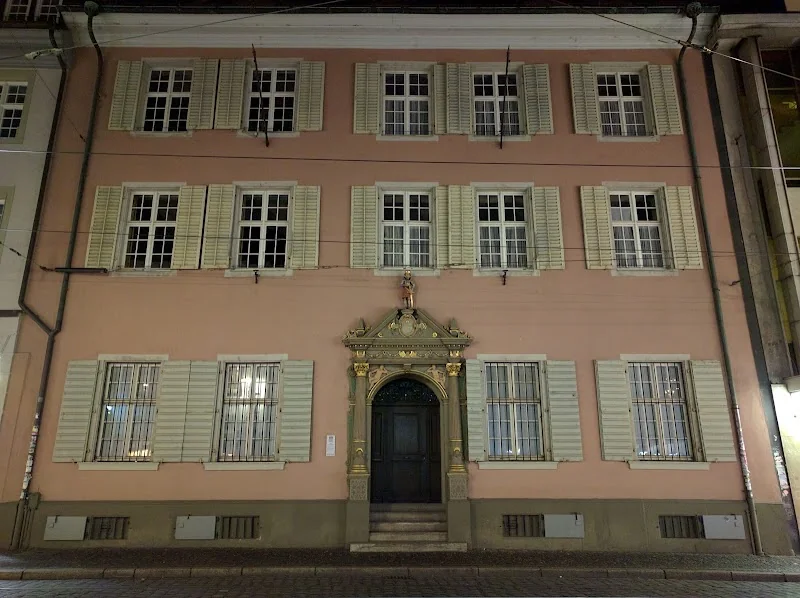
The history of the City Archive Freiburg officially begins in the High Middle Ages. Presumably, the city documents were initially kept as a traveling archive in a chest in the home of the mayor or burgomaster. After Freiburg came under Habsburg rule in 1368, an organized office system developed with several storage locations, including the court archive in the court building at Münsterplatz, the archive of the municipal financial administration in the market hall, and the council archive in the town hall. Since 1414, the accommodation of the council archive in the Hahnentürme of Freiburg Minster has been documented. Among other things, imperial and ducal letters of grace, constitutional documents, alliance letters, peace treaties, handover contracts with the House of Austria, and letters of fealty from the nobility were stored there. The oldest of these volumes is the so-called Red Book from the late 13th century. A kind of modern beginning of archival activity is considered to be the spatial separation of the office and archive, which allowed for independent management of the historical records. In the 18th century, a comprehensive reorganization of the collections took place, and with Ferdinand Weiß, the city received its first actual archivist in 1798. In the 19th century, further professionalization steps followed, including by Peter Paul Albert, who entered as the first professionally trained archivist in 1894. During World War II, the documents and files were successfully outsourced, so the archive remained comparatively well preserved despite the destruction in the city. After the war, the archive administration initially moved to the Colombischlössle and relocated in 1957 to the House of the Duke in Salzstraße. Due to space constraints, a new building was eventually planned at the New Fair; the new premises were occupied at the end of 2023. This last move marks not only a change of location but also the transition to a modern, functionally oriented archival architecture. ([freiburg.de](https://www.freiburg.de/pb/2539961.html))
Employment, Internships, and Job Offers at the City Archive Freiburg
Search inquiries for jobs, job offers, or staff at the City Archive Freiburg also have a clear connection to the official city structure. Those seeking practical insights can do an internship at the City Archive, for example, as part of career orientation at high schools as a BOGY internship or as a decision-making aid for a history degree. Such internships usually last one week; longer periods are possible by arrangement outside the program. Because capacities are limited, the archive asks for early contact, and the mentioned lead times are four to six months. In addition to internships, there is also the possibility of voluntary work. The archive lists various areas of responsibility for this: retro-cataloging of finding aids, transcription of source texts, maintenance of the newspaper clipping collection, creation of official book registers, evaluation of genealogical and prosopographical sources, and indexing of the image collection with photographs and postcards. Thus, the archive addresses historically interested individuals who enjoy working with original sources and want to contribute their skills to a public memory institution. Those searching for job offers are also referred to the city's career portal. The city of Freiburg consolidates its current job postings on wirliebenfreiburg.de, and the link to the job offers is also provided on the archive page. This is important for users because the search for jobs in the vicinity of the City Archive does not lead to a dead end but can be continued through the official city channels. Thus, the City Archive Freiburg covers not only research and usage but also education, youth work, and voluntary engagement. ([freiburg.de](https://www.freiburg.de/pb/2540014.html))
Sources:
- City of Freiburg - City Archive: Tasks
- City of Freiburg - City Archive: Collections
- City of Freiburg - City Archive: Team
- City of Freiburg - City Archive: Archive Visit
- City of Freiburg - City Archive: Archive History
- City of Freiburg - City Archive: Employment
- City of Freiburg - Career Portal: Job Offers
Mehr anzeigenWeniger anzeigen
City Archive Freiburg | Contact & Opening Hours
The City Archive Freiburg is much more than a storage place for old documents. It serves as the central memory of the city and as a point of contact for anyone interested in Freiburg's past, present, and legal heritage. Here, official documents from the city administration are preserved alongside private estates, club and company archives, photos, maps, plans, newspapers, and other testimonies of the city's history. The collections date back to the 12th century and demonstrate the broad historical spectrum of the institution. For research, family history, administration, and also for securing legal claims, the archive has a clear public function. At the same time, it is a modern service location: with a reading room, consulting, reproduction options, digital accessibility, and a specialized library, the City Archive combines historical depth with practical usability. Those looking for the City Archive Freiburg can find it today at Neuer Messplatz 5a in Freiburg im Breisgau, easily accessible by public transport and with clearly regulated visiting hours. ([freiburg.de](https://www.freiburg.de/pb/2539883.html))
Opening Hours, Contact, and Directions to the City Archive Freiburg
For visitors, practical information is particularly important, as the City Archive is not a classic freely accessible exhibition, but a specialized institution with regulated reading room operations. Officially, the reading room is open on Mondays, Tuesdays, and Thursdays from 10 AM to 4 PM, Wednesdays from 10 AM to 6 PM; the archive is closed on Fridays. On all opening days, there are fixed retrieval times for archival materials at 10:30 AM, 1:30 PM, and 3 PM, with an additional time on Wednesdays at 4:30 PM. This is central for planning an archive visit, as requested documents cannot simply be taken from the shelf but must be provided according to the classification system and preservation needs. The archive also explicitly recommends scheduling an appointment in advance by email or phone. For general usage questions, please contact the central archive address or directly the reading room. The official address is Neuer Messplatz 5a, 79108 Freiburg. The archive can be reached by phone at +49 761 2012701, and there is also a general email address stadtarchiv@freiburg.de. Directions are well described for both public transport and by car: Take line 4 and get off at the Technische Fakultät stop, or line 22 at the FWTM Neuer Messplatz stop. Drivers should follow the A 5, exit Freiburg-Mitte, and head towards the city center; paid parking is available at the Messe parking lot. This combination of clear opening hours, clean travel descriptions, and appointment recommendations makes it clear that while the City Archive is publicly accessible, it is also focused on orderly usage and preservation of its collections. ([freiburg.de](https://www.freiburg.de/pb/%2CLde/235796.html))
Collections, Specialized Library, and Research at the City Archive Freiburg
Those searching for the collections of the City Archive Freiburg will find one of the most important answers directly on the official archive page: The institution takes over documents from the city administration that must be permanently preserved for legal reasons or have historical significance. Additionally, documents of non-city provenance, such as estates, collections, and club and company archives, complement the image of the city from additional perspectives. The depth of content in the records is particularly valuable. The archive holds certificates, files, official books, photos, maps, plans, postcards, newspapers, as well as film and audio documents. The thematic breadth is also large: from municipal administrative records to city historical collections to sources relevant for genealogical, social historical, and topographical research. The official description states that the library contains around 75,000 volumes on city and regional history, while another source mentions a scientific specialized library with around 80,000 media units. For use, it is important that large parts of the collections are already electronically recorded and can be researched via databases or online catalogs. At the same time, older finding aids still exist in paper form, which can be helpful for historical specialized research. Particularly modern is the digital long-term archiving: The City Archive uses the Municipal Digital Long-Term Archive provided by the State Archive of Baden-Württemberg for electronic documents. This makes it clear that the archive not only protects historical paper sources but also must secure digital records in the long term. Thus, a place is created where classic archival materials, digital data, specialized literature, and systematic accessibility are closely interconnected. ([freiburg.de](https://www.freiburg.de/pb/2539883.html))
Director, Team, and Contacts at the City Archive Freiburg
Frequently searched terms such as director, management, or staff lead directly to a clearly structured team at the City Archive Freiburg. At the top is Dr. Florian Hoffmann as the City Archive Director. He is supported by Dr. Johanne Küenzlen as the Deputy City Archive Director. Dr. Mona Djabbarpour is responsible for historical mediation and research, while Rita Schneider manages the secretariat. The library and photo collection are overseen by Brigitta Arden, while Margarethe Baumgartner handles official records, agency consulting, and digital archiving. For older official documents prior to 1870, estates, and other non-official collections, Dominique Frings is the contact person. Christine Gutzmer is responsible for restoration, Anita Hafner for city historical collections, Boris Kramb for the magazine area, and Felix Thalheimer and Roman Zimmermann for the usage and reading room area. This clear division of labor is very sensible for an archive, as different types of sources, user inquiries, and conservation requirements each require their own expertise. Therefore, those searching for the City Archive Freiburg and its staff receive not only a name but an entire network of specialized responsibilities. This is particularly helpful for visitors with specific questions, such as regarding family research, older official documents, photo or map material, or usage in the reading room. At the same time, the team structure makes it clear that the archive does not function as an anonymous administrative office but as a professionally staffed cultural and knowledge institution that connects research, service, and preservation. This clear assignment is a real advantage, especially for inquiries to the management, for scientific projects, and for follow-up questions regarding collections or usage. ([freiburg.de](https://www.freiburg.de/pb/2540040.html))
Reading Room, Archive Visit, and On-Site Usage
A visit to the City Archive Freiburg follows clear rules that connect the protection of originals with good usability. The archive is open to all interested parties, and the staff reserve a place in the reading room as well as the requested documents. Preparation is particularly important: Even before the first visit, one must register as an archive user, and it is advisable to review the collections in advance so that work on-site proceeds efficiently. General inquiries can be sent by email to the main address; questions about the process in the reading room or ordering archival materials can also be directed to the specific reading room address. In the reading room, conservation rules apply that are very helpful in practice: volumes and files should be supported with the available aids, the original order of the archival materials must not be changed, and documents should be handled in such a way that they do not serve as writing surfaces or supports. For unprotected photographs, disposable gloves or cotton gloves are available upon request. If there are questions about handling the materials or if irregularities are noticed, one should contact the reading room supervision. Photographing is generally possible, provided there are no legal or conservation restrictions and arrangements are made with the archive staff. If self-made recordings are insufficient, the specialized staff can create reproductions or high-resolution print templates. The City Archive is thus not just a place for reading but a working space for research, documentation, and precise source work. For all those who want to delve deeper into city history, family history, or administrative records, the reading room offers the right mix of support, protection rules, and professional assistance. ([freiburg.de](https://www.freiburg.de/pb/2540143.html))
History of the City Archive Freiburg from the Middle Ages to the Fair
The history of the City Archive Freiburg officially begins in the High Middle Ages. Presumably, the city documents were initially kept as a traveling archive in a chest in the home of the mayor or burgomaster. After Freiburg came under Habsburg rule in 1368, an organized office system developed with several storage locations, including the court archive in the court building at Münsterplatz, the archive of the municipal financial administration in the market hall, and the council archive in the town hall. Since 1414, the accommodation of the council archive in the Hahnentürme of Freiburg Minster has been documented. Among other things, imperial and ducal letters of grace, constitutional documents, alliance letters, peace treaties, handover contracts with the House of Austria, and letters of fealty from the nobility were stored there. The oldest of these volumes is the so-called Red Book from the late 13th century. A kind of modern beginning of archival activity is considered to be the spatial separation of the office and archive, which allowed for independent management of the historical records. In the 18th century, a comprehensive reorganization of the collections took place, and with Ferdinand Weiß, the city received its first actual archivist in 1798. In the 19th century, further professionalization steps followed, including by Peter Paul Albert, who entered as the first professionally trained archivist in 1894. During World War II, the documents and files were successfully outsourced, so the archive remained comparatively well preserved despite the destruction in the city. After the war, the archive administration initially moved to the Colombischlössle and relocated in 1957 to the House of the Duke in Salzstraße. Due to space constraints, a new building was eventually planned at the New Fair; the new premises were occupied at the end of 2023. This last move marks not only a change of location but also the transition to a modern, functionally oriented archival architecture. ([freiburg.de](https://www.freiburg.de/pb/2539961.html))
Employment, Internships, and Job Offers at the City Archive Freiburg
Search inquiries for jobs, job offers, or staff at the City Archive Freiburg also have a clear connection to the official city structure. Those seeking practical insights can do an internship at the City Archive, for example, as part of career orientation at high schools as a BOGY internship or as a decision-making aid for a history degree. Such internships usually last one week; longer periods are possible by arrangement outside the program. Because capacities are limited, the archive asks for early contact, and the mentioned lead times are four to six months. In addition to internships, there is also the possibility of voluntary work. The archive lists various areas of responsibility for this: retro-cataloging of finding aids, transcription of source texts, maintenance of the newspaper clipping collection, creation of official book registers, evaluation of genealogical and prosopographical sources, and indexing of the image collection with photographs and postcards. Thus, the archive addresses historically interested individuals who enjoy working with original sources and want to contribute their skills to a public memory institution. Those searching for job offers are also referred to the city's career portal. The city of Freiburg consolidates its current job postings on wirliebenfreiburg.de, and the link to the job offers is also provided on the archive page. This is important for users because the search for jobs in the vicinity of the City Archive does not lead to a dead end but can be continued through the official city channels. Thus, the City Archive Freiburg covers not only research and usage but also education, youth work, and voluntary engagement. ([freiburg.de](https://www.freiburg.de/pb/2540014.html))
Sources:
- City of Freiburg - City Archive: Tasks
- City of Freiburg - City Archive: Collections
- City of Freiburg - City Archive: Team
- City of Freiburg - City Archive: Archive Visit
- City of Freiburg - City Archive: Archive History
- City of Freiburg - City Archive: Employment
- City of Freiburg - Career Portal: Job Offers
City Archive Freiburg | Contact & Opening Hours
The City Archive Freiburg is much more than a storage place for old documents. It serves as the central memory of the city and as a point of contact for anyone interested in Freiburg's past, present, and legal heritage. Here, official documents from the city administration are preserved alongside private estates, club and company archives, photos, maps, plans, newspapers, and other testimonies of the city's history. The collections date back to the 12th century and demonstrate the broad historical spectrum of the institution. For research, family history, administration, and also for securing legal claims, the archive has a clear public function. At the same time, it is a modern service location: with a reading room, consulting, reproduction options, digital accessibility, and a specialized library, the City Archive combines historical depth with practical usability. Those looking for the City Archive Freiburg can find it today at Neuer Messplatz 5a in Freiburg im Breisgau, easily accessible by public transport and with clearly regulated visiting hours. ([freiburg.de](https://www.freiburg.de/pb/2539883.html))
Opening Hours, Contact, and Directions to the City Archive Freiburg
For visitors, practical information is particularly important, as the City Archive is not a classic freely accessible exhibition, but a specialized institution with regulated reading room operations. Officially, the reading room is open on Mondays, Tuesdays, and Thursdays from 10 AM to 4 PM, Wednesdays from 10 AM to 6 PM; the archive is closed on Fridays. On all opening days, there are fixed retrieval times for archival materials at 10:30 AM, 1:30 PM, and 3 PM, with an additional time on Wednesdays at 4:30 PM. This is central for planning an archive visit, as requested documents cannot simply be taken from the shelf but must be provided according to the classification system and preservation needs. The archive also explicitly recommends scheduling an appointment in advance by email or phone. For general usage questions, please contact the central archive address or directly the reading room. The official address is Neuer Messplatz 5a, 79108 Freiburg. The archive can be reached by phone at +49 761 2012701, and there is also a general email address stadtarchiv@freiburg.de. Directions are well described for both public transport and by car: Take line 4 and get off at the Technische Fakultät stop, or line 22 at the FWTM Neuer Messplatz stop. Drivers should follow the A 5, exit Freiburg-Mitte, and head towards the city center; paid parking is available at the Messe parking lot. This combination of clear opening hours, clean travel descriptions, and appointment recommendations makes it clear that while the City Archive is publicly accessible, it is also focused on orderly usage and preservation of its collections. ([freiburg.de](https://www.freiburg.de/pb/%2CLde/235796.html))
Collections, Specialized Library, and Research at the City Archive Freiburg
Those searching for the collections of the City Archive Freiburg will find one of the most important answers directly on the official archive page: The institution takes over documents from the city administration that must be permanently preserved for legal reasons or have historical significance. Additionally, documents of non-city provenance, such as estates, collections, and club and company archives, complement the image of the city from additional perspectives. The depth of content in the records is particularly valuable. The archive holds certificates, files, official books, photos, maps, plans, postcards, newspapers, as well as film and audio documents. The thematic breadth is also large: from municipal administrative records to city historical collections to sources relevant for genealogical, social historical, and topographical research. The official description states that the library contains around 75,000 volumes on city and regional history, while another source mentions a scientific specialized library with around 80,000 media units. For use, it is important that large parts of the collections are already electronically recorded and can be researched via databases or online catalogs. At the same time, older finding aids still exist in paper form, which can be helpful for historical specialized research. Particularly modern is the digital long-term archiving: The City Archive uses the Municipal Digital Long-Term Archive provided by the State Archive of Baden-Württemberg for electronic documents. This makes it clear that the archive not only protects historical paper sources but also must secure digital records in the long term. Thus, a place is created where classic archival materials, digital data, specialized literature, and systematic accessibility are closely interconnected. ([freiburg.de](https://www.freiburg.de/pb/2539883.html))
Director, Team, and Contacts at the City Archive Freiburg
Frequently searched terms such as director, management, or staff lead directly to a clearly structured team at the City Archive Freiburg. At the top is Dr. Florian Hoffmann as the City Archive Director. He is supported by Dr. Johanne Küenzlen as the Deputy City Archive Director. Dr. Mona Djabbarpour is responsible for historical mediation and research, while Rita Schneider manages the secretariat. The library and photo collection are overseen by Brigitta Arden, while Margarethe Baumgartner handles official records, agency consulting, and digital archiving. For older official documents prior to 1870, estates, and other non-official collections, Dominique Frings is the contact person. Christine Gutzmer is responsible for restoration, Anita Hafner for city historical collections, Boris Kramb for the magazine area, and Felix Thalheimer and Roman Zimmermann for the usage and reading room area. This clear division of labor is very sensible for an archive, as different types of sources, user inquiries, and conservation requirements each require their own expertise. Therefore, those searching for the City Archive Freiburg and its staff receive not only a name but an entire network of specialized responsibilities. This is particularly helpful for visitors with specific questions, such as regarding family research, older official documents, photo or map material, or usage in the reading room. At the same time, the team structure makes it clear that the archive does not function as an anonymous administrative office but as a professionally staffed cultural and knowledge institution that connects research, service, and preservation. This clear assignment is a real advantage, especially for inquiries to the management, for scientific projects, and for follow-up questions regarding collections or usage. ([freiburg.de](https://www.freiburg.de/pb/2540040.html))
Reading Room, Archive Visit, and On-Site Usage
A visit to the City Archive Freiburg follows clear rules that connect the protection of originals with good usability. The archive is open to all interested parties, and the staff reserve a place in the reading room as well as the requested documents. Preparation is particularly important: Even before the first visit, one must register as an archive user, and it is advisable to review the collections in advance so that work on-site proceeds efficiently. General inquiries can be sent by email to the main address; questions about the process in the reading room or ordering archival materials can also be directed to the specific reading room address. In the reading room, conservation rules apply that are very helpful in practice: volumes and files should be supported with the available aids, the original order of the archival materials must not be changed, and documents should be handled in such a way that they do not serve as writing surfaces or supports. For unprotected photographs, disposable gloves or cotton gloves are available upon request. If there are questions about handling the materials or if irregularities are noticed, one should contact the reading room supervision. Photographing is generally possible, provided there are no legal or conservation restrictions and arrangements are made with the archive staff. If self-made recordings are insufficient, the specialized staff can create reproductions or high-resolution print templates. The City Archive is thus not just a place for reading but a working space for research, documentation, and precise source work. For all those who want to delve deeper into city history, family history, or administrative records, the reading room offers the right mix of support, protection rules, and professional assistance. ([freiburg.de](https://www.freiburg.de/pb/2540143.html))
History of the City Archive Freiburg from the Middle Ages to the Fair
The history of the City Archive Freiburg officially begins in the High Middle Ages. Presumably, the city documents were initially kept as a traveling archive in a chest in the home of the mayor or burgomaster. After Freiburg came under Habsburg rule in 1368, an organized office system developed with several storage locations, including the court archive in the court building at Münsterplatz, the archive of the municipal financial administration in the market hall, and the council archive in the town hall. Since 1414, the accommodation of the council archive in the Hahnentürme of Freiburg Minster has been documented. Among other things, imperial and ducal letters of grace, constitutional documents, alliance letters, peace treaties, handover contracts with the House of Austria, and letters of fealty from the nobility were stored there. The oldest of these volumes is the so-called Red Book from the late 13th century. A kind of modern beginning of archival activity is considered to be the spatial separation of the office and archive, which allowed for independent management of the historical records. In the 18th century, a comprehensive reorganization of the collections took place, and with Ferdinand Weiß, the city received its first actual archivist in 1798. In the 19th century, further professionalization steps followed, including by Peter Paul Albert, who entered as the first professionally trained archivist in 1894. During World War II, the documents and files were successfully outsourced, so the archive remained comparatively well preserved despite the destruction in the city. After the war, the archive administration initially moved to the Colombischlössle and relocated in 1957 to the House of the Duke in Salzstraße. Due to space constraints, a new building was eventually planned at the New Fair; the new premises were occupied at the end of 2023. This last move marks not only a change of location but also the transition to a modern, functionally oriented archival architecture. ([freiburg.de](https://www.freiburg.de/pb/2539961.html))
Employment, Internships, and Job Offers at the City Archive Freiburg
Search inquiries for jobs, job offers, or staff at the City Archive Freiburg also have a clear connection to the official city structure. Those seeking practical insights can do an internship at the City Archive, for example, as part of career orientation at high schools as a BOGY internship or as a decision-making aid for a history degree. Such internships usually last one week; longer periods are possible by arrangement outside the program. Because capacities are limited, the archive asks for early contact, and the mentioned lead times are four to six months. In addition to internships, there is also the possibility of voluntary work. The archive lists various areas of responsibility for this: retro-cataloging of finding aids, transcription of source texts, maintenance of the newspaper clipping collection, creation of official book registers, evaluation of genealogical and prosopographical sources, and indexing of the image collection with photographs and postcards. Thus, the archive addresses historically interested individuals who enjoy working with original sources and want to contribute their skills to a public memory institution. Those searching for job offers are also referred to the city's career portal. The city of Freiburg consolidates its current job postings on wirliebenfreiburg.de, and the link to the job offers is also provided on the archive page. This is important for users because the search for jobs in the vicinity of the City Archive does not lead to a dead end but can be continued through the official city channels. Thus, the City Archive Freiburg covers not only research and usage but also education, youth work, and voluntary engagement. ([freiburg.de](https://www.freiburg.de/pb/2540014.html))
Sources:
- City of Freiburg - City Archive: Tasks
- City of Freiburg - City Archive: Collections
- City of Freiburg - City Archive: Team
- City of Freiburg - City Archive: Archive Visit
- City of Freiburg - City Archive: Archive History
- City of Freiburg - City Archive: Employment
- City of Freiburg - Career Portal: Job Offers
Frequently Asked Questions
Reviews
No reviews found