
Freiburg im Breisgau
Bertoldstraße 30, 79098 Freiburg im Breisgau, Deutschland
Square of the Old Synagogue | today & events
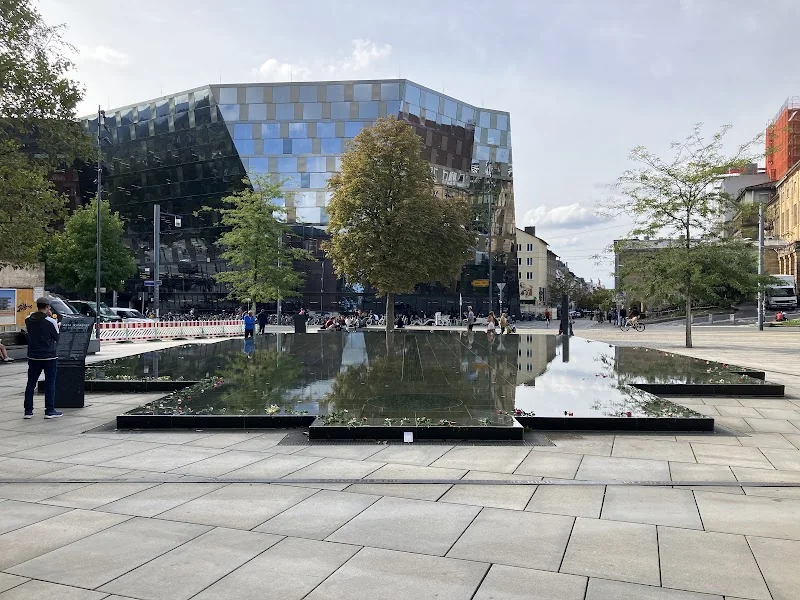
The Square of the Old Synagogue is one of the most significant places in Freiburg: centrally located in the city center, freely accessible, and at the same time a memorial site with strong historical significance. Standing here, one looks at a square that was redesigned in 2016/2017 and now functions with a water mirror, benches, public art, and a lot of urban life. Opposite are the city theater and university library; thus, the square is not only a monument but also a daily meeting point. This connection of memory, openness, and modern urban design makes it interesting for visitors as well as for the locals. ([visit.freiburg.de](https://visit.freiburg.de/en/platz-der-alten-synagoge-old-synagogue-plaza?utm_source=openai))
Today and events at the Square of the Old Synagogue
Today, the Square of the Old Synagogue serves multiple roles: it acts as a meeting point, event venue, and also as a place for gatherings in the city center. The municipal pages emphasize that the square is regularly used for events and is important in public life in Freiburg due to its central location. At the same time, it is freely accessible at all times, making it an open urban space in everyday life. Especially in the warm months, the water features, seating options, and surrounding city architecture shape the image. The square then appears less like a classic tourist attraction and more like a vibrant piece of the city, where paths, pauses, encounters, and memories naturally blend. ([visit.freiburg.de](https://visit.freiburg.de/en/platz-der-alten-synagoge-old-synagogue-plaza?utm_source=openai))
For the search for “event today,” it is important: there is no rigid permanent program at the square, but rather changing dates. Anyone wanting to check if there is a market, a demonstration, a guided tour, or a cultural event on a specific day should consult the official event calendar. This is typical for a public square that flexibly responds to city life, remembrance, and citizen participation. In recent months, the square has repeatedly been used as a venue for demonstrations, sister city meetings, and other public formats, further emphasizing its function as an urban center. So, anyone looking for the square today will find no static memorial space, but a place that visibly shapes Freiburg's present. ([veranstaltungen.freiburg.de](https://veranstaltungen.freiburg.de/whl4-test/events/detail/platz-der-alten-synagoge-1/poi/platz-der-alten-synagoge-1?utm_source=openai))
Then and now: The history of the place
The historical core of the site dates back to the former synagogue of the Jewish community in Freiburg, which was built in 1869/70. On the night of November 9 to 10, 1938, it was set on fire; thus, the square is inseparably linked to the persecution and extermination of Jewish life during the Nazi era. Precisely for this reason, today’s design is not only aesthetically significant but also pedagogically and morally important: the site commemorates the history of the city and makes it visible in public space. The information pillars in the square explain the history and request appropriate behavior, as this is a place of remembrance and not just a normal city square. Therefore, the term “then” is not just a search term here but an invitation to consciously trace the transformation of the place. ([freiburg.de](https://www.freiburg.de/pb/%2CLde_DE/1154785.html?utm_source=openai))
The memory does not only focus on the past but also connects the square with the present of the Jewish community in Freiburg. Opposite the square is the current synagogue; its foundation stone was laid in 1985, and the ceremonial inauguration of the hexagonal building took place in 1987. Valuable carvings from the old synagogue that had survived the flames were integrated into the new house of worship. This creates a direct architectural and symbolic connection between the old and the new place of Jewish life. Therefore, anyone visiting the square recognizes not only an urban area but also an ensemble of history, loss, reconstruction, and continuity. For the keyword search “Square of the Old Synagogue Freiburg then,” this connection is crucial: the square tells of the past but remains part of the vibrant present. ([visit.freiburg.de](https://visit.freiburg.de/synagoge?utm_source=openai))
Fountain, water mirror, and public art
The most striking element is the synagogue fountain or water mirror. It traces the floor plan of the former synagogue and makes the lost building sensually experienceable through water, light, and movement. This form of remembrance is quiet but very present: those walking across the square recognize the outlines of the historic building without it becoming a heavy, closed monument. This is precisely where the strength of the concept lies. The square remains open and usable, yet its surface always refers to what once stood here. The city explicitly describes the water mirror as a place of remembrance; at the same time, the tourism page emphasizes that the fountain is a monument and should not be used as a bathing area. Thus, the search term “fountain” becomes not just a design detail but a central part of the place's identity. ([freiburg.de](https://www.freiburg.de/pb/%2CLde_DE/1154785.html?utm_source=openai))
The image is complemented by the bronze sculpture Reclining Figure by Henry Moore, which has shaped the urban space since 1961. It is one of the most important works of public art in Freiburg and adds another accent between architecture, water, and urban greenery. Especially in the interplay of the artwork, synagogue fountain, and surrounding buildings, an unusually strong place emerges: not museum-like isolated but right in the midst of everyday city life. For many visitors, this mix is a reason to stay longer, take photos, or choose the square as a starting point for a walk through the city center. Therefore, the Square of the Old Synagogue is not just a space to cross but a place where memory and aesthetic perception mutually reinforce each other. ([visit.freiburg.de](https://visit.freiburg.de/reclining-figure?utm_source=openai))
Trees, shade, and quality of stay in the city center
The question of trees is also important for this square. In summer, many wish for more shade, but the city explains that additional trees with roots in the ground are not possible there due to the complex underground structure of special concrete, drainage systems, and numerous shafts and pipes. This is a good example of how challenging the design of such a central place can be. The square must simultaneously fulfill remembrance, traffic, events, and quality of stay. Therefore, the greening here is different from that of a normal city square. So, anyone searching for “trees” will not find a simple tree-lined avenue here but a consciously limited, technically and historically sensitive solution. ([freiburg.de](https://www.freiburg.de/pb/%2CLde/2590992.html?utm_source=openai))
Since May 2026, the city has been testing an alternative with three large tree containers, each equipped with integrated water storage and irrigation systems. Additionally, there are round benches that facilitate sitting in the shade. This solution shows that Freiburg wants to further develop the square as a lively place to stay without ignoring its historical and technical uniqueness. The measures are part of Freiburg's green oases and are initially intended to run for six months. For visitors, this means: the square remains open, spacious, and urban but gains more comfort and less heat stress in the warm months. Especially for longer stays, meetings with friends, or a short break between city center paths, this is a clear advantage. ([freiburg.de](https://www.freiburg.de/pb/%2CLde/2590992.html?utm_source=openai))
Access and parking around the Square of the Old Synagogue
Practically, the square is located at Bertoldstraße 30 in the heart of the city center. It is opposite the city theater and university library and is therefore very easy to reach on foot if you are already in the center. Anyone coming from a hotel, the train station, or one of the surrounding city center neighborhoods will find a clear point of orientation here. For many routes in Freiburg, this is even the most pleasant solution, as the square is located in an area that is consciously urban and pedestrian-friendly. This central, easily readable location is one reason why the place is perceived so strongly not only by locals but also by guests. Therefore, anyone searching for “access” will end up at a real city center square and not at an isolated event building. ([innenstadt.freiburg.de](https://innenstadt.freiburg.de/spielen-staunen-und-entdecken?utm_source=openai))
Anyone arriving by car should know the city's parking logic: there are 16 parking garages in Freiburg's city center, divided into the areas of Old Town, University, and Train Station. A parking guidance system shows available spaces and leads directly to the appropriate parking garage. This is sensible for a place like the Square of the Old Synagogue since the Old Town is largely car-free, and the square itself is not a classic car parking location. During large gatherings or demonstrations, the entry and exit of parking garages may be temporarily restricted; however, they are generally still accessible on foot. Therefore, anyone planning to visit the square should understand parking as part of a city center visit and not as direct access to the square's center. For the keyword “parking,” the most important practical answer is therefore: plan ahead, choose a city center parking garage, and walk the rest of the way. ([innenstadt.freiburg.de](https://innenstadt.freiburg.de/anfahrt-parken/mit-dem-auto?utm_source=openai))
Photos, perspectives, and visiting tips for Freiburg
The square is particularly interesting for photos because several levels come together: the water of the memorial fountain, the clear geometry of the square, the bronze sculpture by Henry Moore, the theater and university facades, and the recently added tree containers. Depending on the time of day, calm, bright, or strongly contrasting motifs arise. In terms of SEO, this fits well with the search term “photos,” but content-wise, it is especially because the square not only documents but also tells a visible story. It is a place that can be understood with just a few glances and yet remains long in memory. Therefore, anyone photographing the square captures not only architecture but also the special atmosphere of a place where memory and present lie directly side by side. ([visit.freiburg.de](https://visit.freiburg.de/reclining-figure?utm_source=openai))
A good visit works best with an attitude that allows for both: attention to history and openness to today’s city life. Upon entering the square, one should respect the fountain as a monument, read the information pillars, and experience the space for what it is - a public center where remembering, lingering, and encountering coexist. This balance makes the Square of the Old Synagogue one of the most important places in Freiburg: not loud, not staged, but clearly recognizable, central, and of particular depth. For visitors searching for “today,” “then,” “fountain,” “trees,” or “parking,” this square bundles many answers in a small space and connects them with a strong, credible story. ([freiburg.de](https://www.freiburg.de/pb/%2CLde_DE/1154785.html?utm_source=openai))
Those only looking for a beautiful square will find more here: history, water, shade, art, and the opportunity to see Freiburg's city center from a different perspective. Precisely because the place is open, easily accessible, and heavily used in everyday life, it does not feel like a closed monument but like a vibrant part of the city. This makes it suitable for spontaneous visits as well as planned city tours, encounters, or a quiet break between appointments. The Square of the Old Synagogue is thus not just a search term but a lively reference point in Freiburg. ([visit.freiburg.de](https://visit.freiburg.de/en/platz-der-alten-synagoge-old-synagogue-plaza?utm_source=openai))
Sources:
Mehr anzeigenWeniger anzeigen
Square of the Old Synagogue | today & events
The Square of the Old Synagogue is one of the most significant places in Freiburg: centrally located in the city center, freely accessible, and at the same time a memorial site with strong historical significance. Standing here, one looks at a square that was redesigned in 2016/2017 and now functions with a water mirror, benches, public art, and a lot of urban life. Opposite are the city theater and university library; thus, the square is not only a monument but also a daily meeting point. This connection of memory, openness, and modern urban design makes it interesting for visitors as well as for the locals. ([visit.freiburg.de](https://visit.freiburg.de/en/platz-der-alten-synagoge-old-synagogue-plaza?utm_source=openai))
Today and events at the Square of the Old Synagogue
Today, the Square of the Old Synagogue serves multiple roles: it acts as a meeting point, event venue, and also as a place for gatherings in the city center. The municipal pages emphasize that the square is regularly used for events and is important in public life in Freiburg due to its central location. At the same time, it is freely accessible at all times, making it an open urban space in everyday life. Especially in the warm months, the water features, seating options, and surrounding city architecture shape the image. The square then appears less like a classic tourist attraction and more like a vibrant piece of the city, where paths, pauses, encounters, and memories naturally blend. ([visit.freiburg.de](https://visit.freiburg.de/en/platz-der-alten-synagoge-old-synagogue-plaza?utm_source=openai))
For the search for “event today,” it is important: there is no rigid permanent program at the square, but rather changing dates. Anyone wanting to check if there is a market, a demonstration, a guided tour, or a cultural event on a specific day should consult the official event calendar. This is typical for a public square that flexibly responds to city life, remembrance, and citizen participation. In recent months, the square has repeatedly been used as a venue for demonstrations, sister city meetings, and other public formats, further emphasizing its function as an urban center. So, anyone looking for the square today will find no static memorial space, but a place that visibly shapes Freiburg's present. ([veranstaltungen.freiburg.de](https://veranstaltungen.freiburg.de/whl4-test/events/detail/platz-der-alten-synagoge-1/poi/platz-der-alten-synagoge-1?utm_source=openai))
Then and now: The history of the place
The historical core of the site dates back to the former synagogue of the Jewish community in Freiburg, which was built in 1869/70. On the night of November 9 to 10, 1938, it was set on fire; thus, the square is inseparably linked to the persecution and extermination of Jewish life during the Nazi era. Precisely for this reason, today’s design is not only aesthetically significant but also pedagogically and morally important: the site commemorates the history of the city and makes it visible in public space. The information pillars in the square explain the history and request appropriate behavior, as this is a place of remembrance and not just a normal city square. Therefore, the term “then” is not just a search term here but an invitation to consciously trace the transformation of the place. ([freiburg.de](https://www.freiburg.de/pb/%2CLde_DE/1154785.html?utm_source=openai))
The memory does not only focus on the past but also connects the square with the present of the Jewish community in Freiburg. Opposite the square is the current synagogue; its foundation stone was laid in 1985, and the ceremonial inauguration of the hexagonal building took place in 1987. Valuable carvings from the old synagogue that had survived the flames were integrated into the new house of worship. This creates a direct architectural and symbolic connection between the old and the new place of Jewish life. Therefore, anyone visiting the square recognizes not only an urban area but also an ensemble of history, loss, reconstruction, and continuity. For the keyword search “Square of the Old Synagogue Freiburg then,” this connection is crucial: the square tells of the past but remains part of the vibrant present. ([visit.freiburg.de](https://visit.freiburg.de/synagoge?utm_source=openai))
Fountain, water mirror, and public art
The most striking element is the synagogue fountain or water mirror. It traces the floor plan of the former synagogue and makes the lost building sensually experienceable through water, light, and movement. This form of remembrance is quiet but very present: those walking across the square recognize the outlines of the historic building without it becoming a heavy, closed monument. This is precisely where the strength of the concept lies. The square remains open and usable, yet its surface always refers to what once stood here. The city explicitly describes the water mirror as a place of remembrance; at the same time, the tourism page emphasizes that the fountain is a monument and should not be used as a bathing area. Thus, the search term “fountain” becomes not just a design detail but a central part of the place's identity. ([freiburg.de](https://www.freiburg.de/pb/%2CLde_DE/1154785.html?utm_source=openai))
The image is complemented by the bronze sculpture Reclining Figure by Henry Moore, which has shaped the urban space since 1961. It is one of the most important works of public art in Freiburg and adds another accent between architecture, water, and urban greenery. Especially in the interplay of the artwork, synagogue fountain, and surrounding buildings, an unusually strong place emerges: not museum-like isolated but right in the midst of everyday city life. For many visitors, this mix is a reason to stay longer, take photos, or choose the square as a starting point for a walk through the city center. Therefore, the Square of the Old Synagogue is not just a space to cross but a place where memory and aesthetic perception mutually reinforce each other. ([visit.freiburg.de](https://visit.freiburg.de/reclining-figure?utm_source=openai))
Trees, shade, and quality of stay in the city center
The question of trees is also important for this square. In summer, many wish for more shade, but the city explains that additional trees with roots in the ground are not possible there due to the complex underground structure of special concrete, drainage systems, and numerous shafts and pipes. This is a good example of how challenging the design of such a central place can be. The square must simultaneously fulfill remembrance, traffic, events, and quality of stay. Therefore, the greening here is different from that of a normal city square. So, anyone searching for “trees” will not find a simple tree-lined avenue here but a consciously limited, technically and historically sensitive solution. ([freiburg.de](https://www.freiburg.de/pb/%2CLde/2590992.html?utm_source=openai))
Since May 2026, the city has been testing an alternative with three large tree containers, each equipped with integrated water storage and irrigation systems. Additionally, there are round benches that facilitate sitting in the shade. This solution shows that Freiburg wants to further develop the square as a lively place to stay without ignoring its historical and technical uniqueness. The measures are part of Freiburg's green oases and are initially intended to run for six months. For visitors, this means: the square remains open, spacious, and urban but gains more comfort and less heat stress in the warm months. Especially for longer stays, meetings with friends, or a short break between city center paths, this is a clear advantage. ([freiburg.de](https://www.freiburg.de/pb/%2CLde/2590992.html?utm_source=openai))
Access and parking around the Square of the Old Synagogue
Practically, the square is located at Bertoldstraße 30 in the heart of the city center. It is opposite the city theater and university library and is therefore very easy to reach on foot if you are already in the center. Anyone coming from a hotel, the train station, or one of the surrounding city center neighborhoods will find a clear point of orientation here. For many routes in Freiburg, this is even the most pleasant solution, as the square is located in an area that is consciously urban and pedestrian-friendly. This central, easily readable location is one reason why the place is perceived so strongly not only by locals but also by guests. Therefore, anyone searching for “access” will end up at a real city center square and not at an isolated event building. ([innenstadt.freiburg.de](https://innenstadt.freiburg.de/spielen-staunen-und-entdecken?utm_source=openai))
Anyone arriving by car should know the city's parking logic: there are 16 parking garages in Freiburg's city center, divided into the areas of Old Town, University, and Train Station. A parking guidance system shows available spaces and leads directly to the appropriate parking garage. This is sensible for a place like the Square of the Old Synagogue since the Old Town is largely car-free, and the square itself is not a classic car parking location. During large gatherings or demonstrations, the entry and exit of parking garages may be temporarily restricted; however, they are generally still accessible on foot. Therefore, anyone planning to visit the square should understand parking as part of a city center visit and not as direct access to the square's center. For the keyword “parking,” the most important practical answer is therefore: plan ahead, choose a city center parking garage, and walk the rest of the way. ([innenstadt.freiburg.de](https://innenstadt.freiburg.de/anfahrt-parken/mit-dem-auto?utm_source=openai))
Photos, perspectives, and visiting tips for Freiburg
The square is particularly interesting for photos because several levels come together: the water of the memorial fountain, the clear geometry of the square, the bronze sculpture by Henry Moore, the theater and university facades, and the recently added tree containers. Depending on the time of day, calm, bright, or strongly contrasting motifs arise. In terms of SEO, this fits well with the search term “photos,” but content-wise, it is especially because the square not only documents but also tells a visible story. It is a place that can be understood with just a few glances and yet remains long in memory. Therefore, anyone photographing the square captures not only architecture but also the special atmosphere of a place where memory and present lie directly side by side. ([visit.freiburg.de](https://visit.freiburg.de/reclining-figure?utm_source=openai))
A good visit works best with an attitude that allows for both: attention to history and openness to today’s city life. Upon entering the square, one should respect the fountain as a monument, read the information pillars, and experience the space for what it is - a public center where remembering, lingering, and encountering coexist. This balance makes the Square of the Old Synagogue one of the most important places in Freiburg: not loud, not staged, but clearly recognizable, central, and of particular depth. For visitors searching for “today,” “then,” “fountain,” “trees,” or “parking,” this square bundles many answers in a small space and connects them with a strong, credible story. ([freiburg.de](https://www.freiburg.de/pb/%2CLde_DE/1154785.html?utm_source=openai))
Those only looking for a beautiful square will find more here: history, water, shade, art, and the opportunity to see Freiburg's city center from a different perspective. Precisely because the place is open, easily accessible, and heavily used in everyday life, it does not feel like a closed monument but like a vibrant part of the city. This makes it suitable for spontaneous visits as well as planned city tours, encounters, or a quiet break between appointments. The Square of the Old Synagogue is thus not just a search term but a lively reference point in Freiburg. ([visit.freiburg.de](https://visit.freiburg.de/en/platz-der-alten-synagoge-old-synagogue-plaza?utm_source=openai))
Sources:
Square of the Old Synagogue | today & events
The Square of the Old Synagogue is one of the most significant places in Freiburg: centrally located in the city center, freely accessible, and at the same time a memorial site with strong historical significance. Standing here, one looks at a square that was redesigned in 2016/2017 and now functions with a water mirror, benches, public art, and a lot of urban life. Opposite are the city theater and university library; thus, the square is not only a monument but also a daily meeting point. This connection of memory, openness, and modern urban design makes it interesting for visitors as well as for the locals. ([visit.freiburg.de](https://visit.freiburg.de/en/platz-der-alten-synagoge-old-synagogue-plaza?utm_source=openai))
Today and events at the Square of the Old Synagogue
Today, the Square of the Old Synagogue serves multiple roles: it acts as a meeting point, event venue, and also as a place for gatherings in the city center. The municipal pages emphasize that the square is regularly used for events and is important in public life in Freiburg due to its central location. At the same time, it is freely accessible at all times, making it an open urban space in everyday life. Especially in the warm months, the water features, seating options, and surrounding city architecture shape the image. The square then appears less like a classic tourist attraction and more like a vibrant piece of the city, where paths, pauses, encounters, and memories naturally blend. ([visit.freiburg.de](https://visit.freiburg.de/en/platz-der-alten-synagoge-old-synagogue-plaza?utm_source=openai))
For the search for “event today,” it is important: there is no rigid permanent program at the square, but rather changing dates. Anyone wanting to check if there is a market, a demonstration, a guided tour, or a cultural event on a specific day should consult the official event calendar. This is typical for a public square that flexibly responds to city life, remembrance, and citizen participation. In recent months, the square has repeatedly been used as a venue for demonstrations, sister city meetings, and other public formats, further emphasizing its function as an urban center. So, anyone looking for the square today will find no static memorial space, but a place that visibly shapes Freiburg's present. ([veranstaltungen.freiburg.de](https://veranstaltungen.freiburg.de/whl4-test/events/detail/platz-der-alten-synagoge-1/poi/platz-der-alten-synagoge-1?utm_source=openai))
Then and now: The history of the place
The historical core of the site dates back to the former synagogue of the Jewish community in Freiburg, which was built in 1869/70. On the night of November 9 to 10, 1938, it was set on fire; thus, the square is inseparably linked to the persecution and extermination of Jewish life during the Nazi era. Precisely for this reason, today’s design is not only aesthetically significant but also pedagogically and morally important: the site commemorates the history of the city and makes it visible in public space. The information pillars in the square explain the history and request appropriate behavior, as this is a place of remembrance and not just a normal city square. Therefore, the term “then” is not just a search term here but an invitation to consciously trace the transformation of the place. ([freiburg.de](https://www.freiburg.de/pb/%2CLde_DE/1154785.html?utm_source=openai))
The memory does not only focus on the past but also connects the square with the present of the Jewish community in Freiburg. Opposite the square is the current synagogue; its foundation stone was laid in 1985, and the ceremonial inauguration of the hexagonal building took place in 1987. Valuable carvings from the old synagogue that had survived the flames were integrated into the new house of worship. This creates a direct architectural and symbolic connection between the old and the new place of Jewish life. Therefore, anyone visiting the square recognizes not only an urban area but also an ensemble of history, loss, reconstruction, and continuity. For the keyword search “Square of the Old Synagogue Freiburg then,” this connection is crucial: the square tells of the past but remains part of the vibrant present. ([visit.freiburg.de](https://visit.freiburg.de/synagoge?utm_source=openai))
Fountain, water mirror, and public art
The most striking element is the synagogue fountain or water mirror. It traces the floor plan of the former synagogue and makes the lost building sensually experienceable through water, light, and movement. This form of remembrance is quiet but very present: those walking across the square recognize the outlines of the historic building without it becoming a heavy, closed monument. This is precisely where the strength of the concept lies. The square remains open and usable, yet its surface always refers to what once stood here. The city explicitly describes the water mirror as a place of remembrance; at the same time, the tourism page emphasizes that the fountain is a monument and should not be used as a bathing area. Thus, the search term “fountain” becomes not just a design detail but a central part of the place's identity. ([freiburg.de](https://www.freiburg.de/pb/%2CLde_DE/1154785.html?utm_source=openai))
The image is complemented by the bronze sculpture Reclining Figure by Henry Moore, which has shaped the urban space since 1961. It is one of the most important works of public art in Freiburg and adds another accent between architecture, water, and urban greenery. Especially in the interplay of the artwork, synagogue fountain, and surrounding buildings, an unusually strong place emerges: not museum-like isolated but right in the midst of everyday city life. For many visitors, this mix is a reason to stay longer, take photos, or choose the square as a starting point for a walk through the city center. Therefore, the Square of the Old Synagogue is not just a space to cross but a place where memory and aesthetic perception mutually reinforce each other. ([visit.freiburg.de](https://visit.freiburg.de/reclining-figure?utm_source=openai))
Trees, shade, and quality of stay in the city center
The question of trees is also important for this square. In summer, many wish for more shade, but the city explains that additional trees with roots in the ground are not possible there due to the complex underground structure of special concrete, drainage systems, and numerous shafts and pipes. This is a good example of how challenging the design of such a central place can be. The square must simultaneously fulfill remembrance, traffic, events, and quality of stay. Therefore, the greening here is different from that of a normal city square. So, anyone searching for “trees” will not find a simple tree-lined avenue here but a consciously limited, technically and historically sensitive solution. ([freiburg.de](https://www.freiburg.de/pb/%2CLde/2590992.html?utm_source=openai))
Since May 2026, the city has been testing an alternative with three large tree containers, each equipped with integrated water storage and irrigation systems. Additionally, there are round benches that facilitate sitting in the shade. This solution shows that Freiburg wants to further develop the square as a lively place to stay without ignoring its historical and technical uniqueness. The measures are part of Freiburg's green oases and are initially intended to run for six months. For visitors, this means: the square remains open, spacious, and urban but gains more comfort and less heat stress in the warm months. Especially for longer stays, meetings with friends, or a short break between city center paths, this is a clear advantage. ([freiburg.de](https://www.freiburg.de/pb/%2CLde/2590992.html?utm_source=openai))
Access and parking around the Square of the Old Synagogue
Practically, the square is located at Bertoldstraße 30 in the heart of the city center. It is opposite the city theater and university library and is therefore very easy to reach on foot if you are already in the center. Anyone coming from a hotel, the train station, or one of the surrounding city center neighborhoods will find a clear point of orientation here. For many routes in Freiburg, this is even the most pleasant solution, as the square is located in an area that is consciously urban and pedestrian-friendly. This central, easily readable location is one reason why the place is perceived so strongly not only by locals but also by guests. Therefore, anyone searching for “access” will end up at a real city center square and not at an isolated event building. ([innenstadt.freiburg.de](https://innenstadt.freiburg.de/spielen-staunen-und-entdecken?utm_source=openai))
Anyone arriving by car should know the city's parking logic: there are 16 parking garages in Freiburg's city center, divided into the areas of Old Town, University, and Train Station. A parking guidance system shows available spaces and leads directly to the appropriate parking garage. This is sensible for a place like the Square of the Old Synagogue since the Old Town is largely car-free, and the square itself is not a classic car parking location. During large gatherings or demonstrations, the entry and exit of parking garages may be temporarily restricted; however, they are generally still accessible on foot. Therefore, anyone planning to visit the square should understand parking as part of a city center visit and not as direct access to the square's center. For the keyword “parking,” the most important practical answer is therefore: plan ahead, choose a city center parking garage, and walk the rest of the way. ([innenstadt.freiburg.de](https://innenstadt.freiburg.de/anfahrt-parken/mit-dem-auto?utm_source=openai))
Photos, perspectives, and visiting tips for Freiburg
The square is particularly interesting for photos because several levels come together: the water of the memorial fountain, the clear geometry of the square, the bronze sculpture by Henry Moore, the theater and university facades, and the recently added tree containers. Depending on the time of day, calm, bright, or strongly contrasting motifs arise. In terms of SEO, this fits well with the search term “photos,” but content-wise, it is especially because the square not only documents but also tells a visible story. It is a place that can be understood with just a few glances and yet remains long in memory. Therefore, anyone photographing the square captures not only architecture but also the special atmosphere of a place where memory and present lie directly side by side. ([visit.freiburg.de](https://visit.freiburg.de/reclining-figure?utm_source=openai))
A good visit works best with an attitude that allows for both: attention to history and openness to today’s city life. Upon entering the square, one should respect the fountain as a monument, read the information pillars, and experience the space for what it is - a public center where remembering, lingering, and encountering coexist. This balance makes the Square of the Old Synagogue one of the most important places in Freiburg: not loud, not staged, but clearly recognizable, central, and of particular depth. For visitors searching for “today,” “then,” “fountain,” “trees,” or “parking,” this square bundles many answers in a small space and connects them with a strong, credible story. ([freiburg.de](https://www.freiburg.de/pb/%2CLde_DE/1154785.html?utm_source=openai))
Those only looking for a beautiful square will find more here: history, water, shade, art, and the opportunity to see Freiburg's city center from a different perspective. Precisely because the place is open, easily accessible, and heavily used in everyday life, it does not feel like a closed monument but like a vibrant part of the city. This makes it suitable for spontaneous visits as well as planned city tours, encounters, or a quiet break between appointments. The Square of the Old Synagogue is thus not just a search term but a lively reference point in Freiburg. ([visit.freiburg.de](https://visit.freiburg.de/en/platz-der-alten-synagoge-old-synagogue-plaza?utm_source=openai))
Sources:
Frequently Asked Questions
Reviews
No reviews found