
Freiburg im Breisgau
Mundenhof 15, 79111 Freiburg im Breisgau, Deutschland
Mundenhof Animal-Nature-Experience Park | Parking & Directions
The Mundenhof is one of the special places in Freiburg because it combines leisure, nature, and animal experiences without a traditional entrance fee. Since 1968, there has been an animal enclosure here; today, the area is a spacious animal-nature-experience park that, according to official city and tourism information, covers around 38 hectares and is considered the largest animal enclosure in Baden-Württemberg. Families, walkers, school classes, and excursion groups find open paths, large enclosures, play areas, gastronomy, and the educational KonTiKi here. Those who visit the Mundenhof not only experience animals from various continents but also enjoy plenty of space, tranquility, and a consciously nature-oriented day right outside the city gates. The park is accessible at any time, entry is free, and the parking fees contribute to the maintenance of the facility. Those looking for an uncomplicated excursion destination in Freiburg will find a mix of learning, movement, deceleration, and encounters with animals that is rarely presented so generously. ([visit.freiburg.de](https://visit.freiburg.de/tier-natur-erlebnispark-mundenhof?utm_source=openai))
Directions, Parking, and Access to Mundenhof
Those arriving by public transport can reach the Mundenhof via several well-described routes. By tram, take line 1 to the Padua-Allee stop and walk about 30 minutes from there. If using line 5, get off at the Bollerstaudenweg stop and it takes about 20 minutes to reach the destination. Additionally, bus line 19 goes to the Mundenhof, sometimes directly into the yard and sometimes only to the parking lot, so checking the current timetable is advisable. For cyclists, the route is also clearly described: follow the Dreisam cycle path to the Lehener Bridge, then follow the signs to the area. By car, take the Freiburg Mitte connector, exit Lehen, to the Mundenhof. The official address is Zum Tiergehege 2, 79111 Freiburg. ([freiburg.de](https://www.freiburg.de/pb/mundenhof%2CLde_DE/besuch/anfahrt.html))
When it comes to parking, the Mundenhof operates with seasonal fees directly linked to the operation of the animal enclosure. For cars, parking costs 10 euros daily from April to August. From September to March, it costs 5 euros on weekdays and 10 euros on Saturdays, Sundays, and public holidays. Regular visitors to the Mundenhof can purchase an annual parking card for 60 euros. For holders of the Freiburg Family Card or the Freiburg Pass, the price is reduced to 30 euros. The annual parking card can be ordered at several locations on the premises, in the city center, or online; it can be registered with two license plates. Coaches generally pay 20 euros. Thus, it is clear: the Mundenhof is freely accessible, but the parking fee is an important contribution to the maintenance of the facility. ([freiburg.de](https://www.freiburg.de/pb/mundenhof%2CLde_DE/besuch/anfahrt.html))
This combination is particularly attractive for families and excursion groups because there is no need to buy tickets in advance, yet there is still a well-organized way to arrive. Those coming by bike benefit from the scenic route, those arriving by bus or train save themselves the hassle of finding parking, and those using a car find a comprehensible pricing structure. The Mundenhof is thus close enough for a spontaneous day trip, yet large and quiet enough to make the visit feel like a true nature experience rather than a brief stop. The clear signage, various travel options, and open accessibility make the place easy to plan. ([freiburg.de](https://www.freiburg.de/pb/mundenhof%2CLde_DE/besuch/anfahrt.html))
Admission, Opening Hours, and Tickets
For regular visits, there are no traditional tickets, as the Mundenhof does not charge an entrance fee and is open at all times. This is exactly why many people search for tickets, but they actually mean the question of how the visit is organized. The answer is simple: freely accessible, without a cash register at the entrance, but with the option to donate. So, anyone planning a day trip can come spontaneously without reserving a time slot or adhering to a fixed entry time. This makes the Mundenhof particularly uncomplicated for families, day-trippers, and anyone who prefers to experience nature flexibly rather than on a strict schedule. The official wording is clear: the Mundenhof is always open because no admission is charged. ([freiburg.de](https://www.freiburg.de/pb/mundenhof%2CLru/besuch/Fragen%2Bund%2BAntworten.html))
There are also clear rules regarding photography. According to the FAQ, audio, film, photo, and video recordings are only permitted for private souvenir purposes. Anyone wishing to publish images commercially, for profit, or even on private homepages needs prior written permission from the Mundenhof. This is relevant for many visitors who like to document their trip or prepare content for social media. At the same time, there is a very relaxed rule for everyday life on the premises: dogs are allowed but must be kept on a leash. This keeps the visit pleasant and considerate for both pet owners and other guests and the animals themselves. ([freiburg.de](https://www.freiburg.de/pb/mundenhof%2CLru/besuch/Fragen%2Bund%2BAntworten.html))
Those visiting the Mundenhof for the first time benefit from the fact that there are hardly any hurdles. The most important decisions do not concern tickets but rather the questions of how to arrive, where to park, what time of day to visit, and how long to stay. One can thus traditionally start a walk, observe animals along the way, stop at playgrounds, take a break in the restaurant, and later return home without pressure. This open structure is a key part of the Mundenhof's success: the place does not function as a strictly controlled attraction but as a freely accessible experience space that is equally suitable for spontaneous visits as for consciously planned family outings. ([freiburg.de](https://www.freiburg.de/pb/mundenhof%2CLru/besuch/Fragen%2Bund%2BAntworten.html))
Animals, Enclosures, and Aquarium
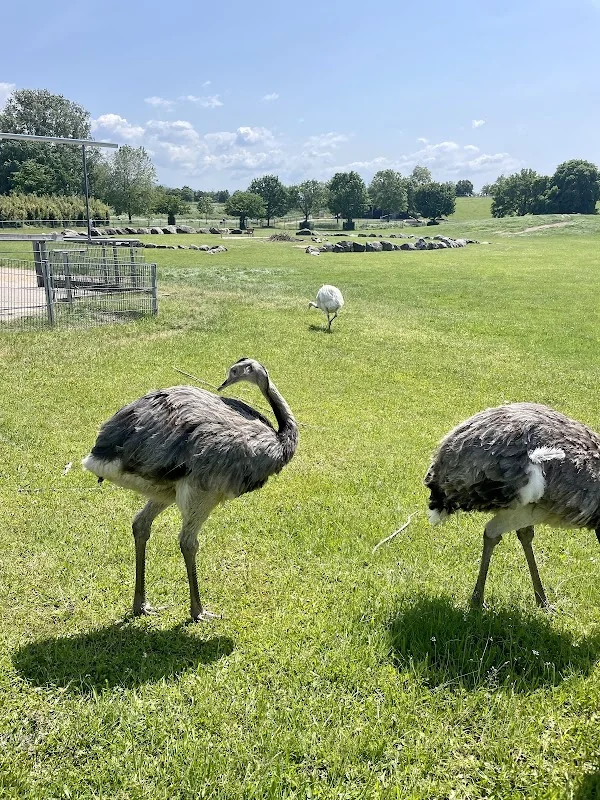
The true heart of the Mundenhof is its animals and the spacious facilities. On about 38 hectares, a mix of domestic and farm animal breeds lives here, complemented by special residents such as Javanese and gibbon monkeys, meerkats, and an aquarium with saltwater and freshwater fish. The official tourism information describes the Mundenhof as the largest animal enclosure in Baden-Württemberg. This size ensures that the tour does not feel like a cramped zoo but rather an open nature experience with plenty of distance, sightlines, and space to linger. The animals are not in dense rows but are experienceable in a spacious area that combines the character of a landscape park with animal encounters. ([visit.freiburg.de](https://visit.freiburg.de/tier-natur-erlebnispark-mundenhof?utm_source=openai))
Additionally, there are two large playgrounds and two walk-through animal enclosures that make the Mundenhof particularly family-friendly. Those traveling with children can easily combine animal observation, movement, and breaks. The thematic organization of the facilities also plays a role: the Mundenhof guides visitors through areas such as Europe, Africa, Asia, North America, South America, an exotic center, the aquarium, as well as agriculture and animal births. This transforms the walk into a small journey through animal worlds without losing the natural character of the area. For many guests, this mix of openness, overview, and thematic diversity is a reason to keep coming back. ([freiburg.de](https://www.freiburg.de/pb/mundenhof/Animal%2Benclosures.html))
It is also important to note a clear warning from the official pages: feeding is strictly prohibited. The animals do not tolerate much of what humans would give them; incorrect food can even harm them. This rule ensures that the Mundenhof remains not only a place of closeness but also a place of responsibility. Thus, those observing animals here learn not only about species and habitats but also about mindful behavior in dealing with them. The aquarium of the Freiburg Aquarium Association complements the outdoor area with a completely different atmosphere and provides an exciting contrast to the open facilities. This creates a versatile experience that ranges from walking to intensive observation. ([freiburg.de](https://www.freiburg.de/pb/mundenhof/Animal%2Benclosures.html))
KonTiKi, Tours, and Family Offers
An important unique feature is KonTiKi, short for Contact-Animal-Child. This nature and environmental education facility is aimed at schoolchildren and adolescents and conveys nature, animals, and sustainability through all senses. According to the official description, the children help care for the animals under pedagogical guidance, learn about their ways of life, and take on responsibility. KonTiKi has paddocks, stables, rooms, an inner courtyard, and a garden area on the premises, so it has real learning places that function not just theoretically but are practically experienceable. The basic idea behind it is clear: children should not only see nature but engage with it, try out their own abilities, and experience everyday life with animals and plants as a living learning space. ([freiburg.de](https://www.freiburg.de/pb/mundenhof/KonTiKi.html?utm_source=openai))
The offerings include weekly open KonTiKi afternoons, a youth group, educational offerings for school classes and groups, project weeks, holiday camps, and other events throughout the year. There are also opportunities for a Voluntary Ecological Year and practical semesters in social studies programs. The official pages list KonTiKi animals including horses, donkeys, mules, alpacas, sheep, goats, many chickens, and a cat. This shows how broad the educational approach is: not spectacular but approachable, sensory, and relatable. Families with children particularly appreciate that learning and playing are not separated but complement each other. ([freiburg.de](https://www.freiburg.de/pb/mundenhof/KonTiKi.html?utm_source=openai))
Guided tours are also part of the regular offering, and the Mundenhof recommends early registration for school classes. This is especially practical for groups that want to prepare their visit content-wise or arrive with pedagogical support. This is complemented by offers for supporters, volunteers, and practical collaboration, showing that the Mundenhof is not just a place to visit but also an active city project. The combination of free access, educational work, and many small participatory opportunities makes KonTiKi a component that clearly sets the Mundenhof apart from pure animal exhibitions. Here, it is not just about watching but about experiencing, understanding, and participating. ([freiburg.de](https://www.freiburg.de/pb/mundenhof%2CLde_DE/besuch/anfahrt.html))
History and Special Milestones of the Mundenhof
The history of the Mundenhof goes back a long way. The first documented mention dates back to 864. In 1294, the Günterstal Monastery became the owner, later the estate passed to the Principality of Baden and was sold to the University of Freiburg in 1808. In the 19th century, the use changed several times: in 1892, the city acquired a large area in the west of Freiburg for the Rieselfeld, i.e., the former natural sewage treatment plant, and the Mundenhof became part of this development. The place is thus not simply a leisure park but a historically grown piece of urban and landscape history. This long history also explains why the Mundenhof is so much more than a modern excursion area: it carries the traces of agricultural, urban, and ecological use within it. ([freiburg.de](https://www.freiburg.de/pb/mundenhof/Geschichte.html))
The current zoo was established in 1968 with the opening of the animal enclosure and the founding of the Fördergemeinschaft Freiburger Tiergehege e. V.; shortly thereafter, more than 100,000 visitors came each year. Later milestones show the continuous development: in 1991, KonTiKi was established, in 2002, the North American enclosure and African facility were inaugurated, in 2003, the South American enclosure, in 2005, the Javanese enclosure, in 2006, the walk-through enclosure for dwarf goats, in 2011, the entrance building, in 2013, the aviary, in 2018, the 50th anniversary was celebrated, and in 2019, the colorful marten enclosure was added. Additionally, the first tent music festival took place at the Mundenhof in 1985. These milestones show how a developed area has gradually become a modern animal-nature-experience park. ([freiburg.de](https://www.freiburg.de/pb/mundenhof/Geschichte.html))
Today, when visiting the Mundenhof, one sees not only animals and paths but also a historical project that has grown over decades. The facility combines old farm history with contemporary animal husbandry, environmental education, and recreational use. This explains why the place is attractive for families, school classes, nature enthusiasts, and city visitors alike. The Mundenhof is not a static place but a site that has visibly continued to write its history. This creates its special charm: here, past, present, and future meet in an open landscape that connects education, encounters, and relaxation. ([freiburg.de](https://www.freiburg.de/pb/mundenhof/Geschichte.html))
Farm Economy, Snack Areas, and a Relaxed Break
The Mundenhof also includes the farm economy, which welcomes visitors with regional, seasonal cuisine, snacks, cakes, and vegetarian options. The tourism page describes it as a place for a break in the green with a guest room and beer garden, right at the edge of the area. This allows the excursion to be extended well: first animals and paths, then a quiet table or a spot outdoors. Families particularly benefit from the fact that children can move nearby while adults can relax and unwind at the end of the day. The gastronomy is thus not a side show but part of the overall feeling that the Mundenhof conveys: arrive, stay, breathe, and experience the day in peace. ([visit.freiburg.de](https://visit.freiburg.de/hofwirtschaft-mundenhof?utm_source=openai))
The many snack areas also contribute to the character of the Mundenhof. Those who prefer to bring their own picnic will find plenty of opportunities for a break between the enclosures and play areas. The park invites not only walking and looking but also sitting, talking, and observing. This makes it particularly suitable for longer stays where one does not have to keep moving constantly but can find their own rhythm. Especially in combination with the large areas, playgrounds, and open animal facilities, it creates a destination that does not feel hectic or overloaded. Instead, one has the feeling of being able to spend a whole day in the green without leaving the city far behind. ([visit.freiburg.de](https://visit.freiburg.de/tier-natur-erlebnispark-mundenhof?utm_source=openai))
Together with the free access, the clear rules for dogs and photos, the family-friendly facilities, and the educational offerings of KonTiKi, the Mundenhof becomes a place where one can easily spend a whole day trip. Those looking for a destination that combines nature experiences, animals, learning, and relaxation will find a convincing mix here. The Mundenhof does not thrive on grand effects but on its size, openness, and quiet self-evidence. This is precisely why the visit often stays in mind longer than one might expect: it is uncomplicated, varied, and pleasantly decelerated. ([freiburg.de](https://www.freiburg.de/pb/mundenhof%2CLru/besuch/Fragen%2Bund%2BAntworten.html))
Sources:
- Animal-Nature-Experience Park Mundenhof - visit.freiburg.de ([visit.freiburg.de](https://visit.freiburg.de/tier-natur-erlebnispark-mundenhof?utm_source=openai))
- Directions - www.freiburg.de ([freiburg.de](https://www.freiburg.de/pb/mundenhof%2CLde_DE/besuch/anfahrt.html))
- Questions and Answers - www.freiburg.de ([freiburg.de](https://www.freiburg.de/pb/mundenhof%2CLru/besuch/Fragen%2Bund%2BAntworten.html))
- History of the Mundenhof - www.freiburg.de ([freiburg.de](https://www.freiburg.de/pb/mundenhof/Geschichte.html))
- Nature and Environmental Education at KonTiKi - www.freiburg.de ([freiburg.de](https://www.freiburg.de/pb/mundenhof/KonTiKi.html?utm_source=openai))
- Farm Economy Mundenhof - visit.freiburg.de ([visit.freiburg.de](https://visit.freiburg.de/hofwirtschaft-mundenhof?utm_source=openai))
Show moreShow less
Mundenhof Animal-Nature-Experience Park | Parking & Directions
The Mundenhof is one of the special places in Freiburg because it combines leisure, nature, and animal experiences without a traditional entrance fee. Since 1968, there has been an animal enclosure here; today, the area is a spacious animal-nature-experience park that, according to official city and tourism information, covers around 38 hectares and is considered the largest animal enclosure in Baden-Württemberg. Families, walkers, school classes, and excursion groups find open paths, large enclosures, play areas, gastronomy, and the educational KonTiKi here. Those who visit the Mundenhof not only experience animals from various continents but also enjoy plenty of space, tranquility, and a consciously nature-oriented day right outside the city gates. The park is accessible at any time, entry is free, and the parking fees contribute to the maintenance of the facility. Those looking for an uncomplicated excursion destination in Freiburg will find a mix of learning, movement, deceleration, and encounters with animals that is rarely presented so generously. ([visit.freiburg.de](https://visit.freiburg.de/tier-natur-erlebnispark-mundenhof?utm_source=openai))
Directions, Parking, and Access to Mundenhof
Those arriving by public transport can reach the Mundenhof via several well-described routes. By tram, take line 1 to the Padua-Allee stop and walk about 30 minutes from there. If using line 5, get off at the Bollerstaudenweg stop and it takes about 20 minutes to reach the destination. Additionally, bus line 19 goes to the Mundenhof, sometimes directly into the yard and sometimes only to the parking lot, so checking the current timetable is advisable. For cyclists, the route is also clearly described: follow the Dreisam cycle path to the Lehener Bridge, then follow the signs to the area. By car, take the Freiburg Mitte connector, exit Lehen, to the Mundenhof. The official address is Zum Tiergehege 2, 79111 Freiburg. ([freiburg.de](https://www.freiburg.de/pb/mundenhof%2CLde_DE/besuch/anfahrt.html))
When it comes to parking, the Mundenhof operates with seasonal fees directly linked to the operation of the animal enclosure. For cars, parking costs 10 euros daily from April to August. From September to March, it costs 5 euros on weekdays and 10 euros on Saturdays, Sundays, and public holidays. Regular visitors to the Mundenhof can purchase an annual parking card for 60 euros. For holders of the Freiburg Family Card or the Freiburg Pass, the price is reduced to 30 euros. The annual parking card can be ordered at several locations on the premises, in the city center, or online; it can be registered with two license plates. Coaches generally pay 20 euros. Thus, it is clear: the Mundenhof is freely accessible, but the parking fee is an important contribution to the maintenance of the facility. ([freiburg.de](https://www.freiburg.de/pb/mundenhof%2CLde_DE/besuch/anfahrt.html))
This combination is particularly attractive for families and excursion groups because there is no need to buy tickets in advance, yet there is still a well-organized way to arrive. Those coming by bike benefit from the scenic route, those arriving by bus or train save themselves the hassle of finding parking, and those using a car find a comprehensible pricing structure. The Mundenhof is thus close enough for a spontaneous day trip, yet large and quiet enough to make the visit feel like a true nature experience rather than a brief stop. The clear signage, various travel options, and open accessibility make the place easy to plan. ([freiburg.de](https://www.freiburg.de/pb/mundenhof%2CLde_DE/besuch/anfahrt.html))
Admission, Opening Hours, and Tickets
For regular visits, there are no traditional tickets, as the Mundenhof does not charge an entrance fee and is open at all times. This is exactly why many people search for tickets, but they actually mean the question of how the visit is organized. The answer is simple: freely accessible, without a cash register at the entrance, but with the option to donate. So, anyone planning a day trip can come spontaneously without reserving a time slot or adhering to a fixed entry time. This makes the Mundenhof particularly uncomplicated for families, day-trippers, and anyone who prefers to experience nature flexibly rather than on a strict schedule. The official wording is clear: the Mundenhof is always open because no admission is charged. ([freiburg.de](https://www.freiburg.de/pb/mundenhof%2CLru/besuch/Fragen%2Bund%2BAntworten.html))
There are also clear rules regarding photography. According to the FAQ, audio, film, photo, and video recordings are only permitted for private souvenir purposes. Anyone wishing to publish images commercially, for profit, or even on private homepages needs prior written permission from the Mundenhof. This is relevant for many visitors who like to document their trip or prepare content for social media. At the same time, there is a very relaxed rule for everyday life on the premises: dogs are allowed but must be kept on a leash. This keeps the visit pleasant and considerate for both pet owners and other guests and the animals themselves. ([freiburg.de](https://www.freiburg.de/pb/mundenhof%2CLru/besuch/Fragen%2Bund%2BAntworten.html))
Those visiting the Mundenhof for the first time benefit from the fact that there are hardly any hurdles. The most important decisions do not concern tickets but rather the questions of how to arrive, where to park, what time of day to visit, and how long to stay. One can thus traditionally start a walk, observe animals along the way, stop at playgrounds, take a break in the restaurant, and later return home without pressure. This open structure is a key part of the Mundenhof's success: the place does not function as a strictly controlled attraction but as a freely accessible experience space that is equally suitable for spontaneous visits as for consciously planned family outings. ([freiburg.de](https://www.freiburg.de/pb/mundenhof%2CLru/besuch/Fragen%2Bund%2BAntworten.html))
Animals, Enclosures, and Aquarium
The true heart of the Mundenhof is its animals and the spacious facilities. On about 38 hectares, a mix of domestic and farm animal breeds lives here, complemented by special residents such as Javanese and gibbon monkeys, meerkats, and an aquarium with saltwater and freshwater fish. The official tourism information describes the Mundenhof as the largest animal enclosure in Baden-Württemberg. This size ensures that the tour does not feel like a cramped zoo but rather an open nature experience with plenty of distance, sightlines, and space to linger. The animals are not in dense rows but are experienceable in a spacious area that combines the character of a landscape park with animal encounters. ([visit.freiburg.de](https://visit.freiburg.de/tier-natur-erlebnispark-mundenhof?utm_source=openai))
Additionally, there are two large playgrounds and two walk-through animal enclosures that make the Mundenhof particularly family-friendly. Those traveling with children can easily combine animal observation, movement, and breaks. The thematic organization of the facilities also plays a role: the Mundenhof guides visitors through areas such as Europe, Africa, Asia, North America, South America, an exotic center, the aquarium, as well as agriculture and animal births. This transforms the walk into a small journey through animal worlds without losing the natural character of the area. For many guests, this mix of openness, overview, and thematic diversity is a reason to keep coming back. ([freiburg.de](https://www.freiburg.de/pb/mundenhof/Animal%2Benclosures.html))
It is also important to note a clear warning from the official pages: feeding is strictly prohibited. The animals do not tolerate much of what humans would give them; incorrect food can even harm them. This rule ensures that the Mundenhof remains not only a place of closeness but also a place of responsibility. Thus, those observing animals here learn not only about species and habitats but also about mindful behavior in dealing with them. The aquarium of the Freiburg Aquarium Association complements the outdoor area with a completely different atmosphere and provides an exciting contrast to the open facilities. This creates a versatile experience that ranges from walking to intensive observation. ([freiburg.de](https://www.freiburg.de/pb/mundenhof/Animal%2Benclosures.html))
KonTiKi, Tours, and Family Offers
An important unique feature is KonTiKi, short for Contact-Animal-Child. This nature and environmental education facility is aimed at schoolchildren and adolescents and conveys nature, animals, and sustainability through all senses. According to the official description, the children help care for the animals under pedagogical guidance, learn about their ways of life, and take on responsibility. KonTiKi has paddocks, stables, rooms, an inner courtyard, and a garden area on the premises, so it has real learning places that function not just theoretically but are practically experienceable. The basic idea behind it is clear: children should not only see nature but engage with it, try out their own abilities, and experience everyday life with animals and plants as a living learning space. ([freiburg.de](https://www.freiburg.de/pb/mundenhof/KonTiKi.html?utm_source=openai))
The offerings include weekly open KonTiKi afternoons, a youth group, educational offerings for school classes and groups, project weeks, holiday camps, and other events throughout the year. There are also opportunities for a Voluntary Ecological Year and practical semesters in social studies programs. The official pages list KonTiKi animals including horses, donkeys, mules, alpacas, sheep, goats, many chickens, and a cat. This shows how broad the educational approach is: not spectacular but approachable, sensory, and relatable. Families with children particularly appreciate that learning and playing are not separated but complement each other. ([freiburg.de](https://www.freiburg.de/pb/mundenhof/KonTiKi.html?utm_source=openai))
Guided tours are also part of the regular offering, and the Mundenhof recommends early registration for school classes. This is especially practical for groups that want to prepare their visit content-wise or arrive with pedagogical support. This is complemented by offers for supporters, volunteers, and practical collaboration, showing that the Mundenhof is not just a place to visit but also an active city project. The combination of free access, educational work, and many small participatory opportunities makes KonTiKi a component that clearly sets the Mundenhof apart from pure animal exhibitions. Here, it is not just about watching but about experiencing, understanding, and participating. ([freiburg.de](https://www.freiburg.de/pb/mundenhof%2CLde_DE/besuch/anfahrt.html))
History and Special Milestones of the Mundenhof
The history of the Mundenhof goes back a long way. The first documented mention dates back to 864. In 1294, the Günterstal Monastery became the owner, later the estate passed to the Principality of Baden and was sold to the University of Freiburg in 1808. In the 19th century, the use changed several times: in 1892, the city acquired a large area in the west of Freiburg for the Rieselfeld, i.e., the former natural sewage treatment plant, and the Mundenhof became part of this development. The place is thus not simply a leisure park but a historically grown piece of urban and landscape history. This long history also explains why the Mundenhof is so much more than a modern excursion area: it carries the traces of agricultural, urban, and ecological use within it. ([freiburg.de](https://www.freiburg.de/pb/mundenhof/Geschichte.html))
The current zoo was established in 1968 with the opening of the animal enclosure and the founding of the Fördergemeinschaft Freiburger Tiergehege e. V.; shortly thereafter, more than 100,000 visitors came each year. Later milestones show the continuous development: in 1991, KonTiKi was established, in 2002, the North American enclosure and African facility were inaugurated, in 2003, the South American enclosure, in 2005, the Javanese enclosure, in 2006, the walk-through enclosure for dwarf goats, in 2011, the entrance building, in 2013, the aviary, in 2018, the 50th anniversary was celebrated, and in 2019, the colorful marten enclosure was added. Additionally, the first tent music festival took place at the Mundenhof in 1985. These milestones show how a developed area has gradually become a modern animal-nature-experience park. ([freiburg.de](https://www.freiburg.de/pb/mundenhof/Geschichte.html))
Today, when visiting the Mundenhof, one sees not only animals and paths but also a historical project that has grown over decades. The facility combines old farm history with contemporary animal husbandry, environmental education, and recreational use. This explains why the place is attractive for families, school classes, nature enthusiasts, and city visitors alike. The Mundenhof is not a static place but a site that has visibly continued to write its history. This creates its special charm: here, past, present, and future meet in an open landscape that connects education, encounters, and relaxation. ([freiburg.de](https://www.freiburg.de/pb/mundenhof/Geschichte.html))
Farm Economy, Snack Areas, and a Relaxed Break
The Mundenhof also includes the farm economy, which welcomes visitors with regional, seasonal cuisine, snacks, cakes, and vegetarian options. The tourism page describes it as a place for a break in the green with a guest room and beer garden, right at the edge of the area. This allows the excursion to be extended well: first animals and paths, then a quiet table or a spot outdoors. Families particularly benefit from the fact that children can move nearby while adults can relax and unwind at the end of the day. The gastronomy is thus not a side show but part of the overall feeling that the Mundenhof conveys: arrive, stay, breathe, and experience the day in peace. ([visit.freiburg.de](https://visit.freiburg.de/hofwirtschaft-mundenhof?utm_source=openai))
The many snack areas also contribute to the character of the Mundenhof. Those who prefer to bring their own picnic will find plenty of opportunities for a break between the enclosures and play areas. The park invites not only walking and looking but also sitting, talking, and observing. This makes it particularly suitable for longer stays where one does not have to keep moving constantly but can find their own rhythm. Especially in combination with the large areas, playgrounds, and open animal facilities, it creates a destination that does not feel hectic or overloaded. Instead, one has the feeling of being able to spend a whole day in the green without leaving the city far behind. ([visit.freiburg.de](https://visit.freiburg.de/tier-natur-erlebnispark-mundenhof?utm_source=openai))
Together with the free access, the clear rules for dogs and photos, the family-friendly facilities, and the educational offerings of KonTiKi, the Mundenhof becomes a place where one can easily spend a whole day trip. Those looking for a destination that combines nature experiences, animals, learning, and relaxation will find a convincing mix here. The Mundenhof does not thrive on grand effects but on its size, openness, and quiet self-evidence. This is precisely why the visit often stays in mind longer than one might expect: it is uncomplicated, varied, and pleasantly decelerated. ([freiburg.de](https://www.freiburg.de/pb/mundenhof%2CLru/besuch/Fragen%2Bund%2BAntworten.html))
Sources:
- Animal-Nature-Experience Park Mundenhof - visit.freiburg.de ([visit.freiburg.de](https://visit.freiburg.de/tier-natur-erlebnispark-mundenhof?utm_source=openai))
- Directions - www.freiburg.de ([freiburg.de](https://www.freiburg.de/pb/mundenhof%2CLde_DE/besuch/anfahrt.html))
- Questions and Answers - www.freiburg.de ([freiburg.de](https://www.freiburg.de/pb/mundenhof%2CLru/besuch/Fragen%2Bund%2BAntworten.html))
- History of the Mundenhof - www.freiburg.de ([freiburg.de](https://www.freiburg.de/pb/mundenhof/Geschichte.html))
- Nature and Environmental Education at KonTiKi - www.freiburg.de ([freiburg.de](https://www.freiburg.de/pb/mundenhof/KonTiKi.html?utm_source=openai))
- Farm Economy Mundenhof - visit.freiburg.de ([visit.freiburg.de](https://visit.freiburg.de/hofwirtschaft-mundenhof?utm_source=openai))
Mundenhof Animal-Nature-Experience Park | Parking & Directions
The Mundenhof is one of the special places in Freiburg because it combines leisure, nature, and animal experiences without a traditional entrance fee. Since 1968, there has been an animal enclosure here; today, the area is a spacious animal-nature-experience park that, according to official city and tourism information, covers around 38 hectares and is considered the largest animal enclosure in Baden-Württemberg. Families, walkers, school classes, and excursion groups find open paths, large enclosures, play areas, gastronomy, and the educational KonTiKi here. Those who visit the Mundenhof not only experience animals from various continents but also enjoy plenty of space, tranquility, and a consciously nature-oriented day right outside the city gates. The park is accessible at any time, entry is free, and the parking fees contribute to the maintenance of the facility. Those looking for an uncomplicated excursion destination in Freiburg will find a mix of learning, movement, deceleration, and encounters with animals that is rarely presented so generously. ([visit.freiburg.de](https://visit.freiburg.de/tier-natur-erlebnispark-mundenhof?utm_source=openai))
Directions, Parking, and Access to Mundenhof
Those arriving by public transport can reach the Mundenhof via several well-described routes. By tram, take line 1 to the Padua-Allee stop and walk about 30 minutes from there. If using line 5, get off at the Bollerstaudenweg stop and it takes about 20 minutes to reach the destination. Additionally, bus line 19 goes to the Mundenhof, sometimes directly into the yard and sometimes only to the parking lot, so checking the current timetable is advisable. For cyclists, the route is also clearly described: follow the Dreisam cycle path to the Lehener Bridge, then follow the signs to the area. By car, take the Freiburg Mitte connector, exit Lehen, to the Mundenhof. The official address is Zum Tiergehege 2, 79111 Freiburg. ([freiburg.de](https://www.freiburg.de/pb/mundenhof%2CLde_DE/besuch/anfahrt.html))
When it comes to parking, the Mundenhof operates with seasonal fees directly linked to the operation of the animal enclosure. For cars, parking costs 10 euros daily from April to August. From September to March, it costs 5 euros on weekdays and 10 euros on Saturdays, Sundays, and public holidays. Regular visitors to the Mundenhof can purchase an annual parking card for 60 euros. For holders of the Freiburg Family Card or the Freiburg Pass, the price is reduced to 30 euros. The annual parking card can be ordered at several locations on the premises, in the city center, or online; it can be registered with two license plates. Coaches generally pay 20 euros. Thus, it is clear: the Mundenhof is freely accessible, but the parking fee is an important contribution to the maintenance of the facility. ([freiburg.de](https://www.freiburg.de/pb/mundenhof%2CLde_DE/besuch/anfahrt.html))
This combination is particularly attractive for families and excursion groups because there is no need to buy tickets in advance, yet there is still a well-organized way to arrive. Those coming by bike benefit from the scenic route, those arriving by bus or train save themselves the hassle of finding parking, and those using a car find a comprehensible pricing structure. The Mundenhof is thus close enough for a spontaneous day trip, yet large and quiet enough to make the visit feel like a true nature experience rather than a brief stop. The clear signage, various travel options, and open accessibility make the place easy to plan. ([freiburg.de](https://www.freiburg.de/pb/mundenhof%2CLde_DE/besuch/anfahrt.html))
Admission, Opening Hours, and Tickets
For regular visits, there are no traditional tickets, as the Mundenhof does not charge an entrance fee and is open at all times. This is exactly why many people search for tickets, but they actually mean the question of how the visit is organized. The answer is simple: freely accessible, without a cash register at the entrance, but with the option to donate. So, anyone planning a day trip can come spontaneously without reserving a time slot or adhering to a fixed entry time. This makes the Mundenhof particularly uncomplicated for families, day-trippers, and anyone who prefers to experience nature flexibly rather than on a strict schedule. The official wording is clear: the Mundenhof is always open because no admission is charged. ([freiburg.de](https://www.freiburg.de/pb/mundenhof%2CLru/besuch/Fragen%2Bund%2BAntworten.html))
There are also clear rules regarding photography. According to the FAQ, audio, film, photo, and video recordings are only permitted for private souvenir purposes. Anyone wishing to publish images commercially, for profit, or even on private homepages needs prior written permission from the Mundenhof. This is relevant for many visitors who like to document their trip or prepare content for social media. At the same time, there is a very relaxed rule for everyday life on the premises: dogs are allowed but must be kept on a leash. This keeps the visit pleasant and considerate for both pet owners and other guests and the animals themselves. ([freiburg.de](https://www.freiburg.de/pb/mundenhof%2CLru/besuch/Fragen%2Bund%2BAntworten.html))
Those visiting the Mundenhof for the first time benefit from the fact that there are hardly any hurdles. The most important decisions do not concern tickets but rather the questions of how to arrive, where to park, what time of day to visit, and how long to stay. One can thus traditionally start a walk, observe animals along the way, stop at playgrounds, take a break in the restaurant, and later return home without pressure. This open structure is a key part of the Mundenhof's success: the place does not function as a strictly controlled attraction but as a freely accessible experience space that is equally suitable for spontaneous visits as for consciously planned family outings. ([freiburg.de](https://www.freiburg.de/pb/mundenhof%2CLru/besuch/Fragen%2Bund%2BAntworten.html))
Animals, Enclosures, and Aquarium
The true heart of the Mundenhof is its animals and the spacious facilities. On about 38 hectares, a mix of domestic and farm animal breeds lives here, complemented by special residents such as Javanese and gibbon monkeys, meerkats, and an aquarium with saltwater and freshwater fish. The official tourism information describes the Mundenhof as the largest animal enclosure in Baden-Württemberg. This size ensures that the tour does not feel like a cramped zoo but rather an open nature experience with plenty of distance, sightlines, and space to linger. The animals are not in dense rows but are experienceable in a spacious area that combines the character of a landscape park with animal encounters. ([visit.freiburg.de](https://visit.freiburg.de/tier-natur-erlebnispark-mundenhof?utm_source=openai))
Additionally, there are two large playgrounds and two walk-through animal enclosures that make the Mundenhof particularly family-friendly. Those traveling with children can easily combine animal observation, movement, and breaks. The thematic organization of the facilities also plays a role: the Mundenhof guides visitors through areas such as Europe, Africa, Asia, North America, South America, an exotic center, the aquarium, as well as agriculture and animal births. This transforms the walk into a small journey through animal worlds without losing the natural character of the area. For many guests, this mix of openness, overview, and thematic diversity is a reason to keep coming back. ([freiburg.de](https://www.freiburg.de/pb/mundenhof/Animal%2Benclosures.html))
It is also important to note a clear warning from the official pages: feeding is strictly prohibited. The animals do not tolerate much of what humans would give them; incorrect food can even harm them. This rule ensures that the Mundenhof remains not only a place of closeness but also a place of responsibility. Thus, those observing animals here learn not only about species and habitats but also about mindful behavior in dealing with them. The aquarium of the Freiburg Aquarium Association complements the outdoor area with a completely different atmosphere and provides an exciting contrast to the open facilities. This creates a versatile experience that ranges from walking to intensive observation. ([freiburg.de](https://www.freiburg.de/pb/mundenhof/Animal%2Benclosures.html))
KonTiKi, Tours, and Family Offers
An important unique feature is KonTiKi, short for Contact-Animal-Child. This nature and environmental education facility is aimed at schoolchildren and adolescents and conveys nature, animals, and sustainability through all senses. According to the official description, the children help care for the animals under pedagogical guidance, learn about their ways of life, and take on responsibility. KonTiKi has paddocks, stables, rooms, an inner courtyard, and a garden area on the premises, so it has real learning places that function not just theoretically but are practically experienceable. The basic idea behind it is clear: children should not only see nature but engage with it, try out their own abilities, and experience everyday life with animals and plants as a living learning space. ([freiburg.de](https://www.freiburg.de/pb/mundenhof/KonTiKi.html?utm_source=openai))
The offerings include weekly open KonTiKi afternoons, a youth group, educational offerings for school classes and groups, project weeks, holiday camps, and other events throughout the year. There are also opportunities for a Voluntary Ecological Year and practical semesters in social studies programs. The official pages list KonTiKi animals including horses, donkeys, mules, alpacas, sheep, goats, many chickens, and a cat. This shows how broad the educational approach is: not spectacular but approachable, sensory, and relatable. Families with children particularly appreciate that learning and playing are not separated but complement each other. ([freiburg.de](https://www.freiburg.de/pb/mundenhof/KonTiKi.html?utm_source=openai))
Guided tours are also part of the regular offering, and the Mundenhof recommends early registration for school classes. This is especially practical for groups that want to prepare their visit content-wise or arrive with pedagogical support. This is complemented by offers for supporters, volunteers, and practical collaboration, showing that the Mundenhof is not just a place to visit but also an active city project. The combination of free access, educational work, and many small participatory opportunities makes KonTiKi a component that clearly sets the Mundenhof apart from pure animal exhibitions. Here, it is not just about watching but about experiencing, understanding, and participating. ([freiburg.de](https://www.freiburg.de/pb/mundenhof%2CLde_DE/besuch/anfahrt.html))
History and Special Milestones of the Mundenhof
The history of the Mundenhof goes back a long way. The first documented mention dates back to 864. In 1294, the Günterstal Monastery became the owner, later the estate passed to the Principality of Baden and was sold to the University of Freiburg in 1808. In the 19th century, the use changed several times: in 1892, the city acquired a large area in the west of Freiburg for the Rieselfeld, i.e., the former natural sewage treatment plant, and the Mundenhof became part of this development. The place is thus not simply a leisure park but a historically grown piece of urban and landscape history. This long history also explains why the Mundenhof is so much more than a modern excursion area: it carries the traces of agricultural, urban, and ecological use within it. ([freiburg.de](https://www.freiburg.de/pb/mundenhof/Geschichte.html))
The current zoo was established in 1968 with the opening of the animal enclosure and the founding of the Fördergemeinschaft Freiburger Tiergehege e. V.; shortly thereafter, more than 100,000 visitors came each year. Later milestones show the continuous development: in 1991, KonTiKi was established, in 2002, the North American enclosure and African facility were inaugurated, in 2003, the South American enclosure, in 2005, the Javanese enclosure, in 2006, the walk-through enclosure for dwarf goats, in 2011, the entrance building, in 2013, the aviary, in 2018, the 50th anniversary was celebrated, and in 2019, the colorful marten enclosure was added. Additionally, the first tent music festival took place at the Mundenhof in 1985. These milestones show how a developed area has gradually become a modern animal-nature-experience park. ([freiburg.de](https://www.freiburg.de/pb/mundenhof/Geschichte.html))
Today, when visiting the Mundenhof, one sees not only animals and paths but also a historical project that has grown over decades. The facility combines old farm history with contemporary animal husbandry, environmental education, and recreational use. This explains why the place is attractive for families, school classes, nature enthusiasts, and city visitors alike. The Mundenhof is not a static place but a site that has visibly continued to write its history. This creates its special charm: here, past, present, and future meet in an open landscape that connects education, encounters, and relaxation. ([freiburg.de](https://www.freiburg.de/pb/mundenhof/Geschichte.html))
Farm Economy, Snack Areas, and a Relaxed Break
The Mundenhof also includes the farm economy, which welcomes visitors with regional, seasonal cuisine, snacks, cakes, and vegetarian options. The tourism page describes it as a place for a break in the green with a guest room and beer garden, right at the edge of the area. This allows the excursion to be extended well: first animals and paths, then a quiet table or a spot outdoors. Families particularly benefit from the fact that children can move nearby while adults can relax and unwind at the end of the day. The gastronomy is thus not a side show but part of the overall feeling that the Mundenhof conveys: arrive, stay, breathe, and experience the day in peace. ([visit.freiburg.de](https://visit.freiburg.de/hofwirtschaft-mundenhof?utm_source=openai))
The many snack areas also contribute to the character of the Mundenhof. Those who prefer to bring their own picnic will find plenty of opportunities for a break between the enclosures and play areas. The park invites not only walking and looking but also sitting, talking, and observing. This makes it particularly suitable for longer stays where one does not have to keep moving constantly but can find their own rhythm. Especially in combination with the large areas, playgrounds, and open animal facilities, it creates a destination that does not feel hectic or overloaded. Instead, one has the feeling of being able to spend a whole day in the green without leaving the city far behind. ([visit.freiburg.de](https://visit.freiburg.de/tier-natur-erlebnispark-mundenhof?utm_source=openai))
Together with the free access, the clear rules for dogs and photos, the family-friendly facilities, and the educational offerings of KonTiKi, the Mundenhof becomes a place where one can easily spend a whole day trip. Those looking for a destination that combines nature experiences, animals, learning, and relaxation will find a convincing mix here. The Mundenhof does not thrive on grand effects but on its size, openness, and quiet self-evidence. This is precisely why the visit often stays in mind longer than one might expect: it is uncomplicated, varied, and pleasantly decelerated. ([freiburg.de](https://www.freiburg.de/pb/mundenhof%2CLru/besuch/Fragen%2Bund%2BAntworten.html))
Sources:
- Animal-Nature-Experience Park Mundenhof - visit.freiburg.de ([visit.freiburg.de](https://visit.freiburg.de/tier-natur-erlebnispark-mundenhof?utm_source=openai))
- Directions - www.freiburg.de ([freiburg.de](https://www.freiburg.de/pb/mundenhof%2CLde_DE/besuch/anfahrt.html))
- Questions and Answers - www.freiburg.de ([freiburg.de](https://www.freiburg.de/pb/mundenhof%2CLru/besuch/Fragen%2Bund%2BAntworten.html))
- History of the Mundenhof - www.freiburg.de ([freiburg.de](https://www.freiburg.de/pb/mundenhof/Geschichte.html))
- Nature and Environmental Education at KonTiKi - www.freiburg.de ([freiburg.de](https://www.freiburg.de/pb/mundenhof/KonTiKi.html?utm_source=openai))
- Farm Economy Mundenhof - visit.freiburg.de ([visit.freiburg.de](https://visit.freiburg.de/hofwirtschaft-mundenhof?utm_source=openai))
Upcoming Events
No events found
Frequently Asked Questions
Reviews
Yuwei Liao
3. January 2026
I can only describe our visit to the ErlebnisPark as a wonderful experience. We went on January 1, 2026, with no expectations at all — and it completely exceeded them. Lovely animals, plenty of space, beautiful nature, and a really thoughtful design of the landscape and plantations. Everything felt well maintained, and hygiene standards were excellent. What I also appreciated: there was no separate entrance/ticket fee — we only paid for parking. Overall, it felt like a high-quality zoo experience, and I can absolutely recommend it.
RoxanA R
18. September 2025
We had a wonderful time visiting this zoo park! There are so many animals to see, and the park is very spacious with plenty of room to walk around. The playground is perfect for kids, and it’s also well accessible for children and persons with disabilities, which made our visit even easier and more enjoyable. It’s a great spot for a family picnic surrounded by nature. Entrance was free, and parking cost €10 on the weekend and €5 during the week, which is very reasonable. They also have a small shop where you can buy drinks, ice cream, and even a special German pretzel – such a nice treat! A truly lovely place for families to spend the day.
K. Kerek
16. February 2026
A great place to spend a few peaceful hours surrounded by animals and ancient farming facilities.
Tiberius_GTC
22. September 2025
Great place for families, free entrance, many animals and spacious areas. Kids loved it, very relaxing atmosphere. Highly recommended!
Si Braybrooke-Gibbens
26. August 2018
This is an incredibly great value zoo with the total cost being just the cost of parking which is 5 euros. That then covers all occupants of the car for entrance. The zoo itself is large with a lot of animals split into continents. The animals have large pens and look very well looked after. This is simply great, worth the time.