
Freiburg im Breisgau
Lörracher Str. 31, 79115 Freiburg im Breisgau, Deutschland
Morat-Hallen Freiburg | Exhibitions & Opening Hours
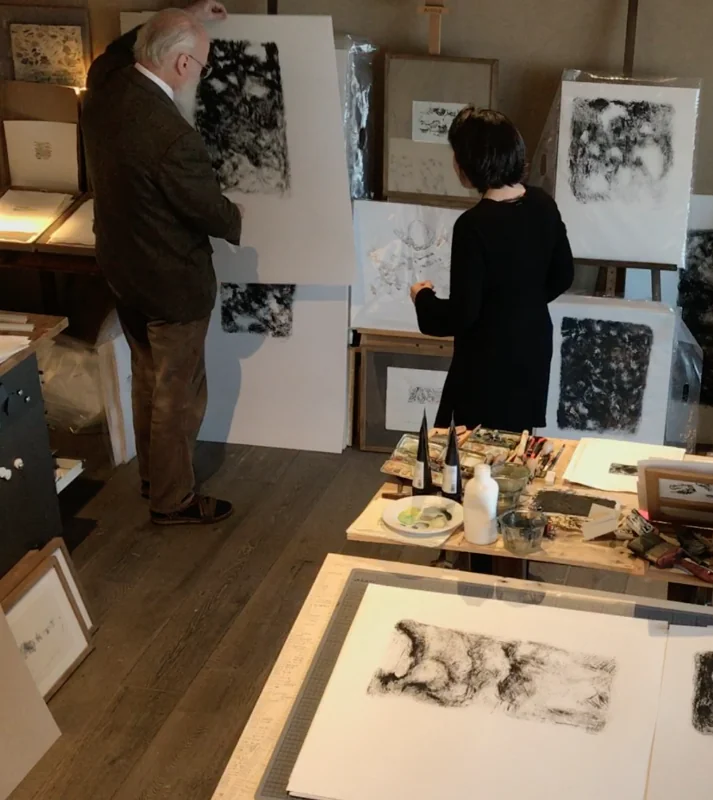
The Morat-Hallen at Lörracher Straße 31 are among the most exciting new cultural venues in Freiburg im Breisgau. Behind the name are three large halls with a total area of nearly 2000 square meters, which were known for many years as the seat of the Morat Institute for Art and Art Science. Since the purchase by the city of Freiburg in May 2024 and the subsequent renovation, the historic site has become a shared space for the Municipal Gallery, Hall North, and the Morat Institute. This connects contemporary art, a significant collection history, and a clear public use. Visitors to the Morat-Hallen experience not a classic museum building with rigid structures, but an open cultural venue with changing exhibitions, generous spaces, and a strong connection to the Freiburg art scene. Particularly practical: The official pages show exhibition views and room photos, allowing one to get a good sense of the atmosphere and architecture before visiting. ([freiburg.de](https://www.freiburg.de/pb/2555010.html))
Changing Exhibitions and Current Program
The Morat-Hallen are intentionally designed as a flexible exhibition space and not as a rigid house with a single permanent format. This is precisely what makes them appealing to art enthusiasts looking for a place with a changing program. The Municipal Gallery uses the middle hall as a new home for changing exhibitions, while Hall North is conceived as an open space for projects, collaborations, and various artistic positions. The official city website explicitly describes the halls as a place for the Municipal Gallery and other art projects; the press release for the opening adds that exhibitions, performances, projects, and site-specific works can be shown in Hall North. Thus, the location is much more than just a simple gallery: it serves as a stage for contemporary art, where formats from painting and sculpture to photography, video, and sound can unfold. The high ceiling and the three halls make it possible for works to not only hang on the wall but also to have a spatial effect and enter into a dialogue with the architecture. Those looking for photos will find not only posters and image motifs on the official pages but also views of the spaces that document the impact of the halls very well. This is helpful for visitors as it makes it easier to decide whether a particular exhibition is more contemplative, experimental, generous, or installation-based. Additionally, the Morat-Hallen are not only intended for Freiburg art. Hall North is explicitly described on the official site as a place for the Freiburg as well as the national and international art scene. This openness makes the program attractive: today a concentrated exhibition can be shown, tomorrow a large-scale installation or a collaborative project. The Morat-Hallen are thus a place where one can always look anew, as the program continuously changes. ([freiburg.de](https://www.freiburg.de/pb/230811.html))
Opening Hours, Free Admission, and Visit Planning
The opening hours for a visit to the Morat-Hallen are pleasantly clearly structured. The official pages state Thursday and Friday from 4 PM to 7 PM and Saturday and Sunday from 11 AM to 5 PM. On public holidays, the Municipal Gallery and Hall North are closed. This combination makes the place interesting for both a cultural evening visit and a weekend trip. Free admission is another plus, as it allows access to the exhibitions without a financial barrier. This fits very well with an urban cultural venue that aims not only to appeal to a specialized audience but also to curious spontaneous visitors, families, students, or people who simply want to check out a new exhibition in Freiburg. Since it is a gallery and project use, the visiting rhythm is more oriented towards exhibition times than traditional evening events. Therefore, anyone planning a visit should keep an eye on the weekly calendar rather than the usual theater logic. The later start on Thursday and Friday is particularly attractive for many, as it allows for an easy detour after work. On the weekend, the longer time window offers enough space to visit both areas in succession and to engage with the works at leisure. It is also practical that the Morat-Hallen are listed on the Municipal Gallery page and in the city's event portal with clear event pages. This allows for good preparation for the visit without having to navigate through different sources. Those who want to know more can also find contact options for inquiries during opening hours on the city page. For SEO and user-friendliness, this mix is ideal: free admission, clear times, changing content, and a central cultural location that consciously remains accessible. ([freiburg.de](https://www.freiburg.de/pb/230811.html))
Access by Tram 5 and Parking in Freiburg
The address of the Morat-Hallen is Lörracher Straße 31, 79115 Freiburg im Breisgau. For access by public transport, the official Municipal Gallery page provides a very concrete and simple route: From the city center, tram line 5 travels towards Rieselfeld to the stop Pressehaus, from there it is about a nine-minute walk. This is particularly helpful for visitors, as the route can be easily planned and the orientation on site is not complicated. The Freiburg event portal also lists the Morat-Hallen as a destination and offers route planning for arriving by public transport or by car. For people coming from the city center, the connection by tram is especially convenient, as one can reach the area of Lörracher Straße without changing and walk the last section. Those arriving by car should check the route in advance. Although the official pages consider the route by car, a separate visitor parking lot is not indicated. This does not mean that one cannot arrive by car, but rather that planning becomes more sensible if one checks the route and parking options in the vicinity beforehand. For inquiries about parking, access, and address, this point is important: The Morat-Hallen are well connected to public transport, but they are not a classic fair or arena location with a large parking system. Those who plan their arrival wisely will therefore particularly benefit from public transport or a short walking route after the tram ride. The location in the south of Freiburg is well suited for a relaxed cultural visit that can be combined with a city stroll or an evening appointment. ([freiburg.de](https://www.freiburg.de/pb/230811.html))
Accessibility, Ramps, and Visitor Comfort
Much has also been done regarding accessibility around the Morat-Hallen. The official city page informs that a ramp for wheelchair users is planned and access to the art spaces is temporarily via the rear emergency exits. Those who need assistance can call the provided phone number during opening hours and will then be accompanied by a supervisor. This solution is not perfect, but it shows that the place is already not intended as a closed space, but as a publicly accessible cultural venue that actively wants to break down barriers. The press release for the opening adds that a barrier-free toilet facility and a kitchen were installed as part of the renovation, along with new emergency exits and renewed technical systems. The building renovation itself is also practically relevant: it was completed in November 2025 and cost around 580,000 euros. For visitors, this means more safety, more comfort, and an infrastructure that is geared towards permanent exhibition operations. Particularly important is the combination of historical substance and contemporary use. The halls are large, flexible, and atmospheric, while also being upgraded to function in the everyday practice of an urban exhibition. Visitors to the Morat-Hallen should keep the transitional status in mind, as access via the back shows that the development of the building is not yet fully completed. This mix of ongoing improvement and already visible openness makes the building interesting: it is not only a place for art but also an example of how public cultural architecture is gradually becoming more accessible. For people with limited mobility, it is advisable to plan the visit in advance, keep an eye on the opening hours, and inquire by phone if in doubt. This way, the stay can be prepared as pleasantly as possible, even though the final ramp situation at the main entrance is still pending. ([freiburg.de](https://www.freiburg.de/pb/230811.html))
History of the Morat Institute and the Takeover by the City
The history of the Morat-Hallen does not begin with the municipal purchase but extends deep into the Freiburg art and foundation history. The Morat Institute for Art and Art Science was founded in 1983; in 1984, the involved foundations merged, and the institute was continued as a foundation under civil law under its current name. The Morat Institute's page also documents that the foundation was visible far beyond Freiburg for decades through exhibitions, symposia, and loans. Local reporting states that the institute has been located on Lörracher Straße since 1987. This is important because it shows how long the place has been connected to art and why the location has a familiar sound for many in Freiburg. In the background is the Morat family with an exceptionally large collection: the foundation maintains a specialized library of about 50,000 volumes, along with numerous important work groups and graphic collections. The city of Freiburg describes in its press release that the couple Eva-Maria and Franz Armin Morat collected an impressive collection over more than 40 years. Mentioned there is a comprehensive library with about 50,000 volumes of art literature, around 7,500 graphics, and 500 paintings and sculptures, including works by Dürer, Rembrandt, and Goya. In November 2023, the Morats handed over their foundation to their sons Daniel and Robert, just in time for the 80th birthday of founder Franz Armin Morat. The brothers, who live in Berlin, wanted to ensure that the collection remains in Freiburg. This led to the cooperation with the city of Freiburg, which purchased the building in May 2024. The acquisition was made possible by a generous donation from Freiburg patron Gertraud Hurrle. For Freiburg, this means more than just the preservation of a building: the city was able to secure a developed art location, keep the collection publicly accessible, and lead the cultural claim of the place into a new phase. The Morat-Hallen are therefore not just a new name on the city map, but the result of a long continuity of collection, research, exhibition, and private commitment. ([morat-institut.de](https://www.morat-institut.de/ueber-uns/))
Spaces, Collection, and Importance for the Freiburg Art Scene
The spatial structure of the Morat-Hallen is one of the reasons why the place appears so often in inquiries such as seating plan, seats, or best seats, even though it is not actually a classic theater or concert hall. Instead of fixed rows and numbered seats, there are three exhibition spaces with clear functions. The middle hall is the new home of the Municipal Gallery and offers significantly more space at nearly 240 square meters than the previous location in Kunsthaus L6. Hall North encompasses nearly 300 square meters and is intended for a variety of artistic formats, from exhibitions to performances to site-specific works. In the southern hall, the life's work of Eva-Maria and Franz Armin Morat is stored. The city's press release makes it clear that the collection, with its library, graphics, paintings, and sculptures, remains present there and is accessible to the public through long-term loans. Particularly impressive is the thematic breadth of the collection, which is described on the Morat Institute page with artist names such as Carl Schuch, Gerhard Hoehme, Kurt Kocherscheidt, Ian McKeever, Franz Bernhard, Artur Stoll, Herbert Maier, Erwin Bohatsch, Stephan Hasslinger, Dorothée Aschoff, Per Kirkeby, Rudolf Schönwald, Giorgio Morandi, Max Beckmann, James Ensor, Francisco Goya, Albrecht Dürer, and Martin Schongauer. Additionally, there are masks and sculptures from Burkina Faso as well as Renaissance medals. This mix explains why the house has a name far beyond Freiburg: it connects international art history, scientific collection depth, and a very concrete local use. For the Freiburg art scene, this is a gain, as not only can art be shown here, but also worked on, mediated, and further developed. Hall North creates space for initiatives and associations, the middle hall gives the Municipal Gallery a modern home, and the southern hall preserves the identity of the collection. This tripartition makes the Morat-Hallen a cultural venue with profile. Instead of a rigid seating plan, there is a flexible space plan; instead of a single program, there are multiple levels of art, research, and public engagement. This is attractive for visitors, as depending on their interest, they can experience a quiet exhibition, an experimental installation, or a glimpse into the history of the collection. ([freiburg.de](https://www.freiburg.de/pb/2555010.html))
Sources:
Show moreShow less
Morat-Hallen Freiburg | Exhibitions & Opening Hours
The Morat-Hallen at Lörracher Straße 31 are among the most exciting new cultural venues in Freiburg im Breisgau. Behind the name are three large halls with a total area of nearly 2000 square meters, which were known for many years as the seat of the Morat Institute for Art and Art Science. Since the purchase by the city of Freiburg in May 2024 and the subsequent renovation, the historic site has become a shared space for the Municipal Gallery, Hall North, and the Morat Institute. This connects contemporary art, a significant collection history, and a clear public use. Visitors to the Morat-Hallen experience not a classic museum building with rigid structures, but an open cultural venue with changing exhibitions, generous spaces, and a strong connection to the Freiburg art scene. Particularly practical: The official pages show exhibition views and room photos, allowing one to get a good sense of the atmosphere and architecture before visiting. ([freiburg.de](https://www.freiburg.de/pb/2555010.html))
Changing Exhibitions and Current Program
The Morat-Hallen are intentionally designed as a flexible exhibition space and not as a rigid house with a single permanent format. This is precisely what makes them appealing to art enthusiasts looking for a place with a changing program. The Municipal Gallery uses the middle hall as a new home for changing exhibitions, while Hall North is conceived as an open space for projects, collaborations, and various artistic positions. The official city website explicitly describes the halls as a place for the Municipal Gallery and other art projects; the press release for the opening adds that exhibitions, performances, projects, and site-specific works can be shown in Hall North. Thus, the location is much more than just a simple gallery: it serves as a stage for contemporary art, where formats from painting and sculpture to photography, video, and sound can unfold. The high ceiling and the three halls make it possible for works to not only hang on the wall but also to have a spatial effect and enter into a dialogue with the architecture. Those looking for photos will find not only posters and image motifs on the official pages but also views of the spaces that document the impact of the halls very well. This is helpful for visitors as it makes it easier to decide whether a particular exhibition is more contemplative, experimental, generous, or installation-based. Additionally, the Morat-Hallen are not only intended for Freiburg art. Hall North is explicitly described on the official site as a place for the Freiburg as well as the national and international art scene. This openness makes the program attractive: today a concentrated exhibition can be shown, tomorrow a large-scale installation or a collaborative project. The Morat-Hallen are thus a place where one can always look anew, as the program continuously changes. ([freiburg.de](https://www.freiburg.de/pb/230811.html))
Opening Hours, Free Admission, and Visit Planning
The opening hours for a visit to the Morat-Hallen are pleasantly clearly structured. The official pages state Thursday and Friday from 4 PM to 7 PM and Saturday and Sunday from 11 AM to 5 PM. On public holidays, the Municipal Gallery and Hall North are closed. This combination makes the place interesting for both a cultural evening visit and a weekend trip. Free admission is another plus, as it allows access to the exhibitions without a financial barrier. This fits very well with an urban cultural venue that aims not only to appeal to a specialized audience but also to curious spontaneous visitors, families, students, or people who simply want to check out a new exhibition in Freiburg. Since it is a gallery and project use, the visiting rhythm is more oriented towards exhibition times than traditional evening events. Therefore, anyone planning a visit should keep an eye on the weekly calendar rather than the usual theater logic. The later start on Thursday and Friday is particularly attractive for many, as it allows for an easy detour after work. On the weekend, the longer time window offers enough space to visit both areas in succession and to engage with the works at leisure. It is also practical that the Morat-Hallen are listed on the Municipal Gallery page and in the city's event portal with clear event pages. This allows for good preparation for the visit without having to navigate through different sources. Those who want to know more can also find contact options for inquiries during opening hours on the city page. For SEO and user-friendliness, this mix is ideal: free admission, clear times, changing content, and a central cultural location that consciously remains accessible. ([freiburg.de](https://www.freiburg.de/pb/230811.html))
Access by Tram 5 and Parking in Freiburg
The address of the Morat-Hallen is Lörracher Straße 31, 79115 Freiburg im Breisgau. For access by public transport, the official Municipal Gallery page provides a very concrete and simple route: From the city center, tram line 5 travels towards Rieselfeld to the stop Pressehaus, from there it is about a nine-minute walk. This is particularly helpful for visitors, as the route can be easily planned and the orientation on site is not complicated. The Freiburg event portal also lists the Morat-Hallen as a destination and offers route planning for arriving by public transport or by car. For people coming from the city center, the connection by tram is especially convenient, as one can reach the area of Lörracher Straße without changing and walk the last section. Those arriving by car should check the route in advance. Although the official pages consider the route by car, a separate visitor parking lot is not indicated. This does not mean that one cannot arrive by car, but rather that planning becomes more sensible if one checks the route and parking options in the vicinity beforehand. For inquiries about parking, access, and address, this point is important: The Morat-Hallen are well connected to public transport, but they are not a classic fair or arena location with a large parking system. Those who plan their arrival wisely will therefore particularly benefit from public transport or a short walking route after the tram ride. The location in the south of Freiburg is well suited for a relaxed cultural visit that can be combined with a city stroll or an evening appointment. ([freiburg.de](https://www.freiburg.de/pb/230811.html))
Accessibility, Ramps, and Visitor Comfort
Much has also been done regarding accessibility around the Morat-Hallen. The official city page informs that a ramp for wheelchair users is planned and access to the art spaces is temporarily via the rear emergency exits. Those who need assistance can call the provided phone number during opening hours and will then be accompanied by a supervisor. This solution is not perfect, but it shows that the place is already not intended as a closed space, but as a publicly accessible cultural venue that actively wants to break down barriers. The press release for the opening adds that a barrier-free toilet facility and a kitchen were installed as part of the renovation, along with new emergency exits and renewed technical systems. The building renovation itself is also practically relevant: it was completed in November 2025 and cost around 580,000 euros. For visitors, this means more safety, more comfort, and an infrastructure that is geared towards permanent exhibition operations. Particularly important is the combination of historical substance and contemporary use. The halls are large, flexible, and atmospheric, while also being upgraded to function in the everyday practice of an urban exhibition. Visitors to the Morat-Hallen should keep the transitional status in mind, as access via the back shows that the development of the building is not yet fully completed. This mix of ongoing improvement and already visible openness makes the building interesting: it is not only a place for art but also an example of how public cultural architecture is gradually becoming more accessible. For people with limited mobility, it is advisable to plan the visit in advance, keep an eye on the opening hours, and inquire by phone if in doubt. This way, the stay can be prepared as pleasantly as possible, even though the final ramp situation at the main entrance is still pending. ([freiburg.de](https://www.freiburg.de/pb/230811.html))
History of the Morat Institute and the Takeover by the City
The history of the Morat-Hallen does not begin with the municipal purchase but extends deep into the Freiburg art and foundation history. The Morat Institute for Art and Art Science was founded in 1983; in 1984, the involved foundations merged, and the institute was continued as a foundation under civil law under its current name. The Morat Institute's page also documents that the foundation was visible far beyond Freiburg for decades through exhibitions, symposia, and loans. Local reporting states that the institute has been located on Lörracher Straße since 1987. This is important because it shows how long the place has been connected to art and why the location has a familiar sound for many in Freiburg. In the background is the Morat family with an exceptionally large collection: the foundation maintains a specialized library of about 50,000 volumes, along with numerous important work groups and graphic collections. The city of Freiburg describes in its press release that the couple Eva-Maria and Franz Armin Morat collected an impressive collection over more than 40 years. Mentioned there is a comprehensive library with about 50,000 volumes of art literature, around 7,500 graphics, and 500 paintings and sculptures, including works by Dürer, Rembrandt, and Goya. In November 2023, the Morats handed over their foundation to their sons Daniel and Robert, just in time for the 80th birthday of founder Franz Armin Morat. The brothers, who live in Berlin, wanted to ensure that the collection remains in Freiburg. This led to the cooperation with the city of Freiburg, which purchased the building in May 2024. The acquisition was made possible by a generous donation from Freiburg patron Gertraud Hurrle. For Freiburg, this means more than just the preservation of a building: the city was able to secure a developed art location, keep the collection publicly accessible, and lead the cultural claim of the place into a new phase. The Morat-Hallen are therefore not just a new name on the city map, but the result of a long continuity of collection, research, exhibition, and private commitment. ([morat-institut.de](https://www.morat-institut.de/ueber-uns/))
Spaces, Collection, and Importance for the Freiburg Art Scene
The spatial structure of the Morat-Hallen is one of the reasons why the place appears so often in inquiries such as seating plan, seats, or best seats, even though it is not actually a classic theater or concert hall. Instead of fixed rows and numbered seats, there are three exhibition spaces with clear functions. The middle hall is the new home of the Municipal Gallery and offers significantly more space at nearly 240 square meters than the previous location in Kunsthaus L6. Hall North encompasses nearly 300 square meters and is intended for a variety of artistic formats, from exhibitions to performances to site-specific works. In the southern hall, the life's work of Eva-Maria and Franz Armin Morat is stored. The city's press release makes it clear that the collection, with its library, graphics, paintings, and sculptures, remains present there and is accessible to the public through long-term loans. Particularly impressive is the thematic breadth of the collection, which is described on the Morat Institute page with artist names such as Carl Schuch, Gerhard Hoehme, Kurt Kocherscheidt, Ian McKeever, Franz Bernhard, Artur Stoll, Herbert Maier, Erwin Bohatsch, Stephan Hasslinger, Dorothée Aschoff, Per Kirkeby, Rudolf Schönwald, Giorgio Morandi, Max Beckmann, James Ensor, Francisco Goya, Albrecht Dürer, and Martin Schongauer. Additionally, there are masks and sculptures from Burkina Faso as well as Renaissance medals. This mix explains why the house has a name far beyond Freiburg: it connects international art history, scientific collection depth, and a very concrete local use. For the Freiburg art scene, this is a gain, as not only can art be shown here, but also worked on, mediated, and further developed. Hall North creates space for initiatives and associations, the middle hall gives the Municipal Gallery a modern home, and the southern hall preserves the identity of the collection. This tripartition makes the Morat-Hallen a cultural venue with profile. Instead of a rigid seating plan, there is a flexible space plan; instead of a single program, there are multiple levels of art, research, and public engagement. This is attractive for visitors, as depending on their interest, they can experience a quiet exhibition, an experimental installation, or a glimpse into the history of the collection. ([freiburg.de](https://www.freiburg.de/pb/2555010.html))
Sources:
Morat-Hallen Freiburg | Exhibitions & Opening Hours
The Morat-Hallen at Lörracher Straße 31 are among the most exciting new cultural venues in Freiburg im Breisgau. Behind the name are three large halls with a total area of nearly 2000 square meters, which were known for many years as the seat of the Morat Institute for Art and Art Science. Since the purchase by the city of Freiburg in May 2024 and the subsequent renovation, the historic site has become a shared space for the Municipal Gallery, Hall North, and the Morat Institute. This connects contemporary art, a significant collection history, and a clear public use. Visitors to the Morat-Hallen experience not a classic museum building with rigid structures, but an open cultural venue with changing exhibitions, generous spaces, and a strong connection to the Freiburg art scene. Particularly practical: The official pages show exhibition views and room photos, allowing one to get a good sense of the atmosphere and architecture before visiting. ([freiburg.de](https://www.freiburg.de/pb/2555010.html))
Changing Exhibitions and Current Program
The Morat-Hallen are intentionally designed as a flexible exhibition space and not as a rigid house with a single permanent format. This is precisely what makes them appealing to art enthusiasts looking for a place with a changing program. The Municipal Gallery uses the middle hall as a new home for changing exhibitions, while Hall North is conceived as an open space for projects, collaborations, and various artistic positions. The official city website explicitly describes the halls as a place for the Municipal Gallery and other art projects; the press release for the opening adds that exhibitions, performances, projects, and site-specific works can be shown in Hall North. Thus, the location is much more than just a simple gallery: it serves as a stage for contemporary art, where formats from painting and sculpture to photography, video, and sound can unfold. The high ceiling and the three halls make it possible for works to not only hang on the wall but also to have a spatial effect and enter into a dialogue with the architecture. Those looking for photos will find not only posters and image motifs on the official pages but also views of the spaces that document the impact of the halls very well. This is helpful for visitors as it makes it easier to decide whether a particular exhibition is more contemplative, experimental, generous, or installation-based. Additionally, the Morat-Hallen are not only intended for Freiburg art. Hall North is explicitly described on the official site as a place for the Freiburg as well as the national and international art scene. This openness makes the program attractive: today a concentrated exhibition can be shown, tomorrow a large-scale installation or a collaborative project. The Morat-Hallen are thus a place where one can always look anew, as the program continuously changes. ([freiburg.de](https://www.freiburg.de/pb/230811.html))
Opening Hours, Free Admission, and Visit Planning
The opening hours for a visit to the Morat-Hallen are pleasantly clearly structured. The official pages state Thursday and Friday from 4 PM to 7 PM and Saturday and Sunday from 11 AM to 5 PM. On public holidays, the Municipal Gallery and Hall North are closed. This combination makes the place interesting for both a cultural evening visit and a weekend trip. Free admission is another plus, as it allows access to the exhibitions without a financial barrier. This fits very well with an urban cultural venue that aims not only to appeal to a specialized audience but also to curious spontaneous visitors, families, students, or people who simply want to check out a new exhibition in Freiburg. Since it is a gallery and project use, the visiting rhythm is more oriented towards exhibition times than traditional evening events. Therefore, anyone planning a visit should keep an eye on the weekly calendar rather than the usual theater logic. The later start on Thursday and Friday is particularly attractive for many, as it allows for an easy detour after work. On the weekend, the longer time window offers enough space to visit both areas in succession and to engage with the works at leisure. It is also practical that the Morat-Hallen are listed on the Municipal Gallery page and in the city's event portal with clear event pages. This allows for good preparation for the visit without having to navigate through different sources. Those who want to know more can also find contact options for inquiries during opening hours on the city page. For SEO and user-friendliness, this mix is ideal: free admission, clear times, changing content, and a central cultural location that consciously remains accessible. ([freiburg.de](https://www.freiburg.de/pb/230811.html))
Access by Tram 5 and Parking in Freiburg
The address of the Morat-Hallen is Lörracher Straße 31, 79115 Freiburg im Breisgau. For access by public transport, the official Municipal Gallery page provides a very concrete and simple route: From the city center, tram line 5 travels towards Rieselfeld to the stop Pressehaus, from there it is about a nine-minute walk. This is particularly helpful for visitors, as the route can be easily planned and the orientation on site is not complicated. The Freiburg event portal also lists the Morat-Hallen as a destination and offers route planning for arriving by public transport or by car. For people coming from the city center, the connection by tram is especially convenient, as one can reach the area of Lörracher Straße without changing and walk the last section. Those arriving by car should check the route in advance. Although the official pages consider the route by car, a separate visitor parking lot is not indicated. This does not mean that one cannot arrive by car, but rather that planning becomes more sensible if one checks the route and parking options in the vicinity beforehand. For inquiries about parking, access, and address, this point is important: The Morat-Hallen are well connected to public transport, but they are not a classic fair or arena location with a large parking system. Those who plan their arrival wisely will therefore particularly benefit from public transport or a short walking route after the tram ride. The location in the south of Freiburg is well suited for a relaxed cultural visit that can be combined with a city stroll or an evening appointment. ([freiburg.de](https://www.freiburg.de/pb/230811.html))
Accessibility, Ramps, and Visitor Comfort
Much has also been done regarding accessibility around the Morat-Hallen. The official city page informs that a ramp for wheelchair users is planned and access to the art spaces is temporarily via the rear emergency exits. Those who need assistance can call the provided phone number during opening hours and will then be accompanied by a supervisor. This solution is not perfect, but it shows that the place is already not intended as a closed space, but as a publicly accessible cultural venue that actively wants to break down barriers. The press release for the opening adds that a barrier-free toilet facility and a kitchen were installed as part of the renovation, along with new emergency exits and renewed technical systems. The building renovation itself is also practically relevant: it was completed in November 2025 and cost around 580,000 euros. For visitors, this means more safety, more comfort, and an infrastructure that is geared towards permanent exhibition operations. Particularly important is the combination of historical substance and contemporary use. The halls are large, flexible, and atmospheric, while also being upgraded to function in the everyday practice of an urban exhibition. Visitors to the Morat-Hallen should keep the transitional status in mind, as access via the back shows that the development of the building is not yet fully completed. This mix of ongoing improvement and already visible openness makes the building interesting: it is not only a place for art but also an example of how public cultural architecture is gradually becoming more accessible. For people with limited mobility, it is advisable to plan the visit in advance, keep an eye on the opening hours, and inquire by phone if in doubt. This way, the stay can be prepared as pleasantly as possible, even though the final ramp situation at the main entrance is still pending. ([freiburg.de](https://www.freiburg.de/pb/230811.html))
History of the Morat Institute and the Takeover by the City
The history of the Morat-Hallen does not begin with the municipal purchase but extends deep into the Freiburg art and foundation history. The Morat Institute for Art and Art Science was founded in 1983; in 1984, the involved foundations merged, and the institute was continued as a foundation under civil law under its current name. The Morat Institute's page also documents that the foundation was visible far beyond Freiburg for decades through exhibitions, symposia, and loans. Local reporting states that the institute has been located on Lörracher Straße since 1987. This is important because it shows how long the place has been connected to art and why the location has a familiar sound for many in Freiburg. In the background is the Morat family with an exceptionally large collection: the foundation maintains a specialized library of about 50,000 volumes, along with numerous important work groups and graphic collections. The city of Freiburg describes in its press release that the couple Eva-Maria and Franz Armin Morat collected an impressive collection over more than 40 years. Mentioned there is a comprehensive library with about 50,000 volumes of art literature, around 7,500 graphics, and 500 paintings and sculptures, including works by Dürer, Rembrandt, and Goya. In November 2023, the Morats handed over their foundation to their sons Daniel and Robert, just in time for the 80th birthday of founder Franz Armin Morat. The brothers, who live in Berlin, wanted to ensure that the collection remains in Freiburg. This led to the cooperation with the city of Freiburg, which purchased the building in May 2024. The acquisition was made possible by a generous donation from Freiburg patron Gertraud Hurrle. For Freiburg, this means more than just the preservation of a building: the city was able to secure a developed art location, keep the collection publicly accessible, and lead the cultural claim of the place into a new phase. The Morat-Hallen are therefore not just a new name on the city map, but the result of a long continuity of collection, research, exhibition, and private commitment. ([morat-institut.de](https://www.morat-institut.de/ueber-uns/))
Spaces, Collection, and Importance for the Freiburg Art Scene
The spatial structure of the Morat-Hallen is one of the reasons why the place appears so often in inquiries such as seating plan, seats, or best seats, even though it is not actually a classic theater or concert hall. Instead of fixed rows and numbered seats, there are three exhibition spaces with clear functions. The middle hall is the new home of the Municipal Gallery and offers significantly more space at nearly 240 square meters than the previous location in Kunsthaus L6. Hall North encompasses nearly 300 square meters and is intended for a variety of artistic formats, from exhibitions to performances to site-specific works. In the southern hall, the life's work of Eva-Maria and Franz Armin Morat is stored. The city's press release makes it clear that the collection, with its library, graphics, paintings, and sculptures, remains present there and is accessible to the public through long-term loans. Particularly impressive is the thematic breadth of the collection, which is described on the Morat Institute page with artist names such as Carl Schuch, Gerhard Hoehme, Kurt Kocherscheidt, Ian McKeever, Franz Bernhard, Artur Stoll, Herbert Maier, Erwin Bohatsch, Stephan Hasslinger, Dorothée Aschoff, Per Kirkeby, Rudolf Schönwald, Giorgio Morandi, Max Beckmann, James Ensor, Francisco Goya, Albrecht Dürer, and Martin Schongauer. Additionally, there are masks and sculptures from Burkina Faso as well as Renaissance medals. This mix explains why the house has a name far beyond Freiburg: it connects international art history, scientific collection depth, and a very concrete local use. For the Freiburg art scene, this is a gain, as not only can art be shown here, but also worked on, mediated, and further developed. Hall North creates space for initiatives and associations, the middle hall gives the Municipal Gallery a modern home, and the southern hall preserves the identity of the collection. This tripartition makes the Morat-Hallen a cultural venue with profile. Instead of a rigid seating plan, there is a flexible space plan; instead of a single program, there are multiple levels of art, research, and public engagement. This is attractive for visitors, as depending on their interest, they can experience a quiet exhibition, an experimental installation, or a glimpse into the history of the collection. ([freiburg.de](https://www.freiburg.de/pb/2555010.html))
Sources:
Upcoming Events
No events found
Frequently Asked Questions
Reviews
No reviews found