
Freiburg im Breisgau
Platz d. Universität 3, 79098 Freiburg im Breisgau, Deutschland
KG I | History & Access
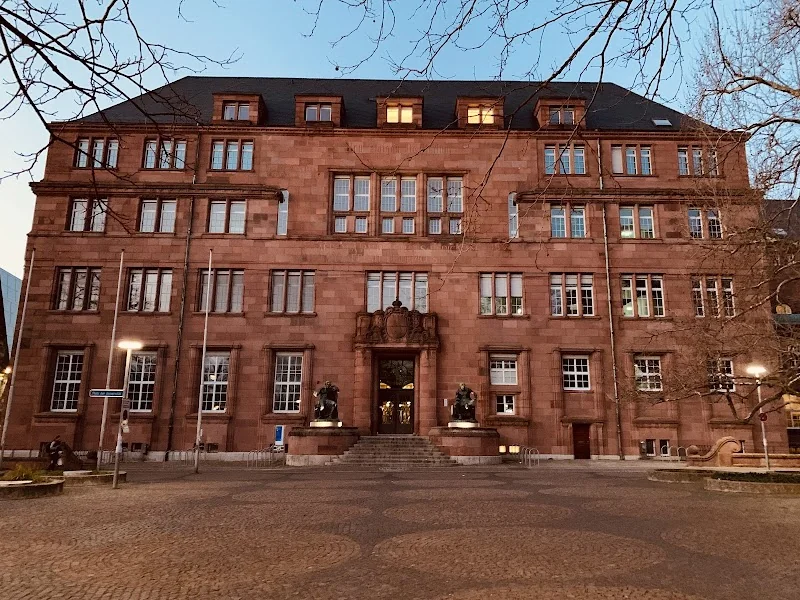
The KG I is one of those Freiburg buildings that you not only enter but experience. The Kollegiengebäude I is located at Platz der Universität 3 in the heart of the university center, directly opposite the university library and within sight of the Freiburg Theater. Those walking through the city center encounter not just a functional teaching building but a striking testament to university history that remains present in the everyday life of the university. In KG I, there are not only lecture halls and the auditorium but also rooms where teaching, public lectures, academic ceremonies, and university events take place. The location is deliberately central, the architecture shapes the cityscape, and the combination of historical substance and vibrant use makes the building one of the most important landmarks around Platz der Universität. ([uni-freiburg.de](https://uni-freiburg.de/lageplaene/kollegiengebaeude-i/))
Especially for visitors, KG I is interesting because it fulfills several roles at once: it is the main building, a place of teaching, an event venue, and a site of memory. The university itself describes it as a monument and witness of time. New memorial plaques contextualize the historical traces and inscriptions of the building, making it visible how strongly architecture, the history of science, and culture of remembrance are intertwined here. Therefore, those visiting KG I are not just moving through a building with lecture halls and staircases, but at a place where the development of the University of Freiburg can be read over more than a century. This mixture of tradition, central location, and academic function makes KG I equally relevant for students, teachers, and guests. ([uni-freiburg.de](https://uni-freiburg.de/erinnerungskultur-und-das-hauptgebaeude-der-universitaet-kollegiengebaeude-i/))
History, Architecture, and Culture of Remembrance in KG I
The history of KG I begins with the growth of the university in the late 19th century. The old buildings were no longer sufficient, which is why new constructions emerged on the edge of the old town. First, in 1903, the new university library was built, which is now known as Kollegiengebäude IV. This was followed by the current Kollegiengebäude I as the new main university building. The foundation stone was laid in 1906 under Grand Duke Friedrich I of Baden. The architect Friedrich Ratzel initially designed the building in the style of historicism before Hermann Billing continued the construction in contemporary Art Nouveau after Ratzel's death in 1907, based on the original floor plan. On October 28, 1911, the building was inaugurated in the presence of Grand Duke Friedrich II of Baden and put into operation. These dates explain why KG I is not just a functional building but a consciously set symbol of university representation. ([uni-freiburg.de](https://uni-freiburg.de/erinnerungskultur-und-das-hauptgebaeude-der-universitaet-kollegiengebaeude-i/))
The architecture still shows this claim today in many details. Above the main portal, an inscription commemorates its establishment by Friedrich II, while the Latin text below refers to the scientific self-understanding of the building. On the west facade, the motto The truth will set you free, which was adopted by the Senate in 1909, is inscribed. The iconographic decoration also played a significant role: In 1921, the university had two bronze statues of Homer and Aristotle erected at the main entrance to emphasize the focus on secular sciences. Additionally, in the foyer above the entrance to the auditorium, there is the monumental fresco Prometheus brings fire to mankind, symbolizing scientific and technological progress. Several of these elements clarify why KG I is architecturally and ideologically so charged. It is a building where educational aspirations, symbolism, and the self-representation of the university converge. ([uni-freiburg.de](https://uni-freiburg.de/erinnerungskultur-und-das-hauptgebaeude-der-universitaet-kollegiengebaeude-i/))
However, the culture of remembrance also includes a critical engagement with the past. At and in KG I, there are historical monuments and inscriptions that make visible the changing approach of the university to its own history. New plaques, which were installed in May 2026, explain these traces on-site and digitally. They refer, among other things, to the biblical phrase The truth will set you free and to a National Socialist inscription, which is now explicitly placed in a historical context. Thus, the building not only shows its architectural origins but also how the university today deals with burdened historical layers. Therefore, those visiting KG I see a building that simultaneously represents, remembers, and explains. ([uni-freiburg.de](https://uni-freiburg.de/neue-denkmaltafeln-am-kollegiengebaeude-i-errichtet/))
A particularly exciting aspect is the so-called Karzer in the tower of KG I. There are two cells, the summer and winter Karzer, where students were previously temporarily imprisoned for violating university rules. In today's understanding, this seems almost curious; historically, it was an expression of its own university legal system. The university points out that the Karzer punishment was abolished in 1920. Together with the representative facades, the interiors, and the monuments, a picture of KG I as a living archive of university cultural history emerges. Therefore, the building is not only important for lectures but also for anyone wanting to understand Freiburg's scientific and urban history. ([osa.uni-freiburg.de](https://www.osa.uni-freiburg.de/campustour/universitaetszentrum/))
Access to KG I, City Theater, and Parking in the City Center
Access to KG I is particularly straightforward because the building is located in the middle of Freiburg's city center. The official address is Platz der Universität 3, 79098 Freiburg. Orientation is provided by the university's location plans, in which KG I is listed as a central address in the university center. Those coming from the city center will find the building directly next to the university library and opposite the Freiburg Theater. For many routes, this is a very short distance, making the building particularly attractive for evening events, seminars between appointments, and public lectures. The location between Platz der Universität, UB, and the theater is one of the most important practical advantages of the site. ([uni-freiburg.de](https://uni-freiburg.de/lageplaene/kollegiengebaeude-i/))
For public transport, the Stadttheater stop is the best orientation point. The university library explicitly mentions this station and points out that the area can be easily reached on foot from there. The university itself also describes KG I as part of the central university center, which is well connected in the city center. Those arriving by bicycle benefit from the dense inner-city location, and footpaths from the old town are also short. Especially because many university facilities are concentrated around Platz der Universität, the route is straightforward: arrival at the stop, orientation at UB and the theater, then across Platz der Universität to the main entrance of KG I. For guests who are not familiar with Freiburg, this is a particularly clear and stress-free arrival. ([ub.uni-freiburg.de](https://www.ub.uni-freiburg.de/en/locations/address-visit/))
Those arriving by car should know that there are no large visitor parking areas at the building itself. The university library opposite KG I refers to nearby parking garages as a sensible option for drivers. Additionally, it mentions parking spaces in Milchstraße that can be used with a disabled parking permit. This is particularly relevant for guests with mobility restrictions, as the entire area is central but also densely built. Therefore, for longer stays, it is worthwhile to plan the arrival well and to cover the last section on foot. Especially for evening events or conferences, it is advisable to allow enough time for parking, as the city center location is convenient but not necessarily parking-oriented. ([ub.uni-freiburg.de](https://www.ub.uni-freiburg.de/en/locations/address-visit/))
The surrounding area also helps with orientation. KG I stands opposite the university library, and the university positions the building clearly within the context of Kollegiengebäude I to IV as part of the urban university center. Thus, the building is not only a destination but also a hub between several important places on campus. Those arriving early can orient themselves at the UB, the Freiburg Theater, and Platz der Universität and quickly find the entrance to KG I. For many visitors, this mixture of city center, cultural site, and university architecture is particularly pleasant, as the way to the building becomes part of the Freiburg city experience. ([uni-freiburg.de](https://uni-freiburg.de/lageplaene/kollegiengebaeude-i/))
Opening Hours and Access to the Building
KG I is not a purely museum-like building but a university location used daily. The University of Freiburg states regular opening hours for Kollegiengebäude I from Monday to Friday 07:00 to 22:00 and Saturdays 07:00 to 13:00. These times are important for anyone coming to an event, seminar, or meeting early in the morning or leaving the building in the evening. Especially because various institutes, seminar rooms, and large lecture halls are housed in KG I, the opening hours are generous enough to allow for teaching operations, events, and movements in the daily life of the building. For visitors, this primarily means: the building is generally well accessible, but one should still pay attention to the times when arriving outside of regular teaching and event phases. ([uni-freiburg.de](https://uni-freiburg.de/universitaet/kontakt-und-wegweiser/oeffnungszeiten/))
Access to KG I is via several entrances, which is typical for the large and historically grown building. The main entrance is located at Platz der Universität and leads up a straight staircase with eight steps. Additionally, there is a side entrance from Werthmannstraße and another access at Platz der weißen Rose, which is equipped with ramps. The university describes the doors and accesses in detail, including the widths and slopes of the ramps. Practically, this means that depending on the target room, a different entrance may be sensible, and it is worthwhile to look at the location plan before visiting. Those looking for the building services can find them in room 1001 at the gate. ([uni-freiburg.de](https://uni-freiburg.de/lageplaene/kollegiengebaeude-i/))
Especially at events, the gate is an important point of contact. The building services for area A for KG I, III, and IV are located there, with the address Platz der Universität 3, Kollegiengebäude I, Room No. 1001. Many practical questions come together there, such as access, technical details, or organizational concerns in the building. For event organizers, teachers, and service staff, this is an important point because the smooth operation in a historically shaped but heavily used building often depends on such central service points. Therefore, anyone attending an event at KG I benefits from the clear structure of the university: address, gate, location plan, and opening hours are all officially documented. ([uni-freiburg.de](https://uni-freiburg.de/universitaet/verwaltung/geschaftsbereiche/hausdienst/))
The access system also shows how strongly the building has been adapted to different uses. The main entrance is representative, the side entrances are functional, and the access at Platz der weißen Rose facilitates certain routes into the building. This mixture of historical entrance and pragmatic infrastructure is typical for KG I. It is a house that preserves its old form but remains integrated into the daily university operation. For visitors, this means: if they check their route in advance, they will find the right entrance in KG I very well and reach the auditorium, lecture halls, or institute rooms quickly. ([uni-freiburg.de](https://uni-freiburg.de/lageplaene/kollegiengebaeude-i/))
Auditorium, Lecture Halls, and Events in KG I
If you ask about the essence of KG I, you quickly end up with the rooms. The university lists the auditorium as well as numerous lecture halls and seminar rooms in the building. In a room overview, the auditorium, HS 1009, HS 1010, HS 1015, HS 1098, HS 1199, and HS 1221 are mentioned, among others. This variety shows that the building is by no means just a historical showcase but a productive teaching and event venue. The rooms are designed for different formats: classic lectures, smaller seminars, public lectures, and academic events. This breadth of use explains why KG I remains so important in university everyday life. ([jura.uni-freiburg.de](https://www.jura.uni-freiburg.de/de/service/Raumbersicht.pdf))
The auditorium is one of the most defining rooms. In the room overview of 2021, it was listed with 65 seats under pandemic conditions and equipped with microphone technology, LAN, and WLAN. HS 1010 was mentioned in the same overview with 62 seats, while HS 1098 was listed with 30 seats. These numbers should not be understood as rigid permanent values but show very well how differently the rooms in KG I are dimensioned. For event organizers, this is relevant because both larger academic formats and smaller teaching situations can be organized in the building. The technical equipment in several rooms additionally indicates that the building is also suitable for hybrid or multimedia teaching and lecture formats. ([jura.uni-freiburg.de](https://www.jura.uni-freiburg.de/de/service/Raumbersicht.pdf))
The official event use of the building is also well documented. The university regularly uses the auditorium and lecture halls of KG I for lectures, guest lectures, public tours, and academic celebrations. Example pages from the event calendar and from departmental announcements mention KG I or specific rooms like HS 1098, HS 1010, or the auditorium as event venues. This makes it clear that the building plays an important role not only in the lecture schedule but also in the public scientific life of Freiburg. For visitors, this is attractive because the house is thus repeatedly filled with new topics, disciplines, and guests. Therefore, attending an event at KG I usually means not just experiencing a room but a piece of living university culture. ([uni-freiburg.de](https://uni-freiburg.de/veranstaltungskalender/?utm_source=openai))
The range of disciplines is also remarkable. According to the location plan, KG I houses, among others, the Faculty of Theology as well as parts of the Faculty of Philology and Philosophy. This explains why so many humanities events take place here. The building is thus a central place for lectures, colloquia, examinations, guest lectures, and special events. Those seeking an academic atmosphere with historical character will find exactly that in KG I: a functioning teaching building that also possesses a strong cultural and urban presence. The visitor not only participates in an event but moves in a space that radiates scientific continuity and historical identity. ([uni-freiburg.de](https://uni-freiburg.de/wp-content/uploads/UNI_Lageplan_2019_Webversion.pdf))
Accessibility, Elevators, and Practical Ways into the Building
Accessibility is an important topic in KG I because the building has grown historically and is also used intensively. The university documents various accesses and also mentions ramps at the side entrance at Platz der weißen Rose. At the same time, the main entrance at Platz der Universität and the side entrance at Werthmannstraße each have steps. Therefore, for visitors with wheelchairs, strollers, or limited mobility, it is advisable to choose the appropriate access in advance. The location plans are very specific and even mention door widths, ramps, and steps. This is practical because it allows for realistic planning of the arrival and entry into the building instead of having to improvise on-site. ([uni-freiburg.de](https://uni-freiburg.de/lageplaene/kollegiengebaeude-i/))
There is also helpful information regarding the elevators. The university points out that some elevators at the University of Freiburg, including in KG I, can only be operated with a so-called Euro key. This is particularly relevant for people who rely on barrier-free access. Additionally, the location plans of the elevators include size specifications, switch heights, and door widths. For visitors, this means: the building is not perfectly modernized, but it offers documented ways to reach different floors. Those with specific needs should check the access before the appointment and, if necessary, contact the building services, which can be reached directly at the gate in KG I. ([uni-freiburg.de](https://uni-freiburg.de/studium/beratung/studieren-mit-beeintraechtigung/barrierefreiheit/))
Another important support is the hearing systems and the technical equipment of individual rooms. The university lists induction loops for several rooms in KG I, including rooms 1009, 1010, 1015, 1098, 1199, and 1221. This information is especially valuable for people with hearing impairments, as it shows that certain event rooms are specifically designed for support. The fact that KG I is simultaneously a historical building and meets modern usage requirements makes its character particularly unique. The university does not attempt to cover up history but rather to connect it with functional solutions for today's operations. ([uni-freiburg.de](https://uni-freiburg.de/studium/beratung/studieren-mit-beeintraechtigung/barrierefreiheit/))
Practically speaking, it is worthwhile to plan the visit to KG I in advance. If you want to target a specific lecture hall, you should know the room number because the building is large and has several wings. The building services in room 1001 can assist with orientation questions. Additionally, KG I is part of a densely networked university center, where routes between KG I, KG III, KG IV, and the university library are often short. This is particularly helpful for guests attending a lecture, colloquium, or ceremonial event: once you know the right entrance, a historically significant old building becomes a well-organized event venue. ([uni-freiburg.de](https://uni-freiburg.de/universitaet/verwaltung/geschaftsbereiche/hausdienst/))
Orientation in the University Center and Typical Uses
KG I is part of the Freiburg university center, where Kollegiengebäude I, II, III, and IV form the most important building blocks. The university locates these buildings as central structures in the city center campus. For visitors, this means: once you have found KG I, you also understand more about the logic of the entire area. The building is closely connected to the university library, the Freiburg Theater, Platz der Universität, and the adjacent Kollegiengebäude. This dense proximity makes it easy to incorporate KG I into a city tour, a lecture visit, or an event day. The location is not randomly chosen but is an expression of a developed scientific quarter in the middle of Freiburg. ([osa.uni-freiburg.de](https://www.osa.uni-freiburg.de/campustour/universitaetszentrum/))
Typical for KG I is the mixture of regular operation and special use. During the week, teaching events of the Theological, Philological, and Philosophical faculties take place here, along with seminars, examinations, and consultation appointments. At the same time, the building serves as a venue for public lectures, academic celebrations, and conferences. The university regularly uses its event calendars and faculty pages for formats in KG I, such as in HS 1098 or the auditorium. This makes the building interesting for very different target groups: students use it daily, teachers organize their teaching formats there, and guests come for special events or scientific lectures. Thus, a building profile emerges that cannot be reduced to a single function. ([uni-freiburg.de](https://uni-freiburg.de/wp-content/uploads/UNI_Lageplan_2019_Webversion.pdf))
A particular advantage of KG I is the clarity of its role in the cityscape. While some university buildings lie more in the background, KG I is visible and clearly located. The proximity to the university library and the Freiburg Theater gives the place a cultural density that is not found in many other university cities. Those arriving here experience Freiburg as a city of short distances between culture, science, and public life. Precisely for this reason, KG I works so well as an event venue: it is representative enough for festive occasions but also everyday enough for normal teaching operations. The building thus remains a focal point of academic Freiburg without losing its historical aura. ([ub.uni-freiburg.de](https://www.ub.uni-freiburg.de/en/locations/address-visit/))
For practical use, a simple principle applies in the end: if you want to experience history, central location, and university everyday life in one place, KG I is the right choice. Whether auditorium, lecture hall, seminar room, or official ceremony, the building continues to carry the function of the old main building to this day. The University of Freiburg documents this use transparently in location plans, opening hours, accessibility information, and event announcements. This makes the visit planable, even though the house has grown historically. This connection of overview, function, and cultural weight makes KG I one of the most prominent places in the Freiburg university center. ([uni-freiburg.de](https://uni-freiburg.de/universitaet/kontakt-und-wegweiser/oeffnungszeiten/))
Sources:
- University of Freiburg - Kollegiengebäude I ([uni-freiburg.de](https://uni-freiburg.de/lageplaene/kollegiengebaeude-i/))
- University of Freiburg - Culture of Remembrance and the Main Building of the University ([uni-freiburg.de](https://uni-freiburg.de/erinnerungskultur-und-das-hauptgebaeude-der-universitaet-kollegiengebaeude-i/))
- University of Freiburg - Opening Hours ([uni-freiburg.de](https://uni-freiburg.de/universitaet/kontakt-und-wegweiser/oeffnungszeiten/))
- University of Freiburg - Accessibility ([uni-freiburg.de](https://uni-freiburg.de/studium/beratung/studieren-mit-beeintraechtigung/barrierefreiheit/))
- University Library Freiburg - Address & Access ([ub.uni-freiburg.de](https://www.ub.uni-freiburg.de/standorte/adresse-anfahrt/?utm_source=openai))
- University of Freiburg - The University Center ([osa.uni-freiburg.de](https://www.osa.uni-freiburg.de/campustour/universitaetszentrum/))
Mehr anzeigenWeniger anzeigen
KG I | History & Access
The KG I is one of those Freiburg buildings that you not only enter but experience. The Kollegiengebäude I is located at Platz der Universität 3 in the heart of the university center, directly opposite the university library and within sight of the Freiburg Theater. Those walking through the city center encounter not just a functional teaching building but a striking testament to university history that remains present in the everyday life of the university. In KG I, there are not only lecture halls and the auditorium but also rooms where teaching, public lectures, academic ceremonies, and university events take place. The location is deliberately central, the architecture shapes the cityscape, and the combination of historical substance and vibrant use makes the building one of the most important landmarks around Platz der Universität. ([uni-freiburg.de](https://uni-freiburg.de/lageplaene/kollegiengebaeude-i/))
Especially for visitors, KG I is interesting because it fulfills several roles at once: it is the main building, a place of teaching, an event venue, and a site of memory. The university itself describes it as a monument and witness of time. New memorial plaques contextualize the historical traces and inscriptions of the building, making it visible how strongly architecture, the history of science, and culture of remembrance are intertwined here. Therefore, those visiting KG I are not just moving through a building with lecture halls and staircases, but at a place where the development of the University of Freiburg can be read over more than a century. This mixture of tradition, central location, and academic function makes KG I equally relevant for students, teachers, and guests. ([uni-freiburg.de](https://uni-freiburg.de/erinnerungskultur-und-das-hauptgebaeude-der-universitaet-kollegiengebaeude-i/))
History, Architecture, and Culture of Remembrance in KG I
The history of KG I begins with the growth of the university in the late 19th century. The old buildings were no longer sufficient, which is why new constructions emerged on the edge of the old town. First, in 1903, the new university library was built, which is now known as Kollegiengebäude IV. This was followed by the current Kollegiengebäude I as the new main university building. The foundation stone was laid in 1906 under Grand Duke Friedrich I of Baden. The architect Friedrich Ratzel initially designed the building in the style of historicism before Hermann Billing continued the construction in contemporary Art Nouveau after Ratzel's death in 1907, based on the original floor plan. On October 28, 1911, the building was inaugurated in the presence of Grand Duke Friedrich II of Baden and put into operation. These dates explain why KG I is not just a functional building but a consciously set symbol of university representation. ([uni-freiburg.de](https://uni-freiburg.de/erinnerungskultur-und-das-hauptgebaeude-der-universitaet-kollegiengebaeude-i/))
The architecture still shows this claim today in many details. Above the main portal, an inscription commemorates its establishment by Friedrich II, while the Latin text below refers to the scientific self-understanding of the building. On the west facade, the motto The truth will set you free, which was adopted by the Senate in 1909, is inscribed. The iconographic decoration also played a significant role: In 1921, the university had two bronze statues of Homer and Aristotle erected at the main entrance to emphasize the focus on secular sciences. Additionally, in the foyer above the entrance to the auditorium, there is the monumental fresco Prometheus brings fire to mankind, symbolizing scientific and technological progress. Several of these elements clarify why KG I is architecturally and ideologically so charged. It is a building where educational aspirations, symbolism, and the self-representation of the university converge. ([uni-freiburg.de](https://uni-freiburg.de/erinnerungskultur-und-das-hauptgebaeude-der-universitaet-kollegiengebaeude-i/))
However, the culture of remembrance also includes a critical engagement with the past. At and in KG I, there are historical monuments and inscriptions that make visible the changing approach of the university to its own history. New plaques, which were installed in May 2026, explain these traces on-site and digitally. They refer, among other things, to the biblical phrase The truth will set you free and to a National Socialist inscription, which is now explicitly placed in a historical context. Thus, the building not only shows its architectural origins but also how the university today deals with burdened historical layers. Therefore, those visiting KG I see a building that simultaneously represents, remembers, and explains. ([uni-freiburg.de](https://uni-freiburg.de/neue-denkmaltafeln-am-kollegiengebaeude-i-errichtet/))
A particularly exciting aspect is the so-called Karzer in the tower of KG I. There are two cells, the summer and winter Karzer, where students were previously temporarily imprisoned for violating university rules. In today's understanding, this seems almost curious; historically, it was an expression of its own university legal system. The university points out that the Karzer punishment was abolished in 1920. Together with the representative facades, the interiors, and the monuments, a picture of KG I as a living archive of university cultural history emerges. Therefore, the building is not only important for lectures but also for anyone wanting to understand Freiburg's scientific and urban history. ([osa.uni-freiburg.de](https://www.osa.uni-freiburg.de/campustour/universitaetszentrum/))
Access to KG I, City Theater, and Parking in the City Center
Access to KG I is particularly straightforward because the building is located in the middle of Freiburg's city center. The official address is Platz der Universität 3, 79098 Freiburg. Orientation is provided by the university's location plans, in which KG I is listed as a central address in the university center. Those coming from the city center will find the building directly next to the university library and opposite the Freiburg Theater. For many routes, this is a very short distance, making the building particularly attractive for evening events, seminars between appointments, and public lectures. The location between Platz der Universität, UB, and the theater is one of the most important practical advantages of the site. ([uni-freiburg.de](https://uni-freiburg.de/lageplaene/kollegiengebaeude-i/))
For public transport, the Stadttheater stop is the best orientation point. The university library explicitly mentions this station and points out that the area can be easily reached on foot from there. The university itself also describes KG I as part of the central university center, which is well connected in the city center. Those arriving by bicycle benefit from the dense inner-city location, and footpaths from the old town are also short. Especially because many university facilities are concentrated around Platz der Universität, the route is straightforward: arrival at the stop, orientation at UB and the theater, then across Platz der Universität to the main entrance of KG I. For guests who are not familiar with Freiburg, this is a particularly clear and stress-free arrival. ([ub.uni-freiburg.de](https://www.ub.uni-freiburg.de/en/locations/address-visit/))
Those arriving by car should know that there are no large visitor parking areas at the building itself. The university library opposite KG I refers to nearby parking garages as a sensible option for drivers. Additionally, it mentions parking spaces in Milchstraße that can be used with a disabled parking permit. This is particularly relevant for guests with mobility restrictions, as the entire area is central but also densely built. Therefore, for longer stays, it is worthwhile to plan the arrival well and to cover the last section on foot. Especially for evening events or conferences, it is advisable to allow enough time for parking, as the city center location is convenient but not necessarily parking-oriented. ([ub.uni-freiburg.de](https://www.ub.uni-freiburg.de/en/locations/address-visit/))
The surrounding area also helps with orientation. KG I stands opposite the university library, and the university positions the building clearly within the context of Kollegiengebäude I to IV as part of the urban university center. Thus, the building is not only a destination but also a hub between several important places on campus. Those arriving early can orient themselves at the UB, the Freiburg Theater, and Platz der Universität and quickly find the entrance to KG I. For many visitors, this mixture of city center, cultural site, and university architecture is particularly pleasant, as the way to the building becomes part of the Freiburg city experience. ([uni-freiburg.de](https://uni-freiburg.de/lageplaene/kollegiengebaeude-i/))
Opening Hours and Access to the Building
KG I is not a purely museum-like building but a university location used daily. The University of Freiburg states regular opening hours for Kollegiengebäude I from Monday to Friday 07:00 to 22:00 and Saturdays 07:00 to 13:00. These times are important for anyone coming to an event, seminar, or meeting early in the morning or leaving the building in the evening. Especially because various institutes, seminar rooms, and large lecture halls are housed in KG I, the opening hours are generous enough to allow for teaching operations, events, and movements in the daily life of the building. For visitors, this primarily means: the building is generally well accessible, but one should still pay attention to the times when arriving outside of regular teaching and event phases. ([uni-freiburg.de](https://uni-freiburg.de/universitaet/kontakt-und-wegweiser/oeffnungszeiten/))
Access to KG I is via several entrances, which is typical for the large and historically grown building. The main entrance is located at Platz der Universität and leads up a straight staircase with eight steps. Additionally, there is a side entrance from Werthmannstraße and another access at Platz der weißen Rose, which is equipped with ramps. The university describes the doors and accesses in detail, including the widths and slopes of the ramps. Practically, this means that depending on the target room, a different entrance may be sensible, and it is worthwhile to look at the location plan before visiting. Those looking for the building services can find them in room 1001 at the gate. ([uni-freiburg.de](https://uni-freiburg.de/lageplaene/kollegiengebaeude-i/))
Especially at events, the gate is an important point of contact. The building services for area A for KG I, III, and IV are located there, with the address Platz der Universität 3, Kollegiengebäude I, Room No. 1001. Many practical questions come together there, such as access, technical details, or organizational concerns in the building. For event organizers, teachers, and service staff, this is an important point because the smooth operation in a historically shaped but heavily used building often depends on such central service points. Therefore, anyone attending an event at KG I benefits from the clear structure of the university: address, gate, location plan, and opening hours are all officially documented. ([uni-freiburg.de](https://uni-freiburg.de/universitaet/verwaltung/geschaftsbereiche/hausdienst/))
The access system also shows how strongly the building has been adapted to different uses. The main entrance is representative, the side entrances are functional, and the access at Platz der weißen Rose facilitates certain routes into the building. This mixture of historical entrance and pragmatic infrastructure is typical for KG I. It is a house that preserves its old form but remains integrated into the daily university operation. For visitors, this means: if they check their route in advance, they will find the right entrance in KG I very well and reach the auditorium, lecture halls, or institute rooms quickly. ([uni-freiburg.de](https://uni-freiburg.de/lageplaene/kollegiengebaeude-i/))
Auditorium, Lecture Halls, and Events in KG I
If you ask about the essence of KG I, you quickly end up with the rooms. The university lists the auditorium as well as numerous lecture halls and seminar rooms in the building. In a room overview, the auditorium, HS 1009, HS 1010, HS 1015, HS 1098, HS 1199, and HS 1221 are mentioned, among others. This variety shows that the building is by no means just a historical showcase but a productive teaching and event venue. The rooms are designed for different formats: classic lectures, smaller seminars, public lectures, and academic events. This breadth of use explains why KG I remains so important in university everyday life. ([jura.uni-freiburg.de](https://www.jura.uni-freiburg.de/de/service/Raumbersicht.pdf))
The auditorium is one of the most defining rooms. In the room overview of 2021, it was listed with 65 seats under pandemic conditions and equipped with microphone technology, LAN, and WLAN. HS 1010 was mentioned in the same overview with 62 seats, while HS 1098 was listed with 30 seats. These numbers should not be understood as rigid permanent values but show very well how differently the rooms in KG I are dimensioned. For event organizers, this is relevant because both larger academic formats and smaller teaching situations can be organized in the building. The technical equipment in several rooms additionally indicates that the building is also suitable for hybrid or multimedia teaching and lecture formats. ([jura.uni-freiburg.de](https://www.jura.uni-freiburg.de/de/service/Raumbersicht.pdf))
The official event use of the building is also well documented. The university regularly uses the auditorium and lecture halls of KG I for lectures, guest lectures, public tours, and academic celebrations. Example pages from the event calendar and from departmental announcements mention KG I or specific rooms like HS 1098, HS 1010, or the auditorium as event venues. This makes it clear that the building plays an important role not only in the lecture schedule but also in the public scientific life of Freiburg. For visitors, this is attractive because the house is thus repeatedly filled with new topics, disciplines, and guests. Therefore, attending an event at KG I usually means not just experiencing a room but a piece of living university culture. ([uni-freiburg.de](https://uni-freiburg.de/veranstaltungskalender/?utm_source=openai))
The range of disciplines is also remarkable. According to the location plan, KG I houses, among others, the Faculty of Theology as well as parts of the Faculty of Philology and Philosophy. This explains why so many humanities events take place here. The building is thus a central place for lectures, colloquia, examinations, guest lectures, and special events. Those seeking an academic atmosphere with historical character will find exactly that in KG I: a functioning teaching building that also possesses a strong cultural and urban presence. The visitor not only participates in an event but moves in a space that radiates scientific continuity and historical identity. ([uni-freiburg.de](https://uni-freiburg.de/wp-content/uploads/UNI_Lageplan_2019_Webversion.pdf))
Accessibility, Elevators, and Practical Ways into the Building
Accessibility is an important topic in KG I because the building has grown historically and is also used intensively. The university documents various accesses and also mentions ramps at the side entrance at Platz der weißen Rose. At the same time, the main entrance at Platz der Universität and the side entrance at Werthmannstraße each have steps. Therefore, for visitors with wheelchairs, strollers, or limited mobility, it is advisable to choose the appropriate access in advance. The location plans are very specific and even mention door widths, ramps, and steps. This is practical because it allows for realistic planning of the arrival and entry into the building instead of having to improvise on-site. ([uni-freiburg.de](https://uni-freiburg.de/lageplaene/kollegiengebaeude-i/))
There is also helpful information regarding the elevators. The university points out that some elevators at the University of Freiburg, including in KG I, can only be operated with a so-called Euro key. This is particularly relevant for people who rely on barrier-free access. Additionally, the location plans of the elevators include size specifications, switch heights, and door widths. For visitors, this means: the building is not perfectly modernized, but it offers documented ways to reach different floors. Those with specific needs should check the access before the appointment and, if necessary, contact the building services, which can be reached directly at the gate in KG I. ([uni-freiburg.de](https://uni-freiburg.de/studium/beratung/studieren-mit-beeintraechtigung/barrierefreiheit/))
Another important support is the hearing systems and the technical equipment of individual rooms. The university lists induction loops for several rooms in KG I, including rooms 1009, 1010, 1015, 1098, 1199, and 1221. This information is especially valuable for people with hearing impairments, as it shows that certain event rooms are specifically designed for support. The fact that KG I is simultaneously a historical building and meets modern usage requirements makes its character particularly unique. The university does not attempt to cover up history but rather to connect it with functional solutions for today's operations. ([uni-freiburg.de](https://uni-freiburg.de/studium/beratung/studieren-mit-beeintraechtigung/barrierefreiheit/))
Practically speaking, it is worthwhile to plan the visit to KG I in advance. If you want to target a specific lecture hall, you should know the room number because the building is large and has several wings. The building services in room 1001 can assist with orientation questions. Additionally, KG I is part of a densely networked university center, where routes between KG I, KG III, KG IV, and the university library are often short. This is particularly helpful for guests attending a lecture, colloquium, or ceremonial event: once you know the right entrance, a historically significant old building becomes a well-organized event venue. ([uni-freiburg.de](https://uni-freiburg.de/universitaet/verwaltung/geschaftsbereiche/hausdienst/))
Orientation in the University Center and Typical Uses
KG I is part of the Freiburg university center, where Kollegiengebäude I, II, III, and IV form the most important building blocks. The university locates these buildings as central structures in the city center campus. For visitors, this means: once you have found KG I, you also understand more about the logic of the entire area. The building is closely connected to the university library, the Freiburg Theater, Platz der Universität, and the adjacent Kollegiengebäude. This dense proximity makes it easy to incorporate KG I into a city tour, a lecture visit, or an event day. The location is not randomly chosen but is an expression of a developed scientific quarter in the middle of Freiburg. ([osa.uni-freiburg.de](https://www.osa.uni-freiburg.de/campustour/universitaetszentrum/))
Typical for KG I is the mixture of regular operation and special use. During the week, teaching events of the Theological, Philological, and Philosophical faculties take place here, along with seminars, examinations, and consultation appointments. At the same time, the building serves as a venue for public lectures, academic celebrations, and conferences. The university regularly uses its event calendars and faculty pages for formats in KG I, such as in HS 1098 or the auditorium. This makes the building interesting for very different target groups: students use it daily, teachers organize their teaching formats there, and guests come for special events or scientific lectures. Thus, a building profile emerges that cannot be reduced to a single function. ([uni-freiburg.de](https://uni-freiburg.de/wp-content/uploads/UNI_Lageplan_2019_Webversion.pdf))
A particular advantage of KG I is the clarity of its role in the cityscape. While some university buildings lie more in the background, KG I is visible and clearly located. The proximity to the university library and the Freiburg Theater gives the place a cultural density that is not found in many other university cities. Those arriving here experience Freiburg as a city of short distances between culture, science, and public life. Precisely for this reason, KG I works so well as an event venue: it is representative enough for festive occasions but also everyday enough for normal teaching operations. The building thus remains a focal point of academic Freiburg without losing its historical aura. ([ub.uni-freiburg.de](https://www.ub.uni-freiburg.de/en/locations/address-visit/))
For practical use, a simple principle applies in the end: if you want to experience history, central location, and university everyday life in one place, KG I is the right choice. Whether auditorium, lecture hall, seminar room, or official ceremony, the building continues to carry the function of the old main building to this day. The University of Freiburg documents this use transparently in location plans, opening hours, accessibility information, and event announcements. This makes the visit planable, even though the house has grown historically. This connection of overview, function, and cultural weight makes KG I one of the most prominent places in the Freiburg university center. ([uni-freiburg.de](https://uni-freiburg.de/universitaet/kontakt-und-wegweiser/oeffnungszeiten/))
Sources:
- University of Freiburg - Kollegiengebäude I ([uni-freiburg.de](https://uni-freiburg.de/lageplaene/kollegiengebaeude-i/))
- University of Freiburg - Culture of Remembrance and the Main Building of the University ([uni-freiburg.de](https://uni-freiburg.de/erinnerungskultur-und-das-hauptgebaeude-der-universitaet-kollegiengebaeude-i/))
- University of Freiburg - Opening Hours ([uni-freiburg.de](https://uni-freiburg.de/universitaet/kontakt-und-wegweiser/oeffnungszeiten/))
- University of Freiburg - Accessibility ([uni-freiburg.de](https://uni-freiburg.de/studium/beratung/studieren-mit-beeintraechtigung/barrierefreiheit/))
- University Library Freiburg - Address & Access ([ub.uni-freiburg.de](https://www.ub.uni-freiburg.de/standorte/adresse-anfahrt/?utm_source=openai))
- University of Freiburg - The University Center ([osa.uni-freiburg.de](https://www.osa.uni-freiburg.de/campustour/universitaetszentrum/))
KG I | History & Access
The KG I is one of those Freiburg buildings that you not only enter but experience. The Kollegiengebäude I is located at Platz der Universität 3 in the heart of the university center, directly opposite the university library and within sight of the Freiburg Theater. Those walking through the city center encounter not just a functional teaching building but a striking testament to university history that remains present in the everyday life of the university. In KG I, there are not only lecture halls and the auditorium but also rooms where teaching, public lectures, academic ceremonies, and university events take place. The location is deliberately central, the architecture shapes the cityscape, and the combination of historical substance and vibrant use makes the building one of the most important landmarks around Platz der Universität. ([uni-freiburg.de](https://uni-freiburg.de/lageplaene/kollegiengebaeude-i/))
Especially for visitors, KG I is interesting because it fulfills several roles at once: it is the main building, a place of teaching, an event venue, and a site of memory. The university itself describes it as a monument and witness of time. New memorial plaques contextualize the historical traces and inscriptions of the building, making it visible how strongly architecture, the history of science, and culture of remembrance are intertwined here. Therefore, those visiting KG I are not just moving through a building with lecture halls and staircases, but at a place where the development of the University of Freiburg can be read over more than a century. This mixture of tradition, central location, and academic function makes KG I equally relevant for students, teachers, and guests. ([uni-freiburg.de](https://uni-freiburg.de/erinnerungskultur-und-das-hauptgebaeude-der-universitaet-kollegiengebaeude-i/))
History, Architecture, and Culture of Remembrance in KG I
The history of KG I begins with the growth of the university in the late 19th century. The old buildings were no longer sufficient, which is why new constructions emerged on the edge of the old town. First, in 1903, the new university library was built, which is now known as Kollegiengebäude IV. This was followed by the current Kollegiengebäude I as the new main university building. The foundation stone was laid in 1906 under Grand Duke Friedrich I of Baden. The architect Friedrich Ratzel initially designed the building in the style of historicism before Hermann Billing continued the construction in contemporary Art Nouveau after Ratzel's death in 1907, based on the original floor plan. On October 28, 1911, the building was inaugurated in the presence of Grand Duke Friedrich II of Baden and put into operation. These dates explain why KG I is not just a functional building but a consciously set symbol of university representation. ([uni-freiburg.de](https://uni-freiburg.de/erinnerungskultur-und-das-hauptgebaeude-der-universitaet-kollegiengebaeude-i/))
The architecture still shows this claim today in many details. Above the main portal, an inscription commemorates its establishment by Friedrich II, while the Latin text below refers to the scientific self-understanding of the building. On the west facade, the motto The truth will set you free, which was adopted by the Senate in 1909, is inscribed. The iconographic decoration also played a significant role: In 1921, the university had two bronze statues of Homer and Aristotle erected at the main entrance to emphasize the focus on secular sciences. Additionally, in the foyer above the entrance to the auditorium, there is the monumental fresco Prometheus brings fire to mankind, symbolizing scientific and technological progress. Several of these elements clarify why KG I is architecturally and ideologically so charged. It is a building where educational aspirations, symbolism, and the self-representation of the university converge. ([uni-freiburg.de](https://uni-freiburg.de/erinnerungskultur-und-das-hauptgebaeude-der-universitaet-kollegiengebaeude-i/))
However, the culture of remembrance also includes a critical engagement with the past. At and in KG I, there are historical monuments and inscriptions that make visible the changing approach of the university to its own history. New plaques, which were installed in May 2026, explain these traces on-site and digitally. They refer, among other things, to the biblical phrase The truth will set you free and to a National Socialist inscription, which is now explicitly placed in a historical context. Thus, the building not only shows its architectural origins but also how the university today deals with burdened historical layers. Therefore, those visiting KG I see a building that simultaneously represents, remembers, and explains. ([uni-freiburg.de](https://uni-freiburg.de/neue-denkmaltafeln-am-kollegiengebaeude-i-errichtet/))
A particularly exciting aspect is the so-called Karzer in the tower of KG I. There are two cells, the summer and winter Karzer, where students were previously temporarily imprisoned for violating university rules. In today's understanding, this seems almost curious; historically, it was an expression of its own university legal system. The university points out that the Karzer punishment was abolished in 1920. Together with the representative facades, the interiors, and the monuments, a picture of KG I as a living archive of university cultural history emerges. Therefore, the building is not only important for lectures but also for anyone wanting to understand Freiburg's scientific and urban history. ([osa.uni-freiburg.de](https://www.osa.uni-freiburg.de/campustour/universitaetszentrum/))
Access to KG I, City Theater, and Parking in the City Center
Access to KG I is particularly straightforward because the building is located in the middle of Freiburg's city center. The official address is Platz der Universität 3, 79098 Freiburg. Orientation is provided by the university's location plans, in which KG I is listed as a central address in the university center. Those coming from the city center will find the building directly next to the university library and opposite the Freiburg Theater. For many routes, this is a very short distance, making the building particularly attractive for evening events, seminars between appointments, and public lectures. The location between Platz der Universität, UB, and the theater is one of the most important practical advantages of the site. ([uni-freiburg.de](https://uni-freiburg.de/lageplaene/kollegiengebaeude-i/))
For public transport, the Stadttheater stop is the best orientation point. The university library explicitly mentions this station and points out that the area can be easily reached on foot from there. The university itself also describes KG I as part of the central university center, which is well connected in the city center. Those arriving by bicycle benefit from the dense inner-city location, and footpaths from the old town are also short. Especially because many university facilities are concentrated around Platz der Universität, the route is straightforward: arrival at the stop, orientation at UB and the theater, then across Platz der Universität to the main entrance of KG I. For guests who are not familiar with Freiburg, this is a particularly clear and stress-free arrival. ([ub.uni-freiburg.de](https://www.ub.uni-freiburg.de/en/locations/address-visit/))
Those arriving by car should know that there are no large visitor parking areas at the building itself. The university library opposite KG I refers to nearby parking garages as a sensible option for drivers. Additionally, it mentions parking spaces in Milchstraße that can be used with a disabled parking permit. This is particularly relevant for guests with mobility restrictions, as the entire area is central but also densely built. Therefore, for longer stays, it is worthwhile to plan the arrival well and to cover the last section on foot. Especially for evening events or conferences, it is advisable to allow enough time for parking, as the city center location is convenient but not necessarily parking-oriented. ([ub.uni-freiburg.de](https://www.ub.uni-freiburg.de/en/locations/address-visit/))
The surrounding area also helps with orientation. KG I stands opposite the university library, and the university positions the building clearly within the context of Kollegiengebäude I to IV as part of the urban university center. Thus, the building is not only a destination but also a hub between several important places on campus. Those arriving early can orient themselves at the UB, the Freiburg Theater, and Platz der Universität and quickly find the entrance to KG I. For many visitors, this mixture of city center, cultural site, and university architecture is particularly pleasant, as the way to the building becomes part of the Freiburg city experience. ([uni-freiburg.de](https://uni-freiburg.de/lageplaene/kollegiengebaeude-i/))
Opening Hours and Access to the Building
KG I is not a purely museum-like building but a university location used daily. The University of Freiburg states regular opening hours for Kollegiengebäude I from Monday to Friday 07:00 to 22:00 and Saturdays 07:00 to 13:00. These times are important for anyone coming to an event, seminar, or meeting early in the morning or leaving the building in the evening. Especially because various institutes, seminar rooms, and large lecture halls are housed in KG I, the opening hours are generous enough to allow for teaching operations, events, and movements in the daily life of the building. For visitors, this primarily means: the building is generally well accessible, but one should still pay attention to the times when arriving outside of regular teaching and event phases. ([uni-freiburg.de](https://uni-freiburg.de/universitaet/kontakt-und-wegweiser/oeffnungszeiten/))
Access to KG I is via several entrances, which is typical for the large and historically grown building. The main entrance is located at Platz der Universität and leads up a straight staircase with eight steps. Additionally, there is a side entrance from Werthmannstraße and another access at Platz der weißen Rose, which is equipped with ramps. The university describes the doors and accesses in detail, including the widths and slopes of the ramps. Practically, this means that depending on the target room, a different entrance may be sensible, and it is worthwhile to look at the location plan before visiting. Those looking for the building services can find them in room 1001 at the gate. ([uni-freiburg.de](https://uni-freiburg.de/lageplaene/kollegiengebaeude-i/))
Especially at events, the gate is an important point of contact. The building services for area A for KG I, III, and IV are located there, with the address Platz der Universität 3, Kollegiengebäude I, Room No. 1001. Many practical questions come together there, such as access, technical details, or organizational concerns in the building. For event organizers, teachers, and service staff, this is an important point because the smooth operation in a historically shaped but heavily used building often depends on such central service points. Therefore, anyone attending an event at KG I benefits from the clear structure of the university: address, gate, location plan, and opening hours are all officially documented. ([uni-freiburg.de](https://uni-freiburg.de/universitaet/verwaltung/geschaftsbereiche/hausdienst/))
The access system also shows how strongly the building has been adapted to different uses. The main entrance is representative, the side entrances are functional, and the access at Platz der weißen Rose facilitates certain routes into the building. This mixture of historical entrance and pragmatic infrastructure is typical for KG I. It is a house that preserves its old form but remains integrated into the daily university operation. For visitors, this means: if they check their route in advance, they will find the right entrance in KG I very well and reach the auditorium, lecture halls, or institute rooms quickly. ([uni-freiburg.de](https://uni-freiburg.de/lageplaene/kollegiengebaeude-i/))
Auditorium, Lecture Halls, and Events in KG I
If you ask about the essence of KG I, you quickly end up with the rooms. The university lists the auditorium as well as numerous lecture halls and seminar rooms in the building. In a room overview, the auditorium, HS 1009, HS 1010, HS 1015, HS 1098, HS 1199, and HS 1221 are mentioned, among others. This variety shows that the building is by no means just a historical showcase but a productive teaching and event venue. The rooms are designed for different formats: classic lectures, smaller seminars, public lectures, and academic events. This breadth of use explains why KG I remains so important in university everyday life. ([jura.uni-freiburg.de](https://www.jura.uni-freiburg.de/de/service/Raumbersicht.pdf))
The auditorium is one of the most defining rooms. In the room overview of 2021, it was listed with 65 seats under pandemic conditions and equipped with microphone technology, LAN, and WLAN. HS 1010 was mentioned in the same overview with 62 seats, while HS 1098 was listed with 30 seats. These numbers should not be understood as rigid permanent values but show very well how differently the rooms in KG I are dimensioned. For event organizers, this is relevant because both larger academic formats and smaller teaching situations can be organized in the building. The technical equipment in several rooms additionally indicates that the building is also suitable for hybrid or multimedia teaching and lecture formats. ([jura.uni-freiburg.de](https://www.jura.uni-freiburg.de/de/service/Raumbersicht.pdf))
The official event use of the building is also well documented. The university regularly uses the auditorium and lecture halls of KG I for lectures, guest lectures, public tours, and academic celebrations. Example pages from the event calendar and from departmental announcements mention KG I or specific rooms like HS 1098, HS 1010, or the auditorium as event venues. This makes it clear that the building plays an important role not only in the lecture schedule but also in the public scientific life of Freiburg. For visitors, this is attractive because the house is thus repeatedly filled with new topics, disciplines, and guests. Therefore, attending an event at KG I usually means not just experiencing a room but a piece of living university culture. ([uni-freiburg.de](https://uni-freiburg.de/veranstaltungskalender/?utm_source=openai))
The range of disciplines is also remarkable. According to the location plan, KG I houses, among others, the Faculty of Theology as well as parts of the Faculty of Philology and Philosophy. This explains why so many humanities events take place here. The building is thus a central place for lectures, colloquia, examinations, guest lectures, and special events. Those seeking an academic atmosphere with historical character will find exactly that in KG I: a functioning teaching building that also possesses a strong cultural and urban presence. The visitor not only participates in an event but moves in a space that radiates scientific continuity and historical identity. ([uni-freiburg.de](https://uni-freiburg.de/wp-content/uploads/UNI_Lageplan_2019_Webversion.pdf))
Accessibility, Elevators, and Practical Ways into the Building
Accessibility is an important topic in KG I because the building has grown historically and is also used intensively. The university documents various accesses and also mentions ramps at the side entrance at Platz der weißen Rose. At the same time, the main entrance at Platz der Universität and the side entrance at Werthmannstraße each have steps. Therefore, for visitors with wheelchairs, strollers, or limited mobility, it is advisable to choose the appropriate access in advance. The location plans are very specific and even mention door widths, ramps, and steps. This is practical because it allows for realistic planning of the arrival and entry into the building instead of having to improvise on-site. ([uni-freiburg.de](https://uni-freiburg.de/lageplaene/kollegiengebaeude-i/))
There is also helpful information regarding the elevators. The university points out that some elevators at the University of Freiburg, including in KG I, can only be operated with a so-called Euro key. This is particularly relevant for people who rely on barrier-free access. Additionally, the location plans of the elevators include size specifications, switch heights, and door widths. For visitors, this means: the building is not perfectly modernized, but it offers documented ways to reach different floors. Those with specific needs should check the access before the appointment and, if necessary, contact the building services, which can be reached directly at the gate in KG I. ([uni-freiburg.de](https://uni-freiburg.de/studium/beratung/studieren-mit-beeintraechtigung/barrierefreiheit/))
Another important support is the hearing systems and the technical equipment of individual rooms. The university lists induction loops for several rooms in KG I, including rooms 1009, 1010, 1015, 1098, 1199, and 1221. This information is especially valuable for people with hearing impairments, as it shows that certain event rooms are specifically designed for support. The fact that KG I is simultaneously a historical building and meets modern usage requirements makes its character particularly unique. The university does not attempt to cover up history but rather to connect it with functional solutions for today's operations. ([uni-freiburg.de](https://uni-freiburg.de/studium/beratung/studieren-mit-beeintraechtigung/barrierefreiheit/))
Practically speaking, it is worthwhile to plan the visit to KG I in advance. If you want to target a specific lecture hall, you should know the room number because the building is large and has several wings. The building services in room 1001 can assist with orientation questions. Additionally, KG I is part of a densely networked university center, where routes between KG I, KG III, KG IV, and the university library are often short. This is particularly helpful for guests attending a lecture, colloquium, or ceremonial event: once you know the right entrance, a historically significant old building becomes a well-organized event venue. ([uni-freiburg.de](https://uni-freiburg.de/universitaet/verwaltung/geschaftsbereiche/hausdienst/))
Orientation in the University Center and Typical Uses
KG I is part of the Freiburg university center, where Kollegiengebäude I, II, III, and IV form the most important building blocks. The university locates these buildings as central structures in the city center campus. For visitors, this means: once you have found KG I, you also understand more about the logic of the entire area. The building is closely connected to the university library, the Freiburg Theater, Platz der Universität, and the adjacent Kollegiengebäude. This dense proximity makes it easy to incorporate KG I into a city tour, a lecture visit, or an event day. The location is not randomly chosen but is an expression of a developed scientific quarter in the middle of Freiburg. ([osa.uni-freiburg.de](https://www.osa.uni-freiburg.de/campustour/universitaetszentrum/))
Typical for KG I is the mixture of regular operation and special use. During the week, teaching events of the Theological, Philological, and Philosophical faculties take place here, along with seminars, examinations, and consultation appointments. At the same time, the building serves as a venue for public lectures, academic celebrations, and conferences. The university regularly uses its event calendars and faculty pages for formats in KG I, such as in HS 1098 or the auditorium. This makes the building interesting for very different target groups: students use it daily, teachers organize their teaching formats there, and guests come for special events or scientific lectures. Thus, a building profile emerges that cannot be reduced to a single function. ([uni-freiburg.de](https://uni-freiburg.de/wp-content/uploads/UNI_Lageplan_2019_Webversion.pdf))
A particular advantage of KG I is the clarity of its role in the cityscape. While some university buildings lie more in the background, KG I is visible and clearly located. The proximity to the university library and the Freiburg Theater gives the place a cultural density that is not found in many other university cities. Those arriving here experience Freiburg as a city of short distances between culture, science, and public life. Precisely for this reason, KG I works so well as an event venue: it is representative enough for festive occasions but also everyday enough for normal teaching operations. The building thus remains a focal point of academic Freiburg without losing its historical aura. ([ub.uni-freiburg.de](https://www.ub.uni-freiburg.de/en/locations/address-visit/))
For practical use, a simple principle applies in the end: if you want to experience history, central location, and university everyday life in one place, KG I is the right choice. Whether auditorium, lecture hall, seminar room, or official ceremony, the building continues to carry the function of the old main building to this day. The University of Freiburg documents this use transparently in location plans, opening hours, accessibility information, and event announcements. This makes the visit planable, even though the house has grown historically. This connection of overview, function, and cultural weight makes KG I one of the most prominent places in the Freiburg university center. ([uni-freiburg.de](https://uni-freiburg.de/universitaet/kontakt-und-wegweiser/oeffnungszeiten/))
Sources:
- University of Freiburg - Kollegiengebäude I ([uni-freiburg.de](https://uni-freiburg.de/lageplaene/kollegiengebaeude-i/))
- University of Freiburg - Culture of Remembrance and the Main Building of the University ([uni-freiburg.de](https://uni-freiburg.de/erinnerungskultur-und-das-hauptgebaeude-der-universitaet-kollegiengebaeude-i/))
- University of Freiburg - Opening Hours ([uni-freiburg.de](https://uni-freiburg.de/universitaet/kontakt-und-wegweiser/oeffnungszeiten/))
- University of Freiburg - Accessibility ([uni-freiburg.de](https://uni-freiburg.de/studium/beratung/studieren-mit-beeintraechtigung/barrierefreiheit/))
- University Library Freiburg - Address & Access ([ub.uni-freiburg.de](https://www.ub.uni-freiburg.de/standorte/adresse-anfahrt/?utm_source=openai))
- University of Freiburg - The University Center ([osa.uni-freiburg.de](https://www.osa.uni-freiburg.de/campustour/universitaetszentrum/))
Upcoming Events
No events found
Frequently Asked Questions
Reviews
Ashwath S
14. August 2018
Beautiful old university buildings. Step in, and you feel like you're in Hogwarts.
Arohi Barai
24. January 2018
Amazing interior and architecture.
NPG “Prince”
18. October 2025
KG I in Freiburg is a really nice and central place for learning. The Theological-Philosophical Institute offers an excellent and calm atmosphere for studying. I really appreciate that the place is open until 10 PM every day, allowing you to work late and in peace. A great facility for anyone looking for a pleasant and flexible learning environment.
BAALSLEGION 07
14. January 2026
A beautiful building with many good rooms. The only downside is that the rooms are numbered a bit chaotically.
Iruska S.
13. January 2022
Great university and one of the most beautiful buildings - KG I