
Freiburg im Breisgau
Leopoldring 13, 79098 Freiburg im Breisgau, Deutschland
Katharinenstift Freiburg | Nursing Home & Community Project
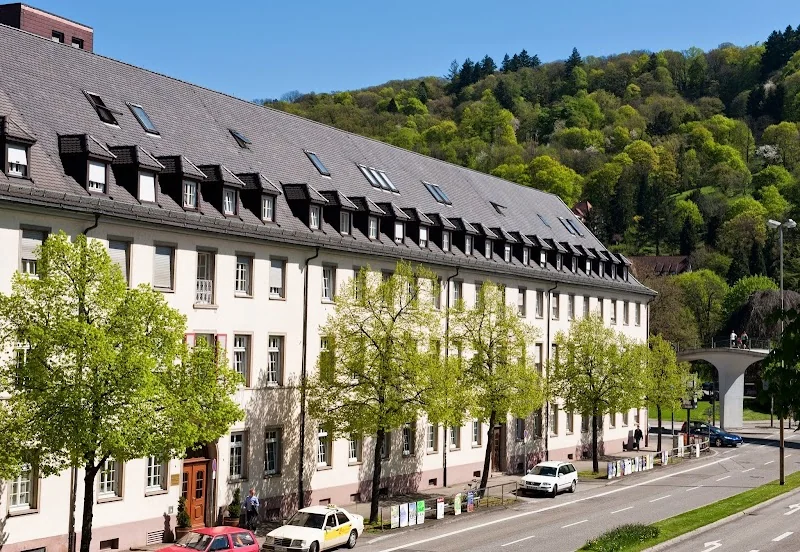
The Katharinenstift in Freiburg is a centrally located care facility with a clear focus on humanity, dignity, and communal living. The official website describes the house as a Catholic institution of the German Order directly at the city park, just a few minutes' walk from the historic city center and the city garden. Here, 131 people live in short-term and full-time care, supplemented by Young Care, a sheltered living area, pastoral care, and an active community project. Therefore, those looking for a nursing home in Freiburg will find not only a location with a good setting but also a house that combines care, everyday proximity, and social openness. The perspective of relatives also plays an important role: The Katharinenstift presents itself as a reliable place for advice, support, and personal contacts, ensuring that decisions are not abstract but are supported in everyday life. At the same time, the house appears consciously urban and lively due to its proximity to the old town, city garden, and city center. This combination of care competence, central location, and social engagement makes the Katharinenstift a defining institution in the northern part of Freiburg's city center. ([altenheim-freiburg.de](https://www.altenheim-freiburg.de/unser-haus))
Location, Contact, and Directions at Leopoldring
The location is one of the strongest arguments for the Katharinenstift. The contact page lists the address Leopoldring 13, 79098 Freiburg; the house page adds that the facility is directly at the city park, centrally located in Freiburg, and sits in direct proximity to the city garden. This is practical for visitors because the way to the city center remains short, and the house does not seem isolated in everyday life but is embedded in the urban environment. The website also provides clear contact methods: The team can be reached by phone at +49 761 2113-3, and by email at katharinenstift-freiburg@deutscher-orden.de. Additionally, fixed consultation hours are specified on the homepage, namely Monday to Friday from 9:00 to 12:30 and from 14:00 to 16:00. Those wishing to make an inquiry for a place or to gather initial information will find a comprehensible and low-threshold contact structure. Especially for care questions, this direct line is often crucial, as advice, visits, and follow-up questions should not be delayed. ([altenheim-freiburg.de](https://www.altenheim-freiburg.de/kontakt))
Even in terms of access, the Katharinenstift clearly emphasizes good accessibility in the urban area. The house page explicitly states that buses and trams connect the house excellently with the city center. For people visiting relatives, attending appointments, or conducting counseling sessions, this is an important point, as a facility with good public transport connections remains significantly more flexible in everyday life. The location by the city garden also indicates that the house provides a green setting despite its central position. However, a separate, prominently displayed parking page is not highlighted on the official website; therefore, those arriving by car should inquire about the specific possibilities directly with the house. This cautious recommendation is sensible because the institution itself primarily emphasizes the central location and the connection with public transport. For seekers looking for terms like access, contact, or location, these practical details are crucial: How do I get there, how do I reach the team, and how close is the house to the city center and city park? The Katharinenstift answers these questions with a clear, urban address and good contact methods. ([altenheim-freiburg.de](https://www.altenheim-freiburg.de/unser-haus))
Care Offers, Places, and Target Groups at the Katharinenstift
Content-wise, the Katharinenstift is significantly more than a classic nursing home. The website mentions 131 people in short-term and full-time care and supplements this offer with five places for young care-dependent individuals and eleven beds in the sheltered living area. This addresses different life situations and care needs, rather than targeting a single group. Particularly striking is the connection between inpatient care, short-term care, and specialized support for younger adults who may need help after accidents, severe chronic, or neurological illnesses. For families searching for a suitable facility, this is relevant because the offerings are not limited to a narrow type of residents. People with dementia also receive special attention in the sheltered living area. Overall, this creates the image of an institution that not only provides beds but offers various paths of care and can respond to different biographies. The clear number of 131 residents also gives a scale that makes the house large enough for specialized structures but still manageable for personal support. ([altenheim-freiburg.de](https://www.altenheim-freiburg.de/unser-haus))
The official homepage further complements this image with additional concrete service components. Mentioned are full inpatient care, short-term and respite care, young care, sheltered living for people with dementia, and care for tracheostomy patients. This shows that the house not only focuses on general care but is also prepared for specialized care and situations with particular support needs. The house page also speaks of a warm community and that residents are individually supported in their daily lives. For orientation on the web, such information is important because search queries like nursing home Freiburg, short-term care, or young care usually aim directly at a specific form of care. The Katharinenstift clearly meets this search intention: inpatient care in the center of Freiburg, complementary care forms for transitional phases, and specialized areas for dementia and young adults. This combination is a strong feature in the regional context because it allows relatives and those affected to make a differentiated decision. Those less interested in mere accommodation but in long-term, professional, and yet personal care will find here a remarkably well-established institution. ([altenheim-freiburg.de](https://www.altenheim-freiburg.de/?utm_source=openai))
Living, Housekeeping, and Everyday Life with Structure
Everyday life at the Katharinenstift is described very realistically on the website. The house page emphasizes that residents are supported from their personally furnished room to a practical care bath and a fixed contact person for residents and relatives. This is an important indication that individuality is not just used as a buzzword but is concretely reflected in the living and care everyday life. Additionally, there is the quietly described inner courtyard garden, which serves as a place of pause and encounter. Such details often make the difference when choosing a care facility because not only care matters but also the feeling of home and familiar surroundings. The Katharinenstift visibly relies on structure and orientation: personal spaces, reachable contacts, and an environment that allows retreat despite its urban location. The fact that even a daycare center has its place under the roof of the house further underscores the intergenerational character of the institution and creates an environment that feels inhabited and lively in the best sense. ([altenheim-freiburg.de](https://www.altenheim-freiburg.de/unser-haus))
Housekeeping also plays a significant role. Meals are cooked directly in the house, using regional, seasonal, and fresh ingredients. The website emphasizes that special needs such as allergies or restrictions are taken into account. Additionally, there are fresh laundry, cleanliness in the rooms, and the possibility to grill together in the garden for celebrations or on nice days. This combination of routine and special occasions positively shapes everyday life in many care facilities because it connects normality and community. The Katharinenstift also emphasizes that meals are not only thought of functionally but as part of a pleasant quality of life. Dining in the dining room, care in the room, and attention to preferences or restrictions create a framework in which residents can feel taken seriously. For relatives, this is an important point of trust because housekeeping in care is much more than cleanliness: it touches on dignity, nutrition, well-being, and the feeling of being in good hands. The in-house kitchen is therefore a strong quality feature that enhances everyday life and simultaneously strengthens the proximity of care. ([altenheim-freiburg.de](https://www.altenheim-freiburg.de/unser-haus/unsere-hauswirtschaft))
Leisure, Culture, and Shared Experiences
The leisure offerings at the Katharinenstift are intentionally varied. The website describes seasonal activities such as a small in-house Oktoberfest, Fasnet with Guggen music, and choir concerts during the Christmas season. Additionally, there are regular musical events from piano soloists to choir performances. These examples show that culture and community do not arise by chance in the house but are purposefully integrated into the annual cycle. For residents, this means that not every day looks the same and that interests, memories, and joy of life are given space. The social service supports these offerings individually and tries to involve people according to their wishes and needs. This is particularly important in a care facility because leisure does not only mean occupation but also participation, stimulation, and social connectedness. The Katharinenstift positions itself as a place where care does not lead to stagnation but to a structured, diverse everyday life with sociability and cultural impulses. ([altenheim-freiburg.de](https://www.altenheim-freiburg.de/unser-haus/unsere-freizeitangebote))
The current reports from the house additionally show that new forms of activation and encounter are being tested. For example, the CareTable is described as an interactive table that combines games, puzzles, memory training, and movement incentives. In a smartphone consultation hour, students worked with residents on digital skills. And during an excursion to the planetarium, it became clear that even short distances in Freiburg can provide new experiences. Additionally, the intergenerational character of many activities is noteworthy: children, teenagers, student interns, and older people regularly meet. This mix is relevant for SEO searches because terms like leisure offerings, events, or programs in the context of a nursing home often inquire about exactly such activating formats. The Katharinenstift shows that a nursing home can be not only a place of care but also a space for learning and experiences. This combination of technology, encounter, and movement makes everyday life lively without losing sight of the needs of the residents. For Freiburg, this is a valuable component of social infrastructure. ([altenheim-freiburg.de](https://www.altenheim-freiburg.de/aktuelles/detail/der-caretable-eine-bereicherung-fuer-das-katharinenstift?utm_source=openai))
Community Project, Neighborhood, and Participation in Freiburg Mitte
A distinctive feature of the Katharinenstift is its community project. The website explicitly states that it aims to strengthen togetherness in Freiburg Mitte, that is, in the city center, Neuburg, and Herdern-South. The goal is to improve the cohesion of the people living there and to promote networking in the neighborhood. This opens the house from the inside out and from the outside in, meaning not as a closed institution but as an active part of the neighborhood. This is particularly evident in urban gardening: In autumn 2023, a cooperation was established with Freiburg packt an, and together with residents and the Eco-Station Freiburg, eight linden tree discs in front of the house are being cultivated with wildflowers. Among others, iris, thyme, and blue globe thistle are mentioned. Such measures make it clear that participation in everyday life becomes concrete and tangible. At the same time, this engagement fits well with the city center location, as it connects care, urban greenery, and neighborhood work within short distances. ([altenheim-freiburg.de](https://www.altenheim-freiburg.de/unser-haus/unser-stadtteilprojekt))
The community project goes even further and focuses on formats that facilitate encounters. The GenussZeit brings people together for cooking and eating; the website describes a project with the Karlschule, where children and residents actively participated together in the kitchen. Additionally, offerings for seniors in the neighborhood are presented, such as the Ü55 regulars' table at Café Inklusiv. The project group for a barrier-free city center is also supported, which ultimately benefits not only the neighborhood but also the residents of the house. Particularly interesting is that the project aims to promote interest in regional and organic foods. This makes it clear: The Katharinenstift does not understand neighborhood as a marginal issue but as an integral part of daily care. Therefore, those searching for terms like community project, Freiburg Mitte, or community will find here an institution that takes neighborhood work seriously and connects it with care, education, and social exchange. This is not only sympathetic but also a genuine unique selling point in the external perception of the house. ([altenheim-freiburg.de](https://www.altenheim-freiburg.de/unser-haus/unser-stadtteilprojekt))
Pastoral Care, Palliative Care, and Support with Attitude
The pastoral dimension is clearly anchored in the Katharinenstift. The website describes the house as a Catholic institution under the sponsorship of the German Order. The pastoral care team includes members of the order, Indian sisters, and individuals from the local Catholic and Protestant congregations. The offerings range from lovingly designed worship services to individual prayers. It is important that the confessional background is not treated as a barrier but that the spiritual and religious well-being of the residents is fundamentally kept in mind. For many relatives and seekers, this is significant because care not only concerns the body but always requires trust, comfort, and orientation. The house's claim is thus clearly Christian in nature, yet open to individual life situations. In a care facility, this form of support can be particularly valuable when people need peace, security, and conversation partners in challenging situations. The Katharinenstift does not merely provide an offering here but a supportive network that is both professional and human. ([altenheim-freiburg.de](https://www.altenheim-freiburg.de/unser-haus/unsere-seelsorge))
The support at the end of life is also structured and professionally differentiated. The website explains that palliative care aims to relieve pain and discomfort and to maintain the best possible quality of life until the end. This includes counseling and support with advance directives, powers of attorney, care directives, and possibly funeral arrangements. Particularly important is the close collaboration with family doctors and with specialized outpatient palliative care and the hospice association. Professionals from nursing, medicine, social work, and pastoral care work together in a multiprofessional manner. The house also emphasizes that the quality of palliative work is regularly reviewed externally. For search queries related to palliative care, end-of-life support, or pastoral care, this is a strong signal because it shows that the Katharinenstift is reliably positioned not only in daily care but also in sensitive boundary situations. The guiding thought is always the same: Every person is special, unique, and valuable. This attitude shapes the external perception of the house and makes the Katharinenstift an institution that convincingly brings together care, dignity, and compassion. ([altenheim-freiburg.de](https://www.altenheim-freiburg.de/unser-haus/unsere-begleitung-am-lebensende))
Sources:
- Elderly Care in Freiburg | Care & Living | Katharinenstift - Official Website
- Our House in Freiburg | Professional Elderly Care with Heart - House Page
- Community Project Freiburg | Strengthening Participation & Community - Community Project
- Pastoral Care & Spiritual Support - Katharinenstift Freiburg
- Contact for Elderly Care in Freiburg | Katharinenstift - Contact & Directions
Show moreShow less
Katharinenstift Freiburg | Nursing Home & Community Project
The Katharinenstift in Freiburg is a centrally located care facility with a clear focus on humanity, dignity, and communal living. The official website describes the house as a Catholic institution of the German Order directly at the city park, just a few minutes' walk from the historic city center and the city garden. Here, 131 people live in short-term and full-time care, supplemented by Young Care, a sheltered living area, pastoral care, and an active community project. Therefore, those looking for a nursing home in Freiburg will find not only a location with a good setting but also a house that combines care, everyday proximity, and social openness. The perspective of relatives also plays an important role: The Katharinenstift presents itself as a reliable place for advice, support, and personal contacts, ensuring that decisions are not abstract but are supported in everyday life. At the same time, the house appears consciously urban and lively due to its proximity to the old town, city garden, and city center. This combination of care competence, central location, and social engagement makes the Katharinenstift a defining institution in the northern part of Freiburg's city center. ([altenheim-freiburg.de](https://www.altenheim-freiburg.de/unser-haus))
Location, Contact, and Directions at Leopoldring
The location is one of the strongest arguments for the Katharinenstift. The contact page lists the address Leopoldring 13, 79098 Freiburg; the house page adds that the facility is directly at the city park, centrally located in Freiburg, and sits in direct proximity to the city garden. This is practical for visitors because the way to the city center remains short, and the house does not seem isolated in everyday life but is embedded in the urban environment. The website also provides clear contact methods: The team can be reached by phone at +49 761 2113-3, and by email at katharinenstift-freiburg@deutscher-orden.de. Additionally, fixed consultation hours are specified on the homepage, namely Monday to Friday from 9:00 to 12:30 and from 14:00 to 16:00. Those wishing to make an inquiry for a place or to gather initial information will find a comprehensible and low-threshold contact structure. Especially for care questions, this direct line is often crucial, as advice, visits, and follow-up questions should not be delayed. ([altenheim-freiburg.de](https://www.altenheim-freiburg.de/kontakt))
Even in terms of access, the Katharinenstift clearly emphasizes good accessibility in the urban area. The house page explicitly states that buses and trams connect the house excellently with the city center. For people visiting relatives, attending appointments, or conducting counseling sessions, this is an important point, as a facility with good public transport connections remains significantly more flexible in everyday life. The location by the city garden also indicates that the house provides a green setting despite its central position. However, a separate, prominently displayed parking page is not highlighted on the official website; therefore, those arriving by car should inquire about the specific possibilities directly with the house. This cautious recommendation is sensible because the institution itself primarily emphasizes the central location and the connection with public transport. For seekers looking for terms like access, contact, or location, these practical details are crucial: How do I get there, how do I reach the team, and how close is the house to the city center and city park? The Katharinenstift answers these questions with a clear, urban address and good contact methods. ([altenheim-freiburg.de](https://www.altenheim-freiburg.de/unser-haus))
Care Offers, Places, and Target Groups at the Katharinenstift
Content-wise, the Katharinenstift is significantly more than a classic nursing home. The website mentions 131 people in short-term and full-time care and supplements this offer with five places for young care-dependent individuals and eleven beds in the sheltered living area. This addresses different life situations and care needs, rather than targeting a single group. Particularly striking is the connection between inpatient care, short-term care, and specialized support for younger adults who may need help after accidents, severe chronic, or neurological illnesses. For families searching for a suitable facility, this is relevant because the offerings are not limited to a narrow type of residents. People with dementia also receive special attention in the sheltered living area. Overall, this creates the image of an institution that not only provides beds but offers various paths of care and can respond to different biographies. The clear number of 131 residents also gives a scale that makes the house large enough for specialized structures but still manageable for personal support. ([altenheim-freiburg.de](https://www.altenheim-freiburg.de/unser-haus))
The official homepage further complements this image with additional concrete service components. Mentioned are full inpatient care, short-term and respite care, young care, sheltered living for people with dementia, and care for tracheostomy patients. This shows that the house not only focuses on general care but is also prepared for specialized care and situations with particular support needs. The house page also speaks of a warm community and that residents are individually supported in their daily lives. For orientation on the web, such information is important because search queries like nursing home Freiburg, short-term care, or young care usually aim directly at a specific form of care. The Katharinenstift clearly meets this search intention: inpatient care in the center of Freiburg, complementary care forms for transitional phases, and specialized areas for dementia and young adults. This combination is a strong feature in the regional context because it allows relatives and those affected to make a differentiated decision. Those less interested in mere accommodation but in long-term, professional, and yet personal care will find here a remarkably well-established institution. ([altenheim-freiburg.de](https://www.altenheim-freiburg.de/?utm_source=openai))
Living, Housekeeping, and Everyday Life with Structure
Everyday life at the Katharinenstift is described very realistically on the website. The house page emphasizes that residents are supported from their personally furnished room to a practical care bath and a fixed contact person for residents and relatives. This is an important indication that individuality is not just used as a buzzword but is concretely reflected in the living and care everyday life. Additionally, there is the quietly described inner courtyard garden, which serves as a place of pause and encounter. Such details often make the difference when choosing a care facility because not only care matters but also the feeling of home and familiar surroundings. The Katharinenstift visibly relies on structure and orientation: personal spaces, reachable contacts, and an environment that allows retreat despite its urban location. The fact that even a daycare center has its place under the roof of the house further underscores the intergenerational character of the institution and creates an environment that feels inhabited and lively in the best sense. ([altenheim-freiburg.de](https://www.altenheim-freiburg.de/unser-haus))
Housekeeping also plays a significant role. Meals are cooked directly in the house, using regional, seasonal, and fresh ingredients. The website emphasizes that special needs such as allergies or restrictions are taken into account. Additionally, there are fresh laundry, cleanliness in the rooms, and the possibility to grill together in the garden for celebrations or on nice days. This combination of routine and special occasions positively shapes everyday life in many care facilities because it connects normality and community. The Katharinenstift also emphasizes that meals are not only thought of functionally but as part of a pleasant quality of life. Dining in the dining room, care in the room, and attention to preferences or restrictions create a framework in which residents can feel taken seriously. For relatives, this is an important point of trust because housekeeping in care is much more than cleanliness: it touches on dignity, nutrition, well-being, and the feeling of being in good hands. The in-house kitchen is therefore a strong quality feature that enhances everyday life and simultaneously strengthens the proximity of care. ([altenheim-freiburg.de](https://www.altenheim-freiburg.de/unser-haus/unsere-hauswirtschaft))
Leisure, Culture, and Shared Experiences
The leisure offerings at the Katharinenstift are intentionally varied. The website describes seasonal activities such as a small in-house Oktoberfest, Fasnet with Guggen music, and choir concerts during the Christmas season. Additionally, there are regular musical events from piano soloists to choir performances. These examples show that culture and community do not arise by chance in the house but are purposefully integrated into the annual cycle. For residents, this means that not every day looks the same and that interests, memories, and joy of life are given space. The social service supports these offerings individually and tries to involve people according to their wishes and needs. This is particularly important in a care facility because leisure does not only mean occupation but also participation, stimulation, and social connectedness. The Katharinenstift positions itself as a place where care does not lead to stagnation but to a structured, diverse everyday life with sociability and cultural impulses. ([altenheim-freiburg.de](https://www.altenheim-freiburg.de/unser-haus/unsere-freizeitangebote))
The current reports from the house additionally show that new forms of activation and encounter are being tested. For example, the CareTable is described as an interactive table that combines games, puzzles, memory training, and movement incentives. In a smartphone consultation hour, students worked with residents on digital skills. And during an excursion to the planetarium, it became clear that even short distances in Freiburg can provide new experiences. Additionally, the intergenerational character of many activities is noteworthy: children, teenagers, student interns, and older people regularly meet. This mix is relevant for SEO searches because terms like leisure offerings, events, or programs in the context of a nursing home often inquire about exactly such activating formats. The Katharinenstift shows that a nursing home can be not only a place of care but also a space for learning and experiences. This combination of technology, encounter, and movement makes everyday life lively without losing sight of the needs of the residents. For Freiburg, this is a valuable component of social infrastructure. ([altenheim-freiburg.de](https://www.altenheim-freiburg.de/aktuelles/detail/der-caretable-eine-bereicherung-fuer-das-katharinenstift?utm_source=openai))
Community Project, Neighborhood, and Participation in Freiburg Mitte
A distinctive feature of the Katharinenstift is its community project. The website explicitly states that it aims to strengthen togetherness in Freiburg Mitte, that is, in the city center, Neuburg, and Herdern-South. The goal is to improve the cohesion of the people living there and to promote networking in the neighborhood. This opens the house from the inside out and from the outside in, meaning not as a closed institution but as an active part of the neighborhood. This is particularly evident in urban gardening: In autumn 2023, a cooperation was established with Freiburg packt an, and together with residents and the Eco-Station Freiburg, eight linden tree discs in front of the house are being cultivated with wildflowers. Among others, iris, thyme, and blue globe thistle are mentioned. Such measures make it clear that participation in everyday life becomes concrete and tangible. At the same time, this engagement fits well with the city center location, as it connects care, urban greenery, and neighborhood work within short distances. ([altenheim-freiburg.de](https://www.altenheim-freiburg.de/unser-haus/unser-stadtteilprojekt))
The community project goes even further and focuses on formats that facilitate encounters. The GenussZeit brings people together for cooking and eating; the website describes a project with the Karlschule, where children and residents actively participated together in the kitchen. Additionally, offerings for seniors in the neighborhood are presented, such as the Ü55 regulars' table at Café Inklusiv. The project group for a barrier-free city center is also supported, which ultimately benefits not only the neighborhood but also the residents of the house. Particularly interesting is that the project aims to promote interest in regional and organic foods. This makes it clear: The Katharinenstift does not understand neighborhood as a marginal issue but as an integral part of daily care. Therefore, those searching for terms like community project, Freiburg Mitte, or community will find here an institution that takes neighborhood work seriously and connects it with care, education, and social exchange. This is not only sympathetic but also a genuine unique selling point in the external perception of the house. ([altenheim-freiburg.de](https://www.altenheim-freiburg.de/unser-haus/unser-stadtteilprojekt))
Pastoral Care, Palliative Care, and Support with Attitude
The pastoral dimension is clearly anchored in the Katharinenstift. The website describes the house as a Catholic institution under the sponsorship of the German Order. The pastoral care team includes members of the order, Indian sisters, and individuals from the local Catholic and Protestant congregations. The offerings range from lovingly designed worship services to individual prayers. It is important that the confessional background is not treated as a barrier but that the spiritual and religious well-being of the residents is fundamentally kept in mind. For many relatives and seekers, this is significant because care not only concerns the body but always requires trust, comfort, and orientation. The house's claim is thus clearly Christian in nature, yet open to individual life situations. In a care facility, this form of support can be particularly valuable when people need peace, security, and conversation partners in challenging situations. The Katharinenstift does not merely provide an offering here but a supportive network that is both professional and human. ([altenheim-freiburg.de](https://www.altenheim-freiburg.de/unser-haus/unsere-seelsorge))
The support at the end of life is also structured and professionally differentiated. The website explains that palliative care aims to relieve pain and discomfort and to maintain the best possible quality of life until the end. This includes counseling and support with advance directives, powers of attorney, care directives, and possibly funeral arrangements. Particularly important is the close collaboration with family doctors and with specialized outpatient palliative care and the hospice association. Professionals from nursing, medicine, social work, and pastoral care work together in a multiprofessional manner. The house also emphasizes that the quality of palliative work is regularly reviewed externally. For search queries related to palliative care, end-of-life support, or pastoral care, this is a strong signal because it shows that the Katharinenstift is reliably positioned not only in daily care but also in sensitive boundary situations. The guiding thought is always the same: Every person is special, unique, and valuable. This attitude shapes the external perception of the house and makes the Katharinenstift an institution that convincingly brings together care, dignity, and compassion. ([altenheim-freiburg.de](https://www.altenheim-freiburg.de/unser-haus/unsere-begleitung-am-lebensende))
Sources:
- Elderly Care in Freiburg | Care & Living | Katharinenstift - Official Website
- Our House in Freiburg | Professional Elderly Care with Heart - House Page
- Community Project Freiburg | Strengthening Participation & Community - Community Project
- Pastoral Care & Spiritual Support - Katharinenstift Freiburg
- Contact for Elderly Care in Freiburg | Katharinenstift - Contact & Directions
Katharinenstift Freiburg | Nursing Home & Community Project
The Katharinenstift in Freiburg is a centrally located care facility with a clear focus on humanity, dignity, and communal living. The official website describes the house as a Catholic institution of the German Order directly at the city park, just a few minutes' walk from the historic city center and the city garden. Here, 131 people live in short-term and full-time care, supplemented by Young Care, a sheltered living area, pastoral care, and an active community project. Therefore, those looking for a nursing home in Freiburg will find not only a location with a good setting but also a house that combines care, everyday proximity, and social openness. The perspective of relatives also plays an important role: The Katharinenstift presents itself as a reliable place for advice, support, and personal contacts, ensuring that decisions are not abstract but are supported in everyday life. At the same time, the house appears consciously urban and lively due to its proximity to the old town, city garden, and city center. This combination of care competence, central location, and social engagement makes the Katharinenstift a defining institution in the northern part of Freiburg's city center. ([altenheim-freiburg.de](https://www.altenheim-freiburg.de/unser-haus))
Location, Contact, and Directions at Leopoldring
The location is one of the strongest arguments for the Katharinenstift. The contact page lists the address Leopoldring 13, 79098 Freiburg; the house page adds that the facility is directly at the city park, centrally located in Freiburg, and sits in direct proximity to the city garden. This is practical for visitors because the way to the city center remains short, and the house does not seem isolated in everyday life but is embedded in the urban environment. The website also provides clear contact methods: The team can be reached by phone at +49 761 2113-3, and by email at katharinenstift-freiburg@deutscher-orden.de. Additionally, fixed consultation hours are specified on the homepage, namely Monday to Friday from 9:00 to 12:30 and from 14:00 to 16:00. Those wishing to make an inquiry for a place or to gather initial information will find a comprehensible and low-threshold contact structure. Especially for care questions, this direct line is often crucial, as advice, visits, and follow-up questions should not be delayed. ([altenheim-freiburg.de](https://www.altenheim-freiburg.de/kontakt))
Even in terms of access, the Katharinenstift clearly emphasizes good accessibility in the urban area. The house page explicitly states that buses and trams connect the house excellently with the city center. For people visiting relatives, attending appointments, or conducting counseling sessions, this is an important point, as a facility with good public transport connections remains significantly more flexible in everyday life. The location by the city garden also indicates that the house provides a green setting despite its central position. However, a separate, prominently displayed parking page is not highlighted on the official website; therefore, those arriving by car should inquire about the specific possibilities directly with the house. This cautious recommendation is sensible because the institution itself primarily emphasizes the central location and the connection with public transport. For seekers looking for terms like access, contact, or location, these practical details are crucial: How do I get there, how do I reach the team, and how close is the house to the city center and city park? The Katharinenstift answers these questions with a clear, urban address and good contact methods. ([altenheim-freiburg.de](https://www.altenheim-freiburg.de/unser-haus))
Care Offers, Places, and Target Groups at the Katharinenstift
Content-wise, the Katharinenstift is significantly more than a classic nursing home. The website mentions 131 people in short-term and full-time care and supplements this offer with five places for young care-dependent individuals and eleven beds in the sheltered living area. This addresses different life situations and care needs, rather than targeting a single group. Particularly striking is the connection between inpatient care, short-term care, and specialized support for younger adults who may need help after accidents, severe chronic, or neurological illnesses. For families searching for a suitable facility, this is relevant because the offerings are not limited to a narrow type of residents. People with dementia also receive special attention in the sheltered living area. Overall, this creates the image of an institution that not only provides beds but offers various paths of care and can respond to different biographies. The clear number of 131 residents also gives a scale that makes the house large enough for specialized structures but still manageable for personal support. ([altenheim-freiburg.de](https://www.altenheim-freiburg.de/unser-haus))
The official homepage further complements this image with additional concrete service components. Mentioned are full inpatient care, short-term and respite care, young care, sheltered living for people with dementia, and care for tracheostomy patients. This shows that the house not only focuses on general care but is also prepared for specialized care and situations with particular support needs. The house page also speaks of a warm community and that residents are individually supported in their daily lives. For orientation on the web, such information is important because search queries like nursing home Freiburg, short-term care, or young care usually aim directly at a specific form of care. The Katharinenstift clearly meets this search intention: inpatient care in the center of Freiburg, complementary care forms for transitional phases, and specialized areas for dementia and young adults. This combination is a strong feature in the regional context because it allows relatives and those affected to make a differentiated decision. Those less interested in mere accommodation but in long-term, professional, and yet personal care will find here a remarkably well-established institution. ([altenheim-freiburg.de](https://www.altenheim-freiburg.de/?utm_source=openai))
Living, Housekeeping, and Everyday Life with Structure
Everyday life at the Katharinenstift is described very realistically on the website. The house page emphasizes that residents are supported from their personally furnished room to a practical care bath and a fixed contact person for residents and relatives. This is an important indication that individuality is not just used as a buzzword but is concretely reflected in the living and care everyday life. Additionally, there is the quietly described inner courtyard garden, which serves as a place of pause and encounter. Such details often make the difference when choosing a care facility because not only care matters but also the feeling of home and familiar surroundings. The Katharinenstift visibly relies on structure and orientation: personal spaces, reachable contacts, and an environment that allows retreat despite its urban location. The fact that even a daycare center has its place under the roof of the house further underscores the intergenerational character of the institution and creates an environment that feels inhabited and lively in the best sense. ([altenheim-freiburg.de](https://www.altenheim-freiburg.de/unser-haus))
Housekeeping also plays a significant role. Meals are cooked directly in the house, using regional, seasonal, and fresh ingredients. The website emphasizes that special needs such as allergies or restrictions are taken into account. Additionally, there are fresh laundry, cleanliness in the rooms, and the possibility to grill together in the garden for celebrations or on nice days. This combination of routine and special occasions positively shapes everyday life in many care facilities because it connects normality and community. The Katharinenstift also emphasizes that meals are not only thought of functionally but as part of a pleasant quality of life. Dining in the dining room, care in the room, and attention to preferences or restrictions create a framework in which residents can feel taken seriously. For relatives, this is an important point of trust because housekeeping in care is much more than cleanliness: it touches on dignity, nutrition, well-being, and the feeling of being in good hands. The in-house kitchen is therefore a strong quality feature that enhances everyday life and simultaneously strengthens the proximity of care. ([altenheim-freiburg.de](https://www.altenheim-freiburg.de/unser-haus/unsere-hauswirtschaft))
Leisure, Culture, and Shared Experiences
The leisure offerings at the Katharinenstift are intentionally varied. The website describes seasonal activities such as a small in-house Oktoberfest, Fasnet with Guggen music, and choir concerts during the Christmas season. Additionally, there are regular musical events from piano soloists to choir performances. These examples show that culture and community do not arise by chance in the house but are purposefully integrated into the annual cycle. For residents, this means that not every day looks the same and that interests, memories, and joy of life are given space. The social service supports these offerings individually and tries to involve people according to their wishes and needs. This is particularly important in a care facility because leisure does not only mean occupation but also participation, stimulation, and social connectedness. The Katharinenstift positions itself as a place where care does not lead to stagnation but to a structured, diverse everyday life with sociability and cultural impulses. ([altenheim-freiburg.de](https://www.altenheim-freiburg.de/unser-haus/unsere-freizeitangebote))
The current reports from the house additionally show that new forms of activation and encounter are being tested. For example, the CareTable is described as an interactive table that combines games, puzzles, memory training, and movement incentives. In a smartphone consultation hour, students worked with residents on digital skills. And during an excursion to the planetarium, it became clear that even short distances in Freiburg can provide new experiences. Additionally, the intergenerational character of many activities is noteworthy: children, teenagers, student interns, and older people regularly meet. This mix is relevant for SEO searches because terms like leisure offerings, events, or programs in the context of a nursing home often inquire about exactly such activating formats. The Katharinenstift shows that a nursing home can be not only a place of care but also a space for learning and experiences. This combination of technology, encounter, and movement makes everyday life lively without losing sight of the needs of the residents. For Freiburg, this is a valuable component of social infrastructure. ([altenheim-freiburg.de](https://www.altenheim-freiburg.de/aktuelles/detail/der-caretable-eine-bereicherung-fuer-das-katharinenstift?utm_source=openai))
Community Project, Neighborhood, and Participation in Freiburg Mitte
A distinctive feature of the Katharinenstift is its community project. The website explicitly states that it aims to strengthen togetherness in Freiburg Mitte, that is, in the city center, Neuburg, and Herdern-South. The goal is to improve the cohesion of the people living there and to promote networking in the neighborhood. This opens the house from the inside out and from the outside in, meaning not as a closed institution but as an active part of the neighborhood. This is particularly evident in urban gardening: In autumn 2023, a cooperation was established with Freiburg packt an, and together with residents and the Eco-Station Freiburg, eight linden tree discs in front of the house are being cultivated with wildflowers. Among others, iris, thyme, and blue globe thistle are mentioned. Such measures make it clear that participation in everyday life becomes concrete and tangible. At the same time, this engagement fits well with the city center location, as it connects care, urban greenery, and neighborhood work within short distances. ([altenheim-freiburg.de](https://www.altenheim-freiburg.de/unser-haus/unser-stadtteilprojekt))
The community project goes even further and focuses on formats that facilitate encounters. The GenussZeit brings people together for cooking and eating; the website describes a project with the Karlschule, where children and residents actively participated together in the kitchen. Additionally, offerings for seniors in the neighborhood are presented, such as the Ü55 regulars' table at Café Inklusiv. The project group for a barrier-free city center is also supported, which ultimately benefits not only the neighborhood but also the residents of the house. Particularly interesting is that the project aims to promote interest in regional and organic foods. This makes it clear: The Katharinenstift does not understand neighborhood as a marginal issue but as an integral part of daily care. Therefore, those searching for terms like community project, Freiburg Mitte, or community will find here an institution that takes neighborhood work seriously and connects it with care, education, and social exchange. This is not only sympathetic but also a genuine unique selling point in the external perception of the house. ([altenheim-freiburg.de](https://www.altenheim-freiburg.de/unser-haus/unser-stadtteilprojekt))
Pastoral Care, Palliative Care, and Support with Attitude
The pastoral dimension is clearly anchored in the Katharinenstift. The website describes the house as a Catholic institution under the sponsorship of the German Order. The pastoral care team includes members of the order, Indian sisters, and individuals from the local Catholic and Protestant congregations. The offerings range from lovingly designed worship services to individual prayers. It is important that the confessional background is not treated as a barrier but that the spiritual and religious well-being of the residents is fundamentally kept in mind. For many relatives and seekers, this is significant because care not only concerns the body but always requires trust, comfort, and orientation. The house's claim is thus clearly Christian in nature, yet open to individual life situations. In a care facility, this form of support can be particularly valuable when people need peace, security, and conversation partners in challenging situations. The Katharinenstift does not merely provide an offering here but a supportive network that is both professional and human. ([altenheim-freiburg.de](https://www.altenheim-freiburg.de/unser-haus/unsere-seelsorge))
The support at the end of life is also structured and professionally differentiated. The website explains that palliative care aims to relieve pain and discomfort and to maintain the best possible quality of life until the end. This includes counseling and support with advance directives, powers of attorney, care directives, and possibly funeral arrangements. Particularly important is the close collaboration with family doctors and with specialized outpatient palliative care and the hospice association. Professionals from nursing, medicine, social work, and pastoral care work together in a multiprofessional manner. The house also emphasizes that the quality of palliative work is regularly reviewed externally. For search queries related to palliative care, end-of-life support, or pastoral care, this is a strong signal because it shows that the Katharinenstift is reliably positioned not only in daily care but also in sensitive boundary situations. The guiding thought is always the same: Every person is special, unique, and valuable. This attitude shapes the external perception of the house and makes the Katharinenstift an institution that convincingly brings together care, dignity, and compassion. ([altenheim-freiburg.de](https://www.altenheim-freiburg.de/unser-haus/unsere-begleitung-am-lebensende))
Sources:
- Elderly Care in Freiburg | Care & Living | Katharinenstift - Official Website
- Our House in Freiburg | Professional Elderly Care with Heart - House Page
- Community Project Freiburg | Strengthening Participation & Community - Community Project
- Pastoral Care & Spiritual Support - Katharinenstift Freiburg
- Contact for Elderly Care in Freiburg | Katharinenstift - Contact & Directions
Frequently Asked Questions
Reviews
No reviews found