
Karlsruhe
Karlsruhe, Deutschland
Karlsruhe | Weather & News
Karlsruhe is a city that cannot be reduced to a single term. The official representation of the city and the tourism website show a fan-shaped city with baroque origins, legal significance, plenty of green spaces, cultural diversity, and an astonishingly clear urban identity. Currently, 301,087 people live here as their primary residence, and the city combines historical substance with modern infrastructure, strong science, vibrant leisure activities, and a very active tourist demand. This is precisely why many people search for Karlsruhe not only with a map in mind but with very different motives: Those reading current news want to know what is happening in the city; those searching for weather are interested in climate and quality of life; those entering zoo or Rhine port are looking for specific places; and those asking about the federal state or population want to place the city in the right context. Karlsruhe provides solid answers to all these questions without getting lost in clichés. The city has been planned, grown, and remains open. Its unique shape, proximity to the Rhine, strong green spaces, and its defining role as the seat of the highest courts make Karlsruhe a place that convinces both factually and atmospherically. ([karlsruhe-erleben.de](https://www.karlsruhe-erleben.de/en/stadtportrait))
To understand Karlsruhe, one must think of two levels together: the historical idea and today's everyday life. Historically, the city is a baroque planned city with a residence at its center, radial axes, and an urban layout that attracted attention far beyond the region. In everyday life, Karlsruhe is a vibrant metropolis with high visitor numbers, many events, good accessibility, and strong leisure offerings. The official statistical data shows for 2025, among other things, 66 accommodation establishments, 9,186 sleeping places, 797,776 arrivals, and 1,342,532 overnight stays. This is important because it illustrates that Karlsruhe is not only an administrative or scientific location but also a travel destination with measurable appeal. Additionally, the city communicates its news, dates, services, and city information centrally through official portals, ensuring that current developments remain quickly findable. Karlsruhe is thus not just a historical backdrop but a city where the present, movement, and orientation fit together. This very mix also shapes the search intent behind terms like current, news, weather, population, zoo, Rhine port, and travel. ([karlsruhe-erleben.de](https://www.karlsruhe-erleben.de/en/stadtportrait))
Current Karlsruhe, Weather, and City Profile
Karlsruhe is often searched for in relation to weather and current conditions, which is understandable because the city holds a special position in climate and quality of life comparisons. The official city and tourism description refers to Karlsruhe as a very pleasant city located in the Rhine valley, protected by the surrounding low mountain ranges. There, Karlsruhe is described as the second warmest city in Germany, with an average of around 20 degrees in summer and approximately 140 sunny days per year. At the same time, almost 60 percent of the area is green. This explains why the cityscape, despite its urban density, appears surprisingly airy and why many visitors associate the fan-shaped city with staying, relaxation, and short distances. Therefore, those searching for Karlsruhe in relation to weather often mean not only the daily forecast but the typical climate of the city, the sunny perspectives, and the practical question of how to plan a day in Karlsruhe well. For such planning, the official pages are particularly useful because they not only feature news and notices but also events, city services, and practical information brought together in a central structure. Karlsruhe communicates visibly on these channels as a city that informs its residents as well as guests and places the current situation in a broader context. ([karlsruhe-erleben.de](https://www.karlsruhe-erleben.de/en/stadtportrait))
The current city profile also includes tourist dynamics. According to official statistics, Karlsruhe recorded 66 establishments with 9,186 sleeping places, 797,776 arrivals, and 1,342,532 overnight stays in 2025; these are clear indications that the city is much more than a local center. It is a destination for city trips, business travel, and short visits. The city statistics also clearly show how closely population development, housing situation, economy, and tourism are interconnected. Karlsruhe regularly publishes these figures, making transparency a part of its location quality. It fits that the city closely links topics such as leisure, tourism, parks, zoo, baths, mobility, and urban development in its external communication. Therefore, those looking for current information about Karlsruhe will find not only news in the official communication but also a coherent picture of the city. This is SEO-relevant because search queries like Karlsruhe current, Karlsruhe news, Karlsruhe weather, or Karlsruhe storm often boil down to the same question: How does the city live, function, and feel today? Karlsruhe provides a convincing answer to this question with its official data, green structure, and vibrant city life. ([karlsruhe.de](https://www.karlsruhe.de/mobilitaet-stadtbild/stadtentwicklung/statistik-und-zensus))
Karlsruhe Zoo and City Garden: Green Oasis with Visitor Magnet
The Zoological City Garden is one of the strongest arguments for why Karlsruhe is so often associated with leisure, family outings, and experiences. The official city website describes it as an area with two parts: In the city garden, thematic gardens invite exploration, while the zoo offers various animal worlds. This is complemented by gastronomy and children's playgrounds. This is particularly attractive for visitors because Karlsruhe thus offers a combination of nature, education, and recreation. Historically, the facility dates back a long way. The city garden originates from several historical facilities, and the actual history of the city garden begins in 1877; however, the roots go back to 1823. In the early 20th century, additional designed special gardens were added, the facility was expanded in 1913/14 due to the relocation of the train station, and from 1963 to 1967, a fundamental redesign took place as part of the Federal Garden Show 1967. This blend of history and present makes the place so characteristic: It is neither a pure zoo nor a pure park but a developed experience space where city history, landscape design, and leisure culture intersect. ([karlsruhe.de](https://www.karlsruhe.de/kultur-freizeit/freizeit-und-tourismus/parks-und-gruenanlagen/zoologischer-stadtgarten))
The fact that the Zoological City Garden is now one of the city's most important attractions is also shown by the current visitor numbers. In 2025, according to official reports, 1,125,466 guests visited, the highest number ever. The zoo is home to more than 6,500 animals, spread across around 340 species. The city also emphasizes the role of the zoo as a modern species protection center that not only entertains but also connects research, education, and the protection of endangered species. This combination is important for the search intent regarding Karlsruhe Zoo because many users want not only opening hours or the name but also to understand why the place has significance. The answer is clear: The zoo is a green oasis in the heart of the city, a visitor magnet, and at the same time a place where biodiversity is practically conveyed. Those who discover Karlsruhe through this theme experience the city from its emotional yet factual side. Among polar bears, tropical halls, walk-through exhibits, and park character, Karlsruhe shows how modern leisure offerings can be embedded in a grown urban backdrop. ([karlsruhe.de](https://www.karlsruhe.de/stadt-rathaus/aktuelles/meldungen/zoo-rekordjahr-gibt-rueckenwind-in-finanziell-herausfordernden-zeiten))
Rhine Port Karlsruhe: Port, History, and Trimodal Logistics
The Rhine port is another key to understanding Karlsruhe because it shapes the city not only geographically but also economically. The official city history and current anniversary reporting show that the Rhine port is much more than a transshipment point: It is a place where water, rail, and road transport come together, thus a trimodal infrastructure with high strategic importance. The area covers around 300 hectares. On March 27, 1901, the first ship entered the newly built Rhine port, and in 2026, Karlsruhe will celebrate 125 years of the Rhine port. This history is valuable for SEO because search queries like Rhine port Karlsruhe or Karlsruhe Rhine port brand often express a strong local interest that goes beyond the term port. People are looking here for economy, urban development, history, and current events. Therefore, the city explicitly communicates the port as Karlsruhe's gateway to the world and as a connection between economy, infrastructure, and urban history. This makes the Rhine port a place where technical utility and urban identity intertwine. ([karlsruhe.de](https://www.karlsruhe.de/stadt-rathaus/aktuelles/meldungen/rollender-werbetraeger-vorgestellt))
Historically noteworthy is that in 1928, Karlsruhe was the fifth largest Rhine port in Germany. The regulation of the Rhine and the expansion of the port facilities also had a lasting impact on development. For today's perception, it is important that the port is not understood as an isolated industrial area but as part of urban dynamics. The city attributes dynamism, development, and progress to the area, and this formulation makes it clear how strongly the port is anchored in Karlsruhe. Therefore, those searching for current information about the Rhine port will find not just an economic object but a developed piece of city history. This also applies to the management, as the Karlsruhe supply, transport, and port GmbH explicitly takes over the operation of the Rhine ports. This means that the port is institutionally firmly anchored in the city. For visitors and readers, this means: Karlsruhe has a place with the Rhine port where one can clearly recognize the industrial and logistical side of the city without having to forgo atmosphere, history, and current relevance. ([stadtlexikon.karlsruhe.de](https://stadtlexikon.karlsruhe.de/index.php/De%3ALexikon%3Ains-1511))
Travel, Airport, and Mobility in Karlsruhe
Karlsruhe is remarkably well-connected, and this makes the city attractive for visitors, business travelers, and short-term vacationers. The official travel page lists the nearby flight connections as Karlsruhe/Baden-Baden Airport as well as the airports in Frankfurt, Stuttgart, and Strasbourg. Various ways into the city from Karlsruhe/Baden-Baden Airport are described: by transfer service, taxi, or public transport. The city refers to bus connections towards Baden-Baden or Rastatt; from there, it continues directly to Karlsruhe Central Station by S-Bahn or regional train. Particularly practical is that Karlsruhe is considered a city of short distances and that public transport is closely integrated. This is supported by the Karlsruhe Transport Association and the regiomove app, which allows real-time planning of connections and ticket bookings. For the search intent Karlsruhe airport, this is important because Karlsruhe itself does not have a large international airport directly in the city area but is reliably connected via Baden-Airpark. Therefore, those traveling to Karlsruhe often use a combination of flight, shuttle, train, and KVV. ([karlsruhe-erleben.de](https://www.karlsruhe-erleben.de/en/anreise-mobilitaet))
The mobility culture of the city is also remarkable. Karlsruhe presents itself as a place with short distances, good public transport, bike and sharing offers, and high usability in everyday life. In the official tourism description, the city mobility culture is described as particularly advanced; it even mentions a pioneering position in German car sharing, with a fleet of around 1,600 vehicles. This is practical for visitors but also important for the perception of the city because mobility here is not seen as a peripheral issue but as part of the lifestyle. Those exploring Karlsruhe can often leave the car behind because trams, trains, bicycles, and pedestrian paths make many things easier. This fits the character of the fan-shaped city: clear axes, compact paths, good orientation, and a tourism infrastructure that does not complicate modern travel more than necessary. For content about Karlsruhe, this point is strong because it offers real added value: The city is not only accessible, but it is also pleasantly navigable within the urban structure. ([karlsruhe-erleben.de](https://www.karlsruhe-erleben.de/en/anreise-mobilitaet))
Population, Federal State, and Quality of Life in the Fan-Shaped City
Karlsruhe is located in the federal state of Baden-Württemberg and clearly belongs geographically and culturally to the southwest of Germany. The official tourism description emphasizes the location on the Rhine, the proximity to Rhineland-Palatinate, the only about 4 kilometers away French border area, and a city area of 173.49 square kilometers. This location makes Karlsruhe a city that lies in the middle of a border region that is economically strong and culturally diverse. For the keyword search Karlsruhe federal state, the simple answer is therefore important, but the stronger answer is the geographical classification: Karlsruhe is not just anywhere in southern Germany but in a region where the Rhine, France, natural space, and urban area interact closely. The city also boasts a high quality of life. Officially, there are more than 800 hectares of parks and green spaces, and almost 60 percent of the area is green. Karlsruhe also belongs to the Black Forest Middle/North Nature Park and has several nature reserves, making the connection to nature not just claimed but spatially visible. ([karlsruhe-erleben.de](https://www.karlsruhe-erleben.de/en/stadtportrait))
The population figures further underline the urban significance. With 301,087 residents at their primary residence, Karlsruhe ranks among the large cities in the country but remains manageable enough to connect city life and accessibility. The city’s statistics page also shows a strong economic and social structure, for example, in terms of employment, households, and housing stock. For readers searching for Karlsruhe population, this is more than just a number: It shows that Karlsruhe is a modern metropolis with stable urban density, high mobility, and a diverse population structure. Combined with the mild climate, green structure, and location on the Rhine and border, a location profile emerges that is attractive for families, commuters, students, and visitors. The city visibly utilizes these strengths in its external communication and thus speaks of quality of stay, sustainable urban development, and a distinctive urban character. This is precisely where the strength of the fan-shaped city lies: Karlsruhe is large enough to support offerings, culture, and economy while also being compact enough to ensure orientation and everyday usability. ([karlsruhe.de](https://www.karlsruhe.de/mobilitaet-stadtbild/stadtentwicklung/statistik-und-zensus))
History, Architecture, and Karlsruher SC
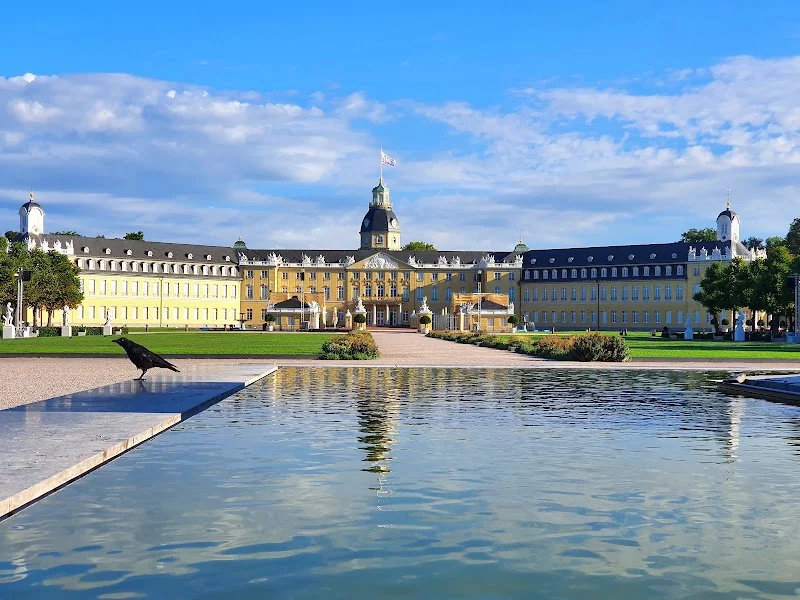
Karlsruhe is unique in Germany mainly due to its history and architecture. The official city and tourism representation describes Karlsruhe as one of the most important baroque planned cities in Germany with a fan-shaped layout. The founding goes back to Margrave Karl Wilhelm of Baden-Durlach, who had the city established in 1715. The central idea was as simple as it was formative: From the palace, the streets radiate out into the city. This order is not only interesting from an urban planning perspective but has also been identity-forming to this day. In 1823, the pyramid was erected as a landmark, and the neoclassical architect Friedrich Weinbrenner sustainably shaped the cityscape with numerous buildings. For the search intent Karlsruhe current and Karlsruhe history, this historical depth is important because it explains why Karlsruhe is so often perceived as a city with a clear structure, special form, and strong character. The city is also regarded as a city of law, as the Federal Court of Justice has been located here since 1950 and the Federal Constitutional Court since 1951. Karlsruhe is thus not only architecturally but also institutionally a place of nationwide significance. ([karlsruhe-erleben.de](https://www.karlsruhe-erleben.de/en/kunst-kultur/architektur))
Today, the Karlsruher SC is also part of the cultural and sporting identity. The official club pages list the match schedule, stadium plan, travel information, and the BBBank Wildpark as central components of the fan and match day world. This is relevant for content about Karlsruhe because the city consists not only of historical buildings and authorities but also of sports culture, club life, and emotional attachment. The KSC belongs to Karlsruhe like the market, the palace, and the fan-shaped structure. Those searching for Karlsruhe SC usually want not just a name but information about matches, stadium visits, and club identity. This is precisely what the official club communication shows. Together, this creates a picture that makes Karlsruhe particularly strong: a city with a baroque idea, classical architecture, legal significance, modern science, sporting identity, and an open urban atmosphere. This mix is rare and explains why Karlsruhe repeatedly appears in very different contexts in the digital search space. Whether weather, news, zoo, Rhine port, airport, or KSC: Behind all these terms is a city that translates over 300 years of history into a very modern present. ([ksc.de](https://www.ksc.de/?utm_source=openai))
Sources:
- Karlsruhe City Portrait from the official tourism site ([karlsruhe-erleben.de](https://www.karlsruhe-erleben.de/en/stadtportrait))
- Statistics and Census of the City of Karlsruhe ([karlsruhe.de](https://www.karlsruhe.de/mobilitaet-stadtbild/stadtentwicklung/statistik-und-zensus))
- Zoological City Garden Karlsruhe and current visitor numbers ([karlsruhe.de](https://www.karlsruhe.de/kultur-freizeit/freizeit-und-tourismus/parks-und-gruenanlagen/zoologischer-stadtgarten))
- Rhine Port Karlsruhe and Anniversary 125 Years ([karlsruhe.de](https://www.karlsruhe.de/stadt-rathaus/aktuelles/meldungen/rollender-werbetraeger-vorgestellt))
- Travel and Mobility in Karlsruhe ([karlsruhe-erleben.de](https://www.karlsruhe-erleben.de/en/anreise-mobilitaet))
- Karlsruher SC official website ([ksc.de](https://www.ksc.de/?utm_source=openai))
Mehr anzeigenWeniger anzeigen
Karlsruhe | Weather & News
Karlsruhe is a city that cannot be reduced to a single term. The official representation of the city and the tourism website show a fan-shaped city with baroque origins, legal significance, plenty of green spaces, cultural diversity, and an astonishingly clear urban identity. Currently, 301,087 people live here as their primary residence, and the city combines historical substance with modern infrastructure, strong science, vibrant leisure activities, and a very active tourist demand. This is precisely why many people search for Karlsruhe not only with a map in mind but with very different motives: Those reading current news want to know what is happening in the city; those searching for weather are interested in climate and quality of life; those entering zoo or Rhine port are looking for specific places; and those asking about the federal state or population want to place the city in the right context. Karlsruhe provides solid answers to all these questions without getting lost in clichés. The city has been planned, grown, and remains open. Its unique shape, proximity to the Rhine, strong green spaces, and its defining role as the seat of the highest courts make Karlsruhe a place that convinces both factually and atmospherically. ([karlsruhe-erleben.de](https://www.karlsruhe-erleben.de/en/stadtportrait))
To understand Karlsruhe, one must think of two levels together: the historical idea and today's everyday life. Historically, the city is a baroque planned city with a residence at its center, radial axes, and an urban layout that attracted attention far beyond the region. In everyday life, Karlsruhe is a vibrant metropolis with high visitor numbers, many events, good accessibility, and strong leisure offerings. The official statistical data shows for 2025, among other things, 66 accommodation establishments, 9,186 sleeping places, 797,776 arrivals, and 1,342,532 overnight stays. This is important because it illustrates that Karlsruhe is not only an administrative or scientific location but also a travel destination with measurable appeal. Additionally, the city communicates its news, dates, services, and city information centrally through official portals, ensuring that current developments remain quickly findable. Karlsruhe is thus not just a historical backdrop but a city where the present, movement, and orientation fit together. This very mix also shapes the search intent behind terms like current, news, weather, population, zoo, Rhine port, and travel. ([karlsruhe-erleben.de](https://www.karlsruhe-erleben.de/en/stadtportrait))
Current Karlsruhe, Weather, and City Profile
Karlsruhe is often searched for in relation to weather and current conditions, which is understandable because the city holds a special position in climate and quality of life comparisons. The official city and tourism description refers to Karlsruhe as a very pleasant city located in the Rhine valley, protected by the surrounding low mountain ranges. There, Karlsruhe is described as the second warmest city in Germany, with an average of around 20 degrees in summer and approximately 140 sunny days per year. At the same time, almost 60 percent of the area is green. This explains why the cityscape, despite its urban density, appears surprisingly airy and why many visitors associate the fan-shaped city with staying, relaxation, and short distances. Therefore, those searching for Karlsruhe in relation to weather often mean not only the daily forecast but the typical climate of the city, the sunny perspectives, and the practical question of how to plan a day in Karlsruhe well. For such planning, the official pages are particularly useful because they not only feature news and notices but also events, city services, and practical information brought together in a central structure. Karlsruhe communicates visibly on these channels as a city that informs its residents as well as guests and places the current situation in a broader context. ([karlsruhe-erleben.de](https://www.karlsruhe-erleben.de/en/stadtportrait))
The current city profile also includes tourist dynamics. According to official statistics, Karlsruhe recorded 66 establishments with 9,186 sleeping places, 797,776 arrivals, and 1,342,532 overnight stays in 2025; these are clear indications that the city is much more than a local center. It is a destination for city trips, business travel, and short visits. The city statistics also clearly show how closely population development, housing situation, economy, and tourism are interconnected. Karlsruhe regularly publishes these figures, making transparency a part of its location quality. It fits that the city closely links topics such as leisure, tourism, parks, zoo, baths, mobility, and urban development in its external communication. Therefore, those looking for current information about Karlsruhe will find not only news in the official communication but also a coherent picture of the city. This is SEO-relevant because search queries like Karlsruhe current, Karlsruhe news, Karlsruhe weather, or Karlsruhe storm often boil down to the same question: How does the city live, function, and feel today? Karlsruhe provides a convincing answer to this question with its official data, green structure, and vibrant city life. ([karlsruhe.de](https://www.karlsruhe.de/mobilitaet-stadtbild/stadtentwicklung/statistik-und-zensus))
Karlsruhe Zoo and City Garden: Green Oasis with Visitor Magnet
The Zoological City Garden is one of the strongest arguments for why Karlsruhe is so often associated with leisure, family outings, and experiences. The official city website describes it as an area with two parts: In the city garden, thematic gardens invite exploration, while the zoo offers various animal worlds. This is complemented by gastronomy and children's playgrounds. This is particularly attractive for visitors because Karlsruhe thus offers a combination of nature, education, and recreation. Historically, the facility dates back a long way. The city garden originates from several historical facilities, and the actual history of the city garden begins in 1877; however, the roots go back to 1823. In the early 20th century, additional designed special gardens were added, the facility was expanded in 1913/14 due to the relocation of the train station, and from 1963 to 1967, a fundamental redesign took place as part of the Federal Garden Show 1967. This blend of history and present makes the place so characteristic: It is neither a pure zoo nor a pure park but a developed experience space where city history, landscape design, and leisure culture intersect. ([karlsruhe.de](https://www.karlsruhe.de/kultur-freizeit/freizeit-und-tourismus/parks-und-gruenanlagen/zoologischer-stadtgarten))
The fact that the Zoological City Garden is now one of the city's most important attractions is also shown by the current visitor numbers. In 2025, according to official reports, 1,125,466 guests visited, the highest number ever. The zoo is home to more than 6,500 animals, spread across around 340 species. The city also emphasizes the role of the zoo as a modern species protection center that not only entertains but also connects research, education, and the protection of endangered species. This combination is important for the search intent regarding Karlsruhe Zoo because many users want not only opening hours or the name but also to understand why the place has significance. The answer is clear: The zoo is a green oasis in the heart of the city, a visitor magnet, and at the same time a place where biodiversity is practically conveyed. Those who discover Karlsruhe through this theme experience the city from its emotional yet factual side. Among polar bears, tropical halls, walk-through exhibits, and park character, Karlsruhe shows how modern leisure offerings can be embedded in a grown urban backdrop. ([karlsruhe.de](https://www.karlsruhe.de/stadt-rathaus/aktuelles/meldungen/zoo-rekordjahr-gibt-rueckenwind-in-finanziell-herausfordernden-zeiten))
Rhine Port Karlsruhe: Port, History, and Trimodal Logistics
The Rhine port is another key to understanding Karlsruhe because it shapes the city not only geographically but also economically. The official city history and current anniversary reporting show that the Rhine port is much more than a transshipment point: It is a place where water, rail, and road transport come together, thus a trimodal infrastructure with high strategic importance. The area covers around 300 hectares. On March 27, 1901, the first ship entered the newly built Rhine port, and in 2026, Karlsruhe will celebrate 125 years of the Rhine port. This history is valuable for SEO because search queries like Rhine port Karlsruhe or Karlsruhe Rhine port brand often express a strong local interest that goes beyond the term port. People are looking here for economy, urban development, history, and current events. Therefore, the city explicitly communicates the port as Karlsruhe's gateway to the world and as a connection between economy, infrastructure, and urban history. This makes the Rhine port a place where technical utility and urban identity intertwine. ([karlsruhe.de](https://www.karlsruhe.de/stadt-rathaus/aktuelles/meldungen/rollender-werbetraeger-vorgestellt))
Historically noteworthy is that in 1928, Karlsruhe was the fifth largest Rhine port in Germany. The regulation of the Rhine and the expansion of the port facilities also had a lasting impact on development. For today's perception, it is important that the port is not understood as an isolated industrial area but as part of urban dynamics. The city attributes dynamism, development, and progress to the area, and this formulation makes it clear how strongly the port is anchored in Karlsruhe. Therefore, those searching for current information about the Rhine port will find not just an economic object but a developed piece of city history. This also applies to the management, as the Karlsruhe supply, transport, and port GmbH explicitly takes over the operation of the Rhine ports. This means that the port is institutionally firmly anchored in the city. For visitors and readers, this means: Karlsruhe has a place with the Rhine port where one can clearly recognize the industrial and logistical side of the city without having to forgo atmosphere, history, and current relevance. ([stadtlexikon.karlsruhe.de](https://stadtlexikon.karlsruhe.de/index.php/De%3ALexikon%3Ains-1511))
Travel, Airport, and Mobility in Karlsruhe
Karlsruhe is remarkably well-connected, and this makes the city attractive for visitors, business travelers, and short-term vacationers. The official travel page lists the nearby flight connections as Karlsruhe/Baden-Baden Airport as well as the airports in Frankfurt, Stuttgart, and Strasbourg. Various ways into the city from Karlsruhe/Baden-Baden Airport are described: by transfer service, taxi, or public transport. The city refers to bus connections towards Baden-Baden or Rastatt; from there, it continues directly to Karlsruhe Central Station by S-Bahn or regional train. Particularly practical is that Karlsruhe is considered a city of short distances and that public transport is closely integrated. This is supported by the Karlsruhe Transport Association and the regiomove app, which allows real-time planning of connections and ticket bookings. For the search intent Karlsruhe airport, this is important because Karlsruhe itself does not have a large international airport directly in the city area but is reliably connected via Baden-Airpark. Therefore, those traveling to Karlsruhe often use a combination of flight, shuttle, train, and KVV. ([karlsruhe-erleben.de](https://www.karlsruhe-erleben.de/en/anreise-mobilitaet))
The mobility culture of the city is also remarkable. Karlsruhe presents itself as a place with short distances, good public transport, bike and sharing offers, and high usability in everyday life. In the official tourism description, the city mobility culture is described as particularly advanced; it even mentions a pioneering position in German car sharing, with a fleet of around 1,600 vehicles. This is practical for visitors but also important for the perception of the city because mobility here is not seen as a peripheral issue but as part of the lifestyle. Those exploring Karlsruhe can often leave the car behind because trams, trains, bicycles, and pedestrian paths make many things easier. This fits the character of the fan-shaped city: clear axes, compact paths, good orientation, and a tourism infrastructure that does not complicate modern travel more than necessary. For content about Karlsruhe, this point is strong because it offers real added value: The city is not only accessible, but it is also pleasantly navigable within the urban structure. ([karlsruhe-erleben.de](https://www.karlsruhe-erleben.de/en/anreise-mobilitaet))
Population, Federal State, and Quality of Life in the Fan-Shaped City
Karlsruhe is located in the federal state of Baden-Württemberg and clearly belongs geographically and culturally to the southwest of Germany. The official tourism description emphasizes the location on the Rhine, the proximity to Rhineland-Palatinate, the only about 4 kilometers away French border area, and a city area of 173.49 square kilometers. This location makes Karlsruhe a city that lies in the middle of a border region that is economically strong and culturally diverse. For the keyword search Karlsruhe federal state, the simple answer is therefore important, but the stronger answer is the geographical classification: Karlsruhe is not just anywhere in southern Germany but in a region where the Rhine, France, natural space, and urban area interact closely. The city also boasts a high quality of life. Officially, there are more than 800 hectares of parks and green spaces, and almost 60 percent of the area is green. Karlsruhe also belongs to the Black Forest Middle/North Nature Park and has several nature reserves, making the connection to nature not just claimed but spatially visible. ([karlsruhe-erleben.de](https://www.karlsruhe-erleben.de/en/stadtportrait))
The population figures further underline the urban significance. With 301,087 residents at their primary residence, Karlsruhe ranks among the large cities in the country but remains manageable enough to connect city life and accessibility. The city’s statistics page also shows a strong economic and social structure, for example, in terms of employment, households, and housing stock. For readers searching for Karlsruhe population, this is more than just a number: It shows that Karlsruhe is a modern metropolis with stable urban density, high mobility, and a diverse population structure. Combined with the mild climate, green structure, and location on the Rhine and border, a location profile emerges that is attractive for families, commuters, students, and visitors. The city visibly utilizes these strengths in its external communication and thus speaks of quality of stay, sustainable urban development, and a distinctive urban character. This is precisely where the strength of the fan-shaped city lies: Karlsruhe is large enough to support offerings, culture, and economy while also being compact enough to ensure orientation and everyday usability. ([karlsruhe.de](https://www.karlsruhe.de/mobilitaet-stadtbild/stadtentwicklung/statistik-und-zensus))
History, Architecture, and Karlsruher SC
Karlsruhe is unique in Germany mainly due to its history and architecture. The official city and tourism representation describes Karlsruhe as one of the most important baroque planned cities in Germany with a fan-shaped layout. The founding goes back to Margrave Karl Wilhelm of Baden-Durlach, who had the city established in 1715. The central idea was as simple as it was formative: From the palace, the streets radiate out into the city. This order is not only interesting from an urban planning perspective but has also been identity-forming to this day. In 1823, the pyramid was erected as a landmark, and the neoclassical architect Friedrich Weinbrenner sustainably shaped the cityscape with numerous buildings. For the search intent Karlsruhe current and Karlsruhe history, this historical depth is important because it explains why Karlsruhe is so often perceived as a city with a clear structure, special form, and strong character. The city is also regarded as a city of law, as the Federal Court of Justice has been located here since 1950 and the Federal Constitutional Court since 1951. Karlsruhe is thus not only architecturally but also institutionally a place of nationwide significance. ([karlsruhe-erleben.de](https://www.karlsruhe-erleben.de/en/kunst-kultur/architektur))
Today, the Karlsruher SC is also part of the cultural and sporting identity. The official club pages list the match schedule, stadium plan, travel information, and the BBBank Wildpark as central components of the fan and match day world. This is relevant for content about Karlsruhe because the city consists not only of historical buildings and authorities but also of sports culture, club life, and emotional attachment. The KSC belongs to Karlsruhe like the market, the palace, and the fan-shaped structure. Those searching for Karlsruhe SC usually want not just a name but information about matches, stadium visits, and club identity. This is precisely what the official club communication shows. Together, this creates a picture that makes Karlsruhe particularly strong: a city with a baroque idea, classical architecture, legal significance, modern science, sporting identity, and an open urban atmosphere. This mix is rare and explains why Karlsruhe repeatedly appears in very different contexts in the digital search space. Whether weather, news, zoo, Rhine port, airport, or KSC: Behind all these terms is a city that translates over 300 years of history into a very modern present. ([ksc.de](https://www.ksc.de/?utm_source=openai))
Sources:
- Karlsruhe City Portrait from the official tourism site ([karlsruhe-erleben.de](https://www.karlsruhe-erleben.de/en/stadtportrait))
- Statistics and Census of the City of Karlsruhe ([karlsruhe.de](https://www.karlsruhe.de/mobilitaet-stadtbild/stadtentwicklung/statistik-und-zensus))
- Zoological City Garden Karlsruhe and current visitor numbers ([karlsruhe.de](https://www.karlsruhe.de/kultur-freizeit/freizeit-und-tourismus/parks-und-gruenanlagen/zoologischer-stadtgarten))
- Rhine Port Karlsruhe and Anniversary 125 Years ([karlsruhe.de](https://www.karlsruhe.de/stadt-rathaus/aktuelles/meldungen/rollender-werbetraeger-vorgestellt))
- Travel and Mobility in Karlsruhe ([karlsruhe-erleben.de](https://www.karlsruhe-erleben.de/en/anreise-mobilitaet))
- Karlsruher SC official website ([ksc.de](https://www.ksc.de/?utm_source=openai))
Karlsruhe | Weather & News
Karlsruhe is a city that cannot be reduced to a single term. The official representation of the city and the tourism website show a fan-shaped city with baroque origins, legal significance, plenty of green spaces, cultural diversity, and an astonishingly clear urban identity. Currently, 301,087 people live here as their primary residence, and the city combines historical substance with modern infrastructure, strong science, vibrant leisure activities, and a very active tourist demand. This is precisely why many people search for Karlsruhe not only with a map in mind but with very different motives: Those reading current news want to know what is happening in the city; those searching for weather are interested in climate and quality of life; those entering zoo or Rhine port are looking for specific places; and those asking about the federal state or population want to place the city in the right context. Karlsruhe provides solid answers to all these questions without getting lost in clichés. The city has been planned, grown, and remains open. Its unique shape, proximity to the Rhine, strong green spaces, and its defining role as the seat of the highest courts make Karlsruhe a place that convinces both factually and atmospherically. ([karlsruhe-erleben.de](https://www.karlsruhe-erleben.de/en/stadtportrait))
To understand Karlsruhe, one must think of two levels together: the historical idea and today's everyday life. Historically, the city is a baroque planned city with a residence at its center, radial axes, and an urban layout that attracted attention far beyond the region. In everyday life, Karlsruhe is a vibrant metropolis with high visitor numbers, many events, good accessibility, and strong leisure offerings. The official statistical data shows for 2025, among other things, 66 accommodation establishments, 9,186 sleeping places, 797,776 arrivals, and 1,342,532 overnight stays. This is important because it illustrates that Karlsruhe is not only an administrative or scientific location but also a travel destination with measurable appeal. Additionally, the city communicates its news, dates, services, and city information centrally through official portals, ensuring that current developments remain quickly findable. Karlsruhe is thus not just a historical backdrop but a city where the present, movement, and orientation fit together. This very mix also shapes the search intent behind terms like current, news, weather, population, zoo, Rhine port, and travel. ([karlsruhe-erleben.de](https://www.karlsruhe-erleben.de/en/stadtportrait))
Current Karlsruhe, Weather, and City Profile
Karlsruhe is often searched for in relation to weather and current conditions, which is understandable because the city holds a special position in climate and quality of life comparisons. The official city and tourism description refers to Karlsruhe as a very pleasant city located in the Rhine valley, protected by the surrounding low mountain ranges. There, Karlsruhe is described as the second warmest city in Germany, with an average of around 20 degrees in summer and approximately 140 sunny days per year. At the same time, almost 60 percent of the area is green. This explains why the cityscape, despite its urban density, appears surprisingly airy and why many visitors associate the fan-shaped city with staying, relaxation, and short distances. Therefore, those searching for Karlsruhe in relation to weather often mean not only the daily forecast but the typical climate of the city, the sunny perspectives, and the practical question of how to plan a day in Karlsruhe well. For such planning, the official pages are particularly useful because they not only feature news and notices but also events, city services, and practical information brought together in a central structure. Karlsruhe communicates visibly on these channels as a city that informs its residents as well as guests and places the current situation in a broader context. ([karlsruhe-erleben.de](https://www.karlsruhe-erleben.de/en/stadtportrait))
The current city profile also includes tourist dynamics. According to official statistics, Karlsruhe recorded 66 establishments with 9,186 sleeping places, 797,776 arrivals, and 1,342,532 overnight stays in 2025; these are clear indications that the city is much more than a local center. It is a destination for city trips, business travel, and short visits. The city statistics also clearly show how closely population development, housing situation, economy, and tourism are interconnected. Karlsruhe regularly publishes these figures, making transparency a part of its location quality. It fits that the city closely links topics such as leisure, tourism, parks, zoo, baths, mobility, and urban development in its external communication. Therefore, those looking for current information about Karlsruhe will find not only news in the official communication but also a coherent picture of the city. This is SEO-relevant because search queries like Karlsruhe current, Karlsruhe news, Karlsruhe weather, or Karlsruhe storm often boil down to the same question: How does the city live, function, and feel today? Karlsruhe provides a convincing answer to this question with its official data, green structure, and vibrant city life. ([karlsruhe.de](https://www.karlsruhe.de/mobilitaet-stadtbild/stadtentwicklung/statistik-und-zensus))
Karlsruhe Zoo and City Garden: Green Oasis with Visitor Magnet
The Zoological City Garden is one of the strongest arguments for why Karlsruhe is so often associated with leisure, family outings, and experiences. The official city website describes it as an area with two parts: In the city garden, thematic gardens invite exploration, while the zoo offers various animal worlds. This is complemented by gastronomy and children's playgrounds. This is particularly attractive for visitors because Karlsruhe thus offers a combination of nature, education, and recreation. Historically, the facility dates back a long way. The city garden originates from several historical facilities, and the actual history of the city garden begins in 1877; however, the roots go back to 1823. In the early 20th century, additional designed special gardens were added, the facility was expanded in 1913/14 due to the relocation of the train station, and from 1963 to 1967, a fundamental redesign took place as part of the Federal Garden Show 1967. This blend of history and present makes the place so characteristic: It is neither a pure zoo nor a pure park but a developed experience space where city history, landscape design, and leisure culture intersect. ([karlsruhe.de](https://www.karlsruhe.de/kultur-freizeit/freizeit-und-tourismus/parks-und-gruenanlagen/zoologischer-stadtgarten))
The fact that the Zoological City Garden is now one of the city's most important attractions is also shown by the current visitor numbers. In 2025, according to official reports, 1,125,466 guests visited, the highest number ever. The zoo is home to more than 6,500 animals, spread across around 340 species. The city also emphasizes the role of the zoo as a modern species protection center that not only entertains but also connects research, education, and the protection of endangered species. This combination is important for the search intent regarding Karlsruhe Zoo because many users want not only opening hours or the name but also to understand why the place has significance. The answer is clear: The zoo is a green oasis in the heart of the city, a visitor magnet, and at the same time a place where biodiversity is practically conveyed. Those who discover Karlsruhe through this theme experience the city from its emotional yet factual side. Among polar bears, tropical halls, walk-through exhibits, and park character, Karlsruhe shows how modern leisure offerings can be embedded in a grown urban backdrop. ([karlsruhe.de](https://www.karlsruhe.de/stadt-rathaus/aktuelles/meldungen/zoo-rekordjahr-gibt-rueckenwind-in-finanziell-herausfordernden-zeiten))
Rhine Port Karlsruhe: Port, History, and Trimodal Logistics
The Rhine port is another key to understanding Karlsruhe because it shapes the city not only geographically but also economically. The official city history and current anniversary reporting show that the Rhine port is much more than a transshipment point: It is a place where water, rail, and road transport come together, thus a trimodal infrastructure with high strategic importance. The area covers around 300 hectares. On March 27, 1901, the first ship entered the newly built Rhine port, and in 2026, Karlsruhe will celebrate 125 years of the Rhine port. This history is valuable for SEO because search queries like Rhine port Karlsruhe or Karlsruhe Rhine port brand often express a strong local interest that goes beyond the term port. People are looking here for economy, urban development, history, and current events. Therefore, the city explicitly communicates the port as Karlsruhe's gateway to the world and as a connection between economy, infrastructure, and urban history. This makes the Rhine port a place where technical utility and urban identity intertwine. ([karlsruhe.de](https://www.karlsruhe.de/stadt-rathaus/aktuelles/meldungen/rollender-werbetraeger-vorgestellt))
Historically noteworthy is that in 1928, Karlsruhe was the fifth largest Rhine port in Germany. The regulation of the Rhine and the expansion of the port facilities also had a lasting impact on development. For today's perception, it is important that the port is not understood as an isolated industrial area but as part of urban dynamics. The city attributes dynamism, development, and progress to the area, and this formulation makes it clear how strongly the port is anchored in Karlsruhe. Therefore, those searching for current information about the Rhine port will find not just an economic object but a developed piece of city history. This also applies to the management, as the Karlsruhe supply, transport, and port GmbH explicitly takes over the operation of the Rhine ports. This means that the port is institutionally firmly anchored in the city. For visitors and readers, this means: Karlsruhe has a place with the Rhine port where one can clearly recognize the industrial and logistical side of the city without having to forgo atmosphere, history, and current relevance. ([stadtlexikon.karlsruhe.de](https://stadtlexikon.karlsruhe.de/index.php/De%3ALexikon%3Ains-1511))
Travel, Airport, and Mobility in Karlsruhe
Karlsruhe is remarkably well-connected, and this makes the city attractive for visitors, business travelers, and short-term vacationers. The official travel page lists the nearby flight connections as Karlsruhe/Baden-Baden Airport as well as the airports in Frankfurt, Stuttgart, and Strasbourg. Various ways into the city from Karlsruhe/Baden-Baden Airport are described: by transfer service, taxi, or public transport. The city refers to bus connections towards Baden-Baden or Rastatt; from there, it continues directly to Karlsruhe Central Station by S-Bahn or regional train. Particularly practical is that Karlsruhe is considered a city of short distances and that public transport is closely integrated. This is supported by the Karlsruhe Transport Association and the regiomove app, which allows real-time planning of connections and ticket bookings. For the search intent Karlsruhe airport, this is important because Karlsruhe itself does not have a large international airport directly in the city area but is reliably connected via Baden-Airpark. Therefore, those traveling to Karlsruhe often use a combination of flight, shuttle, train, and KVV. ([karlsruhe-erleben.de](https://www.karlsruhe-erleben.de/en/anreise-mobilitaet))
The mobility culture of the city is also remarkable. Karlsruhe presents itself as a place with short distances, good public transport, bike and sharing offers, and high usability in everyday life. In the official tourism description, the city mobility culture is described as particularly advanced; it even mentions a pioneering position in German car sharing, with a fleet of around 1,600 vehicles. This is practical for visitors but also important for the perception of the city because mobility here is not seen as a peripheral issue but as part of the lifestyle. Those exploring Karlsruhe can often leave the car behind because trams, trains, bicycles, and pedestrian paths make many things easier. This fits the character of the fan-shaped city: clear axes, compact paths, good orientation, and a tourism infrastructure that does not complicate modern travel more than necessary. For content about Karlsruhe, this point is strong because it offers real added value: The city is not only accessible, but it is also pleasantly navigable within the urban structure. ([karlsruhe-erleben.de](https://www.karlsruhe-erleben.de/en/anreise-mobilitaet))
Population, Federal State, and Quality of Life in the Fan-Shaped City
Karlsruhe is located in the federal state of Baden-Württemberg and clearly belongs geographically and culturally to the southwest of Germany. The official tourism description emphasizes the location on the Rhine, the proximity to Rhineland-Palatinate, the only about 4 kilometers away French border area, and a city area of 173.49 square kilometers. This location makes Karlsruhe a city that lies in the middle of a border region that is economically strong and culturally diverse. For the keyword search Karlsruhe federal state, the simple answer is therefore important, but the stronger answer is the geographical classification: Karlsruhe is not just anywhere in southern Germany but in a region where the Rhine, France, natural space, and urban area interact closely. The city also boasts a high quality of life. Officially, there are more than 800 hectares of parks and green spaces, and almost 60 percent of the area is green. Karlsruhe also belongs to the Black Forest Middle/North Nature Park and has several nature reserves, making the connection to nature not just claimed but spatially visible. ([karlsruhe-erleben.de](https://www.karlsruhe-erleben.de/en/stadtportrait))
The population figures further underline the urban significance. With 301,087 residents at their primary residence, Karlsruhe ranks among the large cities in the country but remains manageable enough to connect city life and accessibility. The city’s statistics page also shows a strong economic and social structure, for example, in terms of employment, households, and housing stock. For readers searching for Karlsruhe population, this is more than just a number: It shows that Karlsruhe is a modern metropolis with stable urban density, high mobility, and a diverse population structure. Combined with the mild climate, green structure, and location on the Rhine and border, a location profile emerges that is attractive for families, commuters, students, and visitors. The city visibly utilizes these strengths in its external communication and thus speaks of quality of stay, sustainable urban development, and a distinctive urban character. This is precisely where the strength of the fan-shaped city lies: Karlsruhe is large enough to support offerings, culture, and economy while also being compact enough to ensure orientation and everyday usability. ([karlsruhe.de](https://www.karlsruhe.de/mobilitaet-stadtbild/stadtentwicklung/statistik-und-zensus))
History, Architecture, and Karlsruher SC
Karlsruhe is unique in Germany mainly due to its history and architecture. The official city and tourism representation describes Karlsruhe as one of the most important baroque planned cities in Germany with a fan-shaped layout. The founding goes back to Margrave Karl Wilhelm of Baden-Durlach, who had the city established in 1715. The central idea was as simple as it was formative: From the palace, the streets radiate out into the city. This order is not only interesting from an urban planning perspective but has also been identity-forming to this day. In 1823, the pyramid was erected as a landmark, and the neoclassical architect Friedrich Weinbrenner sustainably shaped the cityscape with numerous buildings. For the search intent Karlsruhe current and Karlsruhe history, this historical depth is important because it explains why Karlsruhe is so often perceived as a city with a clear structure, special form, and strong character. The city is also regarded as a city of law, as the Federal Court of Justice has been located here since 1950 and the Federal Constitutional Court since 1951. Karlsruhe is thus not only architecturally but also institutionally a place of nationwide significance. ([karlsruhe-erleben.de](https://www.karlsruhe-erleben.de/en/kunst-kultur/architektur))
Today, the Karlsruher SC is also part of the cultural and sporting identity. The official club pages list the match schedule, stadium plan, travel information, and the BBBank Wildpark as central components of the fan and match day world. This is relevant for content about Karlsruhe because the city consists not only of historical buildings and authorities but also of sports culture, club life, and emotional attachment. The KSC belongs to Karlsruhe like the market, the palace, and the fan-shaped structure. Those searching for Karlsruhe SC usually want not just a name but information about matches, stadium visits, and club identity. This is precisely what the official club communication shows. Together, this creates a picture that makes Karlsruhe particularly strong: a city with a baroque idea, classical architecture, legal significance, modern science, sporting identity, and an open urban atmosphere. This mix is rare and explains why Karlsruhe repeatedly appears in very different contexts in the digital search space. Whether weather, news, zoo, Rhine port, airport, or KSC: Behind all these terms is a city that translates over 300 years of history into a very modern present. ([ksc.de](https://www.ksc.de/?utm_source=openai))
Sources:
- Karlsruhe City Portrait from the official tourism site ([karlsruhe-erleben.de](https://www.karlsruhe-erleben.de/en/stadtportrait))
- Statistics and Census of the City of Karlsruhe ([karlsruhe.de](https://www.karlsruhe.de/mobilitaet-stadtbild/stadtentwicklung/statistik-und-zensus))
- Zoological City Garden Karlsruhe and current visitor numbers ([karlsruhe.de](https://www.karlsruhe.de/kultur-freizeit/freizeit-und-tourismus/parks-und-gruenanlagen/zoologischer-stadtgarten))
- Rhine Port Karlsruhe and Anniversary 125 Years ([karlsruhe.de](https://www.karlsruhe.de/stadt-rathaus/aktuelles/meldungen/rollender-werbetraeger-vorgestellt))
- Travel and Mobility in Karlsruhe ([karlsruhe-erleben.de](https://www.karlsruhe-erleben.de/en/anreise-mobilitaet))
- Karlsruher SC official website ([ksc.de](https://www.ksc.de/?utm_source=openai))
Upcoming Events
No events found
Frequently Asked Questions
Reviews
No reviews found