
Freiburg im Breisgau
Stühlinger, 79106 Freiburg im Breisgau, Deutschland
Kaiserstuhlplatz Freiburg | Plan & Parking
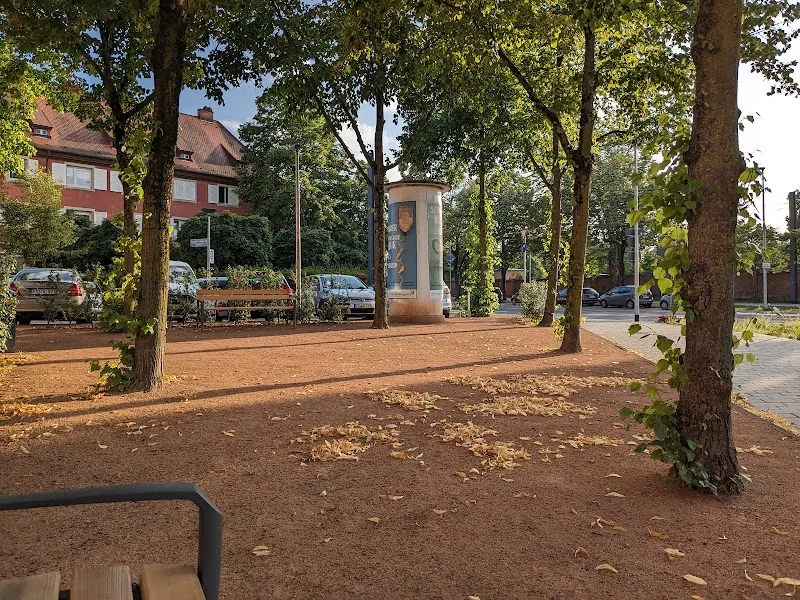
The Kaiserstuhlplatz is not a classic event venue with a stage, hall, or ticket area, but a modern neighborhood square that has taken on a new urban planning task in Freiburg's Brühl-Beurbarung district. From a traffic area, it has become a place with quality for staying, greenery, and movement. This is exactly why many people search for Kaiserstuhlplatz Freiburg, Kaiserstuhlplatz Plan, Kaiserstuhlplatz Access, or Kaiserstuhlplatz Parking: they want to quickly understand where the square is located, how to reach it, and why it has become important for the neighborhood. Official city sources and the AG FREIRAUM describe the square as a result of the relocation of the city railway line and as a new public space that today mediates between everyday paths, meeting points, and small open space presentations. Those who visit the Kaiserstuhlplatz do not experience a sight in the classical sense, but a quiet, well-utilizable urban space with a clear function for the neighborhood and a surprisingly pronounced green character. ([freiburg.de](https://www.freiburg.de/pb/site/Freiburg/get/documents_E631264414/freiburg/daten/news/amtsblatt/pdf/Amtsblatt_841_BF.pdf))
Location, Plan, and Classification in the Brühl-Beurbarung District
The Kaiserstuhlplatz is located in the north of the central Freiburg urban structure, in the Brühl-Beurbarung district, and forms a small but well-perceived link between different urban areas. The official city description locates it in the triangle formed by Komturstraße, Friedhofstraße, and Rennweg. Additionally, it is described as a connection between the city center and the exhibition and freight railway area. This location makes the square interesting: it is not located on a major tourist axis, but in a neighborhood that functions in everyday life, while also being close enough to important mobility and development areas to be perceived as a point of orientation. Therefore, for keyword searches, not only Kaiserstuhlplatz Freiburg is relevant, but also the plan of the square and its classification in the neighborhood. ([freiburg.de](https://www.freiburg.de/pb/site/Freiburg/get/documents_E631264414/freiburg/daten/news/amtsblatt/pdf/Amtsblatt_841_BF.pdf))
From an urban planning perspective, the square is exciting because it emerged from a changed traffic routing. The relocation of the tram or city railway line towards Waldkircher Straße opened up the opportunity to redesign the previously rather diffuse area. In the official retrospective, this is mentioned as a decisive trigger: from a residual area, a public square was created that truly deserves the name square. This development also explains why the Kaiserstuhlplatz is perceived today as a small green island. It did not arise by chance, but is the result of a planning process that transformed a technical infrastructure measure into a usable urban space. For visitors, this is important because orientation at the Kaiserstuhlplatz does not function through a single monument, but through its embedding in the surrounding streets and its clear location in the Brühl-Beurbarung neighborhood. ([freiburg.de](https://www.freiburg.de/pb/site/Freiburg/get/documents_E631264414/freiburg/daten/news/amtsblatt/pdf/Amtsblatt_841_BF.pdf))
The square is also well-suited to understand the function of public spaces in Freiburg. The city has been focusing for years on upgrading, sealing removal, and ecological design in public spaces, and the Kaiserstuhlplatz is a vivid example of this. In contrast to heavily developed city center locations, it appears open, quiet, and more neighborly than representative. This is already evident in official reports describing it as a meeting point suitable for lingering. Therefore, for the search intent plan, it is not only important to know where the square is located, but also what role it plays in the neighborhood: it is not a transit area, but a piece of the neighborhood that creates identity, organizes paths, allows for stays, and makes the green enhancement of the surroundings visible. ([freiburg.de](https://www.freiburg.de/pb/site/Freiburg/get/documents_E631264414/freiburg/daten/news/amtsblatt/pdf/Amtsblatt_841_BF.pdf))
Access to Kaiserstuhlplatz by City Railway, on Foot, and by Bike
Those who want to reach the Kaiserstuhlplatz by public transport should orient themselves to the Rennweg stop. The Freiburg Transport AG indicates lines 2 and 23 for this stop. This connects the square to the city railway network and makes it easily accessible from there. The proximity to the stop is particularly practical because the Kaiserstuhlplatz itself is not a closed special place, but lies in the midst of the everyday neighborhood network. So, anyone searching for Kaiserstuhlplatz Access gets a very simple answer: take the city railway to Rennweg and cover the remaining distance within the neighborhood. Official VAG pages provide exactly this anchor point, and the location of the square in Brühl-Beurbarung makes the connection with public transport obvious. ([vag-freiburg.de](https://www.vag-freiburg.de/fahrplan/haltestellen-plaene/haltestelle/rennweg-freiburg?utm_source=openai))
From an urban planning perspective, arriving by train and on foot is also logical. The Kaiserstuhlplatz is intended as a neighborhood space, not as an isolated destination with heavy visitor traffic. In the official description, it is referred to as a link between the city center and the exhibition and freight railway area. This means: it is located at a point where city paths, neighborhood paths, and accessibility via public transport converge. Therefore, those coming from the surrounding area can easily reach the square on foot or by bike. Although the sources do not mention a separate bike station or a specific pedestrian path plan, the urban location and proximity to the city railway network clearly indicate that these forms of access are practical for everyday use. This assessment is a factual derivation from the location description and the transport connection. ([freiburg.de](https://www.freiburg.de/pb/site/Freiburg/get/documents_E631264414/freiburg/daten/news/amtsblatt/pdf/Amtsblatt_841_BF.pdf))
For planning a visit, it is also helpful to see the Kaiserstuhlplatz not as a destination with a narrow time window, but as a short urban building block that can be incorporated into a larger route through Brühl-Beurbarung or towards the exhibition. The official retrospective of the city explicitly calls the square a place to linger. This shows that access here is thought of more in terms of a relaxed arrival than in the sense of a classic event start. Therefore, those visiting the square by public transport benefit primarily from its good connection and the short distance between the stop and the neighborhood space. This is what makes it so interesting for search queries like Kaiserstuhlplatz Plan or Stop Rennweg. ([freiburg.de](https://www.freiburg.de/pb/site/Freiburg/get/documents_E631264414/freiburg/daten/news/amtsblatt/pdf/Amtsblatt_841_BF.pdf))
Parking at Kaiserstuhlplatz: What is Officially Known
When it comes to the keyword Kaiserstuhlplatz Parking, a sober look at the available information is worthwhile. The official descriptions do not mention a standalone parking garage or a large special parking area for visitors. Instead, it is mentioned that the new seating on Konradin-Kreutzer-Straße is shielded from the parking spaces by hedges. This can be inferred that parking space is available in the immediate vicinity, but the square was not designed as a car-friendly large facility. Therefore, those arriving by car should expect limited street space and a rather neighborhood-related parking situation rather than a designated event area. This classification is a cautious but reasonable conclusion from the official information. ([freiburg.de](https://www.freiburg.de/pb/site/Freiburg/get/documents_E631264414/freiburg/daten/news/amtsblatt/pdf/Amtsblatt_841_BF.pdf))
This is typical for Freiburg: public space is increasingly designed so that staying, greenery, and movement take precedence over parking spaces. The Kaiserstuhlplatz fits perfectly into this pattern. The city does not describe it as a parking location, but as a public space that serves as a meeting point and where seating areas, a boules court, and movement offers are in the foreground. Therefore, it is important for SEO use not to create false expectations. Those specifically searching for parking should know that the square itself does not have a prominently marketed parking infrastructure. In practice, visiting by public transport is significantly more straightforward due to the Rennweg stop than arriving by car. ([freiburg.de](https://www.freiburg.de/pb/site/Freiburg/get/documents_E631264414/freiburg/daten/news/amtsblatt/pdf/Amtsblatt_841_BF.pdf))
The design with visible parking references at the edge is still no coincidence. It shows that while the square is located in a developed neighborhood, it is not completely disconnected from cars. Rather, an attempt was made to organize the available space so that the green and staying areas appear clearer. Exactly therein lies the quality of the Kaiserstuhlplatz: it acknowledges the parking pressure of the surroundings without becoming a large parking lot itself. Therefore, those looking for a convenient, neighborhood-close visit should primarily plan access via Rennweg or from the immediate vicinity. This keeps the square at its core what it is supposed to be according to the city description: a small gem in the neighborhood. ([freiburg.de](https://www.freiburg.de/pb/site/Freiburg/get/documents_E631264414/freiburg/daten/news/amtsblatt/pdf/Amtsblatt_841_BF.pdf))
Facilities and Design: Boules Court, Seating, and Greenery
The greatest strength of the Kaiserstuhlplatz is its combination of quality for staying and nature-oriented design. The official square description mentions benches, rotatable seating elements, a boules court, and fitness equipment as central features. Additionally, there is an existing tree canopy of linden and plane trees, which has been complemented with amber trees. This mix makes the square more than just a building gap with some greenery: it is intentionally designed as a place for various uses, from short sitting to movement to social play. The boules court, in particular, is a good example of how an urban space is thought of as multifunctional today. It creates a low-threshold occasion to meet in the neighborhood without the need for an organized event. ([freiburg.de](https://www.freiburg.de/pb/site/Freiburg/get/documents_E631264414/freiburg/daten/news/amtsblatt/pdf/Amtsblatt_841_BF.pdf))
Ecologically, the square is also remarkable. The city emphasizes that part of the area has been unsealed and redesigned into a prairie-like perennial area with grasses and flower bulbs. Additionally, a flower meadow has been established. In 2025, the city even mentioned the specific number of 1950 perennials and 4850 flower bulbs at the Kaiserstuhlplatz in connection with the label StadtGrün naturnah. Such details show that this was not just decorative planting, but that the area is intentionally meant to contribute to the improvement of biodiversity and urban climate. For search queries like Kaiserstuhlplatz Green Space or Kaiserstuhlplatz Seating, this is the core: the square is green, usable, and climate-adapted at the same time. ([freiburg.de](https://www.freiburg.de/pb/2463644.html))
A particularly illustrative detail is the preserved piece of track. The city reports that this last remnant of the old city railway line was deliberately left to remind of its former use. Thus, the square is not only aesthetically attractive but also readable. It tells a small story of change: from a traffic area to a public space for staying. This connection of memory and redesign gives the place character. In many cities, squares are created that, although newly planted, remain without recognizable identity. The Kaiserstuhlplatz avoids exactly that because it does not hide its former life but integrates it into the design. This makes it particularly interesting for people who are interested in urban open spaces, neighborhood development, and sustainable planning. ([freiburg.de](https://www.freiburg.de/pb/site/Freiburg/get/documents_E631264414/freiburg/daten/news/amtsblatt/pdf/Amtsblatt_841_BF.pdf))
Events and Neighborhood Life Around the Square
The Kaiserstuhlplatz is not only a designed open space but also a place for small, neighborhood-related events. A good example is the boules leisure tournament on June 13, 2026, organized by the Brühl-Beurbarung citizens' association. According to the official announcement, a maximum of 8 teams with 2 to 3 people will participate, and the event is part of the Engaged June action month. This makes it clear how the square is used: not for large events, but for low-threshold neighborhood offerings that invite participation. This form of use fits perfectly with the architectural features of the boules court and seating areas. The square is thus not only a backdrop but an active part of social life in the neighborhood. ([freiburg.de](https://www.freiburg.de/pb/site/Freiburg/node/343211/zmdetail_34318168/Boule%2BTunier%2Bfuer%2BJung%2Bund%2BAlt.html?nodeID=34318168&zm.sid=zm4obm0dnzd1&utm_source=openai))
The city itself has also described the square as a meeting point. In the official texts, it is stated that it now also serves as a place to linger and can be perceived as a link between the city center, exhibition, and freight railway area. This is important because it shows that the function of the square goes beyond mere aesthetics. Those sitting there or passing by experience a space that connects neighborhood, movement, and urban identity. Especially in Freiburg, where public open spaces are often used intensively, such a small, well-designed place is of great value. The Kaiserstuhlplatz appears more quiet than loud, more neighborly than touristy. This makes it particularly exciting for people in the neighborhood and for visitors interested in urban development. ([freiburg.de](https://www.freiburg.de/pb/site/Freiburg/get/documents_E631264414/freiburg/daten/news/amtsblatt/pdf/Amtsblatt_841_BF.pdf))
Recent reports from the town hall also confirm this development. In autumn 2025, the Kaiserstuhlplatz was described in a report by the mayor as a small green island with a boules court. Such formulations show that the square has not only been well received at its opening but has apparently established itself stably in the neighborhood. This is an important SEO point for Kaiserstuhlplatz Events and Kaiserstuhlplatz Boules Court: the square does not have a constantly changing large program, but it is regularly used for community activities. Therefore, anyone looking for a realistic impression of the location should think of a manageable, charming neighborhood square where one can spontaneously play, sit, or participate in a small local event. ([freiburg.de](https://www.freiburg.de/pb/205243_205248_486400_2351118_2534998_2534950.html))
Frequently Asked Questions about Kaiserstuhlplatz, Plan, and Parking
A common question is: Is the Kaiserstuhlplatz more of a park, a square, or an event venue? The most factual answer is: it is a public neighborhood square with a distinctly green design. Officially, it is described as a square that invites lingering and serves as a meeting point. Therefore, the term square fits best, even though the green area and tree structure make it almost park-like in some ways. Those searching for the place only by name should not expect a hall or event grounds, but rather an openly designed space in the everyday life of the neighborhood. ([freiburg.de](https://www.freiburg.de/pb/site/Freiburg/get/documents_E631264414/freiburg/daten/news/amtsblatt/pdf/Amtsblatt_841_BF.pdf))
A second question concerns orientation. Where can one find the Kaiserstuhlplatz Plan? For practical purposes, the official location description in the triangle of Komturstraße, Friedhofstraße, and Rennweg is sufficient. Additionally, the proximity to the Rennweg stop, served by lines 2 and 23, is a plus. Often, that is all that is needed to locate the place. Those moving in northern Freiburg can easily plan the square as a stopover, for example, for a break, a short meeting, or a walk through the neighborhood. This makes the location easily findable online despite its rather small extent. ([freiburg.de](https://www.freiburg.de/pb/site/Freiburg/get/documents_E631264414/freiburg/daten/news/amtsblatt/pdf/Amtsblatt_841_BF.pdf))
A third common question is: Are there enough parking spaces? Caution is advised here. The official texts mention parking spaces at the edge, but no separate facility or specific visitor logic. Therefore, it is better not to treat the Kaiserstuhlplatz like a classic parking area. Those arriving by car should keep an eye on the surroundings and realistically expect limited parking space. For a convenient and planable arrival, public transport is the better choice. This recommendation directly arises from the official transport connection and the design logic of the square. ([freiburg.de](https://www.freiburg.de/pb/site/Freiburg/get/documents_E631264414/freiburg/daten/news/amtsblatt/pdf/Amtsblatt_841_BF.pdf))
A fourth question revolves around everyday use: Can one simply sit and stay there? Yes, that is exactly what the square is intended for. The city describes the space as a place to linger, and the facilities with benches, rotatable seating elements, and shaded areas confirm this. Additionally, there are the flower meadow, perennial areas, and the boules court. This is not a place where one just quickly passes through, but a square where one can take short breaks just as well as have a small meeting with neighbors or friends. For many search queries related to Kaiserstuhlplatz Freiburg, this everyday impression is crucial. ([freiburg.de](https://www.freiburg.de/pb/site/Freiburg/get/documents_E631264414/freiburg/daten/news/amtsblatt/pdf/Amtsblatt_841_BF.pdf))
Fifth, many users inquire about special features. Perhaps the most important feature of the Kaiserstuhlplatz is its transformation. From an area shaped by infrastructure, it has become a climate-friendly designed small open space with a reminder of the old track, a boules offer, and ecologically enhanced vegetation. This makes it a good example in Freiburg of how urban development, green planning, and neighborhood use can come together. Therefore, those visiting the square see not only a beautiful place but also a piece of visible urban planning. This is exactly what makes it worthy of online search and offline appealing. ([freiburg.de](https://www.freiburg.de/pb/site/Freiburg/get/documents_E631264414/freiburg/daten/news/amtsblatt/pdf/Amtsblatt_841_BF.pdf))
Sources:
Mehr anzeigenWeniger anzeigen
Kaiserstuhlplatz Freiburg | Plan & Parking
The Kaiserstuhlplatz is not a classic event venue with a stage, hall, or ticket area, but a modern neighborhood square that has taken on a new urban planning task in Freiburg's Brühl-Beurbarung district. From a traffic area, it has become a place with quality for staying, greenery, and movement. This is exactly why many people search for Kaiserstuhlplatz Freiburg, Kaiserstuhlplatz Plan, Kaiserstuhlplatz Access, or Kaiserstuhlplatz Parking: they want to quickly understand where the square is located, how to reach it, and why it has become important for the neighborhood. Official city sources and the AG FREIRAUM describe the square as a result of the relocation of the city railway line and as a new public space that today mediates between everyday paths, meeting points, and small open space presentations. Those who visit the Kaiserstuhlplatz do not experience a sight in the classical sense, but a quiet, well-utilizable urban space with a clear function for the neighborhood and a surprisingly pronounced green character. ([freiburg.de](https://www.freiburg.de/pb/site/Freiburg/get/documents_E631264414/freiburg/daten/news/amtsblatt/pdf/Amtsblatt_841_BF.pdf))
Location, Plan, and Classification in the Brühl-Beurbarung District
The Kaiserstuhlplatz is located in the north of the central Freiburg urban structure, in the Brühl-Beurbarung district, and forms a small but well-perceived link between different urban areas. The official city description locates it in the triangle formed by Komturstraße, Friedhofstraße, and Rennweg. Additionally, it is described as a connection between the city center and the exhibition and freight railway area. This location makes the square interesting: it is not located on a major tourist axis, but in a neighborhood that functions in everyday life, while also being close enough to important mobility and development areas to be perceived as a point of orientation. Therefore, for keyword searches, not only Kaiserstuhlplatz Freiburg is relevant, but also the plan of the square and its classification in the neighborhood. ([freiburg.de](https://www.freiburg.de/pb/site/Freiburg/get/documents_E631264414/freiburg/daten/news/amtsblatt/pdf/Amtsblatt_841_BF.pdf))
From an urban planning perspective, the square is exciting because it emerged from a changed traffic routing. The relocation of the tram or city railway line towards Waldkircher Straße opened up the opportunity to redesign the previously rather diffuse area. In the official retrospective, this is mentioned as a decisive trigger: from a residual area, a public square was created that truly deserves the name square. This development also explains why the Kaiserstuhlplatz is perceived today as a small green island. It did not arise by chance, but is the result of a planning process that transformed a technical infrastructure measure into a usable urban space. For visitors, this is important because orientation at the Kaiserstuhlplatz does not function through a single monument, but through its embedding in the surrounding streets and its clear location in the Brühl-Beurbarung neighborhood. ([freiburg.de](https://www.freiburg.de/pb/site/Freiburg/get/documents_E631264414/freiburg/daten/news/amtsblatt/pdf/Amtsblatt_841_BF.pdf))
The square is also well-suited to understand the function of public spaces in Freiburg. The city has been focusing for years on upgrading, sealing removal, and ecological design in public spaces, and the Kaiserstuhlplatz is a vivid example of this. In contrast to heavily developed city center locations, it appears open, quiet, and more neighborly than representative. This is already evident in official reports describing it as a meeting point suitable for lingering. Therefore, for the search intent plan, it is not only important to know where the square is located, but also what role it plays in the neighborhood: it is not a transit area, but a piece of the neighborhood that creates identity, organizes paths, allows for stays, and makes the green enhancement of the surroundings visible. ([freiburg.de](https://www.freiburg.de/pb/site/Freiburg/get/documents_E631264414/freiburg/daten/news/amtsblatt/pdf/Amtsblatt_841_BF.pdf))
Access to Kaiserstuhlplatz by City Railway, on Foot, and by Bike
Those who want to reach the Kaiserstuhlplatz by public transport should orient themselves to the Rennweg stop. The Freiburg Transport AG indicates lines 2 and 23 for this stop. This connects the square to the city railway network and makes it easily accessible from there. The proximity to the stop is particularly practical because the Kaiserstuhlplatz itself is not a closed special place, but lies in the midst of the everyday neighborhood network. So, anyone searching for Kaiserstuhlplatz Access gets a very simple answer: take the city railway to Rennweg and cover the remaining distance within the neighborhood. Official VAG pages provide exactly this anchor point, and the location of the square in Brühl-Beurbarung makes the connection with public transport obvious. ([vag-freiburg.de](https://www.vag-freiburg.de/fahrplan/haltestellen-plaene/haltestelle/rennweg-freiburg?utm_source=openai))
From an urban planning perspective, arriving by train and on foot is also logical. The Kaiserstuhlplatz is intended as a neighborhood space, not as an isolated destination with heavy visitor traffic. In the official description, it is referred to as a link between the city center and the exhibition and freight railway area. This means: it is located at a point where city paths, neighborhood paths, and accessibility via public transport converge. Therefore, those coming from the surrounding area can easily reach the square on foot or by bike. Although the sources do not mention a separate bike station or a specific pedestrian path plan, the urban location and proximity to the city railway network clearly indicate that these forms of access are practical for everyday use. This assessment is a factual derivation from the location description and the transport connection. ([freiburg.de](https://www.freiburg.de/pb/site/Freiburg/get/documents_E631264414/freiburg/daten/news/amtsblatt/pdf/Amtsblatt_841_BF.pdf))
For planning a visit, it is also helpful to see the Kaiserstuhlplatz not as a destination with a narrow time window, but as a short urban building block that can be incorporated into a larger route through Brühl-Beurbarung or towards the exhibition. The official retrospective of the city explicitly calls the square a place to linger. This shows that access here is thought of more in terms of a relaxed arrival than in the sense of a classic event start. Therefore, those visiting the square by public transport benefit primarily from its good connection and the short distance between the stop and the neighborhood space. This is what makes it so interesting for search queries like Kaiserstuhlplatz Plan or Stop Rennweg. ([freiburg.de](https://www.freiburg.de/pb/site/Freiburg/get/documents_E631264414/freiburg/daten/news/amtsblatt/pdf/Amtsblatt_841_BF.pdf))
Parking at Kaiserstuhlplatz: What is Officially Known
When it comes to the keyword Kaiserstuhlplatz Parking, a sober look at the available information is worthwhile. The official descriptions do not mention a standalone parking garage or a large special parking area for visitors. Instead, it is mentioned that the new seating on Konradin-Kreutzer-Straße is shielded from the parking spaces by hedges. This can be inferred that parking space is available in the immediate vicinity, but the square was not designed as a car-friendly large facility. Therefore, those arriving by car should expect limited street space and a rather neighborhood-related parking situation rather than a designated event area. This classification is a cautious but reasonable conclusion from the official information. ([freiburg.de](https://www.freiburg.de/pb/site/Freiburg/get/documents_E631264414/freiburg/daten/news/amtsblatt/pdf/Amtsblatt_841_BF.pdf))
This is typical for Freiburg: public space is increasingly designed so that staying, greenery, and movement take precedence over parking spaces. The Kaiserstuhlplatz fits perfectly into this pattern. The city does not describe it as a parking location, but as a public space that serves as a meeting point and where seating areas, a boules court, and movement offers are in the foreground. Therefore, it is important for SEO use not to create false expectations. Those specifically searching for parking should know that the square itself does not have a prominently marketed parking infrastructure. In practice, visiting by public transport is significantly more straightforward due to the Rennweg stop than arriving by car. ([freiburg.de](https://www.freiburg.de/pb/site/Freiburg/get/documents_E631264414/freiburg/daten/news/amtsblatt/pdf/Amtsblatt_841_BF.pdf))
The design with visible parking references at the edge is still no coincidence. It shows that while the square is located in a developed neighborhood, it is not completely disconnected from cars. Rather, an attempt was made to organize the available space so that the green and staying areas appear clearer. Exactly therein lies the quality of the Kaiserstuhlplatz: it acknowledges the parking pressure of the surroundings without becoming a large parking lot itself. Therefore, those looking for a convenient, neighborhood-close visit should primarily plan access via Rennweg or from the immediate vicinity. This keeps the square at its core what it is supposed to be according to the city description: a small gem in the neighborhood. ([freiburg.de](https://www.freiburg.de/pb/site/Freiburg/get/documents_E631264414/freiburg/daten/news/amtsblatt/pdf/Amtsblatt_841_BF.pdf))
Facilities and Design: Boules Court, Seating, and Greenery
The greatest strength of the Kaiserstuhlplatz is its combination of quality for staying and nature-oriented design. The official square description mentions benches, rotatable seating elements, a boules court, and fitness equipment as central features. Additionally, there is an existing tree canopy of linden and plane trees, which has been complemented with amber trees. This mix makes the square more than just a building gap with some greenery: it is intentionally designed as a place for various uses, from short sitting to movement to social play. The boules court, in particular, is a good example of how an urban space is thought of as multifunctional today. It creates a low-threshold occasion to meet in the neighborhood without the need for an organized event. ([freiburg.de](https://www.freiburg.de/pb/site/Freiburg/get/documents_E631264414/freiburg/daten/news/amtsblatt/pdf/Amtsblatt_841_BF.pdf))
Ecologically, the square is also remarkable. The city emphasizes that part of the area has been unsealed and redesigned into a prairie-like perennial area with grasses and flower bulbs. Additionally, a flower meadow has been established. In 2025, the city even mentioned the specific number of 1950 perennials and 4850 flower bulbs at the Kaiserstuhlplatz in connection with the label StadtGrün naturnah. Such details show that this was not just decorative planting, but that the area is intentionally meant to contribute to the improvement of biodiversity and urban climate. For search queries like Kaiserstuhlplatz Green Space or Kaiserstuhlplatz Seating, this is the core: the square is green, usable, and climate-adapted at the same time. ([freiburg.de](https://www.freiburg.de/pb/2463644.html))
A particularly illustrative detail is the preserved piece of track. The city reports that this last remnant of the old city railway line was deliberately left to remind of its former use. Thus, the square is not only aesthetically attractive but also readable. It tells a small story of change: from a traffic area to a public space for staying. This connection of memory and redesign gives the place character. In many cities, squares are created that, although newly planted, remain without recognizable identity. The Kaiserstuhlplatz avoids exactly that because it does not hide its former life but integrates it into the design. This makes it particularly interesting for people who are interested in urban open spaces, neighborhood development, and sustainable planning. ([freiburg.de](https://www.freiburg.de/pb/site/Freiburg/get/documents_E631264414/freiburg/daten/news/amtsblatt/pdf/Amtsblatt_841_BF.pdf))
Events and Neighborhood Life Around the Square
The Kaiserstuhlplatz is not only a designed open space but also a place for small, neighborhood-related events. A good example is the boules leisure tournament on June 13, 2026, organized by the Brühl-Beurbarung citizens' association. According to the official announcement, a maximum of 8 teams with 2 to 3 people will participate, and the event is part of the Engaged June action month. This makes it clear how the square is used: not for large events, but for low-threshold neighborhood offerings that invite participation. This form of use fits perfectly with the architectural features of the boules court and seating areas. The square is thus not only a backdrop but an active part of social life in the neighborhood. ([freiburg.de](https://www.freiburg.de/pb/site/Freiburg/node/343211/zmdetail_34318168/Boule%2BTunier%2Bfuer%2BJung%2Bund%2BAlt.html?nodeID=34318168&zm.sid=zm4obm0dnzd1&utm_source=openai))
The city itself has also described the square as a meeting point. In the official texts, it is stated that it now also serves as a place to linger and can be perceived as a link between the city center, exhibition, and freight railway area. This is important because it shows that the function of the square goes beyond mere aesthetics. Those sitting there or passing by experience a space that connects neighborhood, movement, and urban identity. Especially in Freiburg, where public open spaces are often used intensively, such a small, well-designed place is of great value. The Kaiserstuhlplatz appears more quiet than loud, more neighborly than touristy. This makes it particularly exciting for people in the neighborhood and for visitors interested in urban development. ([freiburg.de](https://www.freiburg.de/pb/site/Freiburg/get/documents_E631264414/freiburg/daten/news/amtsblatt/pdf/Amtsblatt_841_BF.pdf))
Recent reports from the town hall also confirm this development. In autumn 2025, the Kaiserstuhlplatz was described in a report by the mayor as a small green island with a boules court. Such formulations show that the square has not only been well received at its opening but has apparently established itself stably in the neighborhood. This is an important SEO point for Kaiserstuhlplatz Events and Kaiserstuhlplatz Boules Court: the square does not have a constantly changing large program, but it is regularly used for community activities. Therefore, anyone looking for a realistic impression of the location should think of a manageable, charming neighborhood square where one can spontaneously play, sit, or participate in a small local event. ([freiburg.de](https://www.freiburg.de/pb/205243_205248_486400_2351118_2534998_2534950.html))
Frequently Asked Questions about Kaiserstuhlplatz, Plan, and Parking
A common question is: Is the Kaiserstuhlplatz more of a park, a square, or an event venue? The most factual answer is: it is a public neighborhood square with a distinctly green design. Officially, it is described as a square that invites lingering and serves as a meeting point. Therefore, the term square fits best, even though the green area and tree structure make it almost park-like in some ways. Those searching for the place only by name should not expect a hall or event grounds, but rather an openly designed space in the everyday life of the neighborhood. ([freiburg.de](https://www.freiburg.de/pb/site/Freiburg/get/documents_E631264414/freiburg/daten/news/amtsblatt/pdf/Amtsblatt_841_BF.pdf))
A second question concerns orientation. Where can one find the Kaiserstuhlplatz Plan? For practical purposes, the official location description in the triangle of Komturstraße, Friedhofstraße, and Rennweg is sufficient. Additionally, the proximity to the Rennweg stop, served by lines 2 and 23, is a plus. Often, that is all that is needed to locate the place. Those moving in northern Freiburg can easily plan the square as a stopover, for example, for a break, a short meeting, or a walk through the neighborhood. This makes the location easily findable online despite its rather small extent. ([freiburg.de](https://www.freiburg.de/pb/site/Freiburg/get/documents_E631264414/freiburg/daten/news/amtsblatt/pdf/Amtsblatt_841_BF.pdf))
A third common question is: Are there enough parking spaces? Caution is advised here. The official texts mention parking spaces at the edge, but no separate facility or specific visitor logic. Therefore, it is better not to treat the Kaiserstuhlplatz like a classic parking area. Those arriving by car should keep an eye on the surroundings and realistically expect limited parking space. For a convenient and planable arrival, public transport is the better choice. This recommendation directly arises from the official transport connection and the design logic of the square. ([freiburg.de](https://www.freiburg.de/pb/site/Freiburg/get/documents_E631264414/freiburg/daten/news/amtsblatt/pdf/Amtsblatt_841_BF.pdf))
A fourth question revolves around everyday use: Can one simply sit and stay there? Yes, that is exactly what the square is intended for. The city describes the space as a place to linger, and the facilities with benches, rotatable seating elements, and shaded areas confirm this. Additionally, there are the flower meadow, perennial areas, and the boules court. This is not a place where one just quickly passes through, but a square where one can take short breaks just as well as have a small meeting with neighbors or friends. For many search queries related to Kaiserstuhlplatz Freiburg, this everyday impression is crucial. ([freiburg.de](https://www.freiburg.de/pb/site/Freiburg/get/documents_E631264414/freiburg/daten/news/amtsblatt/pdf/Amtsblatt_841_BF.pdf))
Fifth, many users inquire about special features. Perhaps the most important feature of the Kaiserstuhlplatz is its transformation. From an area shaped by infrastructure, it has become a climate-friendly designed small open space with a reminder of the old track, a boules offer, and ecologically enhanced vegetation. This makes it a good example in Freiburg of how urban development, green planning, and neighborhood use can come together. Therefore, those visiting the square see not only a beautiful place but also a piece of visible urban planning. This is exactly what makes it worthy of online search and offline appealing. ([freiburg.de](https://www.freiburg.de/pb/site/Freiburg/get/documents_E631264414/freiburg/daten/news/amtsblatt/pdf/Amtsblatt_841_BF.pdf))
Sources:
Kaiserstuhlplatz Freiburg | Plan & Parking
The Kaiserstuhlplatz is not a classic event venue with a stage, hall, or ticket area, but a modern neighborhood square that has taken on a new urban planning task in Freiburg's Brühl-Beurbarung district. From a traffic area, it has become a place with quality for staying, greenery, and movement. This is exactly why many people search for Kaiserstuhlplatz Freiburg, Kaiserstuhlplatz Plan, Kaiserstuhlplatz Access, or Kaiserstuhlplatz Parking: they want to quickly understand where the square is located, how to reach it, and why it has become important for the neighborhood. Official city sources and the AG FREIRAUM describe the square as a result of the relocation of the city railway line and as a new public space that today mediates between everyday paths, meeting points, and small open space presentations. Those who visit the Kaiserstuhlplatz do not experience a sight in the classical sense, but a quiet, well-utilizable urban space with a clear function for the neighborhood and a surprisingly pronounced green character. ([freiburg.de](https://www.freiburg.de/pb/site/Freiburg/get/documents_E631264414/freiburg/daten/news/amtsblatt/pdf/Amtsblatt_841_BF.pdf))
Location, Plan, and Classification in the Brühl-Beurbarung District
The Kaiserstuhlplatz is located in the north of the central Freiburg urban structure, in the Brühl-Beurbarung district, and forms a small but well-perceived link between different urban areas. The official city description locates it in the triangle formed by Komturstraße, Friedhofstraße, and Rennweg. Additionally, it is described as a connection between the city center and the exhibition and freight railway area. This location makes the square interesting: it is not located on a major tourist axis, but in a neighborhood that functions in everyday life, while also being close enough to important mobility and development areas to be perceived as a point of orientation. Therefore, for keyword searches, not only Kaiserstuhlplatz Freiburg is relevant, but also the plan of the square and its classification in the neighborhood. ([freiburg.de](https://www.freiburg.de/pb/site/Freiburg/get/documents_E631264414/freiburg/daten/news/amtsblatt/pdf/Amtsblatt_841_BF.pdf))
From an urban planning perspective, the square is exciting because it emerged from a changed traffic routing. The relocation of the tram or city railway line towards Waldkircher Straße opened up the opportunity to redesign the previously rather diffuse area. In the official retrospective, this is mentioned as a decisive trigger: from a residual area, a public square was created that truly deserves the name square. This development also explains why the Kaiserstuhlplatz is perceived today as a small green island. It did not arise by chance, but is the result of a planning process that transformed a technical infrastructure measure into a usable urban space. For visitors, this is important because orientation at the Kaiserstuhlplatz does not function through a single monument, but through its embedding in the surrounding streets and its clear location in the Brühl-Beurbarung neighborhood. ([freiburg.de](https://www.freiburg.de/pb/site/Freiburg/get/documents_E631264414/freiburg/daten/news/amtsblatt/pdf/Amtsblatt_841_BF.pdf))
The square is also well-suited to understand the function of public spaces in Freiburg. The city has been focusing for years on upgrading, sealing removal, and ecological design in public spaces, and the Kaiserstuhlplatz is a vivid example of this. In contrast to heavily developed city center locations, it appears open, quiet, and more neighborly than representative. This is already evident in official reports describing it as a meeting point suitable for lingering. Therefore, for the search intent plan, it is not only important to know where the square is located, but also what role it plays in the neighborhood: it is not a transit area, but a piece of the neighborhood that creates identity, organizes paths, allows for stays, and makes the green enhancement of the surroundings visible. ([freiburg.de](https://www.freiburg.de/pb/site/Freiburg/get/documents_E631264414/freiburg/daten/news/amtsblatt/pdf/Amtsblatt_841_BF.pdf))
Access to Kaiserstuhlplatz by City Railway, on Foot, and by Bike
Those who want to reach the Kaiserstuhlplatz by public transport should orient themselves to the Rennweg stop. The Freiburg Transport AG indicates lines 2 and 23 for this stop. This connects the square to the city railway network and makes it easily accessible from there. The proximity to the stop is particularly practical because the Kaiserstuhlplatz itself is not a closed special place, but lies in the midst of the everyday neighborhood network. So, anyone searching for Kaiserstuhlplatz Access gets a very simple answer: take the city railway to Rennweg and cover the remaining distance within the neighborhood. Official VAG pages provide exactly this anchor point, and the location of the square in Brühl-Beurbarung makes the connection with public transport obvious. ([vag-freiburg.de](https://www.vag-freiburg.de/fahrplan/haltestellen-plaene/haltestelle/rennweg-freiburg?utm_source=openai))
From an urban planning perspective, arriving by train and on foot is also logical. The Kaiserstuhlplatz is intended as a neighborhood space, not as an isolated destination with heavy visitor traffic. In the official description, it is referred to as a link between the city center and the exhibition and freight railway area. This means: it is located at a point where city paths, neighborhood paths, and accessibility via public transport converge. Therefore, those coming from the surrounding area can easily reach the square on foot or by bike. Although the sources do not mention a separate bike station or a specific pedestrian path plan, the urban location and proximity to the city railway network clearly indicate that these forms of access are practical for everyday use. This assessment is a factual derivation from the location description and the transport connection. ([freiburg.de](https://www.freiburg.de/pb/site/Freiburg/get/documents_E631264414/freiburg/daten/news/amtsblatt/pdf/Amtsblatt_841_BF.pdf))
For planning a visit, it is also helpful to see the Kaiserstuhlplatz not as a destination with a narrow time window, but as a short urban building block that can be incorporated into a larger route through Brühl-Beurbarung or towards the exhibition. The official retrospective of the city explicitly calls the square a place to linger. This shows that access here is thought of more in terms of a relaxed arrival than in the sense of a classic event start. Therefore, those visiting the square by public transport benefit primarily from its good connection and the short distance between the stop and the neighborhood space. This is what makes it so interesting for search queries like Kaiserstuhlplatz Plan or Stop Rennweg. ([freiburg.de](https://www.freiburg.de/pb/site/Freiburg/get/documents_E631264414/freiburg/daten/news/amtsblatt/pdf/Amtsblatt_841_BF.pdf))
Parking at Kaiserstuhlplatz: What is Officially Known
When it comes to the keyword Kaiserstuhlplatz Parking, a sober look at the available information is worthwhile. The official descriptions do not mention a standalone parking garage or a large special parking area for visitors. Instead, it is mentioned that the new seating on Konradin-Kreutzer-Straße is shielded from the parking spaces by hedges. This can be inferred that parking space is available in the immediate vicinity, but the square was not designed as a car-friendly large facility. Therefore, those arriving by car should expect limited street space and a rather neighborhood-related parking situation rather than a designated event area. This classification is a cautious but reasonable conclusion from the official information. ([freiburg.de](https://www.freiburg.de/pb/site/Freiburg/get/documents_E631264414/freiburg/daten/news/amtsblatt/pdf/Amtsblatt_841_BF.pdf))
This is typical for Freiburg: public space is increasingly designed so that staying, greenery, and movement take precedence over parking spaces. The Kaiserstuhlplatz fits perfectly into this pattern. The city does not describe it as a parking location, but as a public space that serves as a meeting point and where seating areas, a boules court, and movement offers are in the foreground. Therefore, it is important for SEO use not to create false expectations. Those specifically searching for parking should know that the square itself does not have a prominently marketed parking infrastructure. In practice, visiting by public transport is significantly more straightforward due to the Rennweg stop than arriving by car. ([freiburg.de](https://www.freiburg.de/pb/site/Freiburg/get/documents_E631264414/freiburg/daten/news/amtsblatt/pdf/Amtsblatt_841_BF.pdf))
The design with visible parking references at the edge is still no coincidence. It shows that while the square is located in a developed neighborhood, it is not completely disconnected from cars. Rather, an attempt was made to organize the available space so that the green and staying areas appear clearer. Exactly therein lies the quality of the Kaiserstuhlplatz: it acknowledges the parking pressure of the surroundings without becoming a large parking lot itself. Therefore, those looking for a convenient, neighborhood-close visit should primarily plan access via Rennweg or from the immediate vicinity. This keeps the square at its core what it is supposed to be according to the city description: a small gem in the neighborhood. ([freiburg.de](https://www.freiburg.de/pb/site/Freiburg/get/documents_E631264414/freiburg/daten/news/amtsblatt/pdf/Amtsblatt_841_BF.pdf))
Facilities and Design: Boules Court, Seating, and Greenery
The greatest strength of the Kaiserstuhlplatz is its combination of quality for staying and nature-oriented design. The official square description mentions benches, rotatable seating elements, a boules court, and fitness equipment as central features. Additionally, there is an existing tree canopy of linden and plane trees, which has been complemented with amber trees. This mix makes the square more than just a building gap with some greenery: it is intentionally designed as a place for various uses, from short sitting to movement to social play. The boules court, in particular, is a good example of how an urban space is thought of as multifunctional today. It creates a low-threshold occasion to meet in the neighborhood without the need for an organized event. ([freiburg.de](https://www.freiburg.de/pb/site/Freiburg/get/documents_E631264414/freiburg/daten/news/amtsblatt/pdf/Amtsblatt_841_BF.pdf))
Ecologically, the square is also remarkable. The city emphasizes that part of the area has been unsealed and redesigned into a prairie-like perennial area with grasses and flower bulbs. Additionally, a flower meadow has been established. In 2025, the city even mentioned the specific number of 1950 perennials and 4850 flower bulbs at the Kaiserstuhlplatz in connection with the label StadtGrün naturnah. Such details show that this was not just decorative planting, but that the area is intentionally meant to contribute to the improvement of biodiversity and urban climate. For search queries like Kaiserstuhlplatz Green Space or Kaiserstuhlplatz Seating, this is the core: the square is green, usable, and climate-adapted at the same time. ([freiburg.de](https://www.freiburg.de/pb/2463644.html))
A particularly illustrative detail is the preserved piece of track. The city reports that this last remnant of the old city railway line was deliberately left to remind of its former use. Thus, the square is not only aesthetically attractive but also readable. It tells a small story of change: from a traffic area to a public space for staying. This connection of memory and redesign gives the place character. In many cities, squares are created that, although newly planted, remain without recognizable identity. The Kaiserstuhlplatz avoids exactly that because it does not hide its former life but integrates it into the design. This makes it particularly interesting for people who are interested in urban open spaces, neighborhood development, and sustainable planning. ([freiburg.de](https://www.freiburg.de/pb/site/Freiburg/get/documents_E631264414/freiburg/daten/news/amtsblatt/pdf/Amtsblatt_841_BF.pdf))
Events and Neighborhood Life Around the Square
The Kaiserstuhlplatz is not only a designed open space but also a place for small, neighborhood-related events. A good example is the boules leisure tournament on June 13, 2026, organized by the Brühl-Beurbarung citizens' association. According to the official announcement, a maximum of 8 teams with 2 to 3 people will participate, and the event is part of the Engaged June action month. This makes it clear how the square is used: not for large events, but for low-threshold neighborhood offerings that invite participation. This form of use fits perfectly with the architectural features of the boules court and seating areas. The square is thus not only a backdrop but an active part of social life in the neighborhood. ([freiburg.de](https://www.freiburg.de/pb/site/Freiburg/node/343211/zmdetail_34318168/Boule%2BTunier%2Bfuer%2BJung%2Bund%2BAlt.html?nodeID=34318168&zm.sid=zm4obm0dnzd1&utm_source=openai))
The city itself has also described the square as a meeting point. In the official texts, it is stated that it now also serves as a place to linger and can be perceived as a link between the city center, exhibition, and freight railway area. This is important because it shows that the function of the square goes beyond mere aesthetics. Those sitting there or passing by experience a space that connects neighborhood, movement, and urban identity. Especially in Freiburg, where public open spaces are often used intensively, such a small, well-designed place is of great value. The Kaiserstuhlplatz appears more quiet than loud, more neighborly than touristy. This makes it particularly exciting for people in the neighborhood and for visitors interested in urban development. ([freiburg.de](https://www.freiburg.de/pb/site/Freiburg/get/documents_E631264414/freiburg/daten/news/amtsblatt/pdf/Amtsblatt_841_BF.pdf))
Recent reports from the town hall also confirm this development. In autumn 2025, the Kaiserstuhlplatz was described in a report by the mayor as a small green island with a boules court. Such formulations show that the square has not only been well received at its opening but has apparently established itself stably in the neighborhood. This is an important SEO point for Kaiserstuhlplatz Events and Kaiserstuhlplatz Boules Court: the square does not have a constantly changing large program, but it is regularly used for community activities. Therefore, anyone looking for a realistic impression of the location should think of a manageable, charming neighborhood square where one can spontaneously play, sit, or participate in a small local event. ([freiburg.de](https://www.freiburg.de/pb/205243_205248_486400_2351118_2534998_2534950.html))
Frequently Asked Questions about Kaiserstuhlplatz, Plan, and Parking
A common question is: Is the Kaiserstuhlplatz more of a park, a square, or an event venue? The most factual answer is: it is a public neighborhood square with a distinctly green design. Officially, it is described as a square that invites lingering and serves as a meeting point. Therefore, the term square fits best, even though the green area and tree structure make it almost park-like in some ways. Those searching for the place only by name should not expect a hall or event grounds, but rather an openly designed space in the everyday life of the neighborhood. ([freiburg.de](https://www.freiburg.de/pb/site/Freiburg/get/documents_E631264414/freiburg/daten/news/amtsblatt/pdf/Amtsblatt_841_BF.pdf))
A second question concerns orientation. Where can one find the Kaiserstuhlplatz Plan? For practical purposes, the official location description in the triangle of Komturstraße, Friedhofstraße, and Rennweg is sufficient. Additionally, the proximity to the Rennweg stop, served by lines 2 and 23, is a plus. Often, that is all that is needed to locate the place. Those moving in northern Freiburg can easily plan the square as a stopover, for example, for a break, a short meeting, or a walk through the neighborhood. This makes the location easily findable online despite its rather small extent. ([freiburg.de](https://www.freiburg.de/pb/site/Freiburg/get/documents_E631264414/freiburg/daten/news/amtsblatt/pdf/Amtsblatt_841_BF.pdf))
A third common question is: Are there enough parking spaces? Caution is advised here. The official texts mention parking spaces at the edge, but no separate facility or specific visitor logic. Therefore, it is better not to treat the Kaiserstuhlplatz like a classic parking area. Those arriving by car should keep an eye on the surroundings and realistically expect limited parking space. For a convenient and planable arrival, public transport is the better choice. This recommendation directly arises from the official transport connection and the design logic of the square. ([freiburg.de](https://www.freiburg.de/pb/site/Freiburg/get/documents_E631264414/freiburg/daten/news/amtsblatt/pdf/Amtsblatt_841_BF.pdf))
A fourth question revolves around everyday use: Can one simply sit and stay there? Yes, that is exactly what the square is intended for. The city describes the space as a place to linger, and the facilities with benches, rotatable seating elements, and shaded areas confirm this. Additionally, there are the flower meadow, perennial areas, and the boules court. This is not a place where one just quickly passes through, but a square where one can take short breaks just as well as have a small meeting with neighbors or friends. For many search queries related to Kaiserstuhlplatz Freiburg, this everyday impression is crucial. ([freiburg.de](https://www.freiburg.de/pb/site/Freiburg/get/documents_E631264414/freiburg/daten/news/amtsblatt/pdf/Amtsblatt_841_BF.pdf))
Fifth, many users inquire about special features. Perhaps the most important feature of the Kaiserstuhlplatz is its transformation. From an area shaped by infrastructure, it has become a climate-friendly designed small open space with a reminder of the old track, a boules offer, and ecologically enhanced vegetation. This makes it a good example in Freiburg of how urban development, green planning, and neighborhood use can come together. Therefore, those visiting the square see not only a beautiful place but also a piece of visible urban planning. This is exactly what makes it worthy of online search and offline appealing. ([freiburg.de](https://www.freiburg.de/pb/site/Freiburg/get/documents_E631264414/freiburg/daten/news/amtsblatt/pdf/Amtsblatt_841_BF.pdf))
Sources:
Upcoming Events
No events found
Frequently Asked Questions
Reviews
No reviews found