
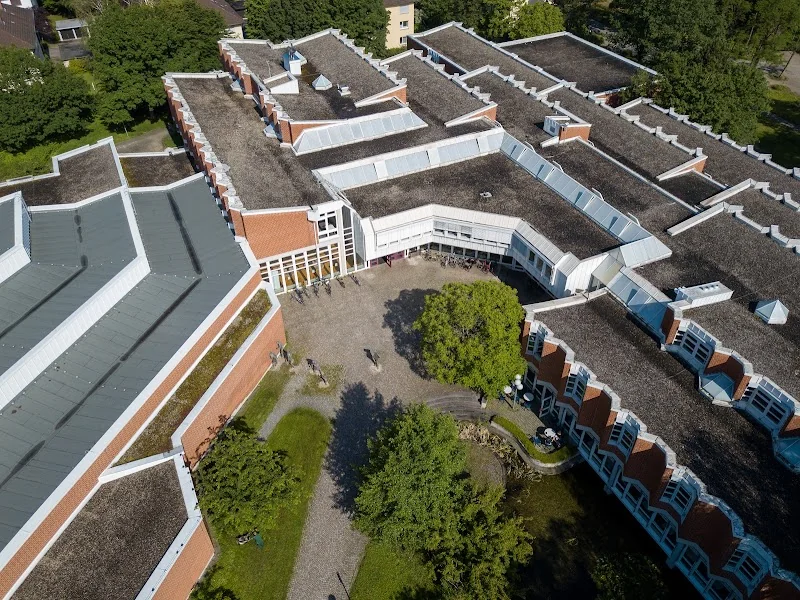
Freiburg im Breisgau
Hauptgebäude, Mendelssohn-Bartholdy-Platz 1, 79102 Freiburg im Breisgau, Deutschland
University of Music Freiburg | Events & Concerts
The University of Music Freiburg is one of the leading music colleges in Europe and offers a comprehensive artistic, pedagogical, and scientific education for around 700 students and more than 60 doctoral candidates. It was founded in 1946 in a city shaped by the aftermath of war. Its founding claim has always been reform-oriented: promoting musical excellence, international openness, scientific curiosity, and the connection of tradition and contemporary art continue to shape its profile today. At the main location at Mendelssohn-Bartholdy-Platz 1, the university consolidates concert life, study organization, library, rehearsal rooms, and central services in one place. ([mh-freiburg.de](https://www.mh-freiburg.de/hochschule/allgemeines/ueber-die-hochschule?utm_source=openai))
Events and Concerts at the University of Music Freiburg
Those looking for events and concerts will find a continuously updated program on the university's website featuring concert formats, lecture evenings, masterclasses, and external events. The range is broad: current pages list public orchestra rehearsals, organ concerts, chamber music, song evenings, and study-related presentations. Each entry specifies the date, time, location, participants, and often the admission fee. This makes the university's website not only a schedule overview but also a reliable guide for visitors specifically looking for a musical evening in Freiburg. ([mh-freiburg.de](https://www.mh-freiburg.de/?utm_source=openai))
There is a particularly strong connection to the university's own halls. Concerts and lecture evenings regularly take place in the Wolfgang-Hoffmann-Saal, the chamber music hall, the Mathilde-Schwarz-Saal, or the small hall. These spaces form the heart of the musical campus and demonstrate that the university is not only a place of education but also a vibrant performance venue. Many events are organized by students from various classes, often in collaboration with instructors or as ensemble projects. This results in a program that reflects both education and the public presentation of musical work. ([mh-freiburg.de](https://www.mh-freiburg.de/service/service/spielorte?utm_source=openai))
Depending on the event, admission is either free or paid; ticket prices or the indication of free admission are directly mentioned on the detail pages. This is practical for visitors, as they do not have to search long for additional information. Those interested in Freiburg's music scene are given a very direct opportunity to experience university life: from public orchestra rehearsals to solo-focused evenings. This mix of teaching, concert, and public visibility makes the events of the University of Music Freiburg an important cultural factor in the city. ([mh-freiburg.de](https://www.mh-freiburg.de/?utm_source=openai))
Application, Portal, and Admission Test
The application process officially centers around the admission test. The university explicitly points out that an admission test is required for all degree programs. Registration is done through the university portal, after which the documents must be submitted by mail. The university states general deadlines of April 1 for applications for the winter semester and November 1 for applications for the summer semester. Thus, the search for the keyword application is closely linked to the portal and the admission test, even though the university predominantly speaks of the admission test. ([mh-freiburg.de](https://www.mh-freiburg.de/studium/vor-dem-studium/bewerbung-und-eignungspruefungen?utm_source=openai))
It is also practically important that the university regularly checks portal messages during the process and gradually evaluates the incoming documents. The application page also contains information on special cases, such as degree programs without an admission test and subject combinations with additional requirements. For future students, this means: Not only the formal application is important, but also careful deadline planning, complete mail submission, and carefully reading the information in the portal. This keeps the application process transparent and comprehensible. ([mh-freiburg.de](https://www.mh-freiburg.de/studium/vor-dem-studium/bewerbung-und-eignungspruefungen?utm_source=openai))
Those who want to orient themselves initially can receive support from the academic advising service regarding questions about the study offerings, admission tests, study planning, and study organization. Additionally, the university offers a video application for the admission test, which is particularly relevant in certain testing formats. This shows that the university not only has a demanding admission process but also utilizes digital and advisory methods to facilitate the entry for prospective students. For many inquiries related to application, portal, and admission test, this combination of information, deadlines, and advice is crucial. ([mh-freiburg.de](https://www.mh-freiburg.de/studium/vor-dem-studium/studienberatung?utm_source=openai))
Library and Opening Hours
The library is a central institution of the University of Music Freiburg and thus an important part of daily study operations. During the lecture period, it is open Monday to Thursday from 10 AM to 5 PM, Friday from 10 AM to 3 PM, and Saturday from 11 AM to 1 PM. For the summer holidays in 2026, the university states shortened hours from July 18 to October 3, Monday to Thursday from 1 PM to 4 PM. Therefore, those looking for the library will find not only a collection but also reliable, current service hours. ([mh-freiburg.de](https://www.mh-freiburg.de/bibliothek/bibliothek/oeffnungszeiten?utm_source=openai))
It is also helpful for visitors that the university separately lists the opening hours of the main building on its general service page. For the summer semester 2026, the hours are Monday to Friday from 7:30 AM to 9:30 PM, Saturday from 9 AM to 9:30 PM, and Sunday and public holidays from 10 AM to 6 PM. The page also mentions differing hours during admission tests and in the lecture-free period. This means that the library cannot be understood separately from the campus but as part of a clearly structured university life with fixed and flexibly adjusted opening hours. ([mh-freiburg.de](https://www.mh-freiburg.de/service/service/oeffnungszeiten?utm_source=openai))
Those wishing to reserve media should do so through the online catalog; the telephone availability is also mentioned on the library page. This is particularly practical for students who want quick access to scores, specialist literature, or internal collections for lessons, practice, and repertoire work. The library thus concretely supports artistic learning: it is not merely a secondary service but a place where research, practice, and daily preparation converge. This is why the combination of opening hours, catalog, and personal contact options is so central for the university. ([mh-freiburg.de](https://www.mh-freiburg.de/bibliothek/bibliothek/oeffnungszeiten?utm_source=openai))
Directions, Address, and Orientation at the Location
The address of the University of Music Freiburg is Mendelssohn-Bartholdy-Platz 1, 79102 Freiburg im Breisgau. On the directions page, the university points out that the address was changed in December 2021 and that the former designation Schwarzwaldstraße 141 may still appear in navigation devices. This information is important for visitors as it avoids typical navigation errors and facilitates the search at the correct location. The address is thus one of the most sought-after practical information regarding the university. ([mh-freiburg.de](https://www.mh-freiburg.de/service/service/anfahrt?utm_source=openai))
The university explicitly recommends traveling by public transport. The tram line 1 stops directly in front of the main building at the Musikhochschule stop. This makes the location easily accessible and reduces the search for a complicated destination. Those coming for events, consultations, or the library can therefore easily reach the campus via public transport. For many guests, this uncomplicated accessibility is a real advantage, as concerts and university events often take place in the evening or at varying times. ([mh-freiburg.de](https://www.mh-freiburg.de/service/service/anfahrt?utm_source=openai))
The location also includes a growing campus network. The university additionally mentions buildings on Schöneckstraße, including Villa Feist, which houses the Freiburg Research and Teaching Center for Music, the Freiburg Institute for Musician Medicine, and parts of the university administration. This shows that the university cannot be reduced to a single building but connects several places with different functions. This multiple location is particularly helpful when it comes to questions about address, orientation, and campus structure, as it makes the institutional everyday life of the university more comprehensible. ([mh-freiburg.de](https://www.mh-freiburg.de/service/service/anfahrt?utm_source=openai))
Wolfgang-Hoffmann-Saal and Other Performance Venues
The main building of the university houses the Wolfgang-Hoffmann-Saal, the chamber music hall, the Mathilde-Schwarz-Saal, the small hall, the rhythm room, the senate hall, and sound studios. This enumeration shows how extensive the space offerings are for lessons, rehearsals, exams, and concerts. Therefore, those looking for a room plan or a specific performance venue will find not just a name on the university's website but a whole network of rooms that make the musical operation possible. ([mh-freiburg.de](https://www.mh-freiburg.de/service/service/spielorte?utm_source=openai))
Particularly relevant are the Wolfgang-Hoffmann-Saal and the chamber music hall as central concert venues. The university points out in connection with the recording studio that the capacities of these two concert halls are very limited. This is not a marketing term but a practical note on the spatial reality of a music college operation: here, mass events are not the focus, but concentrated, acoustically precise, and often student-oriented performances. This proximity between stage, rehearsal room, and learning environment is what makes the location appealing. ([mh-freiburg.de](https://www.mh-freiburg.de/en/university/administration-and-services/recording-studio?utm_source=openai))
The intensive use of these rooms is evidenced by the current event entries. Public orchestra rehearsals, organ evenings, chamber music, and lecture evenings regularly take place in the university's own halls, and open workshop rehearsals or masterclasses are also held there. This is exciting for visitors because they not only attend a concert but also experience the sonic everyday life of a music college. The Wolfgang-Hoffmann-Saal is thus much more than just a room name: it is a central place for the musical identity of the University of Music Freiburg. ([mh-freiburg.de](https://www.mh-freiburg.de/veranstaltungen/details/oeffentliche-orchesterprobe-5?utm_source=openai))
Professors and the Artistic Profile
The University of Music Freiburg was founded in 1946, during a time of new beginnings. Its founding idea was explicitly reform-oriented: it aimed to connect musical excellence, international understanding, and democratic renewal. In this context, the university describes itself as an institution in the tri-border area of Germany, France, and Switzerland, which not only wanted to preserve cultural heritage but also create new, forward-looking art. This historical background is an essential part of its profile and explains why research, artistic practice, and pedagogical education are so closely intertwined here. ([mh-freiburg.de](https://www.mh-freiburg.de/hochschule/allgemeines/ueber-die-hochschule?utm_source=openai))
Today, around 700 people study at the university, along with more than 60 doctoral candidates. The educational offerings range from classical disciplines to music education programs and a growing jazz and pop sector. The profile is complemented by the Freiburg Pre-College Academy for particularly gifted young people from the age of twelve. Additionally, the university emphasizes its research orientation, its doctoral pathways, and its collaboration with the University of Freiburg, for example, through the Freiburg Research and Teaching Center for Music and the Freiburg Institute for Musician Medicine, which has been jointly operated since 2005. ([mh-freiburg.de](https://www.mh-freiburg.de/hochschule/allgemeines/ueber-die-hochschule?utm_source=openai))
Those looking for professors or instructors will find them in the personnel directory on the website. Names can be filtered alphabetically or by subject, which significantly simplifies the search for piano, organ, music theory, music education, musicology, and many other subjects. For general inquiries, the university additionally refers to its contact page and the student secretariat. This connection between the personnel directory, subject filter, and central contact makes the website useful for prospective students and current students alike and explains why search queries for professors, secretariat, and piano often lie closely together. ([mh-freiburg.de](https://www.mh-freiburg.de/personen/komposition?utm_source=openai))
Sources:
- University of Music Freiburg – About the University
- University of Music Freiburg – Application and Admission Tests
- University of Music Freiburg – Library Opening Hours
- University of Music Freiburg – Directions
- University of Music Freiburg – Performance Venues
- University of Music Freiburg – Personnel Directory
- University of Music Freiburg – Contact
- University of Music Freiburg – Public Orchestra Rehearsal
Mehr anzeigenWeniger anzeigen
University of Music Freiburg | Events & Concerts
The University of Music Freiburg is one of the leading music colleges in Europe and offers a comprehensive artistic, pedagogical, and scientific education for around 700 students and more than 60 doctoral candidates. It was founded in 1946 in a city shaped by the aftermath of war. Its founding claim has always been reform-oriented: promoting musical excellence, international openness, scientific curiosity, and the connection of tradition and contemporary art continue to shape its profile today. At the main location at Mendelssohn-Bartholdy-Platz 1, the university consolidates concert life, study organization, library, rehearsal rooms, and central services in one place. ([mh-freiburg.de](https://www.mh-freiburg.de/hochschule/allgemeines/ueber-die-hochschule?utm_source=openai))
Events and Concerts at the University of Music Freiburg
Those looking for events and concerts will find a continuously updated program on the university's website featuring concert formats, lecture evenings, masterclasses, and external events. The range is broad: current pages list public orchestra rehearsals, organ concerts, chamber music, song evenings, and study-related presentations. Each entry specifies the date, time, location, participants, and often the admission fee. This makes the university's website not only a schedule overview but also a reliable guide for visitors specifically looking for a musical evening in Freiburg. ([mh-freiburg.de](https://www.mh-freiburg.de/?utm_source=openai))
There is a particularly strong connection to the university's own halls. Concerts and lecture evenings regularly take place in the Wolfgang-Hoffmann-Saal, the chamber music hall, the Mathilde-Schwarz-Saal, or the small hall. These spaces form the heart of the musical campus and demonstrate that the university is not only a place of education but also a vibrant performance venue. Many events are organized by students from various classes, often in collaboration with instructors or as ensemble projects. This results in a program that reflects both education and the public presentation of musical work. ([mh-freiburg.de](https://www.mh-freiburg.de/service/service/spielorte?utm_source=openai))
Depending on the event, admission is either free or paid; ticket prices or the indication of free admission are directly mentioned on the detail pages. This is practical for visitors, as they do not have to search long for additional information. Those interested in Freiburg's music scene are given a very direct opportunity to experience university life: from public orchestra rehearsals to solo-focused evenings. This mix of teaching, concert, and public visibility makes the events of the University of Music Freiburg an important cultural factor in the city. ([mh-freiburg.de](https://www.mh-freiburg.de/?utm_source=openai))
Application, Portal, and Admission Test
The application process officially centers around the admission test. The university explicitly points out that an admission test is required for all degree programs. Registration is done through the university portal, after which the documents must be submitted by mail. The university states general deadlines of April 1 for applications for the winter semester and November 1 for applications for the summer semester. Thus, the search for the keyword application is closely linked to the portal and the admission test, even though the university predominantly speaks of the admission test. ([mh-freiburg.de](https://www.mh-freiburg.de/studium/vor-dem-studium/bewerbung-und-eignungspruefungen?utm_source=openai))
It is also practically important that the university regularly checks portal messages during the process and gradually evaluates the incoming documents. The application page also contains information on special cases, such as degree programs without an admission test and subject combinations with additional requirements. For future students, this means: Not only the formal application is important, but also careful deadline planning, complete mail submission, and carefully reading the information in the portal. This keeps the application process transparent and comprehensible. ([mh-freiburg.de](https://www.mh-freiburg.de/studium/vor-dem-studium/bewerbung-und-eignungspruefungen?utm_source=openai))
Those who want to orient themselves initially can receive support from the academic advising service regarding questions about the study offerings, admission tests, study planning, and study organization. Additionally, the university offers a video application for the admission test, which is particularly relevant in certain testing formats. This shows that the university not only has a demanding admission process but also utilizes digital and advisory methods to facilitate the entry for prospective students. For many inquiries related to application, portal, and admission test, this combination of information, deadlines, and advice is crucial. ([mh-freiburg.de](https://www.mh-freiburg.de/studium/vor-dem-studium/studienberatung?utm_source=openai))
Library and Opening Hours
The library is a central institution of the University of Music Freiburg and thus an important part of daily study operations. During the lecture period, it is open Monday to Thursday from 10 AM to 5 PM, Friday from 10 AM to 3 PM, and Saturday from 11 AM to 1 PM. For the summer holidays in 2026, the university states shortened hours from July 18 to October 3, Monday to Thursday from 1 PM to 4 PM. Therefore, those looking for the library will find not only a collection but also reliable, current service hours. ([mh-freiburg.de](https://www.mh-freiburg.de/bibliothek/bibliothek/oeffnungszeiten?utm_source=openai))
It is also helpful for visitors that the university separately lists the opening hours of the main building on its general service page. For the summer semester 2026, the hours are Monday to Friday from 7:30 AM to 9:30 PM, Saturday from 9 AM to 9:30 PM, and Sunday and public holidays from 10 AM to 6 PM. The page also mentions differing hours during admission tests and in the lecture-free period. This means that the library cannot be understood separately from the campus but as part of a clearly structured university life with fixed and flexibly adjusted opening hours. ([mh-freiburg.de](https://www.mh-freiburg.de/service/service/oeffnungszeiten?utm_source=openai))
Those wishing to reserve media should do so through the online catalog; the telephone availability is also mentioned on the library page. This is particularly practical for students who want quick access to scores, specialist literature, or internal collections for lessons, practice, and repertoire work. The library thus concretely supports artistic learning: it is not merely a secondary service but a place where research, practice, and daily preparation converge. This is why the combination of opening hours, catalog, and personal contact options is so central for the university. ([mh-freiburg.de](https://www.mh-freiburg.de/bibliothek/bibliothek/oeffnungszeiten?utm_source=openai))
Directions, Address, and Orientation at the Location
The address of the University of Music Freiburg is Mendelssohn-Bartholdy-Platz 1, 79102 Freiburg im Breisgau. On the directions page, the university points out that the address was changed in December 2021 and that the former designation Schwarzwaldstraße 141 may still appear in navigation devices. This information is important for visitors as it avoids typical navigation errors and facilitates the search at the correct location. The address is thus one of the most sought-after practical information regarding the university. ([mh-freiburg.de](https://www.mh-freiburg.de/service/service/anfahrt?utm_source=openai))
The university explicitly recommends traveling by public transport. The tram line 1 stops directly in front of the main building at the Musikhochschule stop. This makes the location easily accessible and reduces the search for a complicated destination. Those coming for events, consultations, or the library can therefore easily reach the campus via public transport. For many guests, this uncomplicated accessibility is a real advantage, as concerts and university events often take place in the evening or at varying times. ([mh-freiburg.de](https://www.mh-freiburg.de/service/service/anfahrt?utm_source=openai))
The location also includes a growing campus network. The university additionally mentions buildings on Schöneckstraße, including Villa Feist, which houses the Freiburg Research and Teaching Center for Music, the Freiburg Institute for Musician Medicine, and parts of the university administration. This shows that the university cannot be reduced to a single building but connects several places with different functions. This multiple location is particularly helpful when it comes to questions about address, orientation, and campus structure, as it makes the institutional everyday life of the university more comprehensible. ([mh-freiburg.de](https://www.mh-freiburg.de/service/service/anfahrt?utm_source=openai))
Wolfgang-Hoffmann-Saal and Other Performance Venues
The main building of the university houses the Wolfgang-Hoffmann-Saal, the chamber music hall, the Mathilde-Schwarz-Saal, the small hall, the rhythm room, the senate hall, and sound studios. This enumeration shows how extensive the space offerings are for lessons, rehearsals, exams, and concerts. Therefore, those looking for a room plan or a specific performance venue will find not just a name on the university's website but a whole network of rooms that make the musical operation possible. ([mh-freiburg.de](https://www.mh-freiburg.de/service/service/spielorte?utm_source=openai))
Particularly relevant are the Wolfgang-Hoffmann-Saal and the chamber music hall as central concert venues. The university points out in connection with the recording studio that the capacities of these two concert halls are very limited. This is not a marketing term but a practical note on the spatial reality of a music college operation: here, mass events are not the focus, but concentrated, acoustically precise, and often student-oriented performances. This proximity between stage, rehearsal room, and learning environment is what makes the location appealing. ([mh-freiburg.de](https://www.mh-freiburg.de/en/university/administration-and-services/recording-studio?utm_source=openai))
The intensive use of these rooms is evidenced by the current event entries. Public orchestra rehearsals, organ evenings, chamber music, and lecture evenings regularly take place in the university's own halls, and open workshop rehearsals or masterclasses are also held there. This is exciting for visitors because they not only attend a concert but also experience the sonic everyday life of a music college. The Wolfgang-Hoffmann-Saal is thus much more than just a room name: it is a central place for the musical identity of the University of Music Freiburg. ([mh-freiburg.de](https://www.mh-freiburg.de/veranstaltungen/details/oeffentliche-orchesterprobe-5?utm_source=openai))
Professors and the Artistic Profile
The University of Music Freiburg was founded in 1946, during a time of new beginnings. Its founding idea was explicitly reform-oriented: it aimed to connect musical excellence, international understanding, and democratic renewal. In this context, the university describes itself as an institution in the tri-border area of Germany, France, and Switzerland, which not only wanted to preserve cultural heritage but also create new, forward-looking art. This historical background is an essential part of its profile and explains why research, artistic practice, and pedagogical education are so closely intertwined here. ([mh-freiburg.de](https://www.mh-freiburg.de/hochschule/allgemeines/ueber-die-hochschule?utm_source=openai))
Today, around 700 people study at the university, along with more than 60 doctoral candidates. The educational offerings range from classical disciplines to music education programs and a growing jazz and pop sector. The profile is complemented by the Freiburg Pre-College Academy for particularly gifted young people from the age of twelve. Additionally, the university emphasizes its research orientation, its doctoral pathways, and its collaboration with the University of Freiburg, for example, through the Freiburg Research and Teaching Center for Music and the Freiburg Institute for Musician Medicine, which has been jointly operated since 2005. ([mh-freiburg.de](https://www.mh-freiburg.de/hochschule/allgemeines/ueber-die-hochschule?utm_source=openai))
Those looking for professors or instructors will find them in the personnel directory on the website. Names can be filtered alphabetically or by subject, which significantly simplifies the search for piano, organ, music theory, music education, musicology, and many other subjects. For general inquiries, the university additionally refers to its contact page and the student secretariat. This connection between the personnel directory, subject filter, and central contact makes the website useful for prospective students and current students alike and explains why search queries for professors, secretariat, and piano often lie closely together. ([mh-freiburg.de](https://www.mh-freiburg.de/personen/komposition?utm_source=openai))
Sources:
- University of Music Freiburg – About the University
- University of Music Freiburg – Application and Admission Tests
- University of Music Freiburg – Library Opening Hours
- University of Music Freiburg – Directions
- University of Music Freiburg – Performance Venues
- University of Music Freiburg – Personnel Directory
- University of Music Freiburg – Contact
- University of Music Freiburg – Public Orchestra Rehearsal
University of Music Freiburg | Events & Concerts
The University of Music Freiburg is one of the leading music colleges in Europe and offers a comprehensive artistic, pedagogical, and scientific education for around 700 students and more than 60 doctoral candidates. It was founded in 1946 in a city shaped by the aftermath of war. Its founding claim has always been reform-oriented: promoting musical excellence, international openness, scientific curiosity, and the connection of tradition and contemporary art continue to shape its profile today. At the main location at Mendelssohn-Bartholdy-Platz 1, the university consolidates concert life, study organization, library, rehearsal rooms, and central services in one place. ([mh-freiburg.de](https://www.mh-freiburg.de/hochschule/allgemeines/ueber-die-hochschule?utm_source=openai))
Events and Concerts at the University of Music Freiburg
Those looking for events and concerts will find a continuously updated program on the university's website featuring concert formats, lecture evenings, masterclasses, and external events. The range is broad: current pages list public orchestra rehearsals, organ concerts, chamber music, song evenings, and study-related presentations. Each entry specifies the date, time, location, participants, and often the admission fee. This makes the university's website not only a schedule overview but also a reliable guide for visitors specifically looking for a musical evening in Freiburg. ([mh-freiburg.de](https://www.mh-freiburg.de/?utm_source=openai))
There is a particularly strong connection to the university's own halls. Concerts and lecture evenings regularly take place in the Wolfgang-Hoffmann-Saal, the chamber music hall, the Mathilde-Schwarz-Saal, or the small hall. These spaces form the heart of the musical campus and demonstrate that the university is not only a place of education but also a vibrant performance venue. Many events are organized by students from various classes, often in collaboration with instructors or as ensemble projects. This results in a program that reflects both education and the public presentation of musical work. ([mh-freiburg.de](https://www.mh-freiburg.de/service/service/spielorte?utm_source=openai))
Depending on the event, admission is either free or paid; ticket prices or the indication of free admission are directly mentioned on the detail pages. This is practical for visitors, as they do not have to search long for additional information. Those interested in Freiburg's music scene are given a very direct opportunity to experience university life: from public orchestra rehearsals to solo-focused evenings. This mix of teaching, concert, and public visibility makes the events of the University of Music Freiburg an important cultural factor in the city. ([mh-freiburg.de](https://www.mh-freiburg.de/?utm_source=openai))
Application, Portal, and Admission Test
The application process officially centers around the admission test. The university explicitly points out that an admission test is required for all degree programs. Registration is done through the university portal, after which the documents must be submitted by mail. The university states general deadlines of April 1 for applications for the winter semester and November 1 for applications for the summer semester. Thus, the search for the keyword application is closely linked to the portal and the admission test, even though the university predominantly speaks of the admission test. ([mh-freiburg.de](https://www.mh-freiburg.de/studium/vor-dem-studium/bewerbung-und-eignungspruefungen?utm_source=openai))
It is also practically important that the university regularly checks portal messages during the process and gradually evaluates the incoming documents. The application page also contains information on special cases, such as degree programs without an admission test and subject combinations with additional requirements. For future students, this means: Not only the formal application is important, but also careful deadline planning, complete mail submission, and carefully reading the information in the portal. This keeps the application process transparent and comprehensible. ([mh-freiburg.de](https://www.mh-freiburg.de/studium/vor-dem-studium/bewerbung-und-eignungspruefungen?utm_source=openai))
Those who want to orient themselves initially can receive support from the academic advising service regarding questions about the study offerings, admission tests, study planning, and study organization. Additionally, the university offers a video application for the admission test, which is particularly relevant in certain testing formats. This shows that the university not only has a demanding admission process but also utilizes digital and advisory methods to facilitate the entry for prospective students. For many inquiries related to application, portal, and admission test, this combination of information, deadlines, and advice is crucial. ([mh-freiburg.de](https://www.mh-freiburg.de/studium/vor-dem-studium/studienberatung?utm_source=openai))
Library and Opening Hours
The library is a central institution of the University of Music Freiburg and thus an important part of daily study operations. During the lecture period, it is open Monday to Thursday from 10 AM to 5 PM, Friday from 10 AM to 3 PM, and Saturday from 11 AM to 1 PM. For the summer holidays in 2026, the university states shortened hours from July 18 to October 3, Monday to Thursday from 1 PM to 4 PM. Therefore, those looking for the library will find not only a collection but also reliable, current service hours. ([mh-freiburg.de](https://www.mh-freiburg.de/bibliothek/bibliothek/oeffnungszeiten?utm_source=openai))
It is also helpful for visitors that the university separately lists the opening hours of the main building on its general service page. For the summer semester 2026, the hours are Monday to Friday from 7:30 AM to 9:30 PM, Saturday from 9 AM to 9:30 PM, and Sunday and public holidays from 10 AM to 6 PM. The page also mentions differing hours during admission tests and in the lecture-free period. This means that the library cannot be understood separately from the campus but as part of a clearly structured university life with fixed and flexibly adjusted opening hours. ([mh-freiburg.de](https://www.mh-freiburg.de/service/service/oeffnungszeiten?utm_source=openai))
Those wishing to reserve media should do so through the online catalog; the telephone availability is also mentioned on the library page. This is particularly practical for students who want quick access to scores, specialist literature, or internal collections for lessons, practice, and repertoire work. The library thus concretely supports artistic learning: it is not merely a secondary service but a place where research, practice, and daily preparation converge. This is why the combination of opening hours, catalog, and personal contact options is so central for the university. ([mh-freiburg.de](https://www.mh-freiburg.de/bibliothek/bibliothek/oeffnungszeiten?utm_source=openai))
Directions, Address, and Orientation at the Location
The address of the University of Music Freiburg is Mendelssohn-Bartholdy-Platz 1, 79102 Freiburg im Breisgau. On the directions page, the university points out that the address was changed in December 2021 and that the former designation Schwarzwaldstraße 141 may still appear in navigation devices. This information is important for visitors as it avoids typical navigation errors and facilitates the search at the correct location. The address is thus one of the most sought-after practical information regarding the university. ([mh-freiburg.de](https://www.mh-freiburg.de/service/service/anfahrt?utm_source=openai))
The university explicitly recommends traveling by public transport. The tram line 1 stops directly in front of the main building at the Musikhochschule stop. This makes the location easily accessible and reduces the search for a complicated destination. Those coming for events, consultations, or the library can therefore easily reach the campus via public transport. For many guests, this uncomplicated accessibility is a real advantage, as concerts and university events often take place in the evening or at varying times. ([mh-freiburg.de](https://www.mh-freiburg.de/service/service/anfahrt?utm_source=openai))
The location also includes a growing campus network. The university additionally mentions buildings on Schöneckstraße, including Villa Feist, which houses the Freiburg Research and Teaching Center for Music, the Freiburg Institute for Musician Medicine, and parts of the university administration. This shows that the university cannot be reduced to a single building but connects several places with different functions. This multiple location is particularly helpful when it comes to questions about address, orientation, and campus structure, as it makes the institutional everyday life of the university more comprehensible. ([mh-freiburg.de](https://www.mh-freiburg.de/service/service/anfahrt?utm_source=openai))
Wolfgang-Hoffmann-Saal and Other Performance Venues
The main building of the university houses the Wolfgang-Hoffmann-Saal, the chamber music hall, the Mathilde-Schwarz-Saal, the small hall, the rhythm room, the senate hall, and sound studios. This enumeration shows how extensive the space offerings are for lessons, rehearsals, exams, and concerts. Therefore, those looking for a room plan or a specific performance venue will find not just a name on the university's website but a whole network of rooms that make the musical operation possible. ([mh-freiburg.de](https://www.mh-freiburg.de/service/service/spielorte?utm_source=openai))
Particularly relevant are the Wolfgang-Hoffmann-Saal and the chamber music hall as central concert venues. The university points out in connection with the recording studio that the capacities of these two concert halls are very limited. This is not a marketing term but a practical note on the spatial reality of a music college operation: here, mass events are not the focus, but concentrated, acoustically precise, and often student-oriented performances. This proximity between stage, rehearsal room, and learning environment is what makes the location appealing. ([mh-freiburg.de](https://www.mh-freiburg.de/en/university/administration-and-services/recording-studio?utm_source=openai))
The intensive use of these rooms is evidenced by the current event entries. Public orchestra rehearsals, organ evenings, chamber music, and lecture evenings regularly take place in the university's own halls, and open workshop rehearsals or masterclasses are also held there. This is exciting for visitors because they not only attend a concert but also experience the sonic everyday life of a music college. The Wolfgang-Hoffmann-Saal is thus much more than just a room name: it is a central place for the musical identity of the University of Music Freiburg. ([mh-freiburg.de](https://www.mh-freiburg.de/veranstaltungen/details/oeffentliche-orchesterprobe-5?utm_source=openai))
Professors and the Artistic Profile
The University of Music Freiburg was founded in 1946, during a time of new beginnings. Its founding idea was explicitly reform-oriented: it aimed to connect musical excellence, international understanding, and democratic renewal. In this context, the university describes itself as an institution in the tri-border area of Germany, France, and Switzerland, which not only wanted to preserve cultural heritage but also create new, forward-looking art. This historical background is an essential part of its profile and explains why research, artistic practice, and pedagogical education are so closely intertwined here. ([mh-freiburg.de](https://www.mh-freiburg.de/hochschule/allgemeines/ueber-die-hochschule?utm_source=openai))
Today, around 700 people study at the university, along with more than 60 doctoral candidates. The educational offerings range from classical disciplines to music education programs and a growing jazz and pop sector. The profile is complemented by the Freiburg Pre-College Academy for particularly gifted young people from the age of twelve. Additionally, the university emphasizes its research orientation, its doctoral pathways, and its collaboration with the University of Freiburg, for example, through the Freiburg Research and Teaching Center for Music and the Freiburg Institute for Musician Medicine, which has been jointly operated since 2005. ([mh-freiburg.de](https://www.mh-freiburg.de/hochschule/allgemeines/ueber-die-hochschule?utm_source=openai))
Those looking for professors or instructors will find them in the personnel directory on the website. Names can be filtered alphabetically or by subject, which significantly simplifies the search for piano, organ, music theory, music education, musicology, and many other subjects. For general inquiries, the university additionally refers to its contact page and the student secretariat. This connection between the personnel directory, subject filter, and central contact makes the website useful for prospective students and current students alike and explains why search queries for professors, secretariat, and piano often lie closely together. ([mh-freiburg.de](https://www.mh-freiburg.de/personen/komposition?utm_source=openai))
Sources:
- University of Music Freiburg – About the University
- University of Music Freiburg – Application and Admission Tests
- University of Music Freiburg – Library Opening Hours
- University of Music Freiburg – Directions
- University of Music Freiburg – Performance Venues
- University of Music Freiburg – Personnel Directory
- University of Music Freiburg – Contact
- University of Music Freiburg – Public Orchestra Rehearsal
Upcoming Events
Master Concert Clarinet in the Small Hall
Jakov Galperin presents his final concert at the University of Music Freiburg. Free admission!
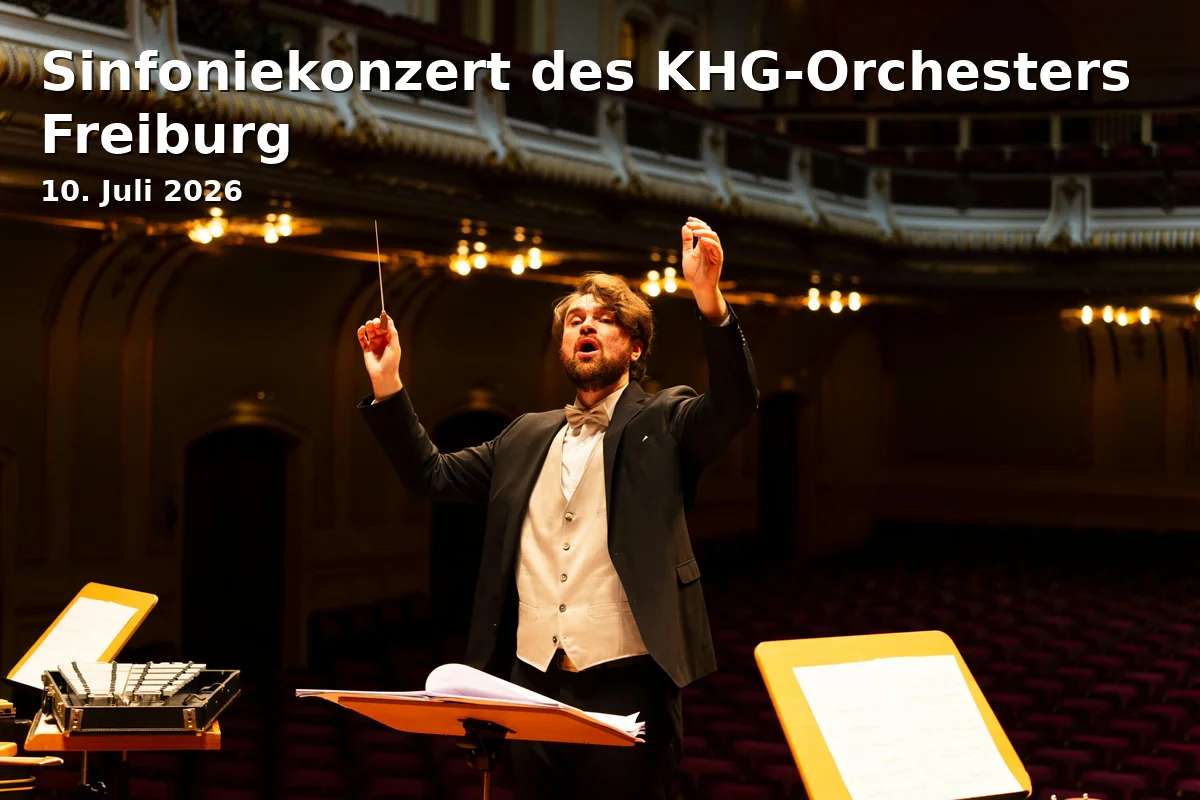
Symphony Concert of the KHG Orchestra Freiburg
Experience a classical concert on July 10, 2026, featuring works by Liszt, Franck, and Saint-Saëns in the Wolfgang-Hoffmann Hall.
Frequently Asked Questions
Reviews
No reviews found