
Freiburg im Breisgau
Eschholzstraße 77, 79106 Freiburg im Breisgau, Deutschland
Gallery for Contemporary Art | Exhibitions & E-WERK
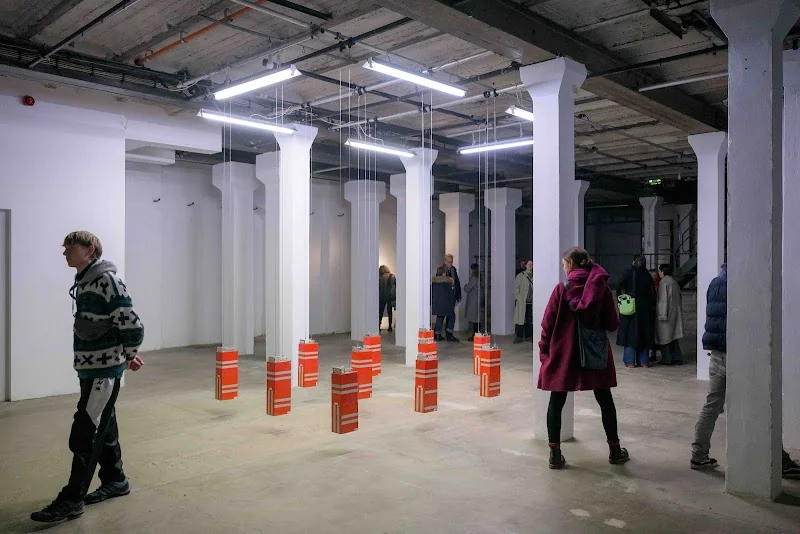
The Gallery for Contemporary Art in Freiburg im Breisgau is not a quiet white-cube space for a short art stop, but a vibrant part of E-WERK Freiburg, which sees itself as a platform for cultural participation, production, and encounter. Those looking for a gallery for contemporary art in Freiburg will find a place where international and regional positions come together, where exhibitions do not stand isolated, but are embedded in a larger context of studio houses, KABUFF, sculpture hall, events, mediation, and public exchange. The gallery is located at Eschholzstraße 77 in the Stühlinger district and operates in a former industrial building that is now one of the most important cultural venues in the city. This mix of historical industrial architecture, open art production, and contemporary exhibition practice is what makes the house appealing. The Gallery for Contemporary Art is thus not only a destination for art enthusiasts but also for visitors who want to get to know Freiburg through its cultural spaces and are looking for a place where art, city, and audience are connected in a productive way. ([gegenwartskunst-freiburg.de](https://gegenwartskunst-freiburg.de/galerie-fuer-gegenwartskunst))
Current Exhibitions and Program at E-WERK Freiburg
The program of the Gallery for Contemporary Art is designed for relevance, openness, and dialogue. The official website focuses on exhibitions and projects of contemporary artists, both from the region and internationally. Currently, the exhibition Drifting Futures by Michel Winterberg is running in Gallery I+II, which will be shown from mid-May to early July 2026. In addition, there will be public tours, a workshop in the sculpture hall, and a sound performance in the chamber theater of E-WERK. This intertwining of different formats is typical for the place: exhibition, conversation, workshop, and performance are not treated as separate worlds but as parts of a coherent art moment. At the same time, the website shows that the gallery continuously works with changing positions and has collaborated in recent years with artists such as Sarah Entwistle, Hanna Stiegeler, Nile Koetting, Bunmi Agusto, Karla Zipfel, Michel Winterberg, or Steph Huang. For visitors, this means: It is worth not only looking at a single exhibition but keeping an eye on the entire program, as the gallery continually positions itself anew between contemporary art, mediation, and experimental formats. Those who want to experience art in Freiburg as a living process will find a place here where current themes, new media, and discursive forms are taken seriously. ([gegenwartskunst-freiburg.de](https://gegenwartskunst-freiburg.de/galerie-fuer-gegenwartskunst))
The current program is also an indication that the gallery is not merely an exhibition space but part of a larger cultural network within the house. Gallery I and Gallery II are used for solo presentations, thematic exhibitions, and changing project series, while additional events can take place in other rooms of E-WERK. This is important for visitor orientation because the house cannot be reduced to a single form of art presentation. Instead, open transitions arise between visual arts, performance, sound, discourse, and participatory offerings. Public tours provide an entry into the exhibition, workshops open it up for younger or curious target groups, and evening events expand the spectrum with artistic formats that go beyond the classic gallery experience. The Gallery for Contemporary Art thus becomes a place where the logic of the exhibition connects with the logic of the production and event space. It is precisely from this that those moments arise that are often associated in search queries with terms like program, exhibition, today, or current event. For seekers, this is practical; for the house, it is conceptually central: The present is not only shown here but negotiated in changing formats. ([gegenwartskunst-freiburg.de](https://gegenwartskunst-freiburg.de/galerie-fuer-gegenwartskunst))
Opening Hours, Directions, and Parking for the Gallery for Contemporary Art
For a visit to the Gallery for Contemporary Art, the current opening hours are particularly important, as they are clearly tailored to weekend use. The official website currently states that Gallery I & II are open on Fridays from 5 PM to 8 PM, Saturdays from 2 PM to 8 PM, and Sundays from 2 PM to 6 PM. Those planning their visit should take these times as a reliable basis and briefly check the website before a visit in case there are any changes in the program or individual days deviate due to setup and takedown, holidays, or special events. E-WERK is located at Eschholzstraße 77 in Freiburg-Stühlinger, in a location that is central but not directly in the classic tourist core of the city center. This is an advantage for all who want to experience art with a bit of peace and without heavy city traffic. The area is well integrated into the daily life of the city and is still clearly recognizable as a cultural venue. The official contact page makes it clear that the gallery is accessible on foot, by bike, or by VAG. This fits with a house that understands urban cultural production not as a closed island but as an open part of the city. ([gegenwartskunst-freiburg.de](https://gegenwartskunst-freiburg.de/galerie-fuer-gegenwartskunst))
Those arriving by public transport can use bus lines 14 and 26 to the Ferdinand-Weiß-Straße stop. Those coming by car can take the A5 via Freiburg Mitte, take the Stühlinger exit, and turn left into Eschholzstraße. The official website points out that there is a parking lot, but only a few spaces. Additionally, it is important to note that the parking spaces on Eschholzstraße and in the resident parking area Stühlinger Süd are subject to fees. For the search intent parking, this is the crucial information, as it makes expectations realistic: The gallery is easily accessible, but one should not expect a large free parking offer. Those who want to arrive relaxed should best plan to come by bus, bike, or a short walk. Especially for a cultural house like E-WERK, this form of arrival is almost ideal, as it supports the idea of an open, urban, and well-integrated art place. Visitors who want to combine several program points also benefit from this, as the district not only offers the gallery but also other cultural destinations within reach. ([gegenwartskunst-freiburg.de](https://gegenwartskunst-freiburg.de/kontakt/))
Photos, Installation Shots, and Digital Insights into the Gallery
Many people today discover places like the Gallery for Contemporary Art first through images, and that is why the topic of photos here is not just a side issue but a relevant part of public perception. The official website explicitly mentions installation shots as image material, and the online presence of the gallery is designed so that interested parties can get a sense of the spaces, hanging, and atmosphere in advance. The site refers to the gallery website, the online presence of the house, Instagram, Facebook, and ART MAPP. This is particularly helpful for search queries for photos, impressions, or gallery views, as the gallery is thus accessible not only through text but also through visual language. Those who want to see the spaces in advance can get a sense of how strongly the exhibition situations in this house are shaped by space, light, material, and documented installation views. For a contemporary art gallery, this is particularly sensible because many works only unfold their full effect in interaction with their spatial situation. The digital insights thus serve not only for promotion but also as an extension of the exhibition experience. ([gegenwartskunst-freiburg.de](https://gegenwartskunst-freiburg.de/galerie-fuer-gegenwartskunst))
From an SEO perspective, this aspect is also exciting because seekers often start with terms like photos, gallery, E-WERK, or contemporary art. The gallery meets this need with a clear visual identity: installation views, artist information, and references to current and past exhibitions appear on the website, in announcements, and in the archive. This creates not only documentation but also a kind of visual memory of the institution. Those who prepare can thus already see before the visit what kind of space, scale, and aesthetic direction they can expect. This is particularly helpful for visitors who want to compare between different exhibitions or use the gallery as a place for repeated visits. The images make it visible that the Gallery for Contemporary Art is not a static shell but reshapes itself with each project. This is precisely why the digital view is so valuable: it lowers the threshold for visiting, arouses curiosity, and provides concrete orientation. For a modern art address in Freiburg, this is an important part of the overall appearance. ([gegenwartskunst-freiburg.de](https://gegenwartskunst-freiburg.de/galerie-fuer-gegenwartskunst))
Studio House, Sculpture Hall, and KABUFF as Creative Production Sites
The Gallery for Contemporary Art is closely linked to the studio house of E-WERK, and this is where one of the strongest differences lies compared to a purely commercial or purely museum exhibition address. As early as 1989, visual artists moved into the vacant spaces of the former Freiburg power plant, laying the foundation for today's E-WERK. The studio house includes 27 visual artists from various fields; at the center is the sculpture hall with 12 open workspaces, complemented by 15 individual studios and 3 temporarily allocated project spaces. This structure shows that the gallery is not conceived in isolation from production but is located in a house where art is actually created. This is important for visitors because it gives the place a special authenticity: here, not only is art exhibited, but also worked on, discussed, and experimented with. Exchange takes place regularly through an artist forum that usually meets every two to three months. This creates a lively network that connects exhibition practice with the everyday life of artistic production. ([gegenwartskunst-freiburg.de](https://gegenwartskunst-freiburg.de/atelierhaus/))
Particularly exciting is KABUFF, the experimental art space in the sculpture hall. KABUFF sees itself as a new space for expanded artistic production and presentation forms and is primarily aimed at young artists from Freiburg and invited guests. The official description makes it clear that production is understood broadly here: not only as the creation of objects but also as material assemblage, installation, thought process, social event, performance, or presentation form. This open concept of art production fits well with the profile of the Gallery for Contemporary Art because it consciously shifts the boundaries between workshop, exhibition, and discourse. Additionally, the guest studio space is located in the turbine hall of the former power plant built in 1906. The place thus carries not only an art-historical but also an industrial memory. Young artists have the opportunity to conceive, implement, and present new works there in performative or discursive formats for one to three months. For visitors, this means: Those who visit the gallery always see a house in the making. This makes the address in Freiburg particularly attractive for all who understand art as an open process and not just as a finished end product. ([gegenwartskunst-freiburg.de](https://gegenwartskunst-freiburg.de/kabuff/))
History, Profile, and Artistic Orientation of the Gallery
The Gallery for Contemporary Art is part of a place that clearly defines itself through content and attitude. On the official profile page, the gallery describes itself as a place for ambitious, imaginative, and stimulating exhibitions and projects by contemporary artists from home and abroad. At the same time, it is emphasized that the gallery is located in a former industrial building and promotes ongoing transdisciplinary exchange with a broad network of artists and a diverse audience. This description is central because it precisely captures the character of the house: it is not only about showing art but about exchange, production, and connecting different perspectives. The emphasis on multimedia and digital formats also shows that the gallery consciously engages with contemporary forms of expression that go beyond the classic image on the wall. Additionally, social and community-based practices allow for critical engagement with global issues, stories, identities, and ecological questions. In this combination lies the true core of the institution. It does not work with a narrow definition of contemporary art but with an open, exploratory, and dialogical attitude. ([gegenwartskunst-freiburg.de](https://gegenwartskunst-freiburg.de/galerie-fuer-gegenwartskunst))
Historically, the place is also remarkable. E-WERK developed from the vacant spaces of the former Freiburg power plant, into which artists moved in 1989. Today, it has become a significant cultural institution that plays an important role for Freiburg and the region. The Gallery for Contemporary Art thus stands at the intersection of the free scene, institutional cultural work, and open urban society. The profile of the house is also sharpened by its proximity to other formats: conversations, knowledge exchange, publications, interventions in public space, and collaborations with other institutions are part of the practice. Therefore, when visiting the gallery, one encounters not only individual works but also an institutional self-understanding that sees art as a social and cultural practice. This also explains why the gallery often appears in search queries with terms like new gallery for contemporary art, gallery Werkart for contemporary art, or gallery Art Active for contemporary art: the audience is looking for a place that not only shows contemporary art but organizes, mediates, and keeps it alive. In Freiburg, this role is clearly anchored in E-WERK. ([gegenwartskunst-freiburg.de](https://gegenwartskunst-freiburg.de/atelierhaus/))
Studio Visits, Art Mediation, and Practical Visiting Tips
Another important component surrounding the Gallery for Contemporary Art is art mediation. The gallery is not limited to classical exhibiting but participates in formats that bring visitors closer to artistic processes. Particularly noteworthy is the Studio Visit series: here, four Freiburg art institutions, namely the Gallery for Contemporary Art E-Werk, the Art Association, the Museum of New Art, and the PEAC Museum, cooperate. Once a month, a public studio visit is offered, where one can gain insight into the practice of artists in Freiburg at the production site and engage in conversation about the presented work. For visitors, this is a real added value because it opens the view behind the scenes and makes art visible not only as a finished exhibit but as work in progress. This format is ideal for those seeking a deeper experience. It connects research, encounter, and immediate proximity to the city's art scene. ([gegenwartskunst-freiburg.de](https://gegenwartskunst-freiburg.de/studio-visits/))
For the perfect visit, a little planning is worthwhile. Those who combine their visit to the gallery with a tour of E-WERK can discover additional spaces depending on the program, such as the sculpture hall, the studio house, or events in the chamber theater and SÜDUFER area. Since the gallery is currently open from Friday to Sunday, a visit fits well into a weekend or a relaxed afternoon. It is particularly sensible to check the current exhibition, tours, and any special dates in advance, as the house works with changing projects and an open program structure. Looking at Instagram or the website can also be helpful if one wants to see installation views or short-term announcements. For all those looking for a place in Freiburg that connects art, city, and the present, the Gallery for Contemporary Art is a strong address. It is easily accessible, clearly profiled in content, and surprisingly versatile. Those who like contemporary art will find not only an exhibition here but a whole cultural cosmos that unfolds a little more with each visit. ([gegenwartskunst-freiburg.de](https://gegenwartskunst-freiburg.de/galerie-fuer-gegenwartskunst))
Sources:
Mehr anzeigenWeniger anzeigen
Gallery for Contemporary Art | Exhibitions & E-WERK
The Gallery for Contemporary Art in Freiburg im Breisgau is not a quiet white-cube space for a short art stop, but a vibrant part of E-WERK Freiburg, which sees itself as a platform for cultural participation, production, and encounter. Those looking for a gallery for contemporary art in Freiburg will find a place where international and regional positions come together, where exhibitions do not stand isolated, but are embedded in a larger context of studio houses, KABUFF, sculpture hall, events, mediation, and public exchange. The gallery is located at Eschholzstraße 77 in the Stühlinger district and operates in a former industrial building that is now one of the most important cultural venues in the city. This mix of historical industrial architecture, open art production, and contemporary exhibition practice is what makes the house appealing. The Gallery for Contemporary Art is thus not only a destination for art enthusiasts but also for visitors who want to get to know Freiburg through its cultural spaces and are looking for a place where art, city, and audience are connected in a productive way. ([gegenwartskunst-freiburg.de](https://gegenwartskunst-freiburg.de/galerie-fuer-gegenwartskunst))
Current Exhibitions and Program at E-WERK Freiburg
The program of the Gallery for Contemporary Art is designed for relevance, openness, and dialogue. The official website focuses on exhibitions and projects of contemporary artists, both from the region and internationally. Currently, the exhibition Drifting Futures by Michel Winterberg is running in Gallery I+II, which will be shown from mid-May to early July 2026. In addition, there will be public tours, a workshop in the sculpture hall, and a sound performance in the chamber theater of E-WERK. This intertwining of different formats is typical for the place: exhibition, conversation, workshop, and performance are not treated as separate worlds but as parts of a coherent art moment. At the same time, the website shows that the gallery continuously works with changing positions and has collaborated in recent years with artists such as Sarah Entwistle, Hanna Stiegeler, Nile Koetting, Bunmi Agusto, Karla Zipfel, Michel Winterberg, or Steph Huang. For visitors, this means: It is worth not only looking at a single exhibition but keeping an eye on the entire program, as the gallery continually positions itself anew between contemporary art, mediation, and experimental formats. Those who want to experience art in Freiburg as a living process will find a place here where current themes, new media, and discursive forms are taken seriously. ([gegenwartskunst-freiburg.de](https://gegenwartskunst-freiburg.de/galerie-fuer-gegenwartskunst))
The current program is also an indication that the gallery is not merely an exhibition space but part of a larger cultural network within the house. Gallery I and Gallery II are used for solo presentations, thematic exhibitions, and changing project series, while additional events can take place in other rooms of E-WERK. This is important for visitor orientation because the house cannot be reduced to a single form of art presentation. Instead, open transitions arise between visual arts, performance, sound, discourse, and participatory offerings. Public tours provide an entry into the exhibition, workshops open it up for younger or curious target groups, and evening events expand the spectrum with artistic formats that go beyond the classic gallery experience. The Gallery for Contemporary Art thus becomes a place where the logic of the exhibition connects with the logic of the production and event space. It is precisely from this that those moments arise that are often associated in search queries with terms like program, exhibition, today, or current event. For seekers, this is practical; for the house, it is conceptually central: The present is not only shown here but negotiated in changing formats. ([gegenwartskunst-freiburg.de](https://gegenwartskunst-freiburg.de/galerie-fuer-gegenwartskunst))
Opening Hours, Directions, and Parking for the Gallery for Contemporary Art
For a visit to the Gallery for Contemporary Art, the current opening hours are particularly important, as they are clearly tailored to weekend use. The official website currently states that Gallery I & II are open on Fridays from 5 PM to 8 PM, Saturdays from 2 PM to 8 PM, and Sundays from 2 PM to 6 PM. Those planning their visit should take these times as a reliable basis and briefly check the website before a visit in case there are any changes in the program or individual days deviate due to setup and takedown, holidays, or special events. E-WERK is located at Eschholzstraße 77 in Freiburg-Stühlinger, in a location that is central but not directly in the classic tourist core of the city center. This is an advantage for all who want to experience art with a bit of peace and without heavy city traffic. The area is well integrated into the daily life of the city and is still clearly recognizable as a cultural venue. The official contact page makes it clear that the gallery is accessible on foot, by bike, or by VAG. This fits with a house that understands urban cultural production not as a closed island but as an open part of the city. ([gegenwartskunst-freiburg.de](https://gegenwartskunst-freiburg.de/galerie-fuer-gegenwartskunst))
Those arriving by public transport can use bus lines 14 and 26 to the Ferdinand-Weiß-Straße stop. Those coming by car can take the A5 via Freiburg Mitte, take the Stühlinger exit, and turn left into Eschholzstraße. The official website points out that there is a parking lot, but only a few spaces. Additionally, it is important to note that the parking spaces on Eschholzstraße and in the resident parking area Stühlinger Süd are subject to fees. For the search intent parking, this is the crucial information, as it makes expectations realistic: The gallery is easily accessible, but one should not expect a large free parking offer. Those who want to arrive relaxed should best plan to come by bus, bike, or a short walk. Especially for a cultural house like E-WERK, this form of arrival is almost ideal, as it supports the idea of an open, urban, and well-integrated art place. Visitors who want to combine several program points also benefit from this, as the district not only offers the gallery but also other cultural destinations within reach. ([gegenwartskunst-freiburg.de](https://gegenwartskunst-freiburg.de/kontakt/))
Photos, Installation Shots, and Digital Insights into the Gallery
Many people today discover places like the Gallery for Contemporary Art first through images, and that is why the topic of photos here is not just a side issue but a relevant part of public perception. The official website explicitly mentions installation shots as image material, and the online presence of the gallery is designed so that interested parties can get a sense of the spaces, hanging, and atmosphere in advance. The site refers to the gallery website, the online presence of the house, Instagram, Facebook, and ART MAPP. This is particularly helpful for search queries for photos, impressions, or gallery views, as the gallery is thus accessible not only through text but also through visual language. Those who want to see the spaces in advance can get a sense of how strongly the exhibition situations in this house are shaped by space, light, material, and documented installation views. For a contemporary art gallery, this is particularly sensible because many works only unfold their full effect in interaction with their spatial situation. The digital insights thus serve not only for promotion but also as an extension of the exhibition experience. ([gegenwartskunst-freiburg.de](https://gegenwartskunst-freiburg.de/galerie-fuer-gegenwartskunst))
From an SEO perspective, this aspect is also exciting because seekers often start with terms like photos, gallery, E-WERK, or contemporary art. The gallery meets this need with a clear visual identity: installation views, artist information, and references to current and past exhibitions appear on the website, in announcements, and in the archive. This creates not only documentation but also a kind of visual memory of the institution. Those who prepare can thus already see before the visit what kind of space, scale, and aesthetic direction they can expect. This is particularly helpful for visitors who want to compare between different exhibitions or use the gallery as a place for repeated visits. The images make it visible that the Gallery for Contemporary Art is not a static shell but reshapes itself with each project. This is precisely why the digital view is so valuable: it lowers the threshold for visiting, arouses curiosity, and provides concrete orientation. For a modern art address in Freiburg, this is an important part of the overall appearance. ([gegenwartskunst-freiburg.de](https://gegenwartskunst-freiburg.de/galerie-fuer-gegenwartskunst))
Studio House, Sculpture Hall, and KABUFF as Creative Production Sites
The Gallery for Contemporary Art is closely linked to the studio house of E-WERK, and this is where one of the strongest differences lies compared to a purely commercial or purely museum exhibition address. As early as 1989, visual artists moved into the vacant spaces of the former Freiburg power plant, laying the foundation for today's E-WERK. The studio house includes 27 visual artists from various fields; at the center is the sculpture hall with 12 open workspaces, complemented by 15 individual studios and 3 temporarily allocated project spaces. This structure shows that the gallery is not conceived in isolation from production but is located in a house where art is actually created. This is important for visitors because it gives the place a special authenticity: here, not only is art exhibited, but also worked on, discussed, and experimented with. Exchange takes place regularly through an artist forum that usually meets every two to three months. This creates a lively network that connects exhibition practice with the everyday life of artistic production. ([gegenwartskunst-freiburg.de](https://gegenwartskunst-freiburg.de/atelierhaus/))
Particularly exciting is KABUFF, the experimental art space in the sculpture hall. KABUFF sees itself as a new space for expanded artistic production and presentation forms and is primarily aimed at young artists from Freiburg and invited guests. The official description makes it clear that production is understood broadly here: not only as the creation of objects but also as material assemblage, installation, thought process, social event, performance, or presentation form. This open concept of art production fits well with the profile of the Gallery for Contemporary Art because it consciously shifts the boundaries between workshop, exhibition, and discourse. Additionally, the guest studio space is located in the turbine hall of the former power plant built in 1906. The place thus carries not only an art-historical but also an industrial memory. Young artists have the opportunity to conceive, implement, and present new works there in performative or discursive formats for one to three months. For visitors, this means: Those who visit the gallery always see a house in the making. This makes the address in Freiburg particularly attractive for all who understand art as an open process and not just as a finished end product. ([gegenwartskunst-freiburg.de](https://gegenwartskunst-freiburg.de/kabuff/))
History, Profile, and Artistic Orientation of the Gallery
The Gallery for Contemporary Art is part of a place that clearly defines itself through content and attitude. On the official profile page, the gallery describes itself as a place for ambitious, imaginative, and stimulating exhibitions and projects by contemporary artists from home and abroad. At the same time, it is emphasized that the gallery is located in a former industrial building and promotes ongoing transdisciplinary exchange with a broad network of artists and a diverse audience. This description is central because it precisely captures the character of the house: it is not only about showing art but about exchange, production, and connecting different perspectives. The emphasis on multimedia and digital formats also shows that the gallery consciously engages with contemporary forms of expression that go beyond the classic image on the wall. Additionally, social and community-based practices allow for critical engagement with global issues, stories, identities, and ecological questions. In this combination lies the true core of the institution. It does not work with a narrow definition of contemporary art but with an open, exploratory, and dialogical attitude. ([gegenwartskunst-freiburg.de](https://gegenwartskunst-freiburg.de/galerie-fuer-gegenwartskunst))
Historically, the place is also remarkable. E-WERK developed from the vacant spaces of the former Freiburg power plant, into which artists moved in 1989. Today, it has become a significant cultural institution that plays an important role for Freiburg and the region. The Gallery for Contemporary Art thus stands at the intersection of the free scene, institutional cultural work, and open urban society. The profile of the house is also sharpened by its proximity to other formats: conversations, knowledge exchange, publications, interventions in public space, and collaborations with other institutions are part of the practice. Therefore, when visiting the gallery, one encounters not only individual works but also an institutional self-understanding that sees art as a social and cultural practice. This also explains why the gallery often appears in search queries with terms like new gallery for contemporary art, gallery Werkart for contemporary art, or gallery Art Active for contemporary art: the audience is looking for a place that not only shows contemporary art but organizes, mediates, and keeps it alive. In Freiburg, this role is clearly anchored in E-WERK. ([gegenwartskunst-freiburg.de](https://gegenwartskunst-freiburg.de/atelierhaus/))
Studio Visits, Art Mediation, and Practical Visiting Tips
Another important component surrounding the Gallery for Contemporary Art is art mediation. The gallery is not limited to classical exhibiting but participates in formats that bring visitors closer to artistic processes. Particularly noteworthy is the Studio Visit series: here, four Freiburg art institutions, namely the Gallery for Contemporary Art E-Werk, the Art Association, the Museum of New Art, and the PEAC Museum, cooperate. Once a month, a public studio visit is offered, where one can gain insight into the practice of artists in Freiburg at the production site and engage in conversation about the presented work. For visitors, this is a real added value because it opens the view behind the scenes and makes art visible not only as a finished exhibit but as work in progress. This format is ideal for those seeking a deeper experience. It connects research, encounter, and immediate proximity to the city's art scene. ([gegenwartskunst-freiburg.de](https://gegenwartskunst-freiburg.de/studio-visits/))
For the perfect visit, a little planning is worthwhile. Those who combine their visit to the gallery with a tour of E-WERK can discover additional spaces depending on the program, such as the sculpture hall, the studio house, or events in the chamber theater and SÜDUFER area. Since the gallery is currently open from Friday to Sunday, a visit fits well into a weekend or a relaxed afternoon. It is particularly sensible to check the current exhibition, tours, and any special dates in advance, as the house works with changing projects and an open program structure. Looking at Instagram or the website can also be helpful if one wants to see installation views or short-term announcements. For all those looking for a place in Freiburg that connects art, city, and the present, the Gallery for Contemporary Art is a strong address. It is easily accessible, clearly profiled in content, and surprisingly versatile. Those who like contemporary art will find not only an exhibition here but a whole cultural cosmos that unfolds a little more with each visit. ([gegenwartskunst-freiburg.de](https://gegenwartskunst-freiburg.de/galerie-fuer-gegenwartskunst))
Sources:
Gallery for Contemporary Art | Exhibitions & E-WERK
The Gallery for Contemporary Art in Freiburg im Breisgau is not a quiet white-cube space for a short art stop, but a vibrant part of E-WERK Freiburg, which sees itself as a platform for cultural participation, production, and encounter. Those looking for a gallery for contemporary art in Freiburg will find a place where international and regional positions come together, where exhibitions do not stand isolated, but are embedded in a larger context of studio houses, KABUFF, sculpture hall, events, mediation, and public exchange. The gallery is located at Eschholzstraße 77 in the Stühlinger district and operates in a former industrial building that is now one of the most important cultural venues in the city. This mix of historical industrial architecture, open art production, and contemporary exhibition practice is what makes the house appealing. The Gallery for Contemporary Art is thus not only a destination for art enthusiasts but also for visitors who want to get to know Freiburg through its cultural spaces and are looking for a place where art, city, and audience are connected in a productive way. ([gegenwartskunst-freiburg.de](https://gegenwartskunst-freiburg.de/galerie-fuer-gegenwartskunst))
Current Exhibitions and Program at E-WERK Freiburg
The program of the Gallery for Contemporary Art is designed for relevance, openness, and dialogue. The official website focuses on exhibitions and projects of contemporary artists, both from the region and internationally. Currently, the exhibition Drifting Futures by Michel Winterberg is running in Gallery I+II, which will be shown from mid-May to early July 2026. In addition, there will be public tours, a workshop in the sculpture hall, and a sound performance in the chamber theater of E-WERK. This intertwining of different formats is typical for the place: exhibition, conversation, workshop, and performance are not treated as separate worlds but as parts of a coherent art moment. At the same time, the website shows that the gallery continuously works with changing positions and has collaborated in recent years with artists such as Sarah Entwistle, Hanna Stiegeler, Nile Koetting, Bunmi Agusto, Karla Zipfel, Michel Winterberg, or Steph Huang. For visitors, this means: It is worth not only looking at a single exhibition but keeping an eye on the entire program, as the gallery continually positions itself anew between contemporary art, mediation, and experimental formats. Those who want to experience art in Freiburg as a living process will find a place here where current themes, new media, and discursive forms are taken seriously. ([gegenwartskunst-freiburg.de](https://gegenwartskunst-freiburg.de/galerie-fuer-gegenwartskunst))
The current program is also an indication that the gallery is not merely an exhibition space but part of a larger cultural network within the house. Gallery I and Gallery II are used for solo presentations, thematic exhibitions, and changing project series, while additional events can take place in other rooms of E-WERK. This is important for visitor orientation because the house cannot be reduced to a single form of art presentation. Instead, open transitions arise between visual arts, performance, sound, discourse, and participatory offerings. Public tours provide an entry into the exhibition, workshops open it up for younger or curious target groups, and evening events expand the spectrum with artistic formats that go beyond the classic gallery experience. The Gallery for Contemporary Art thus becomes a place where the logic of the exhibition connects with the logic of the production and event space. It is precisely from this that those moments arise that are often associated in search queries with terms like program, exhibition, today, or current event. For seekers, this is practical; for the house, it is conceptually central: The present is not only shown here but negotiated in changing formats. ([gegenwartskunst-freiburg.de](https://gegenwartskunst-freiburg.de/galerie-fuer-gegenwartskunst))
Opening Hours, Directions, and Parking for the Gallery for Contemporary Art
For a visit to the Gallery for Contemporary Art, the current opening hours are particularly important, as they are clearly tailored to weekend use. The official website currently states that Gallery I & II are open on Fridays from 5 PM to 8 PM, Saturdays from 2 PM to 8 PM, and Sundays from 2 PM to 6 PM. Those planning their visit should take these times as a reliable basis and briefly check the website before a visit in case there are any changes in the program or individual days deviate due to setup and takedown, holidays, or special events. E-WERK is located at Eschholzstraße 77 in Freiburg-Stühlinger, in a location that is central but not directly in the classic tourist core of the city center. This is an advantage for all who want to experience art with a bit of peace and without heavy city traffic. The area is well integrated into the daily life of the city and is still clearly recognizable as a cultural venue. The official contact page makes it clear that the gallery is accessible on foot, by bike, or by VAG. This fits with a house that understands urban cultural production not as a closed island but as an open part of the city. ([gegenwartskunst-freiburg.de](https://gegenwartskunst-freiburg.de/galerie-fuer-gegenwartskunst))
Those arriving by public transport can use bus lines 14 and 26 to the Ferdinand-Weiß-Straße stop. Those coming by car can take the A5 via Freiburg Mitte, take the Stühlinger exit, and turn left into Eschholzstraße. The official website points out that there is a parking lot, but only a few spaces. Additionally, it is important to note that the parking spaces on Eschholzstraße and in the resident parking area Stühlinger Süd are subject to fees. For the search intent parking, this is the crucial information, as it makes expectations realistic: The gallery is easily accessible, but one should not expect a large free parking offer. Those who want to arrive relaxed should best plan to come by bus, bike, or a short walk. Especially for a cultural house like E-WERK, this form of arrival is almost ideal, as it supports the idea of an open, urban, and well-integrated art place. Visitors who want to combine several program points also benefit from this, as the district not only offers the gallery but also other cultural destinations within reach. ([gegenwartskunst-freiburg.de](https://gegenwartskunst-freiburg.de/kontakt/))
Photos, Installation Shots, and Digital Insights into the Gallery
Many people today discover places like the Gallery for Contemporary Art first through images, and that is why the topic of photos here is not just a side issue but a relevant part of public perception. The official website explicitly mentions installation shots as image material, and the online presence of the gallery is designed so that interested parties can get a sense of the spaces, hanging, and atmosphere in advance. The site refers to the gallery website, the online presence of the house, Instagram, Facebook, and ART MAPP. This is particularly helpful for search queries for photos, impressions, or gallery views, as the gallery is thus accessible not only through text but also through visual language. Those who want to see the spaces in advance can get a sense of how strongly the exhibition situations in this house are shaped by space, light, material, and documented installation views. For a contemporary art gallery, this is particularly sensible because many works only unfold their full effect in interaction with their spatial situation. The digital insights thus serve not only for promotion but also as an extension of the exhibition experience. ([gegenwartskunst-freiburg.de](https://gegenwartskunst-freiburg.de/galerie-fuer-gegenwartskunst))
From an SEO perspective, this aspect is also exciting because seekers often start with terms like photos, gallery, E-WERK, or contemporary art. The gallery meets this need with a clear visual identity: installation views, artist information, and references to current and past exhibitions appear on the website, in announcements, and in the archive. This creates not only documentation but also a kind of visual memory of the institution. Those who prepare can thus already see before the visit what kind of space, scale, and aesthetic direction they can expect. This is particularly helpful for visitors who want to compare between different exhibitions or use the gallery as a place for repeated visits. The images make it visible that the Gallery for Contemporary Art is not a static shell but reshapes itself with each project. This is precisely why the digital view is so valuable: it lowers the threshold for visiting, arouses curiosity, and provides concrete orientation. For a modern art address in Freiburg, this is an important part of the overall appearance. ([gegenwartskunst-freiburg.de](https://gegenwartskunst-freiburg.de/galerie-fuer-gegenwartskunst))
Studio House, Sculpture Hall, and KABUFF as Creative Production Sites
The Gallery for Contemporary Art is closely linked to the studio house of E-WERK, and this is where one of the strongest differences lies compared to a purely commercial or purely museum exhibition address. As early as 1989, visual artists moved into the vacant spaces of the former Freiburg power plant, laying the foundation for today's E-WERK. The studio house includes 27 visual artists from various fields; at the center is the sculpture hall with 12 open workspaces, complemented by 15 individual studios and 3 temporarily allocated project spaces. This structure shows that the gallery is not conceived in isolation from production but is located in a house where art is actually created. This is important for visitors because it gives the place a special authenticity: here, not only is art exhibited, but also worked on, discussed, and experimented with. Exchange takes place regularly through an artist forum that usually meets every two to three months. This creates a lively network that connects exhibition practice with the everyday life of artistic production. ([gegenwartskunst-freiburg.de](https://gegenwartskunst-freiburg.de/atelierhaus/))
Particularly exciting is KABUFF, the experimental art space in the sculpture hall. KABUFF sees itself as a new space for expanded artistic production and presentation forms and is primarily aimed at young artists from Freiburg and invited guests. The official description makes it clear that production is understood broadly here: not only as the creation of objects but also as material assemblage, installation, thought process, social event, performance, or presentation form. This open concept of art production fits well with the profile of the Gallery for Contemporary Art because it consciously shifts the boundaries between workshop, exhibition, and discourse. Additionally, the guest studio space is located in the turbine hall of the former power plant built in 1906. The place thus carries not only an art-historical but also an industrial memory. Young artists have the opportunity to conceive, implement, and present new works there in performative or discursive formats for one to three months. For visitors, this means: Those who visit the gallery always see a house in the making. This makes the address in Freiburg particularly attractive for all who understand art as an open process and not just as a finished end product. ([gegenwartskunst-freiburg.de](https://gegenwartskunst-freiburg.de/kabuff/))
History, Profile, and Artistic Orientation of the Gallery
The Gallery for Contemporary Art is part of a place that clearly defines itself through content and attitude. On the official profile page, the gallery describes itself as a place for ambitious, imaginative, and stimulating exhibitions and projects by contemporary artists from home and abroad. At the same time, it is emphasized that the gallery is located in a former industrial building and promotes ongoing transdisciplinary exchange with a broad network of artists and a diverse audience. This description is central because it precisely captures the character of the house: it is not only about showing art but about exchange, production, and connecting different perspectives. The emphasis on multimedia and digital formats also shows that the gallery consciously engages with contemporary forms of expression that go beyond the classic image on the wall. Additionally, social and community-based practices allow for critical engagement with global issues, stories, identities, and ecological questions. In this combination lies the true core of the institution. It does not work with a narrow definition of contemporary art but with an open, exploratory, and dialogical attitude. ([gegenwartskunst-freiburg.de](https://gegenwartskunst-freiburg.de/galerie-fuer-gegenwartskunst))
Historically, the place is also remarkable. E-WERK developed from the vacant spaces of the former Freiburg power plant, into which artists moved in 1989. Today, it has become a significant cultural institution that plays an important role for Freiburg and the region. The Gallery for Contemporary Art thus stands at the intersection of the free scene, institutional cultural work, and open urban society. The profile of the house is also sharpened by its proximity to other formats: conversations, knowledge exchange, publications, interventions in public space, and collaborations with other institutions are part of the practice. Therefore, when visiting the gallery, one encounters not only individual works but also an institutional self-understanding that sees art as a social and cultural practice. This also explains why the gallery often appears in search queries with terms like new gallery for contemporary art, gallery Werkart for contemporary art, or gallery Art Active for contemporary art: the audience is looking for a place that not only shows contemporary art but organizes, mediates, and keeps it alive. In Freiburg, this role is clearly anchored in E-WERK. ([gegenwartskunst-freiburg.de](https://gegenwartskunst-freiburg.de/atelierhaus/))
Studio Visits, Art Mediation, and Practical Visiting Tips
Another important component surrounding the Gallery for Contemporary Art is art mediation. The gallery is not limited to classical exhibiting but participates in formats that bring visitors closer to artistic processes. Particularly noteworthy is the Studio Visit series: here, four Freiburg art institutions, namely the Gallery for Contemporary Art E-Werk, the Art Association, the Museum of New Art, and the PEAC Museum, cooperate. Once a month, a public studio visit is offered, where one can gain insight into the practice of artists in Freiburg at the production site and engage in conversation about the presented work. For visitors, this is a real added value because it opens the view behind the scenes and makes art visible not only as a finished exhibit but as work in progress. This format is ideal for those seeking a deeper experience. It connects research, encounter, and immediate proximity to the city's art scene. ([gegenwartskunst-freiburg.de](https://gegenwartskunst-freiburg.de/studio-visits/))
For the perfect visit, a little planning is worthwhile. Those who combine their visit to the gallery with a tour of E-WERK can discover additional spaces depending on the program, such as the sculpture hall, the studio house, or events in the chamber theater and SÜDUFER area. Since the gallery is currently open from Friday to Sunday, a visit fits well into a weekend or a relaxed afternoon. It is particularly sensible to check the current exhibition, tours, and any special dates in advance, as the house works with changing projects and an open program structure. Looking at Instagram or the website can also be helpful if one wants to see installation views or short-term announcements. For all those looking for a place in Freiburg that connects art, city, and the present, the Gallery for Contemporary Art is a strong address. It is easily accessible, clearly profiled in content, and surprisingly versatile. Those who like contemporary art will find not only an exhibition here but a whole cultural cosmos that unfolds a little more with each visit. ([gegenwartskunst-freiburg.de](https://gegenwartskunst-freiburg.de/galerie-fuer-gegenwartskunst))
Sources:
Upcoming Events
No events found
Frequently Asked Questions
Reviews
No reviews found