
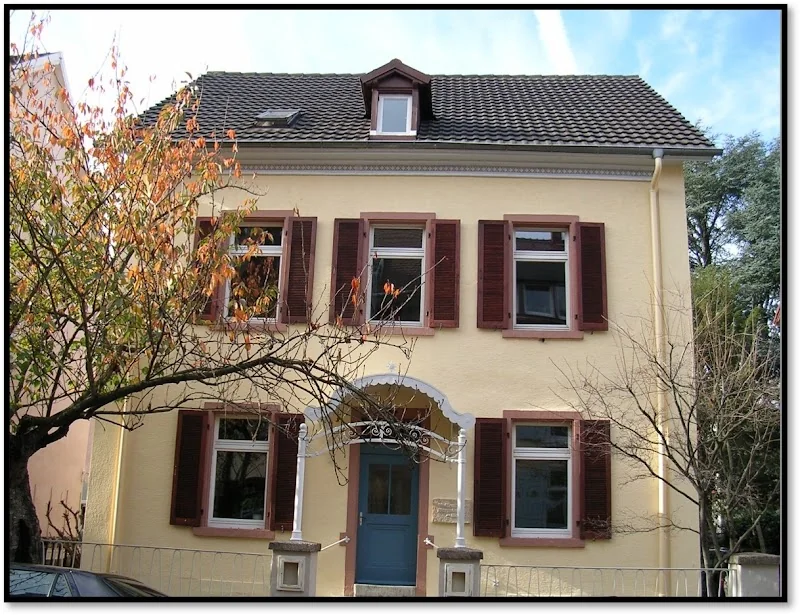
Freiburg im Breisgau
Brombergstraße 6, 79102 Freiburg im Breisgau, Deutschland
District Association for Social Legal Care Freiburg | Photos & Contact
The District Association for Social Legal Care Freiburg is not a classic event or cultural location, but a social institution with a clear societal mission. It belongs to the free offender assistance, supports prisoners and released individuals in their reintegration, and simultaneously tries to avoid the harmful effects of imprisonment. According to its own representation, the association is run by volunteers, is a member of the Baden State Association for Social Legal Care, and stands in a long Baden tradition that dates back to the 19th century. For people who are released from prison, in a crisis situation, or searching for orientation, the location at Brombergstraße 6 in Freiburg is primarily one thing: a contact point with concrete help instead of mere symbolism. This is exactly why the page is so interesting for seekers who are looking for photos, reviews, contact, opening hours, or the real tasks of the association. Anyone wanting to understand the place should not confuse it with an event location, but rather view it as part of a support system that brings together counseling, housing, work, and prevention. ([bezirksverein-freiburg.de](https://www.bezirksverein-freiburg.de/der-verein))
Contact Point for Released Prisoners, Contact, and Opening Hours
The heart of the District Association is the contact point for released prisoners in the Vollrath-Hermisson-Haus. It is about more than just a first address after release: The staff advises and accompanies prisoners and released individuals, supports them in preparing for release, helps with housing and job searches, financial and material claims, debt issues, and finding suitable specialized services. The counseling also opens pathways to other support systems, such as addiction counseling centers, therapy facilities, doctors, or legal guardians. Confidentiality is particularly important, as reliability, discretion, and a low-threshold conversation offer are needed in this field of work. The contact point is thus not an abstract office, but a place where concrete everyday problems are addressed: What comes next regarding housing, money, authorities, work, and social environment? The official page also describes that the support during and after imprisonment includes continuous care and aims to promote a crime-free, independent, and socially responsible way of life. ([bezirksverein-freiburg.de](https://www.bezirksverein-freiburg.de/anlaufstelle))
For visitors, the opening hours are a particularly practical anchor. The contact point is open on Mondays from 9:00 AM to 2:00 PM, Tuesdays from 9:00 AM to 1:00 PM, Wednesdays from 9:00 AM to 2:00 PM as well as additionally from 7:00 PM to 10:00 PM, Thursdays from 9:00 AM to 2:00 PM, and Fridays also from 9:00 AM to 2:00 PM. The address is Brombergstraße 6, 79102 Freiburg im Breisgau. This location is not only the administrative address of the association but also the central contact point for the local support system. So anyone looking for contact, opening hours, address, or a quick point of contact will find the most reliable basic information here. The team page also shows that several social workers and administrative staff are active in this area, which underscores the professional structure of the offering. Especially for users starting with the search terms photos or reviews, this factual orientation is often more important than a purely visual impression, as the real performance of the association lies in counseling, support, and everyday assistance. ([bezirksverein-freiburg.de](https://www.bezirksverein-freiburg.de/anlaufstelle))
Residential Places, Work Project, and EinsA
A central theme of the keyword analysis is practical help after imprisonment, and here the history of the association is particularly telling. According to the association's representation, the contact point today has 24 supervised residential places. These housing offers did not arise by chance but were expanded over the years to respond to increasing housing shortages and growing problems. In addition, the work project was created in 1985. It was intended to provide socially pedagogically supervised work opportunities for unemployed released prisoners, so that skills and competencies could be developed. The focus has changed over time: Not always is the direct leap into the primary labor market in the foreground, but more often the creation of daily structure, reliability, and basic work competencies. Today, up to 15 long-term unemployed released prisoners are employed under the guidance of four full-time staff members. This is an important intermediate step for many affected individuals between imprisonment, unemployment, and new independence, as structure and meaningful activity are often just as important as classic counseling. ([bezirksverein-freiburg.de](https://www.bezirksverein-freiburg.de/der-verein))
Additionally, there is EinsA, the placement service for non-profit work in Freiburg. This offer was established in 2007 under the umbrella of a network of free offender assistance and the Paritätischer Welfare Association. EinsA places insolvent debtors who have been sentenced to a fine in non-profit work to avoid the enforcement of otherwise due substitute imprisonment. Convicted individuals with corresponding judicial instructions can also be placed in non-profit work through this service. The organizational and financial background shows that the association not only provides counseling but also has a structuring effect: According to the association, 90 percent of the costs of EinsA are covered by the Ministry of Justice, while the overall financing of the association is fed by grants from the city of Freiburg, the Ministry of Justice, the state association, fines, membership fees, donations, care allowances, and revenues from services. This mix of public responsibility, social pedagogical practice, and local engagement makes the location in Freiburg a very specific institution that goes far beyond a simple counseling center. ([bezirksverein-freiburg.de](https://www.bezirksverein-freiburg.de/der-verein))
Anti-Violence Activities and Prevention in Freiburg
Those searching for the keyword anti-violence activities will land at the model project of the District Association, which started in April 2019. It is an anti-violence group training for perpetrators of violence in the area of public and domestic violence. The main goal of the offer is clearly formulated: Participants should lead a violence-free life in the future. The training not only addresses specific violent acts but also threatening behavior, outbursts of anger, and aggressively conducted conflicts. This is significant for the target group because prevention does not remain abstract here but addresses the specific behavioral patterns and burdens that can lead to escalations. The association also emphasizes networking with other support institutions so that participants receive a comprehensive support offer. This combination of group work, social pedagogical support, and networking makes the project an important building block within Freiburg's offender assistance. From an SEO perspective, this area is also interesting because it shows that the institution does not only react when something goes wrong but also works preventively. Prevention, violence avoidance, and reintegration work belong together here and explain why the association is a relevant contact for many search queries. ([bezirksverein-freiburg.de](https://www.bezirksverein-freiburg.de/der-verein))
The prevention perspective does not end with the training itself. The official description of the organization on the Baden-Württemberg service portal mentions as focal points not only support and reintegration but also the avoidance of enforcement and harmful consequences as well as violence and crime prevention. This is important because the association thus appears not only as a support facility for the time after imprisonment but as an actor that works along the entire path: before release, in the immediate transition phase, and in longer-term stabilization steps. The website also makes it clear that the projects are very closely interconnected in terms of content. The contact point, work project, EinsA, and anti-violence activities are not isolated offers but different approaches to the same goal: social stabilization and societal participation. So anyone looking for the association is often actually looking for a place where crises, conflicts, and reintegration are thought about together. This is an important part of social infrastructure for Freiburg, even if the place appears much more reserved outwardly than a classic event or cultural location. ([service-bw.de](https://www.service-bw.de/zufi/organisationseinheiten/6063751))
History of the District Association since 1832
The current structure of the District Association is the result of a long development. The association itself refers to a tradition of more than 150 years of Baden prisoner care associations. Already in 1832, a District Association Freiburg was founded, which for many years primarily dealt with easing imprisonment, education and training during imprisonment, support for reintegration, and assistance for needy relatives on a voluntary basis. This historical depth is an essential part of the association's identity, as it shows that the idea of social legal care did not only emerge in recent decades but was institutionally anchored in Freiburg very early on. In more recent history, the student movement of the late 1960s played an important role when the difficulties faced by released prisoners after their release became more prominent in public awareness. This led to the idea of a central meeting place. In 1971, an apartment in Schwarzwaldstraße was first rented as a contact point. Initially, student employees worked there in self-administration before a first full-time social worker was hired in the fall of 1972. ([bezirksverein-freiburg.de](https://www.bezirksverein-freiburg.de/der-verein))
The next step in development followed in 1973 with the move to a five-room apartment in Goethestraße acquired by the Baden State Association for Social Legal Care. The contact point grew because the number of people seeking help and their problems also increased. As early as the beginning of 1975, additional housing units were added in Lehener Straße, which created short-term accommodation for five to seven released individuals. At the end of 1981, the contact point then moved to the former inn Zum Sternen in Brombergstraße, where a three-story building was available for living and office spaces as well as a back house with five rooms for transitional living. In the following years, the work further professionalized as increasing housing shortages, unemployment, addiction problems, and personality disorders posed new demands on expertise. In 1993, with the support of the city of Freiburg and the settlement company, affordable two-room apartments could be rented, more than doubling the offerings in the residential areas. In 2007, EinsA was added, and in 2019, anti-violence activities. This development shows that the association has continuously responded to social changes without losing its core idea: not to leave people in difficult transitions alone. ([bezirksverein-freiburg.de](https://www.bezirksverein-freiburg.de/der-verein))
Photos, Reviews, and a Realistic First Impression
Many search queries begin with photos or reviews because users want to quickly get an impression. In a social institution like the District Association for Social Legal Care Freiburg, this wish is understandable, but the information logic is different than that of restaurants, hotels, or event halls. The association primarily presents itself through its projects, contact pages, and professional descriptions. The pages contain images of the team, counseling, and offers, but the focus is clearly on content rather than staging. This allows for a sensible conclusion that a first online impression is best formed through the content structure: Who is responsible, what help is available, where is the institution located, what are the opening hours, and who are the offers intended for? This is exactly why the official pages for the contact point, association, and service portal are so useful. They answer the questions that are truly relevant for those affected, rather than just providing atmospheric impressions. This is not a marketing slogan but a practical consequence of the function of the place. ([bezirksverein-freiburg.de](https://www.bezirksverein-freiburg.de/der-verein))
When searching for reviews, one should also keep in mind that public evaluations of social organizations are often read very differently. Some experiences relate to counseling, others to waiting times, and others to personal crisis situations. Therefore, for a factual classification, the official information is particularly meaningful: The offer is aimed at released prisoners, inmates, people with debt problems related to fines, and individuals who are supported through prevention and anti-violence work. The website makes it clear that this is about professional social work, confidentiality, and networked help. So anyone viewing the place in the sense of a classic location search should understand the search terms photos and reviews more as an entry point and then immediately switch to the professional details. This creates a more realistic impression: not glamorous, not staged, but socially relevant, practically organized, and very clearly oriented towards the target group. This clarity is often more valuable in a support setting than any glossy presentation. ([bezirksverein-freiburg.de](https://www.bezirksverein-freiburg.de/anlaufstelle))
Internship, Volunteering, and Support through Membership
The District Association is not only interesting for those seeking advice but also for people who want to get involved. According to the contact point page, the association offers two internship positions per semester for the Social Work degree program; for the summer semester 2026, the positions were already filled. For an internship, counseling and support of prisoners and released individuals in the JVA Freiburg and in the counseling center, participation in leisure activities, and public relations are mentioned, among other things. Requirements include social skills, flexibility, and resilience. There is also volunteer engagement, which traditionally plays an important role. Volunteers support work in leisure activities and public relations, such as bowling, game nights, pétanque, excursions, in the cafeteria, or cooking and eating together on Wednesday evenings. Information events, information booths, and events such as the Brombergstraße festival and the 24-hour run are also included. For people looking for contact, collaboration, or support, this is a good signal: The association is open to participation without compromising its professional standards. ([bezirksverein-freiburg.de](https://www.bezirksverein-freiburg.de/anlaufstelle))
In addition, the association explicitly requests support through membership, donations, and monetary contributions. This is understandable because the financing consists of several components and non-profit work in this field requires ongoing resources. The official association page mentions grants and contributions from the city of Freiburg, the Ministry of Justice, and the state association, fines from the judiciary, membership fees, donations, care allowances from the job center for work opportunities, and revenues from services of the work project. For many readers, this is precisely the answer to the question of what makes the institution particularly special in everyday life: It does not operate detached from the city, judiciary, and social space but is deeply embedded in the local structure. So anyone searching for the District Association for Social Legal Care Freiburg will not find an event calendar but a social infrastructure with history, professional breadth, and very concrete points of connection for help, collaboration, and support. ([bezirksverein-freiburg.de](https://www.bezirksverein-freiburg.de/der-verein))
Sources:
- The Association - District Association for Social Legal Care Freiburg ([bezirksverein-freiburg.de](https://www.bezirksverein-freiburg.de/der-verein))
- Contact Point - District Association for Social Legal Care Freiburg ([bezirksverein-freiburg.de](https://www.bezirksverein-freiburg.de/anlaufstelle))
- Service Portal Baden-Württemberg - District Association for Social Legal Care Freiburg ([service-bw.de](https://www.service-bw.de/zufi/organisationseinheiten/6063751))
- Imprint - District Association for Social Legal Care Freiburg ([bezirksverein-freiburg.de](https://www.bezirksverein-freiburg.de/impressum?utm_source=openai))
Mehr anzeigenWeniger anzeigen
District Association for Social Legal Care Freiburg | Photos & Contact
The District Association for Social Legal Care Freiburg is not a classic event or cultural location, but a social institution with a clear societal mission. It belongs to the free offender assistance, supports prisoners and released individuals in their reintegration, and simultaneously tries to avoid the harmful effects of imprisonment. According to its own representation, the association is run by volunteers, is a member of the Baden State Association for Social Legal Care, and stands in a long Baden tradition that dates back to the 19th century. For people who are released from prison, in a crisis situation, or searching for orientation, the location at Brombergstraße 6 in Freiburg is primarily one thing: a contact point with concrete help instead of mere symbolism. This is exactly why the page is so interesting for seekers who are looking for photos, reviews, contact, opening hours, or the real tasks of the association. Anyone wanting to understand the place should not confuse it with an event location, but rather view it as part of a support system that brings together counseling, housing, work, and prevention. ([bezirksverein-freiburg.de](https://www.bezirksverein-freiburg.de/der-verein))
Contact Point for Released Prisoners, Contact, and Opening Hours
The heart of the District Association is the contact point for released prisoners in the Vollrath-Hermisson-Haus. It is about more than just a first address after release: The staff advises and accompanies prisoners and released individuals, supports them in preparing for release, helps with housing and job searches, financial and material claims, debt issues, and finding suitable specialized services. The counseling also opens pathways to other support systems, such as addiction counseling centers, therapy facilities, doctors, or legal guardians. Confidentiality is particularly important, as reliability, discretion, and a low-threshold conversation offer are needed in this field of work. The contact point is thus not an abstract office, but a place where concrete everyday problems are addressed: What comes next regarding housing, money, authorities, work, and social environment? The official page also describes that the support during and after imprisonment includes continuous care and aims to promote a crime-free, independent, and socially responsible way of life. ([bezirksverein-freiburg.de](https://www.bezirksverein-freiburg.de/anlaufstelle))
For visitors, the opening hours are a particularly practical anchor. The contact point is open on Mondays from 9:00 AM to 2:00 PM, Tuesdays from 9:00 AM to 1:00 PM, Wednesdays from 9:00 AM to 2:00 PM as well as additionally from 7:00 PM to 10:00 PM, Thursdays from 9:00 AM to 2:00 PM, and Fridays also from 9:00 AM to 2:00 PM. The address is Brombergstraße 6, 79102 Freiburg im Breisgau. This location is not only the administrative address of the association but also the central contact point for the local support system. So anyone looking for contact, opening hours, address, or a quick point of contact will find the most reliable basic information here. The team page also shows that several social workers and administrative staff are active in this area, which underscores the professional structure of the offering. Especially for users starting with the search terms photos or reviews, this factual orientation is often more important than a purely visual impression, as the real performance of the association lies in counseling, support, and everyday assistance. ([bezirksverein-freiburg.de](https://www.bezirksverein-freiburg.de/anlaufstelle))
Residential Places, Work Project, and EinsA
A central theme of the keyword analysis is practical help after imprisonment, and here the history of the association is particularly telling. According to the association's representation, the contact point today has 24 supervised residential places. These housing offers did not arise by chance but were expanded over the years to respond to increasing housing shortages and growing problems. In addition, the work project was created in 1985. It was intended to provide socially pedagogically supervised work opportunities for unemployed released prisoners, so that skills and competencies could be developed. The focus has changed over time: Not always is the direct leap into the primary labor market in the foreground, but more often the creation of daily structure, reliability, and basic work competencies. Today, up to 15 long-term unemployed released prisoners are employed under the guidance of four full-time staff members. This is an important intermediate step for many affected individuals between imprisonment, unemployment, and new independence, as structure and meaningful activity are often just as important as classic counseling. ([bezirksverein-freiburg.de](https://www.bezirksverein-freiburg.de/der-verein))
Additionally, there is EinsA, the placement service for non-profit work in Freiburg. This offer was established in 2007 under the umbrella of a network of free offender assistance and the Paritätischer Welfare Association. EinsA places insolvent debtors who have been sentenced to a fine in non-profit work to avoid the enforcement of otherwise due substitute imprisonment. Convicted individuals with corresponding judicial instructions can also be placed in non-profit work through this service. The organizational and financial background shows that the association not only provides counseling but also has a structuring effect: According to the association, 90 percent of the costs of EinsA are covered by the Ministry of Justice, while the overall financing of the association is fed by grants from the city of Freiburg, the Ministry of Justice, the state association, fines, membership fees, donations, care allowances, and revenues from services. This mix of public responsibility, social pedagogical practice, and local engagement makes the location in Freiburg a very specific institution that goes far beyond a simple counseling center. ([bezirksverein-freiburg.de](https://www.bezirksverein-freiburg.de/der-verein))
Anti-Violence Activities and Prevention in Freiburg
Those searching for the keyword anti-violence activities will land at the model project of the District Association, which started in April 2019. It is an anti-violence group training for perpetrators of violence in the area of public and domestic violence. The main goal of the offer is clearly formulated: Participants should lead a violence-free life in the future. The training not only addresses specific violent acts but also threatening behavior, outbursts of anger, and aggressively conducted conflicts. This is significant for the target group because prevention does not remain abstract here but addresses the specific behavioral patterns and burdens that can lead to escalations. The association also emphasizes networking with other support institutions so that participants receive a comprehensive support offer. This combination of group work, social pedagogical support, and networking makes the project an important building block within Freiburg's offender assistance. From an SEO perspective, this area is also interesting because it shows that the institution does not only react when something goes wrong but also works preventively. Prevention, violence avoidance, and reintegration work belong together here and explain why the association is a relevant contact for many search queries. ([bezirksverein-freiburg.de](https://www.bezirksverein-freiburg.de/der-verein))
The prevention perspective does not end with the training itself. The official description of the organization on the Baden-Württemberg service portal mentions as focal points not only support and reintegration but also the avoidance of enforcement and harmful consequences as well as violence and crime prevention. This is important because the association thus appears not only as a support facility for the time after imprisonment but as an actor that works along the entire path: before release, in the immediate transition phase, and in longer-term stabilization steps. The website also makes it clear that the projects are very closely interconnected in terms of content. The contact point, work project, EinsA, and anti-violence activities are not isolated offers but different approaches to the same goal: social stabilization and societal participation. So anyone looking for the association is often actually looking for a place where crises, conflicts, and reintegration are thought about together. This is an important part of social infrastructure for Freiburg, even if the place appears much more reserved outwardly than a classic event or cultural location. ([service-bw.de](https://www.service-bw.de/zufi/organisationseinheiten/6063751))
History of the District Association since 1832
The current structure of the District Association is the result of a long development. The association itself refers to a tradition of more than 150 years of Baden prisoner care associations. Already in 1832, a District Association Freiburg was founded, which for many years primarily dealt with easing imprisonment, education and training during imprisonment, support for reintegration, and assistance for needy relatives on a voluntary basis. This historical depth is an essential part of the association's identity, as it shows that the idea of social legal care did not only emerge in recent decades but was institutionally anchored in Freiburg very early on. In more recent history, the student movement of the late 1960s played an important role when the difficulties faced by released prisoners after their release became more prominent in public awareness. This led to the idea of a central meeting place. In 1971, an apartment in Schwarzwaldstraße was first rented as a contact point. Initially, student employees worked there in self-administration before a first full-time social worker was hired in the fall of 1972. ([bezirksverein-freiburg.de](https://www.bezirksverein-freiburg.de/der-verein))
The next step in development followed in 1973 with the move to a five-room apartment in Goethestraße acquired by the Baden State Association for Social Legal Care. The contact point grew because the number of people seeking help and their problems also increased. As early as the beginning of 1975, additional housing units were added in Lehener Straße, which created short-term accommodation for five to seven released individuals. At the end of 1981, the contact point then moved to the former inn Zum Sternen in Brombergstraße, where a three-story building was available for living and office spaces as well as a back house with five rooms for transitional living. In the following years, the work further professionalized as increasing housing shortages, unemployment, addiction problems, and personality disorders posed new demands on expertise. In 1993, with the support of the city of Freiburg and the settlement company, affordable two-room apartments could be rented, more than doubling the offerings in the residential areas. In 2007, EinsA was added, and in 2019, anti-violence activities. This development shows that the association has continuously responded to social changes without losing its core idea: not to leave people in difficult transitions alone. ([bezirksverein-freiburg.de](https://www.bezirksverein-freiburg.de/der-verein))
Photos, Reviews, and a Realistic First Impression
Many search queries begin with photos or reviews because users want to quickly get an impression. In a social institution like the District Association for Social Legal Care Freiburg, this wish is understandable, but the information logic is different than that of restaurants, hotels, or event halls. The association primarily presents itself through its projects, contact pages, and professional descriptions. The pages contain images of the team, counseling, and offers, but the focus is clearly on content rather than staging. This allows for a sensible conclusion that a first online impression is best formed through the content structure: Who is responsible, what help is available, where is the institution located, what are the opening hours, and who are the offers intended for? This is exactly why the official pages for the contact point, association, and service portal are so useful. They answer the questions that are truly relevant for those affected, rather than just providing atmospheric impressions. This is not a marketing slogan but a practical consequence of the function of the place. ([bezirksverein-freiburg.de](https://www.bezirksverein-freiburg.de/der-verein))
When searching for reviews, one should also keep in mind that public evaluations of social organizations are often read very differently. Some experiences relate to counseling, others to waiting times, and others to personal crisis situations. Therefore, for a factual classification, the official information is particularly meaningful: The offer is aimed at released prisoners, inmates, people with debt problems related to fines, and individuals who are supported through prevention and anti-violence work. The website makes it clear that this is about professional social work, confidentiality, and networked help. So anyone viewing the place in the sense of a classic location search should understand the search terms photos and reviews more as an entry point and then immediately switch to the professional details. This creates a more realistic impression: not glamorous, not staged, but socially relevant, practically organized, and very clearly oriented towards the target group. This clarity is often more valuable in a support setting than any glossy presentation. ([bezirksverein-freiburg.de](https://www.bezirksverein-freiburg.de/anlaufstelle))
Internship, Volunteering, and Support through Membership
The District Association is not only interesting for those seeking advice but also for people who want to get involved. According to the contact point page, the association offers two internship positions per semester for the Social Work degree program; for the summer semester 2026, the positions were already filled. For an internship, counseling and support of prisoners and released individuals in the JVA Freiburg and in the counseling center, participation in leisure activities, and public relations are mentioned, among other things. Requirements include social skills, flexibility, and resilience. There is also volunteer engagement, which traditionally plays an important role. Volunteers support work in leisure activities and public relations, such as bowling, game nights, pétanque, excursions, in the cafeteria, or cooking and eating together on Wednesday evenings. Information events, information booths, and events such as the Brombergstraße festival and the 24-hour run are also included. For people looking for contact, collaboration, or support, this is a good signal: The association is open to participation without compromising its professional standards. ([bezirksverein-freiburg.de](https://www.bezirksverein-freiburg.de/anlaufstelle))
In addition, the association explicitly requests support through membership, donations, and monetary contributions. This is understandable because the financing consists of several components and non-profit work in this field requires ongoing resources. The official association page mentions grants and contributions from the city of Freiburg, the Ministry of Justice, and the state association, fines from the judiciary, membership fees, donations, care allowances from the job center for work opportunities, and revenues from services of the work project. For many readers, this is precisely the answer to the question of what makes the institution particularly special in everyday life: It does not operate detached from the city, judiciary, and social space but is deeply embedded in the local structure. So anyone searching for the District Association for Social Legal Care Freiburg will not find an event calendar but a social infrastructure with history, professional breadth, and very concrete points of connection for help, collaboration, and support. ([bezirksverein-freiburg.de](https://www.bezirksverein-freiburg.de/der-verein))
Sources:
- The Association - District Association for Social Legal Care Freiburg ([bezirksverein-freiburg.de](https://www.bezirksverein-freiburg.de/der-verein))
- Contact Point - District Association for Social Legal Care Freiburg ([bezirksverein-freiburg.de](https://www.bezirksverein-freiburg.de/anlaufstelle))
- Service Portal Baden-Württemberg - District Association for Social Legal Care Freiburg ([service-bw.de](https://www.service-bw.de/zufi/organisationseinheiten/6063751))
- Imprint - District Association for Social Legal Care Freiburg ([bezirksverein-freiburg.de](https://www.bezirksverein-freiburg.de/impressum?utm_source=openai))
District Association for Social Legal Care Freiburg | Photos & Contact
The District Association for Social Legal Care Freiburg is not a classic event or cultural location, but a social institution with a clear societal mission. It belongs to the free offender assistance, supports prisoners and released individuals in their reintegration, and simultaneously tries to avoid the harmful effects of imprisonment. According to its own representation, the association is run by volunteers, is a member of the Baden State Association for Social Legal Care, and stands in a long Baden tradition that dates back to the 19th century. For people who are released from prison, in a crisis situation, or searching for orientation, the location at Brombergstraße 6 in Freiburg is primarily one thing: a contact point with concrete help instead of mere symbolism. This is exactly why the page is so interesting for seekers who are looking for photos, reviews, contact, opening hours, or the real tasks of the association. Anyone wanting to understand the place should not confuse it with an event location, but rather view it as part of a support system that brings together counseling, housing, work, and prevention. ([bezirksverein-freiburg.de](https://www.bezirksverein-freiburg.de/der-verein))
Contact Point for Released Prisoners, Contact, and Opening Hours
The heart of the District Association is the contact point for released prisoners in the Vollrath-Hermisson-Haus. It is about more than just a first address after release: The staff advises and accompanies prisoners and released individuals, supports them in preparing for release, helps with housing and job searches, financial and material claims, debt issues, and finding suitable specialized services. The counseling also opens pathways to other support systems, such as addiction counseling centers, therapy facilities, doctors, or legal guardians. Confidentiality is particularly important, as reliability, discretion, and a low-threshold conversation offer are needed in this field of work. The contact point is thus not an abstract office, but a place where concrete everyday problems are addressed: What comes next regarding housing, money, authorities, work, and social environment? The official page also describes that the support during and after imprisonment includes continuous care and aims to promote a crime-free, independent, and socially responsible way of life. ([bezirksverein-freiburg.de](https://www.bezirksverein-freiburg.de/anlaufstelle))
For visitors, the opening hours are a particularly practical anchor. The contact point is open on Mondays from 9:00 AM to 2:00 PM, Tuesdays from 9:00 AM to 1:00 PM, Wednesdays from 9:00 AM to 2:00 PM as well as additionally from 7:00 PM to 10:00 PM, Thursdays from 9:00 AM to 2:00 PM, and Fridays also from 9:00 AM to 2:00 PM. The address is Brombergstraße 6, 79102 Freiburg im Breisgau. This location is not only the administrative address of the association but also the central contact point for the local support system. So anyone looking for contact, opening hours, address, or a quick point of contact will find the most reliable basic information here. The team page also shows that several social workers and administrative staff are active in this area, which underscores the professional structure of the offering. Especially for users starting with the search terms photos or reviews, this factual orientation is often more important than a purely visual impression, as the real performance of the association lies in counseling, support, and everyday assistance. ([bezirksverein-freiburg.de](https://www.bezirksverein-freiburg.de/anlaufstelle))
Residential Places, Work Project, and EinsA
A central theme of the keyword analysis is practical help after imprisonment, and here the history of the association is particularly telling. According to the association's representation, the contact point today has 24 supervised residential places. These housing offers did not arise by chance but were expanded over the years to respond to increasing housing shortages and growing problems. In addition, the work project was created in 1985. It was intended to provide socially pedagogically supervised work opportunities for unemployed released prisoners, so that skills and competencies could be developed. The focus has changed over time: Not always is the direct leap into the primary labor market in the foreground, but more often the creation of daily structure, reliability, and basic work competencies. Today, up to 15 long-term unemployed released prisoners are employed under the guidance of four full-time staff members. This is an important intermediate step for many affected individuals between imprisonment, unemployment, and new independence, as structure and meaningful activity are often just as important as classic counseling. ([bezirksverein-freiburg.de](https://www.bezirksverein-freiburg.de/der-verein))
Additionally, there is EinsA, the placement service for non-profit work in Freiburg. This offer was established in 2007 under the umbrella of a network of free offender assistance and the Paritätischer Welfare Association. EinsA places insolvent debtors who have been sentenced to a fine in non-profit work to avoid the enforcement of otherwise due substitute imprisonment. Convicted individuals with corresponding judicial instructions can also be placed in non-profit work through this service. The organizational and financial background shows that the association not only provides counseling but also has a structuring effect: According to the association, 90 percent of the costs of EinsA are covered by the Ministry of Justice, while the overall financing of the association is fed by grants from the city of Freiburg, the Ministry of Justice, the state association, fines, membership fees, donations, care allowances, and revenues from services. This mix of public responsibility, social pedagogical practice, and local engagement makes the location in Freiburg a very specific institution that goes far beyond a simple counseling center. ([bezirksverein-freiburg.de](https://www.bezirksverein-freiburg.de/der-verein))
Anti-Violence Activities and Prevention in Freiburg
Those searching for the keyword anti-violence activities will land at the model project of the District Association, which started in April 2019. It is an anti-violence group training for perpetrators of violence in the area of public and domestic violence. The main goal of the offer is clearly formulated: Participants should lead a violence-free life in the future. The training not only addresses specific violent acts but also threatening behavior, outbursts of anger, and aggressively conducted conflicts. This is significant for the target group because prevention does not remain abstract here but addresses the specific behavioral patterns and burdens that can lead to escalations. The association also emphasizes networking with other support institutions so that participants receive a comprehensive support offer. This combination of group work, social pedagogical support, and networking makes the project an important building block within Freiburg's offender assistance. From an SEO perspective, this area is also interesting because it shows that the institution does not only react when something goes wrong but also works preventively. Prevention, violence avoidance, and reintegration work belong together here and explain why the association is a relevant contact for many search queries. ([bezirksverein-freiburg.de](https://www.bezirksverein-freiburg.de/der-verein))
The prevention perspective does not end with the training itself. The official description of the organization on the Baden-Württemberg service portal mentions as focal points not only support and reintegration but also the avoidance of enforcement and harmful consequences as well as violence and crime prevention. This is important because the association thus appears not only as a support facility for the time after imprisonment but as an actor that works along the entire path: before release, in the immediate transition phase, and in longer-term stabilization steps. The website also makes it clear that the projects are very closely interconnected in terms of content. The contact point, work project, EinsA, and anti-violence activities are not isolated offers but different approaches to the same goal: social stabilization and societal participation. So anyone looking for the association is often actually looking for a place where crises, conflicts, and reintegration are thought about together. This is an important part of social infrastructure for Freiburg, even if the place appears much more reserved outwardly than a classic event or cultural location. ([service-bw.de](https://www.service-bw.de/zufi/organisationseinheiten/6063751))
History of the District Association since 1832
The current structure of the District Association is the result of a long development. The association itself refers to a tradition of more than 150 years of Baden prisoner care associations. Already in 1832, a District Association Freiburg was founded, which for many years primarily dealt with easing imprisonment, education and training during imprisonment, support for reintegration, and assistance for needy relatives on a voluntary basis. This historical depth is an essential part of the association's identity, as it shows that the idea of social legal care did not only emerge in recent decades but was institutionally anchored in Freiburg very early on. In more recent history, the student movement of the late 1960s played an important role when the difficulties faced by released prisoners after their release became more prominent in public awareness. This led to the idea of a central meeting place. In 1971, an apartment in Schwarzwaldstraße was first rented as a contact point. Initially, student employees worked there in self-administration before a first full-time social worker was hired in the fall of 1972. ([bezirksverein-freiburg.de](https://www.bezirksverein-freiburg.de/der-verein))
The next step in development followed in 1973 with the move to a five-room apartment in Goethestraße acquired by the Baden State Association for Social Legal Care. The contact point grew because the number of people seeking help and their problems also increased. As early as the beginning of 1975, additional housing units were added in Lehener Straße, which created short-term accommodation for five to seven released individuals. At the end of 1981, the contact point then moved to the former inn Zum Sternen in Brombergstraße, where a three-story building was available for living and office spaces as well as a back house with five rooms for transitional living. In the following years, the work further professionalized as increasing housing shortages, unemployment, addiction problems, and personality disorders posed new demands on expertise. In 1993, with the support of the city of Freiburg and the settlement company, affordable two-room apartments could be rented, more than doubling the offerings in the residential areas. In 2007, EinsA was added, and in 2019, anti-violence activities. This development shows that the association has continuously responded to social changes without losing its core idea: not to leave people in difficult transitions alone. ([bezirksverein-freiburg.de](https://www.bezirksverein-freiburg.de/der-verein))
Photos, Reviews, and a Realistic First Impression
Many search queries begin with photos or reviews because users want to quickly get an impression. In a social institution like the District Association for Social Legal Care Freiburg, this wish is understandable, but the information logic is different than that of restaurants, hotels, or event halls. The association primarily presents itself through its projects, contact pages, and professional descriptions. The pages contain images of the team, counseling, and offers, but the focus is clearly on content rather than staging. This allows for a sensible conclusion that a first online impression is best formed through the content structure: Who is responsible, what help is available, where is the institution located, what are the opening hours, and who are the offers intended for? This is exactly why the official pages for the contact point, association, and service portal are so useful. They answer the questions that are truly relevant for those affected, rather than just providing atmospheric impressions. This is not a marketing slogan but a practical consequence of the function of the place. ([bezirksverein-freiburg.de](https://www.bezirksverein-freiburg.de/der-verein))
When searching for reviews, one should also keep in mind that public evaluations of social organizations are often read very differently. Some experiences relate to counseling, others to waiting times, and others to personal crisis situations. Therefore, for a factual classification, the official information is particularly meaningful: The offer is aimed at released prisoners, inmates, people with debt problems related to fines, and individuals who are supported through prevention and anti-violence work. The website makes it clear that this is about professional social work, confidentiality, and networked help. So anyone viewing the place in the sense of a classic location search should understand the search terms photos and reviews more as an entry point and then immediately switch to the professional details. This creates a more realistic impression: not glamorous, not staged, but socially relevant, practically organized, and very clearly oriented towards the target group. This clarity is often more valuable in a support setting than any glossy presentation. ([bezirksverein-freiburg.de](https://www.bezirksverein-freiburg.de/anlaufstelle))
Internship, Volunteering, and Support through Membership
The District Association is not only interesting for those seeking advice but also for people who want to get involved. According to the contact point page, the association offers two internship positions per semester for the Social Work degree program; for the summer semester 2026, the positions were already filled. For an internship, counseling and support of prisoners and released individuals in the JVA Freiburg and in the counseling center, participation in leisure activities, and public relations are mentioned, among other things. Requirements include social skills, flexibility, and resilience. There is also volunteer engagement, which traditionally plays an important role. Volunteers support work in leisure activities and public relations, such as bowling, game nights, pétanque, excursions, in the cafeteria, or cooking and eating together on Wednesday evenings. Information events, information booths, and events such as the Brombergstraße festival and the 24-hour run are also included. For people looking for contact, collaboration, or support, this is a good signal: The association is open to participation without compromising its professional standards. ([bezirksverein-freiburg.de](https://www.bezirksverein-freiburg.de/anlaufstelle))
In addition, the association explicitly requests support through membership, donations, and monetary contributions. This is understandable because the financing consists of several components and non-profit work in this field requires ongoing resources. The official association page mentions grants and contributions from the city of Freiburg, the Ministry of Justice, and the state association, fines from the judiciary, membership fees, donations, care allowances from the job center for work opportunities, and revenues from services of the work project. For many readers, this is precisely the answer to the question of what makes the institution particularly special in everyday life: It does not operate detached from the city, judiciary, and social space but is deeply embedded in the local structure. So anyone searching for the District Association for Social Legal Care Freiburg will not find an event calendar but a social infrastructure with history, professional breadth, and very concrete points of connection for help, collaboration, and support. ([bezirksverein-freiburg.de](https://www.bezirksverein-freiburg.de/der-verein))
Sources:
- The Association - District Association for Social Legal Care Freiburg ([bezirksverein-freiburg.de](https://www.bezirksverein-freiburg.de/der-verein))
- Contact Point - District Association for Social Legal Care Freiburg ([bezirksverein-freiburg.de](https://www.bezirksverein-freiburg.de/anlaufstelle))
- Service Portal Baden-Württemberg - District Association for Social Legal Care Freiburg ([service-bw.de](https://www.service-bw.de/zufi/organisationseinheiten/6063751))
- Imprint - District Association for Social Legal Care Freiburg ([bezirksverein-freiburg.de](https://www.bezirksverein-freiburg.de/impressum?utm_source=openai))
Frequently Asked Questions
Reviews
Klaus.Adolf Nodèr
24. June 2018
An exceptional meeting place for those affected, but not only here is everyone warmly welcomed. Whether help is needed and sought, or law students are just looking for first-hand information – coffee is open daily, everyone is warmly invited. Greetings from Klaus
Klaus-Adolf Nodér
9. August 2018
It’s an open house, please don’t hesitate to go there because it’s a help center for prisoners and others who have gone off track. It’s also a former inn! And if you need to watch your money but still want good coffee, not for 2 euros and a bit more, but for 70 cents, you’re very welcome! There’s also food. Otherwise, everyone is warmly welcomed, there are friendly people, leisure activities, and of course help or info from first-hand for example law students or people who just want to help. Warm regards from Nodér Adolf-Klaus
Torsten Hess
10. February 2021
It’s a very good point of contact for those released from prison. Very friendly staff. You can come with almost any problem. They always make the greatest effort to help you.
Rolf Birkenmeier
13. July 2021
I’ve been here in the district association for a long time and have always received help. The staff is very friendly and helpful.
Eric Ehret
27. November 2018
Here, people are helped, great community, nice staff, I can only recommend it, great team, always an ear or a door open.