
Freiburg im Breisgau
Krozinger Str. 50, 79114 Freiburg im Breisgau-Weingarten, Deutschland
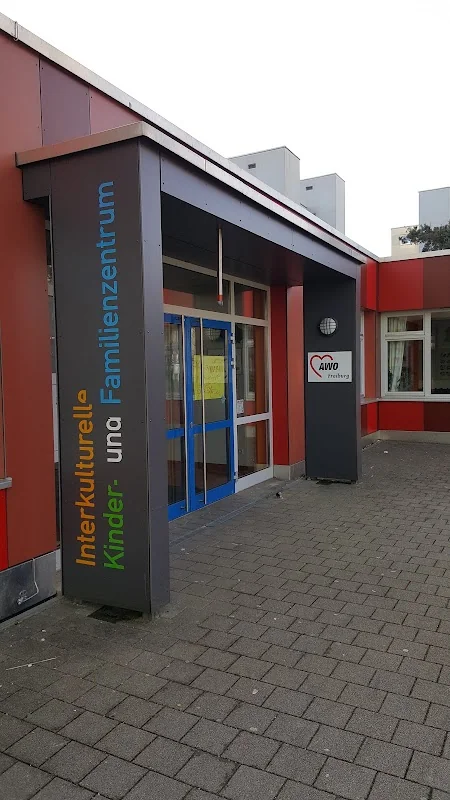
AWO Intercultural Children's and Family Center | Weingarten
The AWO Intercultural Children's and Family Center in Freiburg-Weingarten is more than just a traditional daycare: it combines reliable childcare with family work, encounters, and everyday support for parents. At Krozinger Straße 50, children aged 1 to 8 years are accompanied, cared for, and supported in five groups. The facility works with a multi-professional, intercultural team and explicitly understands diversity as a strength. For families from the district and beyond, the center is a place where educational partnership, language support, counseling, and community are thought together. Particularly significant is the area Family Meeting Point, which bundles free offerings for parents, children, and other interested parties. These include open meetings, movement offerings, language courses, creative formats, and practical help with questions regarding registration, everyday life, and participation. Those looking for photos, opening hours, offerings, or reviews will find a facility that is clearly positioned in both educational everyday life and social interaction: family-oriented, open, structured, and firmly rooted in the district.
Care, Groups, and Opening Hours
The core function of the facility is the care of children in different age groups. According to AWO, a total of 92 children are accompanied in five groups. This model is particularly interesting for families because it combines various forms of care under one roof. The U3 group is aimed at children aged 1 to 3 years and is open on weekdays from 7:45 AM to 2:30 PM. For children aged 3 to 6 years, there are three full-day groups with very long care times: Monday to Thursday from 7:15 AM to 4:45 PM and on Friday from 7:15 AM to 3:00 PM. Additionally, there is a mixed-age group VÖ 7 for children aged 3 to 8 years with times from 7:30 AM to 1:45 PM or 2:30 PM. For school children up to the 3rd grade, care is offered after school until 5:00 PM from Monday to Thursday and until 3:00 PM on Fridays. During school holidays, except for closing days, the facility is open on weekdays from 7:30 AM to 5:00 PM.
This structure shows how strongly the facility responds to different family realities. Early service, full-day care, mixed-age groups, and school child care create flexible solutions without losing sight of educational quality. This is particularly valuable for parents who must reconcile work, family, and the organization of everyday life. In addition, there is a team of educational professionals and volunteers, which AWO describes as qualified, motivated, multi-professional, and intercultural. The management of the facility is led by Regina Kopp. For parents, this combination of fixed structures and personal support is often the decisive difference: the center offers not only supervision but a reliable framework in which children can build relationships, develop routines, and move safely. Especially in the Weingarten district, where different life situations and family histories meet, this broad spectrum of care is a noticeable advantage.
The educational attitude is also clearly recognizable. AWO emphasizes appreciation, respect, and the promotion of community-capable, self-responsible personalities. This means in everyday life: children are not only cared for but taken seriously in their development, supported, and accompanied with appropriate offerings. Differentiated educational areas in the group rooms, carefully selected materials, and theme-specific projects ensure that the groups can respond to age-related needs. For search queries like daycare Weingarten Freiburg, opening hours daycare Freiburg Weingarten, or children's daycare Krozinger Straße, it is important to understand that this is a facility with a clear educational orientation and at the same time high everyday practicality. Those looking for a place will find here a combination of care, education, and family closeness that is noticeable throughout the daily routine.
Family Meeting Point, Counseling, and Free Offerings
The perhaps most important difference from a purely caring daycare lies in the area Family Meeting Point. Here, the facility clearly expands its mission and opens up to all interested families from the district and beyond. AWO describes this offering as a place of encounter and personal development. The goal is not only to promote children but to strengthen parents in their educational tasks and create a lively educational partnership. This is precisely where the special character of this family center emerges: it is a social anchor point, a learning place, and a place of exchange at the same time. The offerings are free and are oriented towards the interests of the participants. These include, among others, parent café, sports offerings for young and old, language courses, creative work, playgroups, and a family library.
A look at the half-year program shows how concrete and practical this work is. There is a parent café with time for conversations and open exchange, parent-child movement offerings in the gym, a German workshop, dance fitness for women, parent-child groups, a baby meeting, help with applications and registrations, as well as open counseling offerings. Additionally, regular formats take place that strengthen education and participation, such as educational guides, the parent course Strong Parents - Strong Children, or the B2 group German. There are also reading groups, fitness offerings, parent-child gymnastics, parent-child cooking, dance café, yoga, creative café, storytelling afternoons, theme evenings, and events for families with school starters. This variety makes it clear that the center does not only offer occasional actions but creates a real rhythm of social and cultural participation.
Particularly valuable is the proximity to the life world of families. Those in need of support find not only information but direct contacts. In the Family Meeting Point, Anna Retsch and Lena Pint are named, who take care of the coordination of offerings and open communication. The facility thus sees itself as a low-threshold point of contact that breaks down barriers and facilitates participation. This is especially important for families who are new to the district, need language support, or do not immediately find their way in traditional counseling structures. The family library with children's books in German and over 20 languages is also a strong sign of multilingualism and cultural openness. Those searching for awo intercultural family counseling, family meeting point Freiburg, or parent café Freiburg Weingarten will find here an offering that goes far beyond a typical parent-child meeting and actively strengthens social cohesion in the neighborhood.
Registration, Fees, and Practical Information
For many parents, the search for a daycare place begins with the question of the registration process. Here, too, the facility works with clear structures: registration for a place is done through the central reservation system of the city of Freiburg. This means that families should use the municipal path for registration and not only inquire directly at the facility. AWO explicitly refers to the information, counseling, and reservation office for childcare in Freiburg, which helps with questions. This makes the process transparent and standardized, which is a relief for many parents. Those needing additional help can also contact the facility directly. This support is a practical advantage, especially for families who are not yet familiar with the Freiburg system.
AWO also states that the daycare fees are based on the recommendations of the city of Freiburg. Although no detailed fee lists are mentioned on the publicly accessible page, the reference to municipal orientation shows that the fees are not arbitrarily set. For families with financial questions, it is important to know that, according to AWO, there are also options for fee coverage and subsidies for lunch, provided the requirements are met. This indicates a socially oriented attitude that is felt not only educationally but also organizationally. Additionally, the facility offers help with applications, especially in the area of registration and reservation procedures. This is particularly relevant for search queries like daycare registration Freiburg or family center Weingarten Freiburg, as here not only a place is conveyed, but also a comprehensible access to the place.
The contact methods are also clear. The daycare can be reached by phone and email, and the Family Meeting Point has its own contacts. In a family center, this structure is crucial because questions often do not only concern the care itself but also language support, participation, applications, closing times, or funding opportunities. The facility also offers training and volunteer service opportunities, including recognition year, PIA training, as well as FSJ and BFD. This shows that not only children and families are thought of here, but also the next generation of professionals. Practically speaking, the Intercultural Children's and Family Center is thus a place where many paths converge: care, counseling, education, training, and neighborhood. This bundling makes it particularly relevant for Freiburg-Weingarten.
Nutrition, Closing Times, and Daily Life in the Daycare
In the daycare's daily life, nutrition and reliable routines play a significant role. AWO mentions several concrete points. The children receive a warm lunch that comes from the kitchen of the Diakonie Hospital. Regional ingredients are predominantly used, some of which are organic products. From Monday to Thursday, lunch is vegetarian, and on Friday, there is fish. The price for lunch is currently 95 euros, increasing to 105 euros as a flat rate from June 1, 2026. The meal flat rate is calculated for 11 months, with August being free. If the requirements are met, parents can apply for cost coverage under the Education and Participation Act. For many families, this is not just an organizational piece of information but an important sign of social accessibility.
Daily life also includes breakfast and afternoon snacks. According to AWO, these are prepared together with the children and are based on seasonal fruits and vegetables, bread, muesli, and other fresh ingredients. Parents pay a monthly amount that varies depending on the group form. Drinks such as water, tea, and milk are available in the daycare. From an educational practice perspective, this joint meal preparation is more than just provision: children experience choice, community, and daily rhythms, and nutrition is understood as part of learning. Such details make a facility reliable and lively in everyday life.
The closing times are also transparently regulated. The AWO daycare centers have 29 closing days per year. The dates are set in coordination with the parents' council in the respective kindergarten year, and the holiday plan is handed out to parents. This is important because parents can plan early and do not have to expect surprising interruptions. Those searching for opening hours daycare Freiburg Weingarten need not only the start and end times of the groups but also a clear idea of the annual rhythm. The facility provides exactly that. Additionally, during school holidays, except for closing days, longer care times are offered. This means the center adapts to the reality of families with school children. Daily life in the center is therefore not only pedagogically well thought out but also organizationally well structured.
Another practical point is the role of the facility as a meeting point in the neighborhood. Parent café, family library, open groups, and movement offerings complement the normal daycare operation. This creates an atmosphere where children are not only cared for but families can also meet outside of the pure drop-off and pick-up situation. Especially in a district like Weingarten, where many different life situations meet, this connection of everyday life, provision, and community is particularly valuable. The center thus shows that good daycare work goes far beyond the actual group offering.
Inclusion, Language Support, and Educational Concept
The educational basic attitude of the facility is clearly focused on inclusion and diversity. AWO describes inclusion as an overarching process that should enable all people to participate in daily and social life. Diversity is seen as an important resource. This is not just a guiding principle but shapes everyday work: children with different developmental prerequisites, children with a migration background, as well as families from financially or socially burdened situations are explicitly valued and supported in a resource-oriented manner. This attitude is central for an intercultural children's and family center because it does not start from deficits but from potentials and individual paths. The facility emphasizes that the support of different peculiarities and developmental paths is experienced as enrichment.
Language support also takes up a broad space. Mentioned are the federal program Language Daycares, Kolibri, and the Language Ball School in cooperation with the SCF. Additionally, there are German courses for women and the German workshop in the Family Meeting Point. The practice is therefore not limited to a single language offering but encompasses various levels and situations: everyday language support in the daycare context, structured learning in the family center, and special formats for women or parents. This makes the facility very attractive for families in need of language support. Those searching for awo intercultural family counseling, German courses for women Freiburg, or family center Weingarten Freiburg will find here no abstract promises but concrete offerings with direct everyday relevance.
The educational concept is based, according to AWO, on the fundamental values of solidarity, tolerance, freedom, equality, and justice. Furthermore, the orientation plan for Baden-Württemberg daycare centers is used, supplemented by the situational approach and the concept of educational and learning stories according to Margaret Carr. This sounds technical, but in everyday life, it is primarily well-founded educational practice. The children should become community-capable and self-responsible personalities. To achieve this, the facility relies on differentiated educational areas, theme-specific and seasonally adapted offerings, as well as projects that are integrated into everyday educational practice. These include the school starter project Set Sail, Let Go!, the art project Little Splashes, the nature project Forest Gnomes, psychomotor skills, role-playing groups, communal singing, children's kitchen, and educational excursions. According to AWO, these excursions are also financed through donations. This makes it clear that the facility not only organizes care but systematically considers learning spaces, creativity, and social development.
For families, this combination of value orientation, language support, inclusion, and project work is particularly important. It creates an environment where children can build various competencies without their background or family situation being understood as a hurdle. Especially in the intercultural context, this is a strong profile characteristic. It also explains why the facility is described in external information sources not only as a daycare but as a multicultural and family-oriented institution. In summary, a place emerges that connects pedagogy and social participation.
Photos, Location in Freiburg-Weingarten, and History of the Facility
The location in Freiburg-Weingarten is central to the profile of the facility. Krozinger Straße 50 is located in a district that is strongly characterized by diversity, family life, and urban everyday paths. AWO itself shows image areas and a location map with a map reference on its page, so that interested parties can gain a first visual and spatial impression. Those looking for photos of the AWO Intercultural Children's and Family Center will find primarily embedded images and visual areas on the official page, but no separate large public photo gallery. That is why it makes sense to look closely at the offerings and location in addition to the website, rather than just searching for individual images. The visual language of the page underscores the character of the facility: open, practical, and family-oriented.
Historically, the facility is also interesting. External information sources locate its roots in a daycare center that has existed since 1975 on Krozinger Straße. It is also described that the offering was expanded architecturally and conceptually in 2011. Such information helps to better place the current location: it did not emerge from nothing but has developed over decades into an intercultural family center. The present of the house is thus closely linked to a longer history of social pedagogical work in the district. This explains why the facility today bundles not only childcare but also family work, counseling, and educational offerings. The journey from the Krozinger Straße daycare to the Intercultural Children's and Family Center marks a development towards more openness, multilingualism, and neighborhood reference.
The connection to the district is also visible. In Freiburg, mother and family centers as well as other counseling and support offerings are centrally listed, and the AWO Intercultural Children's and Family Center is mentioned there with its address and contact information. This underscores the public relevance of the house as a point of contact for families in Freiburg. When the word reviews appears in search queries, one should consider the character of the facility: it is not about an event location with a show program, but about a daycare and a family center with a social mission. Evaluations are therefore primarily interesting in the context of care, accessibility, atmosphere, and counseling. The provided location data indicates an average rating of 3.1 stars from 7 reviews; however, the official AWO page itself emphasizes the offerings, contacts, and educational profile.
For an information page, therefore, two perspectives are important: on the one hand, visual and spatial orientation, and on the other hand, content depth. The AWO Intercultural Children's and Family Center scores with a clear location, a strong family connection, and a long development history in the Weingarten district. Those wanting to consider photos, opening hours, counseling, family offerings, and daycare registration together will receive a coherent overall picture here. The facility does not stand for grand staging but for sustainable, reliable, and human everyday work. That is where its true value for Freiburg-Weingarten and the families using the house lies.
Sources:
- AWO Freiburg - Intercultural Children's and Family Center
- AWO Freiburg - Family Meeting Point Half-Year Program September 2025 to February 2026
- City of Freiburg - Information and Counseling Centers, Mother and Family Centers
- Urban Gardening Freiburg - Intercultural Children's and Family Center AWO Freiburg
Show moreShow less
AWO Intercultural Children's and Family Center | Weingarten
The AWO Intercultural Children's and Family Center in Freiburg-Weingarten is more than just a traditional daycare: it combines reliable childcare with family work, encounters, and everyday support for parents. At Krozinger Straße 50, children aged 1 to 8 years are accompanied, cared for, and supported in five groups. The facility works with a multi-professional, intercultural team and explicitly understands diversity as a strength. For families from the district and beyond, the center is a place where educational partnership, language support, counseling, and community are thought together. Particularly significant is the area Family Meeting Point, which bundles free offerings for parents, children, and other interested parties. These include open meetings, movement offerings, language courses, creative formats, and practical help with questions regarding registration, everyday life, and participation. Those looking for photos, opening hours, offerings, or reviews will find a facility that is clearly positioned in both educational everyday life and social interaction: family-oriented, open, structured, and firmly rooted in the district.
Care, Groups, and Opening Hours
The core function of the facility is the care of children in different age groups. According to AWO, a total of 92 children are accompanied in five groups. This model is particularly interesting for families because it combines various forms of care under one roof. The U3 group is aimed at children aged 1 to 3 years and is open on weekdays from 7:45 AM to 2:30 PM. For children aged 3 to 6 years, there are three full-day groups with very long care times: Monday to Thursday from 7:15 AM to 4:45 PM and on Friday from 7:15 AM to 3:00 PM. Additionally, there is a mixed-age group VÖ 7 for children aged 3 to 8 years with times from 7:30 AM to 1:45 PM or 2:30 PM. For school children up to the 3rd grade, care is offered after school until 5:00 PM from Monday to Thursday and until 3:00 PM on Fridays. During school holidays, except for closing days, the facility is open on weekdays from 7:30 AM to 5:00 PM.
This structure shows how strongly the facility responds to different family realities. Early service, full-day care, mixed-age groups, and school child care create flexible solutions without losing sight of educational quality. This is particularly valuable for parents who must reconcile work, family, and the organization of everyday life. In addition, there is a team of educational professionals and volunteers, which AWO describes as qualified, motivated, multi-professional, and intercultural. The management of the facility is led by Regina Kopp. For parents, this combination of fixed structures and personal support is often the decisive difference: the center offers not only supervision but a reliable framework in which children can build relationships, develop routines, and move safely. Especially in the Weingarten district, where different life situations and family histories meet, this broad spectrum of care is a noticeable advantage.
The educational attitude is also clearly recognizable. AWO emphasizes appreciation, respect, and the promotion of community-capable, self-responsible personalities. This means in everyday life: children are not only cared for but taken seriously in their development, supported, and accompanied with appropriate offerings. Differentiated educational areas in the group rooms, carefully selected materials, and theme-specific projects ensure that the groups can respond to age-related needs. For search queries like daycare Weingarten Freiburg, opening hours daycare Freiburg Weingarten, or children's daycare Krozinger Straße, it is important to understand that this is a facility with a clear educational orientation and at the same time high everyday practicality. Those looking for a place will find here a combination of care, education, and family closeness that is noticeable throughout the daily routine.
Family Meeting Point, Counseling, and Free Offerings
The perhaps most important difference from a purely caring daycare lies in the area Family Meeting Point. Here, the facility clearly expands its mission and opens up to all interested families from the district and beyond. AWO describes this offering as a place of encounter and personal development. The goal is not only to promote children but to strengthen parents in their educational tasks and create a lively educational partnership. This is precisely where the special character of this family center emerges: it is a social anchor point, a learning place, and a place of exchange at the same time. The offerings are free and are oriented towards the interests of the participants. These include, among others, parent café, sports offerings for young and old, language courses, creative work, playgroups, and a family library.
A look at the half-year program shows how concrete and practical this work is. There is a parent café with time for conversations and open exchange, parent-child movement offerings in the gym, a German workshop, dance fitness for women, parent-child groups, a baby meeting, help with applications and registrations, as well as open counseling offerings. Additionally, regular formats take place that strengthen education and participation, such as educational guides, the parent course Strong Parents - Strong Children, or the B2 group German. There are also reading groups, fitness offerings, parent-child gymnastics, parent-child cooking, dance café, yoga, creative café, storytelling afternoons, theme evenings, and events for families with school starters. This variety makes it clear that the center does not only offer occasional actions but creates a real rhythm of social and cultural participation.
Particularly valuable is the proximity to the life world of families. Those in need of support find not only information but direct contacts. In the Family Meeting Point, Anna Retsch and Lena Pint are named, who take care of the coordination of offerings and open communication. The facility thus sees itself as a low-threshold point of contact that breaks down barriers and facilitates participation. This is especially important for families who are new to the district, need language support, or do not immediately find their way in traditional counseling structures. The family library with children's books in German and over 20 languages is also a strong sign of multilingualism and cultural openness. Those searching for awo intercultural family counseling, family meeting point Freiburg, or parent café Freiburg Weingarten will find here an offering that goes far beyond a typical parent-child meeting and actively strengthens social cohesion in the neighborhood.
Registration, Fees, and Practical Information
For many parents, the search for a daycare place begins with the question of the registration process. Here, too, the facility works with clear structures: registration for a place is done through the central reservation system of the city of Freiburg. This means that families should use the municipal path for registration and not only inquire directly at the facility. AWO explicitly refers to the information, counseling, and reservation office for childcare in Freiburg, which helps with questions. This makes the process transparent and standardized, which is a relief for many parents. Those needing additional help can also contact the facility directly. This support is a practical advantage, especially for families who are not yet familiar with the Freiburg system.
AWO also states that the daycare fees are based on the recommendations of the city of Freiburg. Although no detailed fee lists are mentioned on the publicly accessible page, the reference to municipal orientation shows that the fees are not arbitrarily set. For families with financial questions, it is important to know that, according to AWO, there are also options for fee coverage and subsidies for lunch, provided the requirements are met. This indicates a socially oriented attitude that is felt not only educationally but also organizationally. Additionally, the facility offers help with applications, especially in the area of registration and reservation procedures. This is particularly relevant for search queries like daycare registration Freiburg or family center Weingarten Freiburg, as here not only a place is conveyed, but also a comprehensible access to the place.
The contact methods are also clear. The daycare can be reached by phone and email, and the Family Meeting Point has its own contacts. In a family center, this structure is crucial because questions often do not only concern the care itself but also language support, participation, applications, closing times, or funding opportunities. The facility also offers training and volunteer service opportunities, including recognition year, PIA training, as well as FSJ and BFD. This shows that not only children and families are thought of here, but also the next generation of professionals. Practically speaking, the Intercultural Children's and Family Center is thus a place where many paths converge: care, counseling, education, training, and neighborhood. This bundling makes it particularly relevant for Freiburg-Weingarten.
Nutrition, Closing Times, and Daily Life in the Daycare
In the daycare's daily life, nutrition and reliable routines play a significant role. AWO mentions several concrete points. The children receive a warm lunch that comes from the kitchen of the Diakonie Hospital. Regional ingredients are predominantly used, some of which are organic products. From Monday to Thursday, lunch is vegetarian, and on Friday, there is fish. The price for lunch is currently 95 euros, increasing to 105 euros as a flat rate from June 1, 2026. The meal flat rate is calculated for 11 months, with August being free. If the requirements are met, parents can apply for cost coverage under the Education and Participation Act. For many families, this is not just an organizational piece of information but an important sign of social accessibility.
Daily life also includes breakfast and afternoon snacks. According to AWO, these are prepared together with the children and are based on seasonal fruits and vegetables, bread, muesli, and other fresh ingredients. Parents pay a monthly amount that varies depending on the group form. Drinks such as water, tea, and milk are available in the daycare. From an educational practice perspective, this joint meal preparation is more than just provision: children experience choice, community, and daily rhythms, and nutrition is understood as part of learning. Such details make a facility reliable and lively in everyday life.
The closing times are also transparently regulated. The AWO daycare centers have 29 closing days per year. The dates are set in coordination with the parents' council in the respective kindergarten year, and the holiday plan is handed out to parents. This is important because parents can plan early and do not have to expect surprising interruptions. Those searching for opening hours daycare Freiburg Weingarten need not only the start and end times of the groups but also a clear idea of the annual rhythm. The facility provides exactly that. Additionally, during school holidays, except for closing days, longer care times are offered. This means the center adapts to the reality of families with school children. Daily life in the center is therefore not only pedagogically well thought out but also organizationally well structured.
Another practical point is the role of the facility as a meeting point in the neighborhood. Parent café, family library, open groups, and movement offerings complement the normal daycare operation. This creates an atmosphere where children are not only cared for but families can also meet outside of the pure drop-off and pick-up situation. Especially in a district like Weingarten, where many different life situations meet, this connection of everyday life, provision, and community is particularly valuable. The center thus shows that good daycare work goes far beyond the actual group offering.
Inclusion, Language Support, and Educational Concept
The educational basic attitude of the facility is clearly focused on inclusion and diversity. AWO describes inclusion as an overarching process that should enable all people to participate in daily and social life. Diversity is seen as an important resource. This is not just a guiding principle but shapes everyday work: children with different developmental prerequisites, children with a migration background, as well as families from financially or socially burdened situations are explicitly valued and supported in a resource-oriented manner. This attitude is central for an intercultural children's and family center because it does not start from deficits but from potentials and individual paths. The facility emphasizes that the support of different peculiarities and developmental paths is experienced as enrichment.
Language support also takes up a broad space. Mentioned are the federal program Language Daycares, Kolibri, and the Language Ball School in cooperation with the SCF. Additionally, there are German courses for women and the German workshop in the Family Meeting Point. The practice is therefore not limited to a single language offering but encompasses various levels and situations: everyday language support in the daycare context, structured learning in the family center, and special formats for women or parents. This makes the facility very attractive for families in need of language support. Those searching for awo intercultural family counseling, German courses for women Freiburg, or family center Weingarten Freiburg will find here no abstract promises but concrete offerings with direct everyday relevance.
The educational concept is based, according to AWO, on the fundamental values of solidarity, tolerance, freedom, equality, and justice. Furthermore, the orientation plan for Baden-Württemberg daycare centers is used, supplemented by the situational approach and the concept of educational and learning stories according to Margaret Carr. This sounds technical, but in everyday life, it is primarily well-founded educational practice. The children should become community-capable and self-responsible personalities. To achieve this, the facility relies on differentiated educational areas, theme-specific and seasonally adapted offerings, as well as projects that are integrated into everyday educational practice. These include the school starter project Set Sail, Let Go!, the art project Little Splashes, the nature project Forest Gnomes, psychomotor skills, role-playing groups, communal singing, children's kitchen, and educational excursions. According to AWO, these excursions are also financed through donations. This makes it clear that the facility not only organizes care but systematically considers learning spaces, creativity, and social development.
For families, this combination of value orientation, language support, inclusion, and project work is particularly important. It creates an environment where children can build various competencies without their background or family situation being understood as a hurdle. Especially in the intercultural context, this is a strong profile characteristic. It also explains why the facility is described in external information sources not only as a daycare but as a multicultural and family-oriented institution. In summary, a place emerges that connects pedagogy and social participation.
Photos, Location in Freiburg-Weingarten, and History of the Facility
The location in Freiburg-Weingarten is central to the profile of the facility. Krozinger Straße 50 is located in a district that is strongly characterized by diversity, family life, and urban everyday paths. AWO itself shows image areas and a location map with a map reference on its page, so that interested parties can gain a first visual and spatial impression. Those looking for photos of the AWO Intercultural Children's and Family Center will find primarily embedded images and visual areas on the official page, but no separate large public photo gallery. That is why it makes sense to look closely at the offerings and location in addition to the website, rather than just searching for individual images. The visual language of the page underscores the character of the facility: open, practical, and family-oriented.
Historically, the facility is also interesting. External information sources locate its roots in a daycare center that has existed since 1975 on Krozinger Straße. It is also described that the offering was expanded architecturally and conceptually in 2011. Such information helps to better place the current location: it did not emerge from nothing but has developed over decades into an intercultural family center. The present of the house is thus closely linked to a longer history of social pedagogical work in the district. This explains why the facility today bundles not only childcare but also family work, counseling, and educational offerings. The journey from the Krozinger Straße daycare to the Intercultural Children's and Family Center marks a development towards more openness, multilingualism, and neighborhood reference.
The connection to the district is also visible. In Freiburg, mother and family centers as well as other counseling and support offerings are centrally listed, and the AWO Intercultural Children's and Family Center is mentioned there with its address and contact information. This underscores the public relevance of the house as a point of contact for families in Freiburg. When the word reviews appears in search queries, one should consider the character of the facility: it is not about an event location with a show program, but about a daycare and a family center with a social mission. Evaluations are therefore primarily interesting in the context of care, accessibility, atmosphere, and counseling. The provided location data indicates an average rating of 3.1 stars from 7 reviews; however, the official AWO page itself emphasizes the offerings, contacts, and educational profile.
For an information page, therefore, two perspectives are important: on the one hand, visual and spatial orientation, and on the other hand, content depth. The AWO Intercultural Children's and Family Center scores with a clear location, a strong family connection, and a long development history in the Weingarten district. Those wanting to consider photos, opening hours, counseling, family offerings, and daycare registration together will receive a coherent overall picture here. The facility does not stand for grand staging but for sustainable, reliable, and human everyday work. That is where its true value for Freiburg-Weingarten and the families using the house lies.
Sources:
- AWO Freiburg - Intercultural Children's and Family Center
- AWO Freiburg - Family Meeting Point Half-Year Program September 2025 to February 2026
- City of Freiburg - Information and Counseling Centers, Mother and Family Centers
- Urban Gardening Freiburg - Intercultural Children's and Family Center AWO Freiburg
AWO Intercultural Children's and Family Center | Weingarten
The AWO Intercultural Children's and Family Center in Freiburg-Weingarten is more than just a traditional daycare: it combines reliable childcare with family work, encounters, and everyday support for parents. At Krozinger Straße 50, children aged 1 to 8 years are accompanied, cared for, and supported in five groups. The facility works with a multi-professional, intercultural team and explicitly understands diversity as a strength. For families from the district and beyond, the center is a place where educational partnership, language support, counseling, and community are thought together. Particularly significant is the area Family Meeting Point, which bundles free offerings for parents, children, and other interested parties. These include open meetings, movement offerings, language courses, creative formats, and practical help with questions regarding registration, everyday life, and participation. Those looking for photos, opening hours, offerings, or reviews will find a facility that is clearly positioned in both educational everyday life and social interaction: family-oriented, open, structured, and firmly rooted in the district.
Care, Groups, and Opening Hours
The core function of the facility is the care of children in different age groups. According to AWO, a total of 92 children are accompanied in five groups. This model is particularly interesting for families because it combines various forms of care under one roof. The U3 group is aimed at children aged 1 to 3 years and is open on weekdays from 7:45 AM to 2:30 PM. For children aged 3 to 6 years, there are three full-day groups with very long care times: Monday to Thursday from 7:15 AM to 4:45 PM and on Friday from 7:15 AM to 3:00 PM. Additionally, there is a mixed-age group VÖ 7 for children aged 3 to 8 years with times from 7:30 AM to 1:45 PM or 2:30 PM. For school children up to the 3rd grade, care is offered after school until 5:00 PM from Monday to Thursday and until 3:00 PM on Fridays. During school holidays, except for closing days, the facility is open on weekdays from 7:30 AM to 5:00 PM.
This structure shows how strongly the facility responds to different family realities. Early service, full-day care, mixed-age groups, and school child care create flexible solutions without losing sight of educational quality. This is particularly valuable for parents who must reconcile work, family, and the organization of everyday life. In addition, there is a team of educational professionals and volunteers, which AWO describes as qualified, motivated, multi-professional, and intercultural. The management of the facility is led by Regina Kopp. For parents, this combination of fixed structures and personal support is often the decisive difference: the center offers not only supervision but a reliable framework in which children can build relationships, develop routines, and move safely. Especially in the Weingarten district, where different life situations and family histories meet, this broad spectrum of care is a noticeable advantage.
The educational attitude is also clearly recognizable. AWO emphasizes appreciation, respect, and the promotion of community-capable, self-responsible personalities. This means in everyday life: children are not only cared for but taken seriously in their development, supported, and accompanied with appropriate offerings. Differentiated educational areas in the group rooms, carefully selected materials, and theme-specific projects ensure that the groups can respond to age-related needs. For search queries like daycare Weingarten Freiburg, opening hours daycare Freiburg Weingarten, or children's daycare Krozinger Straße, it is important to understand that this is a facility with a clear educational orientation and at the same time high everyday practicality. Those looking for a place will find here a combination of care, education, and family closeness that is noticeable throughout the daily routine.
Family Meeting Point, Counseling, and Free Offerings
The perhaps most important difference from a purely caring daycare lies in the area Family Meeting Point. Here, the facility clearly expands its mission and opens up to all interested families from the district and beyond. AWO describes this offering as a place of encounter and personal development. The goal is not only to promote children but to strengthen parents in their educational tasks and create a lively educational partnership. This is precisely where the special character of this family center emerges: it is a social anchor point, a learning place, and a place of exchange at the same time. The offerings are free and are oriented towards the interests of the participants. These include, among others, parent café, sports offerings for young and old, language courses, creative work, playgroups, and a family library.
A look at the half-year program shows how concrete and practical this work is. There is a parent café with time for conversations and open exchange, parent-child movement offerings in the gym, a German workshop, dance fitness for women, parent-child groups, a baby meeting, help with applications and registrations, as well as open counseling offerings. Additionally, regular formats take place that strengthen education and participation, such as educational guides, the parent course Strong Parents - Strong Children, or the B2 group German. There are also reading groups, fitness offerings, parent-child gymnastics, parent-child cooking, dance café, yoga, creative café, storytelling afternoons, theme evenings, and events for families with school starters. This variety makes it clear that the center does not only offer occasional actions but creates a real rhythm of social and cultural participation.
Particularly valuable is the proximity to the life world of families. Those in need of support find not only information but direct contacts. In the Family Meeting Point, Anna Retsch and Lena Pint are named, who take care of the coordination of offerings and open communication. The facility thus sees itself as a low-threshold point of contact that breaks down barriers and facilitates participation. This is especially important for families who are new to the district, need language support, or do not immediately find their way in traditional counseling structures. The family library with children's books in German and over 20 languages is also a strong sign of multilingualism and cultural openness. Those searching for awo intercultural family counseling, family meeting point Freiburg, or parent café Freiburg Weingarten will find here an offering that goes far beyond a typical parent-child meeting and actively strengthens social cohesion in the neighborhood.
Registration, Fees, and Practical Information
For many parents, the search for a daycare place begins with the question of the registration process. Here, too, the facility works with clear structures: registration for a place is done through the central reservation system of the city of Freiburg. This means that families should use the municipal path for registration and not only inquire directly at the facility. AWO explicitly refers to the information, counseling, and reservation office for childcare in Freiburg, which helps with questions. This makes the process transparent and standardized, which is a relief for many parents. Those needing additional help can also contact the facility directly. This support is a practical advantage, especially for families who are not yet familiar with the Freiburg system.
AWO also states that the daycare fees are based on the recommendations of the city of Freiburg. Although no detailed fee lists are mentioned on the publicly accessible page, the reference to municipal orientation shows that the fees are not arbitrarily set. For families with financial questions, it is important to know that, according to AWO, there are also options for fee coverage and subsidies for lunch, provided the requirements are met. This indicates a socially oriented attitude that is felt not only educationally but also organizationally. Additionally, the facility offers help with applications, especially in the area of registration and reservation procedures. This is particularly relevant for search queries like daycare registration Freiburg or family center Weingarten Freiburg, as here not only a place is conveyed, but also a comprehensible access to the place.
The contact methods are also clear. The daycare can be reached by phone and email, and the Family Meeting Point has its own contacts. In a family center, this structure is crucial because questions often do not only concern the care itself but also language support, participation, applications, closing times, or funding opportunities. The facility also offers training and volunteer service opportunities, including recognition year, PIA training, as well as FSJ and BFD. This shows that not only children and families are thought of here, but also the next generation of professionals. Practically speaking, the Intercultural Children's and Family Center is thus a place where many paths converge: care, counseling, education, training, and neighborhood. This bundling makes it particularly relevant for Freiburg-Weingarten.
Nutrition, Closing Times, and Daily Life in the Daycare
In the daycare's daily life, nutrition and reliable routines play a significant role. AWO mentions several concrete points. The children receive a warm lunch that comes from the kitchen of the Diakonie Hospital. Regional ingredients are predominantly used, some of which are organic products. From Monday to Thursday, lunch is vegetarian, and on Friday, there is fish. The price for lunch is currently 95 euros, increasing to 105 euros as a flat rate from June 1, 2026. The meal flat rate is calculated for 11 months, with August being free. If the requirements are met, parents can apply for cost coverage under the Education and Participation Act. For many families, this is not just an organizational piece of information but an important sign of social accessibility.
Daily life also includes breakfast and afternoon snacks. According to AWO, these are prepared together with the children and are based on seasonal fruits and vegetables, bread, muesli, and other fresh ingredients. Parents pay a monthly amount that varies depending on the group form. Drinks such as water, tea, and milk are available in the daycare. From an educational practice perspective, this joint meal preparation is more than just provision: children experience choice, community, and daily rhythms, and nutrition is understood as part of learning. Such details make a facility reliable and lively in everyday life.
The closing times are also transparently regulated. The AWO daycare centers have 29 closing days per year. The dates are set in coordination with the parents' council in the respective kindergarten year, and the holiday plan is handed out to parents. This is important because parents can plan early and do not have to expect surprising interruptions. Those searching for opening hours daycare Freiburg Weingarten need not only the start and end times of the groups but also a clear idea of the annual rhythm. The facility provides exactly that. Additionally, during school holidays, except for closing days, longer care times are offered. This means the center adapts to the reality of families with school children. Daily life in the center is therefore not only pedagogically well thought out but also organizationally well structured.
Another practical point is the role of the facility as a meeting point in the neighborhood. Parent café, family library, open groups, and movement offerings complement the normal daycare operation. This creates an atmosphere where children are not only cared for but families can also meet outside of the pure drop-off and pick-up situation. Especially in a district like Weingarten, where many different life situations meet, this connection of everyday life, provision, and community is particularly valuable. The center thus shows that good daycare work goes far beyond the actual group offering.
Inclusion, Language Support, and Educational Concept
The educational basic attitude of the facility is clearly focused on inclusion and diversity. AWO describes inclusion as an overarching process that should enable all people to participate in daily and social life. Diversity is seen as an important resource. This is not just a guiding principle but shapes everyday work: children with different developmental prerequisites, children with a migration background, as well as families from financially or socially burdened situations are explicitly valued and supported in a resource-oriented manner. This attitude is central for an intercultural children's and family center because it does not start from deficits but from potentials and individual paths. The facility emphasizes that the support of different peculiarities and developmental paths is experienced as enrichment.
Language support also takes up a broad space. Mentioned are the federal program Language Daycares, Kolibri, and the Language Ball School in cooperation with the SCF. Additionally, there are German courses for women and the German workshop in the Family Meeting Point. The practice is therefore not limited to a single language offering but encompasses various levels and situations: everyday language support in the daycare context, structured learning in the family center, and special formats for women or parents. This makes the facility very attractive for families in need of language support. Those searching for awo intercultural family counseling, German courses for women Freiburg, or family center Weingarten Freiburg will find here no abstract promises but concrete offerings with direct everyday relevance.
The educational concept is based, according to AWO, on the fundamental values of solidarity, tolerance, freedom, equality, and justice. Furthermore, the orientation plan for Baden-Württemberg daycare centers is used, supplemented by the situational approach and the concept of educational and learning stories according to Margaret Carr. This sounds technical, but in everyday life, it is primarily well-founded educational practice. The children should become community-capable and self-responsible personalities. To achieve this, the facility relies on differentiated educational areas, theme-specific and seasonally adapted offerings, as well as projects that are integrated into everyday educational practice. These include the school starter project Set Sail, Let Go!, the art project Little Splashes, the nature project Forest Gnomes, psychomotor skills, role-playing groups, communal singing, children's kitchen, and educational excursions. According to AWO, these excursions are also financed through donations. This makes it clear that the facility not only organizes care but systematically considers learning spaces, creativity, and social development.
For families, this combination of value orientation, language support, inclusion, and project work is particularly important. It creates an environment where children can build various competencies without their background or family situation being understood as a hurdle. Especially in the intercultural context, this is a strong profile characteristic. It also explains why the facility is described in external information sources not only as a daycare but as a multicultural and family-oriented institution. In summary, a place emerges that connects pedagogy and social participation.
Photos, Location in Freiburg-Weingarten, and History of the Facility
The location in Freiburg-Weingarten is central to the profile of the facility. Krozinger Straße 50 is located in a district that is strongly characterized by diversity, family life, and urban everyday paths. AWO itself shows image areas and a location map with a map reference on its page, so that interested parties can gain a first visual and spatial impression. Those looking for photos of the AWO Intercultural Children's and Family Center will find primarily embedded images and visual areas on the official page, but no separate large public photo gallery. That is why it makes sense to look closely at the offerings and location in addition to the website, rather than just searching for individual images. The visual language of the page underscores the character of the facility: open, practical, and family-oriented.
Historically, the facility is also interesting. External information sources locate its roots in a daycare center that has existed since 1975 on Krozinger Straße. It is also described that the offering was expanded architecturally and conceptually in 2011. Such information helps to better place the current location: it did not emerge from nothing but has developed over decades into an intercultural family center. The present of the house is thus closely linked to a longer history of social pedagogical work in the district. This explains why the facility today bundles not only childcare but also family work, counseling, and educational offerings. The journey from the Krozinger Straße daycare to the Intercultural Children's and Family Center marks a development towards more openness, multilingualism, and neighborhood reference.
The connection to the district is also visible. In Freiburg, mother and family centers as well as other counseling and support offerings are centrally listed, and the AWO Intercultural Children's and Family Center is mentioned there with its address and contact information. This underscores the public relevance of the house as a point of contact for families in Freiburg. When the word reviews appears in search queries, one should consider the character of the facility: it is not about an event location with a show program, but about a daycare and a family center with a social mission. Evaluations are therefore primarily interesting in the context of care, accessibility, atmosphere, and counseling. The provided location data indicates an average rating of 3.1 stars from 7 reviews; however, the official AWO page itself emphasizes the offerings, contacts, and educational profile.
For an information page, therefore, two perspectives are important: on the one hand, visual and spatial orientation, and on the other hand, content depth. The AWO Intercultural Children's and Family Center scores with a clear location, a strong family connection, and a long development history in the Weingarten district. Those wanting to consider photos, opening hours, counseling, family offerings, and daycare registration together will receive a coherent overall picture here. The facility does not stand for grand staging but for sustainable, reliable, and human everyday work. That is where its true value for Freiburg-Weingarten and the families using the house lies.
Sources:
- AWO Freiburg - Intercultural Children's and Family Center
- AWO Freiburg - Family Meeting Point Half-Year Program September 2025 to February 2026
- City of Freiburg - Information and Counseling Centers, Mother and Family Centers
- Urban Gardening Freiburg - Intercultural Children's and Family Center AWO Freiburg
Frequently Asked Questions
Reviews
No reviews found