
Augustinerpl., Freiburg im Breisgau
Augustinerpl., 79098 Freiburg im Breisgau, Germany
Augustiner Museum | Opening Hours & Exhibitions
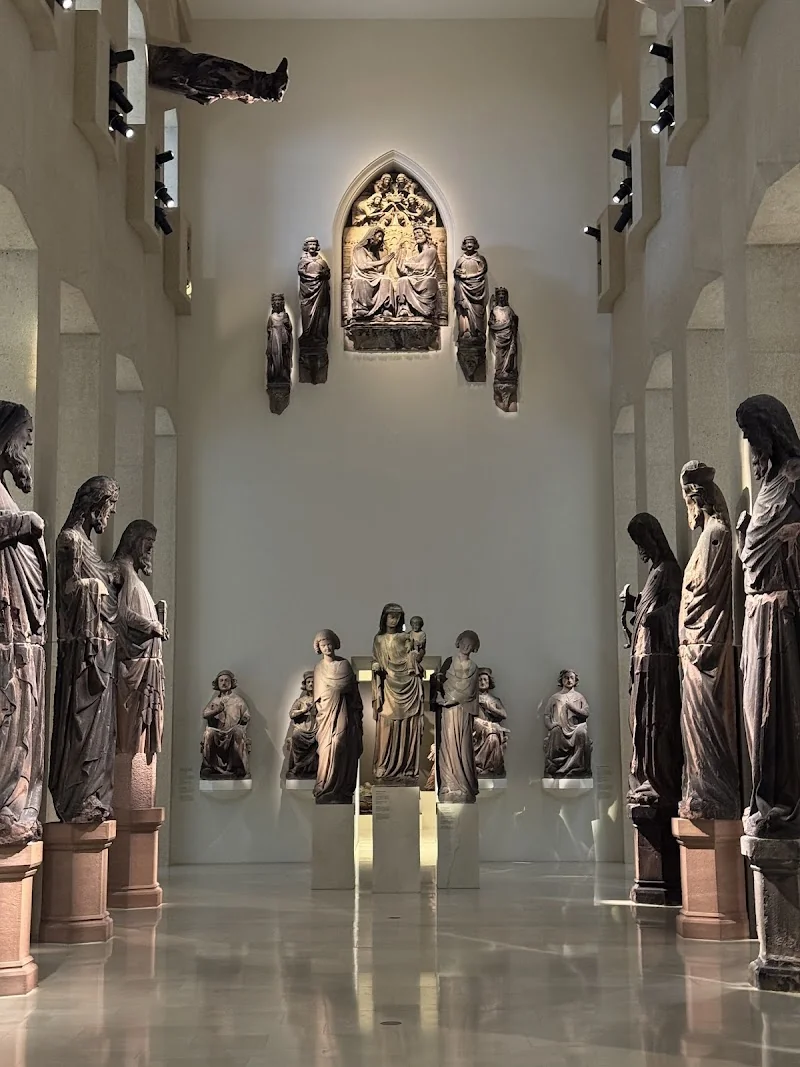
In the heart of Freiburg's old town, at the lively Augustinerplatz, the Augustiner Museum presents art and urban history in a unique combination of medieval monastery architecture and modern museum presentation. The former church and monastery of the Augustinian hermits provide the atmospheric setting for masterpieces from the Middle Ages to the 19th century. After more than two decades of renovation, the final construction phase was opened on February 28, 2026: The convent building and the historic vaulted cellars have since been accessible and expand the museum with modern, barrier-free exhibition spaces featuring interactive stations. Upon entering the sculpture hall with the original figures and windows of Freiburg Cathedral, one feels the power of the space – and looks from galleries and walkways at details that would otherwise remain hidden. The experience is complemented by the painting gallery in the historic roof structure, the Baroque gallery, and new thematic rooms on urban and cultural history. Conveniently, a ticket is valid all day in all museums in Freiburg; on Fridays, the museum is open longer, and the in-house café Kien invites you to take a break in the cloister.
Opening Hours, Tickets, and Day Pass: All Important Information for Your Visit
Planning a museum day in Freiburg is straightforward: The Augustiner Museum opens from Tuesday to Sunday from 10:00 AM to 5:00 PM, and on Fridays until 7:00 PM. These late Friday hours give you the chance to extend your tour leisurely into the evening – ideal if you first want to explore the cathedral figures and stained glass windows in the sculpture hall and then visit the new areas in the convent building. On public holidays, the museum usually closes at 5:00 PM; short-term deviations, such as internal meetings with later entry, are announced on the museum's website on the day itself, so a quick look in advance is advisable. The museum scores points with a clear, fair pricing structure: The day ticket costs 12 euros, reduced 8 euros, and is valid as a day pass in all houses of the Freiburg museums – you can start in the Augustiner Museum in the morning, visit the Museum of Nature and Man or the Museum of Contemporary Art in the afternoon, and take a coffee break in between. Children, teenagers, and young adults under 27 have free entry; as do holders of the Museum PASS Musées, FreiburgPass, FamilyCard, and members of certain professional associations. For frequent visitors, the annual pass (30 euros, reduced 25 euros) is worthwhile, valid in all houses and including special exhibitions. Tickets are available at the museum box office and in the online shop of the Freiburg museums; the digital version saves waiting times and allows for spontaneous planning. Practical service notes: Strollers are allowed in the Augustiner Museum; assistance dogs are welcome; barrier-free access via elevator and a wheelchair-accessible restroom are available. The museum app, free for Android and iOS, accompanies your visit with audio, video, texts in easy language, offerings in sign language, and child-friendly tours – allowing you to tailor the pace and depth according to your interests and available time.
Exhibitions and Highlights: From Cathedral Figures to Urban History
The sculpture hall, opened in a former monastery church, is the heart of the house: On the whitewashed, nearly twelve-meter-high walls, the original figures and gargoyles removed from Freiburg Cathedral unfold their impressive effect. Thanks to galleries, walkways, and balconies, you encounter the medieval works literally at eye level and discover details of stone carving that would hardly be visible at their original height. Additionally, medieval stained glass from the cathedral is presented on two levels, including complete windows from an imperial chapel – a rare ensemble of exceptional density. Adjacent to the choir of the former church is a Baroque gallery: lavish altars, paintings, and small sculptures are staged in dense hanging, as was customary in the time of their creation. In the historic roof structure, you experience the 19th-century painting gallery in a special atmosphere of exposed beams and color-coordinated walls; works by artists of that era, including focal themes such as Black Forest landscapes, portraits, and genre paintings, are shown in changing presentations. With the reopening of the convent building on February 28, 2026, extensive new thematic rooms were added: The areas on urban and cultural history span from medieval urban themes to model and media stations on the construction history of the cathedral to everyday and social history of recent decades. An immersive Black Forest installation allows you to enter a wedding procession or walk through snowy landscapes; paintings and objects from the collection are brought to life media-wise and tell stories of craftsmanship, environment, and tourism. The treasury gathers high-ranking textiles, gold and silver works (including medieval tapestries, significant chalices, early portable altars) and positions them in atmospheric showcases, while the newly established area “Protest and Revolution” traces the historical line from the Baden Revolution through the 1960s to today's movements – with interactive elements that invite discussion. A special Freiburg touch is added by the Welte Lounge: self-playing instruments from M. Welte & Söhne demonstrate technology and music history, flanked by a presentation of around 1,300 music rolls and a media station for listening. The digital portrait gallery makes the diversity of the urban society visible, and in the “FREI_Raum,” the museum develops participatory projects together with local partners. The House of Graphic Collection, which opened in 2016 as the second construction phase, will take an exhibition break until June 2026; however, the monthly format “Extrablatt” regularly showcases folders with drawings and print graphics from the depot. This mix of historical substance, modern architecture, and participatory approaches positions the Augustiner Museum as a cultural center in the tri-border area.
Access by Public Transport and Parking in the Old Town
The location at Augustinerplatz is central – and the most pleasant way to reach the museum is on foot, by bike, or by tram. From Freiburg main station, take tram line 1 towards Littenweiler to the Oberlinden stop; from there, it is just a few minutes on foot through Salzstraße towards Augustinerplatz. Central transfer points are the stops Bertoldsbrunnen and Stadttheater, where several lines converge; from there, Salzstraße leads directly east to Oberlinden square and the museum. The old town is largely traffic-calmed: If you arrive by car, follow the city's parking guidance system and park in the nearby parking garages. The closest is the Schlossberggarage at Schlossbergring – it is the official recommendation of the Freiburg museums for visits to the Augustiner Museum, the Museum of Contemporary Art, or the Museum of Nature and Man. Also within walking distance is the Schwabentorgarage; depending on the time of day and availability, other parking garages in the old town and at Rotteckring are also well connected. Note: Direct access to Augustinerplatz goes through the pedestrian zone and is generally not possible; those using navigation systems should prioritize the parking guidance system and park the car early. For tour buses, there are bus parking spaces near the city center at Karlsplatz and Stadtgarten, both within walking distance. If you want to combine several houses of the Freiburg museums in one day, arriving by tram is often the most relaxed option – especially since the day ticket of the Augustiner Museum is valid for all houses and allows you to consolidate your routes in the city center.
Café in Augustiner Museum: Kien – Enjoyment in the Cloister and Zinnengarten
The gastronomic heart of the house beats in the café “Kien.” Located directly in the museum and also accessible from outside, it combines the character of an old town café with the special flair of the historic cloister and the Zinnengarten. The offer includes homemade cakes, savory snacks, and a changing lunch menu; in addition, there are coffee and tea specialties, cold drinks, a selection of wines and beer, as well as non-alcoholic alternatives. Vegetarian and vegan options are just as standard as gluten-free options (e.g., homemade gluten-free bread, available on-site). The opening hours are aligned with the museum: Tuesday to Sunday 10:00 AM–5:00 PM, Fridays until 7:00 PM. The café does not take reservations – just come by, find a seat, and enjoy. In summer, outdoor seating invites you to linger; due to its location in the cloister, a pleasantly cool atmosphere is created even on hot days. Practically, those leaving the museum can return later for a coffee or a piece of cake, as access is also possible from outside. For private occasions – from birthdays to receptions to small company parties or workshops – the team offers individual arrangements with personal service and tailored catering. The café is barrier-free accessible; dogs are allowed on a leash. Thus, Kien complements the museum visit with a delightful component that attracts both visitors and locals from the neighborhood.
History, Architecture, and the Reopening in 2026
The roots of the Augustiner Museum run deep in the city's history. The Augustinian hermit monastery in Freiburg is first mentioned in 1278; the church and convent buildings were predominantly built in the 14th century. After secularization, the buildings came into municipal ownership and received changing functions: In 1823, the church space was converted into the first municipal theater in Germany, before the ensemble was opened as a museum in 1923. This provided a permanent home for the “Municipal Antiquities Collection” founded in 1864, and the art collections that had grown over time received an appropriate presentation space. The uniqueness of today's museum is the combination of historical substance with contemporary, light-guided architecture that has been gradually developed since the general renovation. The first construction phase (2006–2010) focused on the former church; it included archaeological investigations, static reinforcements, the removal, renovation, and reconstruction of the impressive roof structure, as well as the expansion of a modern exhibition hall in the basement. In 2016, the House of Graphic Collection followed as the second construction phase – a new building on Salzstraße with depot and exhibition rooms, workshops, and a striking central spiral staircase; it connects the levels of the ensemble and allows for the safe delivery of loans according to international standards. The third construction phase (from 2016) turned out to be the most complex: The renovation of the cloister building and the expansion of three medieval vaulted cellars were complicated by unforeseen wood damage and fungal infestation; planning adjustments and a reorganization of the project team were the result. After this long journey, supported by the city, state, and many participants, Freiburg celebrated the opening of the fully renovated house ensemble on February 28, 2026 – a weekend with free entry and a program that showcased the new areas. Since then, the museum in the west wing has been showing urban and cathedral history with models, media stations, and originals, in the cellars a newly conceived treasury with medieval textiles and gold and silver works, as well as in the Baroque gallery paintings from 1600 to 1800. In addition, the Welte Lounge with a self-playing piano and large roll archive, a digital portrait gallery on the diversity of urban society, and the FREI_Raum as a participatory project area have been added. These expansions complement the established highlights in the former church – cathedral figures, stained glass windows, Baroque altars, 19th-century paintings – and make the house a future-proof, inclusive place for art and cultural education in the tri-border area.
Service, Accessibility, and Digital Offerings
A visit to the Augustiner Museum is designed to meet many needs. Barrier-free paths and an elevator provide access to the levels; a wheelchair-accessible restroom is available. The Freiburg museums regularly offer guided tours with sign language interpreters and formats for visually impaired visitors; assistance dogs are welcome in the houses. The free museum app connects audio, video, texts in easy language, and offerings in German sign language; children follow their own audio tours. For research-interested guests, the special library of the Augustiner Museum/Museum of Contemporary Art is open on Wednesdays from 9:00 AM to 12:00 PM (and by appointment); the collection includes over 70,000 titles on art and cultural history. In the museum shop, you will find catalogs, postcards, and selected souvenirs related to the house – a good conclusion after an intensive tour. The weekly late opening on Fridays (until 7:00 PM) is also practical, allowing for a combination with a stroll through the old town or dinner. If you plan to visit several houses in one day, you benefit from the day ticket regulation: With a standard price ticket from the Augustiner Museum, you can visit the other houses of the Freiburg museums at no extra cost. For groups of ten or more, reduced conditions apply; entry is generally free for those under 27. Tip for arrival: Line 1 connects the main station, Bertoldsbrunnen, Oberlinden, and the eastern city area at frequent intervals; from the Oberlinden stop, you can reach the museum in just a few minutes. By car, the Schlossberggarage is the closest officially recommended parking; the parking guidance system takes care of orientation in the center. Thus, a museum visit becomes a relaxed cultural day in Freiburg – with plenty of room for discoveries from the medieval stone figure to the interactive contemporary station.
Sources:
- Municipal Museums Freiburg – Augustiner Museum (Official Website)
- City of Freiburg – Press Release from 26.02.2026: Fully Renovated Augustiner Museum Opens
- Freiburg Museums – Admission Prices & Day Pass (Online Shop)
- Freiburg Museums – Your Visit: Opening Hours, Access, Accessibility
- Visit Freiburg – Augustiner Museum (Tourist Information)
- Kien Augustiner Museum – Café in the Museum (Official Website)
- Freiburg Transport AG – Stop Oberlinden (Line 1)
- Wikipedia – Augustiner Museum (Historical Overview, Construction Phases)
Show moreShow less
Augustiner Museum | Opening Hours & Exhibitions
In the heart of Freiburg's old town, at the lively Augustinerplatz, the Augustiner Museum presents art and urban history in a unique combination of medieval monastery architecture and modern museum presentation. The former church and monastery of the Augustinian hermits provide the atmospheric setting for masterpieces from the Middle Ages to the 19th century. After more than two decades of renovation, the final construction phase was opened on February 28, 2026: The convent building and the historic vaulted cellars have since been accessible and expand the museum with modern, barrier-free exhibition spaces featuring interactive stations. Upon entering the sculpture hall with the original figures and windows of Freiburg Cathedral, one feels the power of the space – and looks from galleries and walkways at details that would otherwise remain hidden. The experience is complemented by the painting gallery in the historic roof structure, the Baroque gallery, and new thematic rooms on urban and cultural history. Conveniently, a ticket is valid all day in all museums in Freiburg; on Fridays, the museum is open longer, and the in-house café Kien invites you to take a break in the cloister.
Opening Hours, Tickets, and Day Pass: All Important Information for Your Visit
Planning a museum day in Freiburg is straightforward: The Augustiner Museum opens from Tuesday to Sunday from 10:00 AM to 5:00 PM, and on Fridays until 7:00 PM. These late Friday hours give you the chance to extend your tour leisurely into the evening – ideal if you first want to explore the cathedral figures and stained glass windows in the sculpture hall and then visit the new areas in the convent building. On public holidays, the museum usually closes at 5:00 PM; short-term deviations, such as internal meetings with later entry, are announced on the museum's website on the day itself, so a quick look in advance is advisable. The museum scores points with a clear, fair pricing structure: The day ticket costs 12 euros, reduced 8 euros, and is valid as a day pass in all houses of the Freiburg museums – you can start in the Augustiner Museum in the morning, visit the Museum of Nature and Man or the Museum of Contemporary Art in the afternoon, and take a coffee break in between. Children, teenagers, and young adults under 27 have free entry; as do holders of the Museum PASS Musées, FreiburgPass, FamilyCard, and members of certain professional associations. For frequent visitors, the annual pass (30 euros, reduced 25 euros) is worthwhile, valid in all houses and including special exhibitions. Tickets are available at the museum box office and in the online shop of the Freiburg museums; the digital version saves waiting times and allows for spontaneous planning. Practical service notes: Strollers are allowed in the Augustiner Museum; assistance dogs are welcome; barrier-free access via elevator and a wheelchair-accessible restroom are available. The museum app, free for Android and iOS, accompanies your visit with audio, video, texts in easy language, offerings in sign language, and child-friendly tours – allowing you to tailor the pace and depth according to your interests and available time.
Exhibitions and Highlights: From Cathedral Figures to Urban History
The sculpture hall, opened in a former monastery church, is the heart of the house: On the whitewashed, nearly twelve-meter-high walls, the original figures and gargoyles removed from Freiburg Cathedral unfold their impressive effect. Thanks to galleries, walkways, and balconies, you encounter the medieval works literally at eye level and discover details of stone carving that would hardly be visible at their original height. Additionally, medieval stained glass from the cathedral is presented on two levels, including complete windows from an imperial chapel – a rare ensemble of exceptional density. Adjacent to the choir of the former church is a Baroque gallery: lavish altars, paintings, and small sculptures are staged in dense hanging, as was customary in the time of their creation. In the historic roof structure, you experience the 19th-century painting gallery in a special atmosphere of exposed beams and color-coordinated walls; works by artists of that era, including focal themes such as Black Forest landscapes, portraits, and genre paintings, are shown in changing presentations. With the reopening of the convent building on February 28, 2026, extensive new thematic rooms were added: The areas on urban and cultural history span from medieval urban themes to model and media stations on the construction history of the cathedral to everyday and social history of recent decades. An immersive Black Forest installation allows you to enter a wedding procession or walk through snowy landscapes; paintings and objects from the collection are brought to life media-wise and tell stories of craftsmanship, environment, and tourism. The treasury gathers high-ranking textiles, gold and silver works (including medieval tapestries, significant chalices, early portable altars) and positions them in atmospheric showcases, while the newly established area “Protest and Revolution” traces the historical line from the Baden Revolution through the 1960s to today's movements – with interactive elements that invite discussion. A special Freiburg touch is added by the Welte Lounge: self-playing instruments from M. Welte & Söhne demonstrate technology and music history, flanked by a presentation of around 1,300 music rolls and a media station for listening. The digital portrait gallery makes the diversity of the urban society visible, and in the “FREI_Raum,” the museum develops participatory projects together with local partners. The House of Graphic Collection, which opened in 2016 as the second construction phase, will take an exhibition break until June 2026; however, the monthly format “Extrablatt” regularly showcases folders with drawings and print graphics from the depot. This mix of historical substance, modern architecture, and participatory approaches positions the Augustiner Museum as a cultural center in the tri-border area.
Access by Public Transport and Parking in the Old Town
The location at Augustinerplatz is central – and the most pleasant way to reach the museum is on foot, by bike, or by tram. From Freiburg main station, take tram line 1 towards Littenweiler to the Oberlinden stop; from there, it is just a few minutes on foot through Salzstraße towards Augustinerplatz. Central transfer points are the stops Bertoldsbrunnen and Stadttheater, where several lines converge; from there, Salzstraße leads directly east to Oberlinden square and the museum. The old town is largely traffic-calmed: If you arrive by car, follow the city's parking guidance system and park in the nearby parking garages. The closest is the Schlossberggarage at Schlossbergring – it is the official recommendation of the Freiburg museums for visits to the Augustiner Museum, the Museum of Contemporary Art, or the Museum of Nature and Man. Also within walking distance is the Schwabentorgarage; depending on the time of day and availability, other parking garages in the old town and at Rotteckring are also well connected. Note: Direct access to Augustinerplatz goes through the pedestrian zone and is generally not possible; those using navigation systems should prioritize the parking guidance system and park the car early. For tour buses, there are bus parking spaces near the city center at Karlsplatz and Stadtgarten, both within walking distance. If you want to combine several houses of the Freiburg museums in one day, arriving by tram is often the most relaxed option – especially since the day ticket of the Augustiner Museum is valid for all houses and allows you to consolidate your routes in the city center.
Café in Augustiner Museum: Kien – Enjoyment in the Cloister and Zinnengarten
The gastronomic heart of the house beats in the café “Kien.” Located directly in the museum and also accessible from outside, it combines the character of an old town café with the special flair of the historic cloister and the Zinnengarten. The offer includes homemade cakes, savory snacks, and a changing lunch menu; in addition, there are coffee and tea specialties, cold drinks, a selection of wines and beer, as well as non-alcoholic alternatives. Vegetarian and vegan options are just as standard as gluten-free options (e.g., homemade gluten-free bread, available on-site). The opening hours are aligned with the museum: Tuesday to Sunday 10:00 AM–5:00 PM, Fridays until 7:00 PM. The café does not take reservations – just come by, find a seat, and enjoy. In summer, outdoor seating invites you to linger; due to its location in the cloister, a pleasantly cool atmosphere is created even on hot days. Practically, those leaving the museum can return later for a coffee or a piece of cake, as access is also possible from outside. For private occasions – from birthdays to receptions to small company parties or workshops – the team offers individual arrangements with personal service and tailored catering. The café is barrier-free accessible; dogs are allowed on a leash. Thus, Kien complements the museum visit with a delightful component that attracts both visitors and locals from the neighborhood.
History, Architecture, and the Reopening in 2026
The roots of the Augustiner Museum run deep in the city's history. The Augustinian hermit monastery in Freiburg is first mentioned in 1278; the church and convent buildings were predominantly built in the 14th century. After secularization, the buildings came into municipal ownership and received changing functions: In 1823, the church space was converted into the first municipal theater in Germany, before the ensemble was opened as a museum in 1923. This provided a permanent home for the “Municipal Antiquities Collection” founded in 1864, and the art collections that had grown over time received an appropriate presentation space. The uniqueness of today's museum is the combination of historical substance with contemporary, light-guided architecture that has been gradually developed since the general renovation. The first construction phase (2006–2010) focused on the former church; it included archaeological investigations, static reinforcements, the removal, renovation, and reconstruction of the impressive roof structure, as well as the expansion of a modern exhibition hall in the basement. In 2016, the House of Graphic Collection followed as the second construction phase – a new building on Salzstraße with depot and exhibition rooms, workshops, and a striking central spiral staircase; it connects the levels of the ensemble and allows for the safe delivery of loans according to international standards. The third construction phase (from 2016) turned out to be the most complex: The renovation of the cloister building and the expansion of three medieval vaulted cellars were complicated by unforeseen wood damage and fungal infestation; planning adjustments and a reorganization of the project team were the result. After this long journey, supported by the city, state, and many participants, Freiburg celebrated the opening of the fully renovated house ensemble on February 28, 2026 – a weekend with free entry and a program that showcased the new areas. Since then, the museum in the west wing has been showing urban and cathedral history with models, media stations, and originals, in the cellars a newly conceived treasury with medieval textiles and gold and silver works, as well as in the Baroque gallery paintings from 1600 to 1800. In addition, the Welte Lounge with a self-playing piano and large roll archive, a digital portrait gallery on the diversity of urban society, and the FREI_Raum as a participatory project area have been added. These expansions complement the established highlights in the former church – cathedral figures, stained glass windows, Baroque altars, 19th-century paintings – and make the house a future-proof, inclusive place for art and cultural education in the tri-border area.
Service, Accessibility, and Digital Offerings
A visit to the Augustiner Museum is designed to meet many needs. Barrier-free paths and an elevator provide access to the levels; a wheelchair-accessible restroom is available. The Freiburg museums regularly offer guided tours with sign language interpreters and formats for visually impaired visitors; assistance dogs are welcome in the houses. The free museum app connects audio, video, texts in easy language, and offerings in German sign language; children follow their own audio tours. For research-interested guests, the special library of the Augustiner Museum/Museum of Contemporary Art is open on Wednesdays from 9:00 AM to 12:00 PM (and by appointment); the collection includes over 70,000 titles on art and cultural history. In the museum shop, you will find catalogs, postcards, and selected souvenirs related to the house – a good conclusion after an intensive tour. The weekly late opening on Fridays (until 7:00 PM) is also practical, allowing for a combination with a stroll through the old town or dinner. If you plan to visit several houses in one day, you benefit from the day ticket regulation: With a standard price ticket from the Augustiner Museum, you can visit the other houses of the Freiburg museums at no extra cost. For groups of ten or more, reduced conditions apply; entry is generally free for those under 27. Tip for arrival: Line 1 connects the main station, Bertoldsbrunnen, Oberlinden, and the eastern city area at frequent intervals; from the Oberlinden stop, you can reach the museum in just a few minutes. By car, the Schlossberggarage is the closest officially recommended parking; the parking guidance system takes care of orientation in the center. Thus, a museum visit becomes a relaxed cultural day in Freiburg – with plenty of room for discoveries from the medieval stone figure to the interactive contemporary station.
Sources:
- Municipal Museums Freiburg – Augustiner Museum (Official Website)
- City of Freiburg – Press Release from 26.02.2026: Fully Renovated Augustiner Museum Opens
- Freiburg Museums – Admission Prices & Day Pass (Online Shop)
- Freiburg Museums – Your Visit: Opening Hours, Access, Accessibility
- Visit Freiburg – Augustiner Museum (Tourist Information)
- Kien Augustiner Museum – Café in the Museum (Official Website)
- Freiburg Transport AG – Stop Oberlinden (Line 1)
- Wikipedia – Augustiner Museum (Historical Overview, Construction Phases)
Augustiner Museum | Opening Hours & Exhibitions
In the heart of Freiburg's old town, at the lively Augustinerplatz, the Augustiner Museum presents art and urban history in a unique combination of medieval monastery architecture and modern museum presentation. The former church and monastery of the Augustinian hermits provide the atmospheric setting for masterpieces from the Middle Ages to the 19th century. After more than two decades of renovation, the final construction phase was opened on February 28, 2026: The convent building and the historic vaulted cellars have since been accessible and expand the museum with modern, barrier-free exhibition spaces featuring interactive stations. Upon entering the sculpture hall with the original figures and windows of Freiburg Cathedral, one feels the power of the space – and looks from galleries and walkways at details that would otherwise remain hidden. The experience is complemented by the painting gallery in the historic roof structure, the Baroque gallery, and new thematic rooms on urban and cultural history. Conveniently, a ticket is valid all day in all museums in Freiburg; on Fridays, the museum is open longer, and the in-house café Kien invites you to take a break in the cloister.
Opening Hours, Tickets, and Day Pass: All Important Information for Your Visit
Planning a museum day in Freiburg is straightforward: The Augustiner Museum opens from Tuesday to Sunday from 10:00 AM to 5:00 PM, and on Fridays until 7:00 PM. These late Friday hours give you the chance to extend your tour leisurely into the evening – ideal if you first want to explore the cathedral figures and stained glass windows in the sculpture hall and then visit the new areas in the convent building. On public holidays, the museum usually closes at 5:00 PM; short-term deviations, such as internal meetings with later entry, are announced on the museum's website on the day itself, so a quick look in advance is advisable. The museum scores points with a clear, fair pricing structure: The day ticket costs 12 euros, reduced 8 euros, and is valid as a day pass in all houses of the Freiburg museums – you can start in the Augustiner Museum in the morning, visit the Museum of Nature and Man or the Museum of Contemporary Art in the afternoon, and take a coffee break in between. Children, teenagers, and young adults under 27 have free entry; as do holders of the Museum PASS Musées, FreiburgPass, FamilyCard, and members of certain professional associations. For frequent visitors, the annual pass (30 euros, reduced 25 euros) is worthwhile, valid in all houses and including special exhibitions. Tickets are available at the museum box office and in the online shop of the Freiburg museums; the digital version saves waiting times and allows for spontaneous planning. Practical service notes: Strollers are allowed in the Augustiner Museum; assistance dogs are welcome; barrier-free access via elevator and a wheelchair-accessible restroom are available. The museum app, free for Android and iOS, accompanies your visit with audio, video, texts in easy language, offerings in sign language, and child-friendly tours – allowing you to tailor the pace and depth according to your interests and available time.
Exhibitions and Highlights: From Cathedral Figures to Urban History
The sculpture hall, opened in a former monastery church, is the heart of the house: On the whitewashed, nearly twelve-meter-high walls, the original figures and gargoyles removed from Freiburg Cathedral unfold their impressive effect. Thanks to galleries, walkways, and balconies, you encounter the medieval works literally at eye level and discover details of stone carving that would hardly be visible at their original height. Additionally, medieval stained glass from the cathedral is presented on two levels, including complete windows from an imperial chapel – a rare ensemble of exceptional density. Adjacent to the choir of the former church is a Baroque gallery: lavish altars, paintings, and small sculptures are staged in dense hanging, as was customary in the time of their creation. In the historic roof structure, you experience the 19th-century painting gallery in a special atmosphere of exposed beams and color-coordinated walls; works by artists of that era, including focal themes such as Black Forest landscapes, portraits, and genre paintings, are shown in changing presentations. With the reopening of the convent building on February 28, 2026, extensive new thematic rooms were added: The areas on urban and cultural history span from medieval urban themes to model and media stations on the construction history of the cathedral to everyday and social history of recent decades. An immersive Black Forest installation allows you to enter a wedding procession or walk through snowy landscapes; paintings and objects from the collection are brought to life media-wise and tell stories of craftsmanship, environment, and tourism. The treasury gathers high-ranking textiles, gold and silver works (including medieval tapestries, significant chalices, early portable altars) and positions them in atmospheric showcases, while the newly established area “Protest and Revolution” traces the historical line from the Baden Revolution through the 1960s to today's movements – with interactive elements that invite discussion. A special Freiburg touch is added by the Welte Lounge: self-playing instruments from M. Welte & Söhne demonstrate technology and music history, flanked by a presentation of around 1,300 music rolls and a media station for listening. The digital portrait gallery makes the diversity of the urban society visible, and in the “FREI_Raum,” the museum develops participatory projects together with local partners. The House of Graphic Collection, which opened in 2016 as the second construction phase, will take an exhibition break until June 2026; however, the monthly format “Extrablatt” regularly showcases folders with drawings and print graphics from the depot. This mix of historical substance, modern architecture, and participatory approaches positions the Augustiner Museum as a cultural center in the tri-border area.
Access by Public Transport and Parking in the Old Town
The location at Augustinerplatz is central – and the most pleasant way to reach the museum is on foot, by bike, or by tram. From Freiburg main station, take tram line 1 towards Littenweiler to the Oberlinden stop; from there, it is just a few minutes on foot through Salzstraße towards Augustinerplatz. Central transfer points are the stops Bertoldsbrunnen and Stadttheater, where several lines converge; from there, Salzstraße leads directly east to Oberlinden square and the museum. The old town is largely traffic-calmed: If you arrive by car, follow the city's parking guidance system and park in the nearby parking garages. The closest is the Schlossberggarage at Schlossbergring – it is the official recommendation of the Freiburg museums for visits to the Augustiner Museum, the Museum of Contemporary Art, or the Museum of Nature and Man. Also within walking distance is the Schwabentorgarage; depending on the time of day and availability, other parking garages in the old town and at Rotteckring are also well connected. Note: Direct access to Augustinerplatz goes through the pedestrian zone and is generally not possible; those using navigation systems should prioritize the parking guidance system and park the car early. For tour buses, there are bus parking spaces near the city center at Karlsplatz and Stadtgarten, both within walking distance. If you want to combine several houses of the Freiburg museums in one day, arriving by tram is often the most relaxed option – especially since the day ticket of the Augustiner Museum is valid for all houses and allows you to consolidate your routes in the city center.
Café in Augustiner Museum: Kien – Enjoyment in the Cloister and Zinnengarten
The gastronomic heart of the house beats in the café “Kien.” Located directly in the museum and also accessible from outside, it combines the character of an old town café with the special flair of the historic cloister and the Zinnengarten. The offer includes homemade cakes, savory snacks, and a changing lunch menu; in addition, there are coffee and tea specialties, cold drinks, a selection of wines and beer, as well as non-alcoholic alternatives. Vegetarian and vegan options are just as standard as gluten-free options (e.g., homemade gluten-free bread, available on-site). The opening hours are aligned with the museum: Tuesday to Sunday 10:00 AM–5:00 PM, Fridays until 7:00 PM. The café does not take reservations – just come by, find a seat, and enjoy. In summer, outdoor seating invites you to linger; due to its location in the cloister, a pleasantly cool atmosphere is created even on hot days. Practically, those leaving the museum can return later for a coffee or a piece of cake, as access is also possible from outside. For private occasions – from birthdays to receptions to small company parties or workshops – the team offers individual arrangements with personal service and tailored catering. The café is barrier-free accessible; dogs are allowed on a leash. Thus, Kien complements the museum visit with a delightful component that attracts both visitors and locals from the neighborhood.
History, Architecture, and the Reopening in 2026
The roots of the Augustiner Museum run deep in the city's history. The Augustinian hermit monastery in Freiburg is first mentioned in 1278; the church and convent buildings were predominantly built in the 14th century. After secularization, the buildings came into municipal ownership and received changing functions: In 1823, the church space was converted into the first municipal theater in Germany, before the ensemble was opened as a museum in 1923. This provided a permanent home for the “Municipal Antiquities Collection” founded in 1864, and the art collections that had grown over time received an appropriate presentation space. The uniqueness of today's museum is the combination of historical substance with contemporary, light-guided architecture that has been gradually developed since the general renovation. The first construction phase (2006–2010) focused on the former church; it included archaeological investigations, static reinforcements, the removal, renovation, and reconstruction of the impressive roof structure, as well as the expansion of a modern exhibition hall in the basement. In 2016, the House of Graphic Collection followed as the second construction phase – a new building on Salzstraße with depot and exhibition rooms, workshops, and a striking central spiral staircase; it connects the levels of the ensemble and allows for the safe delivery of loans according to international standards. The third construction phase (from 2016) turned out to be the most complex: The renovation of the cloister building and the expansion of three medieval vaulted cellars were complicated by unforeseen wood damage and fungal infestation; planning adjustments and a reorganization of the project team were the result. After this long journey, supported by the city, state, and many participants, Freiburg celebrated the opening of the fully renovated house ensemble on February 28, 2026 – a weekend with free entry and a program that showcased the new areas. Since then, the museum in the west wing has been showing urban and cathedral history with models, media stations, and originals, in the cellars a newly conceived treasury with medieval textiles and gold and silver works, as well as in the Baroque gallery paintings from 1600 to 1800. In addition, the Welte Lounge with a self-playing piano and large roll archive, a digital portrait gallery on the diversity of urban society, and the FREI_Raum as a participatory project area have been added. These expansions complement the established highlights in the former church – cathedral figures, stained glass windows, Baroque altars, 19th-century paintings – and make the house a future-proof, inclusive place for art and cultural education in the tri-border area.
Service, Accessibility, and Digital Offerings
A visit to the Augustiner Museum is designed to meet many needs. Barrier-free paths and an elevator provide access to the levels; a wheelchair-accessible restroom is available. The Freiburg museums regularly offer guided tours with sign language interpreters and formats for visually impaired visitors; assistance dogs are welcome in the houses. The free museum app connects audio, video, texts in easy language, and offerings in German sign language; children follow their own audio tours. For research-interested guests, the special library of the Augustiner Museum/Museum of Contemporary Art is open on Wednesdays from 9:00 AM to 12:00 PM (and by appointment); the collection includes over 70,000 titles on art and cultural history. In the museum shop, you will find catalogs, postcards, and selected souvenirs related to the house – a good conclusion after an intensive tour. The weekly late opening on Fridays (until 7:00 PM) is also practical, allowing for a combination with a stroll through the old town or dinner. If you plan to visit several houses in one day, you benefit from the day ticket regulation: With a standard price ticket from the Augustiner Museum, you can visit the other houses of the Freiburg museums at no extra cost. For groups of ten or more, reduced conditions apply; entry is generally free for those under 27. Tip for arrival: Line 1 connects the main station, Bertoldsbrunnen, Oberlinden, and the eastern city area at frequent intervals; from the Oberlinden stop, you can reach the museum in just a few minutes. By car, the Schlossberggarage is the closest officially recommended parking; the parking guidance system takes care of orientation in the center. Thus, a museum visit becomes a relaxed cultural day in Freiburg – with plenty of room for discoveries from the medieval stone figure to the interactive contemporary station.
Sources:
- Municipal Museums Freiburg – Augustiner Museum (Official Website)
- City of Freiburg – Press Release from 26.02.2026: Fully Renovated Augustiner Museum Opens
- Freiburg Museums – Admission Prices & Day Pass (Online Shop)
- Freiburg Museums – Your Visit: Opening Hours, Access, Accessibility
- Visit Freiburg – Augustiner Museum (Tourist Information)
- Kien Augustiner Museum – Café in the Museum (Official Website)
- Freiburg Transport AG – Stop Oberlinden (Line 1)
- Wikipedia – Augustiner Museum (Historical Overview, Construction Phases)
Upcoming Events
International Museum Day 2026 in Freiburg
Experience free admission and an exciting program on International Museum Day in Freiburg.
Family Afternoon: Of Refined Women and Strong Men
Spend an afternoon at the Augustiner Museum and discover history and art with your family. Free admission.
Frequently Asked Questions
Reviews
Ojo Olumide
23. February 2026
I was really impressed by the amount of detail and history in this museum. You can tell a lot of effort went into explaining the stories behind everything on display. It wasn’t just objects; there was real meaning behind them. I learned so much just walking through, and it made the experience feel worthwhile and memorable. I will definitely recommend you visit while you are in Freiburg.❤️
Paul Ciprian
21. December 2024
A not very large museum, housed in the building of a former church. In general, you will see religious art. A unique and interesting fact is that there is a small room where you can watch the restoration of some paintings live through the window. There is a small painting exhibition in the attic. On the ground floor is a temporary exhibition with objects from the former German colonies in Africa. If you are not a fan of religious art, you can visit it in about an hour.
Ms. K
26. May 2025
This museum was really nice and surprisingly extensive! I was amazed at the very beginning! You get to see some really cool statues and learn about some really interesting history!
Let's Eat Houston
30. March 2023
A must-visit museum while in Freiburg! Beautiful museum full of amazing art pieces from the medieval ages set in an ancient monastery. All the descriptions are well written and the museum is organized well. Much of the museum has been well preserved and restored, and there is a lot of construction on the exterior, but it very minimally affected my experience inside. Great addition of an elevator for those handicapped or not capable of going up many flights of stairs. The special exhibits on the bottom of the museum and top were very engaging and well curated.
Irina Irina
1. January 2025
I'm in love with the place. Must see together with the Cathedral. The space is fantastic. I've never had a chance to see original sculptures from medieval churches so close. The paintings collection is beautiful, with some fantastic works from the northern Renaissance by Cranach, Grin, and Grünewald. I used an app for a tour and it works amazing. You can download the audio guide in advance from the website and there are plenty of materials to understand the collection better in addition to the audio guide. For example, there is an interesting video about the baroque organ from the museum. It was a fantastic day visiting the museum and the Cathedral, both must see in Freiburg.