
Freiburg im Breisgau
79085, Habsburgerstraße, 79104 Freiburg im Breisgau, Deutschland
Archaeological Collection Freiburg | Opening Hours & Directions
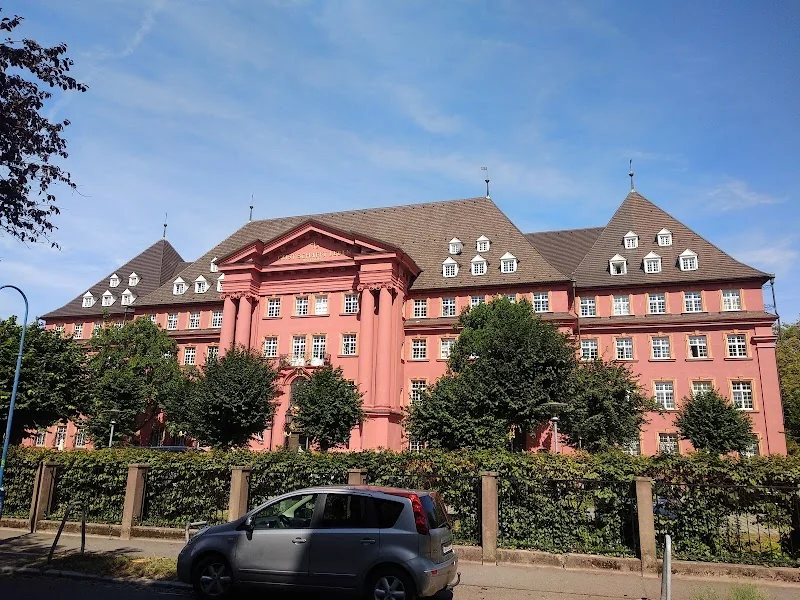
The Archaeological Collection of the Albert-Ludwigs-University Freiburg is a special place between museum, teaching collection, and research space. It is located in the Herder Building in the basement at Habsburgerstraße 114/116 and presents ancient originals, plaster casts, architectural fragments from Baalbek, as well as changing special exhibitions. Unlike a large, more anonymous museum, this place feels approachable and at the same time scientifically precise: The collection is closely linked to the Institute of Archaeological Sciences, is used in everyday university life, and remains accessible to the public. Visitors encounter not only individual works of art but a whole narrative space of Greek-Roman antiquity. The objects are selected and combined in such a way that they make historical contexts visible while also training the act of seeing itself. This mix of concentrated presentation, university context, and free access makes the Archaeological Collection Freiburg a strong destination for anyone interested in antiquity, art history, archaeology, and vibrant science communication. ([archaeologische-sammlung.uni-freiburg.de](https://www.archaeologische-sammlung.uni-freiburg.de/))
Opening Hours, Admission, and Current Visiting Times
Anyone wishing to visit the Archaeological Collection Freiburg should always keep an eye on the opening hours, as the page distinguishes between the general regulations and the current special exhibition. On the dedicated opening hours page, it states that the collection is open from Monday to Thursday from 2 PM to 4 PM. During the lecture-free period and the Christmas holidays, it remains closed. Additionally, alternative times by appointment are possible, even during holiday periods. At the same time, the homepage mentions a special exhibition for the summer semester season 2026 with extended hours: Model Moon Horse is open from April 16 to July 26, 2026, from Monday to Thursday from 2 PM to 6 PM, as well as by prior arrangement. This combination shows well how flexibly the collection operates: on one hand with a clear university structure, on the other hand with extended hours for special exhibitions. For those searching for archaeological collection Freiburg opening hours, it is therefore important not only to remember a single time but to check the current situation. The good news for all visitors is clear: Admission is free. This makes the collection suitable for spontaneous cultural outings, for students, for families, and for anyone who wants to explore Freiburg's museum landscape without the pressure of tickets. ([archaeologische-sammlung.uni-freiburg.de](https://www.archaeologische-sammlung.uni-freiburg.de/oeffnungszeiten?utm_source=openai))
Particularly attractive is that the collection does not rely on quick walkthroughs but on concentrated, mindful viewing. Precisely for this reason, the time slots are manageable and well-planned. Those who take advantage of the regular opening hours experience a calm visit in a university environment; those who visit the current special exhibition benefit from the longer opening hours, providing additional flexibility. The concept behind free admission also fits with the academic orientation of the collection: Knowledge should not be isolated but conveyed. The collection invites visitors to examine objects up close, make detailed observations, and engage with ancient imagery without financial barriers. For SEO-relevant search queries like archaeological collection Freiburg free admission or archaeological collection Freiburg exhibition, this is particularly relevant: an authentic, open place with professional standards and a clear, low-threshold access model. When visitors coordinate the opening hours with the current exhibition, the visit can be easily integrated into a city stroll, a scientific appointment, or a cultural afternoon. ([archaeologische-sammlung.uni-freiburg.de](https://www.archaeologische-sammlung.uni-freiburg.de/oeffnungszeiten?utm_source=openai))
Directions to the Archaeological Collection and Location in the Herder Building
The official directions are clear and well accessible by public transport. To reach the Archaeological Collection, take tram line 3, either from the city center towards Zähringen or from Zähringen towards Haid. The relevant stop is Tennenbacher Straße. The visitor access is located via Habsburgerstraße between numbers 114 and 116. Thus, the location is clearly embedded in the Freiburg urban structure: central enough for an uncomplicated visit, but quiet enough to perceive the exhibition rooms as a concentrated place. The collection itself is located in the Herder Building in the basement. This architectural situation is part of the character of the house, as the former usage site has been transformed into a museum space where the collections are now presented. Those searching for archaeological collection Freiburg directions receive a very reliable visitor orientation: public transport is the directly mentioned means of arrival, and access is clearly described. This is particularly helpful for guests who do not know Freiburg daily or are visiting the collection for the first time. ([archaeologische-sammlung.uni-freiburg.de](https://www.archaeologische-sammlung.uni-freiburg.de/anfahrt))
Regarding parking, the official directions do not provide a separate indication, which is why public transport appears to be the most straightforward and explicitly supported option by the website. This is not unusual for a university collection in a central location. Therefore, those arriving by car should check the inner-city parking situation in advance and allow enough time for the journey from the parking spot. Especially in connection with a visit to the city center, tram line 3 is the most sensible solution both in content and practically. Also, for search queries like archaeological collection Freiburg parking or directions, the essential information is not a large visitor parking garage but the good connection to public transport. The location in the Herder Building is also meaningful in content: the historical building shell and the museum's interior use fit the scientific atmosphere of the collection. Upon entering the collection, visitors do not feel like they are entering a random event venue but a precisely located institution with an academic identity. This strengthens the recognizability of the location and makes it particularly attractive for visitors interested in history and culture. ([archaeologische-sammlung.uni-freiburg.de](https://www.archaeologische-sammlung.uni-freiburg.de/anfahrt))
Guided Tours and Program in the Summer Semester
The guided tour and program offerings are one of the greatest added values of the Archaeological Collection Freiburg. On selected Sundays, archaeologists or advanced students offer tours of selected exhibits, object groups, or art historical topics from the field of Greek-Roman antiquity. The start is at 11:30 AM, and the duration is about 45 minutes. The program is designed to spark curiosity, view the familiar from a different perspective, and explicitly allow questions. This makes the collection experience not just as an exhibition space but as a conversation space. For those searching for archaeological collection Freiburg tours or program, this is a strong signal: It is not about passive distance but about genuine mediation. It is also particularly important that admission to the tours as well as to the collection is free. This lowers the threshold and makes the offer attractive for spontaneous guests. ([archaeologische-sammlung.uni-freiburg.de](https://www.archaeologische-sammlung.uni-freiburg.de/fuehrungen-und-programm))
This mediation concept also includes Slow Art tours and the Open Showcase. Slow Art means here not just fleetingly viewing works but slowly grasping, interpreting, and understanding their effects together with archaeologists. The Open Showcase goes a step further: once per semester, selected objects are taken out of the display cases so that visitors can hold, turn, and inspect them very closely. This allows even small fragments to unfold an astonishing expressiveness. The program is thus not only didactic but also sensibly structured. Additionally, visits and tours are possible for school classes outside of official opening hours. For such appointments, the collection requests a donation of 40 euros for visits without a tour and 60 euros for visits including a tour. The duration is then about 60 minutes. All of this shows that the collection remains an active learning place that can be utilized by the public, schools, and the university alike. ([archaeologische-sammlung.uni-freiburg.de](https://www.archaeologische-sammlung.uni-freiburg.de/fuehrungen-und-programm))
History of the Collection Since 1855
The history of the Archaeological Collection Freiburg goes back a long way. Interest in works of art from Greek-Roman antiquity has been documented at the University of Freiburg for more than 250 years. By the end of the 18th century, the foundation for an academic coin cabinet had already been laid, and individual plaster casts had been acquired for drawing instruction. The collection has existed as an independent institution since 1855. This development is closely linked to the history of the institute and bears the signature of many well-known archaeologists who have worked for decades to expand the inventory. Among those mentioned in the sources are Anselm Feuerbach, Franz Studniczka, Otto Puchstein, Hermann Thiersch, Ludwig Curtius, Ernst Buschor, Hans Dragendorff, and Walter-Herwig Schuchhardt. Particularly in the 1880s and after the founding of the Archaeological Institute in 1891, the inventory increased significantly; the cast collection grew from 30 objects in 1882 to 300 in 1900. Therefore, those searching for archaeology Freiburg university do not encounter a young institution but a historically grown scientific tradition. ([archaeologische-sammlung.uni-freiburg.de](https://www.archaeologische-sammlung.uni-freiburg.de/geschichte-der-sammlung))
However, the history was also marked by breaks in the 20th century. After 1944, the collection had to be rethought and rebuilt at several locations. The current form is the result of long reconstruction work, in which Walter-Herwig Schuchhardt and Hans Weber were involved, among others. An important step was the reopening in May 2011 in the converted paper storage of the Herder Building, a former storage facility of the Herder Publishing House. There, all collections are now united in one place for the first time. This is not only organizationally important for visitors but also atmospherically: a historically shaped building has been transformed into a museum space that does not conceal but makes visible the scientific use. The inventory is now not only thought out in terms of expertise but also didactics; the collection describes itself as a practical writing and museum workshop and as a school of seeing. This makes the historical background relevant for modern visitors: the collection is not simply old but has emerged from a long tradition of teaching and research that remains palpable in the space to this day. ([archaeologische-sammlung.uni-freiburg.de](https://www.archaeologische-sammlung.uni-freiburg.de/geschichte-der-sammlung))
Originals, Casts, and the Special Feature of Baalbek
In terms of content, the Archaeological Collection Freiburg thrives on an unusually strong combination of originals, casts, and architectural fragments. The inventory includes over 3000 original objects from more than 2500 years of Greek, Etruscan, and Roman antiquity. Chronologically, the spectrum ranges from the beginning of the 2nd millennium BC to the 5th century AD. Thus, the collection is extraordinarily broad for a university institution. On display are primarily decorated ceramics such as grave goods and symposium vessels, bronzes, including statuettes and surgical instruments, terracotta figures, Roman glass, and an extensive collection of ancient oil lamps. Additionally, there are stone sculptures, including a grave relief of a doctor. For SEO terms like ancient originals Freiburg or archaeological collection Freiburg exhibition, this diversity is central as it precisely describes the character of the collection: not just individual pieces of jewelry but a broad archaeological material culture. ([archaeologische-sammlung.uni-freiburg.de](https://www.archaeologische-sammlung.uni-freiburg.de/))
A particular allure lies in the casts and the famous Baalbek fragments. The collection has more than 800 casts, including a portrait gallery of significant Greeks and Roman emperors as well as numerous grave and votive reliefs. These casts are not merely substitutes but a scientific and didactic medium through which form, scale, and iconographic relationships become recognizable. The architectural elements from the Roman temple complex in Baalbek are a Freiburg specialty. According to the website, such large original architectural fragments can only be found in Göttingen and Berlin; they were brought to Freiburg for study purposes by Otto Puchstein in 1905. In the foyer, they are displayed alongside a graphic reconstruction, making the monumentality of the site visually apparent. Smaller components also allow a view of tool marks and ornamentation. This connection of original fragment, reconstruction, and scientific contextualization makes the place so exciting for visitors. Those searching for Baalbek fragments Freiburg or plaster casts Freiburg find here a genuine, professionally exceptional anchor point. ([archaeologische-sammlung.uni-freiburg.de](https://www.archaeologische-sammlung.uni-freiburg.de/))
Special Exhibition Model Moon Horse and the Unique Viewing Experience
The current special exhibition Model Moon Horse gives the collection a particularly strong profile in 2026. It runs from April 16 to July 26, 2026, and focuses on a famous horse head from the eastern gable of the Parthenon. The concept is deliberately unusual: access is not first through the original but through its reproductions. As a plaster cast and 3D print, these reproductions mark the starting point of the exhibition and make visible how an ancient fragment can become a culturally effective object through copies. The ancient piece was originally part of a multi-figure gable composition and belonged to four heads of the moon goddess Selene. It was never intended as a standalone artwork. This biography makes the object particularly fitting for the collection, as it brings together questions of image effect, multiplication, reception, and cultural memory in a vivid way. For search queries like model moon horse Freiburg or archaeological collection Freiburg exhibition, this is currently the most important reason to visit the collection. ([archaeologische-sammlung.uni-freiburg.de](https://www.archaeologische-sammlung.uni-freiburg.de/))
The exhibition also fits so well with the Freiburg collection because it has always worked with copies, reconstructions, and teaching materials. The theme of reproduction is therefore not just a curatorial gimmick but a continuation of the collection principle with contemporary means. The homepage also refers to the new program for the summer semester 2026, thus highlighting ongoing, active mediation work. When visiting the collection, one experiences not just individual display cases but a deliberately staged view of antiquity as a presence of images. This makes the place interesting even for visitors who might otherwise first think of classically conservative museum spaces. It is about perspective shifts, the visibility of fragments, and how knowledge arises through observation. Thus, the visit becomes a small but substantial cultural experience that connects university research and public curiosity. For all those searching for archaeological collection Freiburg, university museum Freiburg antiquity, or archaeology Freiburg university, this is precisely the actual strength of this location: a lively place where antiquity does not seem distant but surprisingly close. ([archaeologische-sammlung.uni-freiburg.de](https://www.archaeologische-sammlung.uni-freiburg.de/))
Why a Visit is Worthwhile
The Archaeological Collection Freiburg impresses not through size but through density, quality, and context. The rooms in the Herder Building combine science, teaching, and exhibition in a form that is rarely so clear. Those wanting to see ancient originals gain deep insights into ceramics, bronzes, lamps, glass, and stone sculptures. Those interested in reconstructions will find the Freiburg portrait gallery, the casts of famous sculptures, and the special Baalbek fragments. Those looking for a program with mediation will find opportunities in the Sunday tours, the Open Showcase, and the Slow Art formats. Those seeking a free cultural destination in Freiburg will find a place with free admission and good public transport connections. And those who appreciate the connection between university and public will experience an exemplary place of academic cultural mediation. The collection is thus interesting not only for professionals but also for curious city visitors, school classes, students, and anyone who wants to discover Freiburg's cultural depth beyond the well-known major attractions. ([archaeologische-sammlung.uni-freiburg.de](https://www.archaeologische-sammlung.uni-freiburg.de/fuehrungen-und-programm))
Especially in the interplay of history, current exhibition, and free access, a visit experience arises that is easy to plan and at the same time very rich in content. The collection is not a place for mere quick snapshots but for concentrated viewing. Precisely for this reason, it works so well as a search target for archaeological collection Freiburg opening hours, directions, tours, and exhibition at the same time: all essential aspects are present but in a calm, scientifically grounded form. For a visit to Freiburg, this means a clear recommendation: those who want to experience antiquity not just as material for books but as a visible, spatial, and narrative experience should add the Archaeological Collection to their list. ([archaeologische-sammlung.uni-freiburg.de](https://www.archaeologische-sammlung.uni-freiburg.de/))
Sources:
Mehr anzeigenWeniger anzeigen
Archaeological Collection Freiburg | Opening Hours & Directions
The Archaeological Collection of the Albert-Ludwigs-University Freiburg is a special place between museum, teaching collection, and research space. It is located in the Herder Building in the basement at Habsburgerstraße 114/116 and presents ancient originals, plaster casts, architectural fragments from Baalbek, as well as changing special exhibitions. Unlike a large, more anonymous museum, this place feels approachable and at the same time scientifically precise: The collection is closely linked to the Institute of Archaeological Sciences, is used in everyday university life, and remains accessible to the public. Visitors encounter not only individual works of art but a whole narrative space of Greek-Roman antiquity. The objects are selected and combined in such a way that they make historical contexts visible while also training the act of seeing itself. This mix of concentrated presentation, university context, and free access makes the Archaeological Collection Freiburg a strong destination for anyone interested in antiquity, art history, archaeology, and vibrant science communication. ([archaeologische-sammlung.uni-freiburg.de](https://www.archaeologische-sammlung.uni-freiburg.de/))
Opening Hours, Admission, and Current Visiting Times
Anyone wishing to visit the Archaeological Collection Freiburg should always keep an eye on the opening hours, as the page distinguishes between the general regulations and the current special exhibition. On the dedicated opening hours page, it states that the collection is open from Monday to Thursday from 2 PM to 4 PM. During the lecture-free period and the Christmas holidays, it remains closed. Additionally, alternative times by appointment are possible, even during holiday periods. At the same time, the homepage mentions a special exhibition for the summer semester season 2026 with extended hours: Model Moon Horse is open from April 16 to July 26, 2026, from Monday to Thursday from 2 PM to 6 PM, as well as by prior arrangement. This combination shows well how flexibly the collection operates: on one hand with a clear university structure, on the other hand with extended hours for special exhibitions. For those searching for archaeological collection Freiburg opening hours, it is therefore important not only to remember a single time but to check the current situation. The good news for all visitors is clear: Admission is free. This makes the collection suitable for spontaneous cultural outings, for students, for families, and for anyone who wants to explore Freiburg's museum landscape without the pressure of tickets. ([archaeologische-sammlung.uni-freiburg.de](https://www.archaeologische-sammlung.uni-freiburg.de/oeffnungszeiten?utm_source=openai))
Particularly attractive is that the collection does not rely on quick walkthroughs but on concentrated, mindful viewing. Precisely for this reason, the time slots are manageable and well-planned. Those who take advantage of the regular opening hours experience a calm visit in a university environment; those who visit the current special exhibition benefit from the longer opening hours, providing additional flexibility. The concept behind free admission also fits with the academic orientation of the collection: Knowledge should not be isolated but conveyed. The collection invites visitors to examine objects up close, make detailed observations, and engage with ancient imagery without financial barriers. For SEO-relevant search queries like archaeological collection Freiburg free admission or archaeological collection Freiburg exhibition, this is particularly relevant: an authentic, open place with professional standards and a clear, low-threshold access model. When visitors coordinate the opening hours with the current exhibition, the visit can be easily integrated into a city stroll, a scientific appointment, or a cultural afternoon. ([archaeologische-sammlung.uni-freiburg.de](https://www.archaeologische-sammlung.uni-freiburg.de/oeffnungszeiten?utm_source=openai))
Directions to the Archaeological Collection and Location in the Herder Building
The official directions are clear and well accessible by public transport. To reach the Archaeological Collection, take tram line 3, either from the city center towards Zähringen or from Zähringen towards Haid. The relevant stop is Tennenbacher Straße. The visitor access is located via Habsburgerstraße between numbers 114 and 116. Thus, the location is clearly embedded in the Freiburg urban structure: central enough for an uncomplicated visit, but quiet enough to perceive the exhibition rooms as a concentrated place. The collection itself is located in the Herder Building in the basement. This architectural situation is part of the character of the house, as the former usage site has been transformed into a museum space where the collections are now presented. Those searching for archaeological collection Freiburg directions receive a very reliable visitor orientation: public transport is the directly mentioned means of arrival, and access is clearly described. This is particularly helpful for guests who do not know Freiburg daily or are visiting the collection for the first time. ([archaeologische-sammlung.uni-freiburg.de](https://www.archaeologische-sammlung.uni-freiburg.de/anfahrt))
Regarding parking, the official directions do not provide a separate indication, which is why public transport appears to be the most straightforward and explicitly supported option by the website. This is not unusual for a university collection in a central location. Therefore, those arriving by car should check the inner-city parking situation in advance and allow enough time for the journey from the parking spot. Especially in connection with a visit to the city center, tram line 3 is the most sensible solution both in content and practically. Also, for search queries like archaeological collection Freiburg parking or directions, the essential information is not a large visitor parking garage but the good connection to public transport. The location in the Herder Building is also meaningful in content: the historical building shell and the museum's interior use fit the scientific atmosphere of the collection. Upon entering the collection, visitors do not feel like they are entering a random event venue but a precisely located institution with an academic identity. This strengthens the recognizability of the location and makes it particularly attractive for visitors interested in history and culture. ([archaeologische-sammlung.uni-freiburg.de](https://www.archaeologische-sammlung.uni-freiburg.de/anfahrt))
Guided Tours and Program in the Summer Semester
The guided tour and program offerings are one of the greatest added values of the Archaeological Collection Freiburg. On selected Sundays, archaeologists or advanced students offer tours of selected exhibits, object groups, or art historical topics from the field of Greek-Roman antiquity. The start is at 11:30 AM, and the duration is about 45 minutes. The program is designed to spark curiosity, view the familiar from a different perspective, and explicitly allow questions. This makes the collection experience not just as an exhibition space but as a conversation space. For those searching for archaeological collection Freiburg tours or program, this is a strong signal: It is not about passive distance but about genuine mediation. It is also particularly important that admission to the tours as well as to the collection is free. This lowers the threshold and makes the offer attractive for spontaneous guests. ([archaeologische-sammlung.uni-freiburg.de](https://www.archaeologische-sammlung.uni-freiburg.de/fuehrungen-und-programm))
This mediation concept also includes Slow Art tours and the Open Showcase. Slow Art means here not just fleetingly viewing works but slowly grasping, interpreting, and understanding their effects together with archaeologists. The Open Showcase goes a step further: once per semester, selected objects are taken out of the display cases so that visitors can hold, turn, and inspect them very closely. This allows even small fragments to unfold an astonishing expressiveness. The program is thus not only didactic but also sensibly structured. Additionally, visits and tours are possible for school classes outside of official opening hours. For such appointments, the collection requests a donation of 40 euros for visits without a tour and 60 euros for visits including a tour. The duration is then about 60 minutes. All of this shows that the collection remains an active learning place that can be utilized by the public, schools, and the university alike. ([archaeologische-sammlung.uni-freiburg.de](https://www.archaeologische-sammlung.uni-freiburg.de/fuehrungen-und-programm))
History of the Collection Since 1855
The history of the Archaeological Collection Freiburg goes back a long way. Interest in works of art from Greek-Roman antiquity has been documented at the University of Freiburg for more than 250 years. By the end of the 18th century, the foundation for an academic coin cabinet had already been laid, and individual plaster casts had been acquired for drawing instruction. The collection has existed as an independent institution since 1855. This development is closely linked to the history of the institute and bears the signature of many well-known archaeologists who have worked for decades to expand the inventory. Among those mentioned in the sources are Anselm Feuerbach, Franz Studniczka, Otto Puchstein, Hermann Thiersch, Ludwig Curtius, Ernst Buschor, Hans Dragendorff, and Walter-Herwig Schuchhardt. Particularly in the 1880s and after the founding of the Archaeological Institute in 1891, the inventory increased significantly; the cast collection grew from 30 objects in 1882 to 300 in 1900. Therefore, those searching for archaeology Freiburg university do not encounter a young institution but a historically grown scientific tradition. ([archaeologische-sammlung.uni-freiburg.de](https://www.archaeologische-sammlung.uni-freiburg.de/geschichte-der-sammlung))
However, the history was also marked by breaks in the 20th century. After 1944, the collection had to be rethought and rebuilt at several locations. The current form is the result of long reconstruction work, in which Walter-Herwig Schuchhardt and Hans Weber were involved, among others. An important step was the reopening in May 2011 in the converted paper storage of the Herder Building, a former storage facility of the Herder Publishing House. There, all collections are now united in one place for the first time. This is not only organizationally important for visitors but also atmospherically: a historically shaped building has been transformed into a museum space that does not conceal but makes visible the scientific use. The inventory is now not only thought out in terms of expertise but also didactics; the collection describes itself as a practical writing and museum workshop and as a school of seeing. This makes the historical background relevant for modern visitors: the collection is not simply old but has emerged from a long tradition of teaching and research that remains palpable in the space to this day. ([archaeologische-sammlung.uni-freiburg.de](https://www.archaeologische-sammlung.uni-freiburg.de/geschichte-der-sammlung))
Originals, Casts, and the Special Feature of Baalbek
In terms of content, the Archaeological Collection Freiburg thrives on an unusually strong combination of originals, casts, and architectural fragments. The inventory includes over 3000 original objects from more than 2500 years of Greek, Etruscan, and Roman antiquity. Chronologically, the spectrum ranges from the beginning of the 2nd millennium BC to the 5th century AD. Thus, the collection is extraordinarily broad for a university institution. On display are primarily decorated ceramics such as grave goods and symposium vessels, bronzes, including statuettes and surgical instruments, terracotta figures, Roman glass, and an extensive collection of ancient oil lamps. Additionally, there are stone sculptures, including a grave relief of a doctor. For SEO terms like ancient originals Freiburg or archaeological collection Freiburg exhibition, this diversity is central as it precisely describes the character of the collection: not just individual pieces of jewelry but a broad archaeological material culture. ([archaeologische-sammlung.uni-freiburg.de](https://www.archaeologische-sammlung.uni-freiburg.de/))
A particular allure lies in the casts and the famous Baalbek fragments. The collection has more than 800 casts, including a portrait gallery of significant Greeks and Roman emperors as well as numerous grave and votive reliefs. These casts are not merely substitutes but a scientific and didactic medium through which form, scale, and iconographic relationships become recognizable. The architectural elements from the Roman temple complex in Baalbek are a Freiburg specialty. According to the website, such large original architectural fragments can only be found in Göttingen and Berlin; they were brought to Freiburg for study purposes by Otto Puchstein in 1905. In the foyer, they are displayed alongside a graphic reconstruction, making the monumentality of the site visually apparent. Smaller components also allow a view of tool marks and ornamentation. This connection of original fragment, reconstruction, and scientific contextualization makes the place so exciting for visitors. Those searching for Baalbek fragments Freiburg or plaster casts Freiburg find here a genuine, professionally exceptional anchor point. ([archaeologische-sammlung.uni-freiburg.de](https://www.archaeologische-sammlung.uni-freiburg.de/))
Special Exhibition Model Moon Horse and the Unique Viewing Experience
The current special exhibition Model Moon Horse gives the collection a particularly strong profile in 2026. It runs from April 16 to July 26, 2026, and focuses on a famous horse head from the eastern gable of the Parthenon. The concept is deliberately unusual: access is not first through the original but through its reproductions. As a plaster cast and 3D print, these reproductions mark the starting point of the exhibition and make visible how an ancient fragment can become a culturally effective object through copies. The ancient piece was originally part of a multi-figure gable composition and belonged to four heads of the moon goddess Selene. It was never intended as a standalone artwork. This biography makes the object particularly fitting for the collection, as it brings together questions of image effect, multiplication, reception, and cultural memory in a vivid way. For search queries like model moon horse Freiburg or archaeological collection Freiburg exhibition, this is currently the most important reason to visit the collection. ([archaeologische-sammlung.uni-freiburg.de](https://www.archaeologische-sammlung.uni-freiburg.de/))
The exhibition also fits so well with the Freiburg collection because it has always worked with copies, reconstructions, and teaching materials. The theme of reproduction is therefore not just a curatorial gimmick but a continuation of the collection principle with contemporary means. The homepage also refers to the new program for the summer semester 2026, thus highlighting ongoing, active mediation work. When visiting the collection, one experiences not just individual display cases but a deliberately staged view of antiquity as a presence of images. This makes the place interesting even for visitors who might otherwise first think of classically conservative museum spaces. It is about perspective shifts, the visibility of fragments, and how knowledge arises through observation. Thus, the visit becomes a small but substantial cultural experience that connects university research and public curiosity. For all those searching for archaeological collection Freiburg, university museum Freiburg antiquity, or archaeology Freiburg university, this is precisely the actual strength of this location: a lively place where antiquity does not seem distant but surprisingly close. ([archaeologische-sammlung.uni-freiburg.de](https://www.archaeologische-sammlung.uni-freiburg.de/))
Why a Visit is Worthwhile
The Archaeological Collection Freiburg impresses not through size but through density, quality, and context. The rooms in the Herder Building combine science, teaching, and exhibition in a form that is rarely so clear. Those wanting to see ancient originals gain deep insights into ceramics, bronzes, lamps, glass, and stone sculptures. Those interested in reconstructions will find the Freiburg portrait gallery, the casts of famous sculptures, and the special Baalbek fragments. Those looking for a program with mediation will find opportunities in the Sunday tours, the Open Showcase, and the Slow Art formats. Those seeking a free cultural destination in Freiburg will find a place with free admission and good public transport connections. And those who appreciate the connection between university and public will experience an exemplary place of academic cultural mediation. The collection is thus interesting not only for professionals but also for curious city visitors, school classes, students, and anyone who wants to discover Freiburg's cultural depth beyond the well-known major attractions. ([archaeologische-sammlung.uni-freiburg.de](https://www.archaeologische-sammlung.uni-freiburg.de/fuehrungen-und-programm))
Especially in the interplay of history, current exhibition, and free access, a visit experience arises that is easy to plan and at the same time very rich in content. The collection is not a place for mere quick snapshots but for concentrated viewing. Precisely for this reason, it works so well as a search target for archaeological collection Freiburg opening hours, directions, tours, and exhibition at the same time: all essential aspects are present but in a calm, scientifically grounded form. For a visit to Freiburg, this means a clear recommendation: those who want to experience antiquity not just as material for books but as a visible, spatial, and narrative experience should add the Archaeological Collection to their list. ([archaeologische-sammlung.uni-freiburg.de](https://www.archaeologische-sammlung.uni-freiburg.de/))
Sources:
Archaeological Collection Freiburg | Opening Hours & Directions
The Archaeological Collection of the Albert-Ludwigs-University Freiburg is a special place between museum, teaching collection, and research space. It is located in the Herder Building in the basement at Habsburgerstraße 114/116 and presents ancient originals, plaster casts, architectural fragments from Baalbek, as well as changing special exhibitions. Unlike a large, more anonymous museum, this place feels approachable and at the same time scientifically precise: The collection is closely linked to the Institute of Archaeological Sciences, is used in everyday university life, and remains accessible to the public. Visitors encounter not only individual works of art but a whole narrative space of Greek-Roman antiquity. The objects are selected and combined in such a way that they make historical contexts visible while also training the act of seeing itself. This mix of concentrated presentation, university context, and free access makes the Archaeological Collection Freiburg a strong destination for anyone interested in antiquity, art history, archaeology, and vibrant science communication. ([archaeologische-sammlung.uni-freiburg.de](https://www.archaeologische-sammlung.uni-freiburg.de/))
Opening Hours, Admission, and Current Visiting Times
Anyone wishing to visit the Archaeological Collection Freiburg should always keep an eye on the opening hours, as the page distinguishes between the general regulations and the current special exhibition. On the dedicated opening hours page, it states that the collection is open from Monday to Thursday from 2 PM to 4 PM. During the lecture-free period and the Christmas holidays, it remains closed. Additionally, alternative times by appointment are possible, even during holiday periods. At the same time, the homepage mentions a special exhibition for the summer semester season 2026 with extended hours: Model Moon Horse is open from April 16 to July 26, 2026, from Monday to Thursday from 2 PM to 6 PM, as well as by prior arrangement. This combination shows well how flexibly the collection operates: on one hand with a clear university structure, on the other hand with extended hours for special exhibitions. For those searching for archaeological collection Freiburg opening hours, it is therefore important not only to remember a single time but to check the current situation. The good news for all visitors is clear: Admission is free. This makes the collection suitable for spontaneous cultural outings, for students, for families, and for anyone who wants to explore Freiburg's museum landscape without the pressure of tickets. ([archaeologische-sammlung.uni-freiburg.de](https://www.archaeologische-sammlung.uni-freiburg.de/oeffnungszeiten?utm_source=openai))
Particularly attractive is that the collection does not rely on quick walkthroughs but on concentrated, mindful viewing. Precisely for this reason, the time slots are manageable and well-planned. Those who take advantage of the regular opening hours experience a calm visit in a university environment; those who visit the current special exhibition benefit from the longer opening hours, providing additional flexibility. The concept behind free admission also fits with the academic orientation of the collection: Knowledge should not be isolated but conveyed. The collection invites visitors to examine objects up close, make detailed observations, and engage with ancient imagery without financial barriers. For SEO-relevant search queries like archaeological collection Freiburg free admission or archaeological collection Freiburg exhibition, this is particularly relevant: an authentic, open place with professional standards and a clear, low-threshold access model. When visitors coordinate the opening hours with the current exhibition, the visit can be easily integrated into a city stroll, a scientific appointment, or a cultural afternoon. ([archaeologische-sammlung.uni-freiburg.de](https://www.archaeologische-sammlung.uni-freiburg.de/oeffnungszeiten?utm_source=openai))
Directions to the Archaeological Collection and Location in the Herder Building
The official directions are clear and well accessible by public transport. To reach the Archaeological Collection, take tram line 3, either from the city center towards Zähringen or from Zähringen towards Haid. The relevant stop is Tennenbacher Straße. The visitor access is located via Habsburgerstraße between numbers 114 and 116. Thus, the location is clearly embedded in the Freiburg urban structure: central enough for an uncomplicated visit, but quiet enough to perceive the exhibition rooms as a concentrated place. The collection itself is located in the Herder Building in the basement. This architectural situation is part of the character of the house, as the former usage site has been transformed into a museum space where the collections are now presented. Those searching for archaeological collection Freiburg directions receive a very reliable visitor orientation: public transport is the directly mentioned means of arrival, and access is clearly described. This is particularly helpful for guests who do not know Freiburg daily or are visiting the collection for the first time. ([archaeologische-sammlung.uni-freiburg.de](https://www.archaeologische-sammlung.uni-freiburg.de/anfahrt))
Regarding parking, the official directions do not provide a separate indication, which is why public transport appears to be the most straightforward and explicitly supported option by the website. This is not unusual for a university collection in a central location. Therefore, those arriving by car should check the inner-city parking situation in advance and allow enough time for the journey from the parking spot. Especially in connection with a visit to the city center, tram line 3 is the most sensible solution both in content and practically. Also, for search queries like archaeological collection Freiburg parking or directions, the essential information is not a large visitor parking garage but the good connection to public transport. The location in the Herder Building is also meaningful in content: the historical building shell and the museum's interior use fit the scientific atmosphere of the collection. Upon entering the collection, visitors do not feel like they are entering a random event venue but a precisely located institution with an academic identity. This strengthens the recognizability of the location and makes it particularly attractive for visitors interested in history and culture. ([archaeologische-sammlung.uni-freiburg.de](https://www.archaeologische-sammlung.uni-freiburg.de/anfahrt))
Guided Tours and Program in the Summer Semester
The guided tour and program offerings are one of the greatest added values of the Archaeological Collection Freiburg. On selected Sundays, archaeologists or advanced students offer tours of selected exhibits, object groups, or art historical topics from the field of Greek-Roman antiquity. The start is at 11:30 AM, and the duration is about 45 minutes. The program is designed to spark curiosity, view the familiar from a different perspective, and explicitly allow questions. This makes the collection experience not just as an exhibition space but as a conversation space. For those searching for archaeological collection Freiburg tours or program, this is a strong signal: It is not about passive distance but about genuine mediation. It is also particularly important that admission to the tours as well as to the collection is free. This lowers the threshold and makes the offer attractive for spontaneous guests. ([archaeologische-sammlung.uni-freiburg.de](https://www.archaeologische-sammlung.uni-freiburg.de/fuehrungen-und-programm))
This mediation concept also includes Slow Art tours and the Open Showcase. Slow Art means here not just fleetingly viewing works but slowly grasping, interpreting, and understanding their effects together with archaeologists. The Open Showcase goes a step further: once per semester, selected objects are taken out of the display cases so that visitors can hold, turn, and inspect them very closely. This allows even small fragments to unfold an astonishing expressiveness. The program is thus not only didactic but also sensibly structured. Additionally, visits and tours are possible for school classes outside of official opening hours. For such appointments, the collection requests a donation of 40 euros for visits without a tour and 60 euros for visits including a tour. The duration is then about 60 minutes. All of this shows that the collection remains an active learning place that can be utilized by the public, schools, and the university alike. ([archaeologische-sammlung.uni-freiburg.de](https://www.archaeologische-sammlung.uni-freiburg.de/fuehrungen-und-programm))
History of the Collection Since 1855
The history of the Archaeological Collection Freiburg goes back a long way. Interest in works of art from Greek-Roman antiquity has been documented at the University of Freiburg for more than 250 years. By the end of the 18th century, the foundation for an academic coin cabinet had already been laid, and individual plaster casts had been acquired for drawing instruction. The collection has existed as an independent institution since 1855. This development is closely linked to the history of the institute and bears the signature of many well-known archaeologists who have worked for decades to expand the inventory. Among those mentioned in the sources are Anselm Feuerbach, Franz Studniczka, Otto Puchstein, Hermann Thiersch, Ludwig Curtius, Ernst Buschor, Hans Dragendorff, and Walter-Herwig Schuchhardt. Particularly in the 1880s and after the founding of the Archaeological Institute in 1891, the inventory increased significantly; the cast collection grew from 30 objects in 1882 to 300 in 1900. Therefore, those searching for archaeology Freiburg university do not encounter a young institution but a historically grown scientific tradition. ([archaeologische-sammlung.uni-freiburg.de](https://www.archaeologische-sammlung.uni-freiburg.de/geschichte-der-sammlung))
However, the history was also marked by breaks in the 20th century. After 1944, the collection had to be rethought and rebuilt at several locations. The current form is the result of long reconstruction work, in which Walter-Herwig Schuchhardt and Hans Weber were involved, among others. An important step was the reopening in May 2011 in the converted paper storage of the Herder Building, a former storage facility of the Herder Publishing House. There, all collections are now united in one place for the first time. This is not only organizationally important for visitors but also atmospherically: a historically shaped building has been transformed into a museum space that does not conceal but makes visible the scientific use. The inventory is now not only thought out in terms of expertise but also didactics; the collection describes itself as a practical writing and museum workshop and as a school of seeing. This makes the historical background relevant for modern visitors: the collection is not simply old but has emerged from a long tradition of teaching and research that remains palpable in the space to this day. ([archaeologische-sammlung.uni-freiburg.de](https://www.archaeologische-sammlung.uni-freiburg.de/geschichte-der-sammlung))
Originals, Casts, and the Special Feature of Baalbek
In terms of content, the Archaeological Collection Freiburg thrives on an unusually strong combination of originals, casts, and architectural fragments. The inventory includes over 3000 original objects from more than 2500 years of Greek, Etruscan, and Roman antiquity. Chronologically, the spectrum ranges from the beginning of the 2nd millennium BC to the 5th century AD. Thus, the collection is extraordinarily broad for a university institution. On display are primarily decorated ceramics such as grave goods and symposium vessels, bronzes, including statuettes and surgical instruments, terracotta figures, Roman glass, and an extensive collection of ancient oil lamps. Additionally, there are stone sculptures, including a grave relief of a doctor. For SEO terms like ancient originals Freiburg or archaeological collection Freiburg exhibition, this diversity is central as it precisely describes the character of the collection: not just individual pieces of jewelry but a broad archaeological material culture. ([archaeologische-sammlung.uni-freiburg.de](https://www.archaeologische-sammlung.uni-freiburg.de/))
A particular allure lies in the casts and the famous Baalbek fragments. The collection has more than 800 casts, including a portrait gallery of significant Greeks and Roman emperors as well as numerous grave and votive reliefs. These casts are not merely substitutes but a scientific and didactic medium through which form, scale, and iconographic relationships become recognizable. The architectural elements from the Roman temple complex in Baalbek are a Freiburg specialty. According to the website, such large original architectural fragments can only be found in Göttingen and Berlin; they were brought to Freiburg for study purposes by Otto Puchstein in 1905. In the foyer, they are displayed alongside a graphic reconstruction, making the monumentality of the site visually apparent. Smaller components also allow a view of tool marks and ornamentation. This connection of original fragment, reconstruction, and scientific contextualization makes the place so exciting for visitors. Those searching for Baalbek fragments Freiburg or plaster casts Freiburg find here a genuine, professionally exceptional anchor point. ([archaeologische-sammlung.uni-freiburg.de](https://www.archaeologische-sammlung.uni-freiburg.de/))
Special Exhibition Model Moon Horse and the Unique Viewing Experience
The current special exhibition Model Moon Horse gives the collection a particularly strong profile in 2026. It runs from April 16 to July 26, 2026, and focuses on a famous horse head from the eastern gable of the Parthenon. The concept is deliberately unusual: access is not first through the original but through its reproductions. As a plaster cast and 3D print, these reproductions mark the starting point of the exhibition and make visible how an ancient fragment can become a culturally effective object through copies. The ancient piece was originally part of a multi-figure gable composition and belonged to four heads of the moon goddess Selene. It was never intended as a standalone artwork. This biography makes the object particularly fitting for the collection, as it brings together questions of image effect, multiplication, reception, and cultural memory in a vivid way. For search queries like model moon horse Freiburg or archaeological collection Freiburg exhibition, this is currently the most important reason to visit the collection. ([archaeologische-sammlung.uni-freiburg.de](https://www.archaeologische-sammlung.uni-freiburg.de/))
The exhibition also fits so well with the Freiburg collection because it has always worked with copies, reconstructions, and teaching materials. The theme of reproduction is therefore not just a curatorial gimmick but a continuation of the collection principle with contemporary means. The homepage also refers to the new program for the summer semester 2026, thus highlighting ongoing, active mediation work. When visiting the collection, one experiences not just individual display cases but a deliberately staged view of antiquity as a presence of images. This makes the place interesting even for visitors who might otherwise first think of classically conservative museum spaces. It is about perspective shifts, the visibility of fragments, and how knowledge arises through observation. Thus, the visit becomes a small but substantial cultural experience that connects university research and public curiosity. For all those searching for archaeological collection Freiburg, university museum Freiburg antiquity, or archaeology Freiburg university, this is precisely the actual strength of this location: a lively place where antiquity does not seem distant but surprisingly close. ([archaeologische-sammlung.uni-freiburg.de](https://www.archaeologische-sammlung.uni-freiburg.de/))
Why a Visit is Worthwhile
The Archaeological Collection Freiburg impresses not through size but through density, quality, and context. The rooms in the Herder Building combine science, teaching, and exhibition in a form that is rarely so clear. Those wanting to see ancient originals gain deep insights into ceramics, bronzes, lamps, glass, and stone sculptures. Those interested in reconstructions will find the Freiburg portrait gallery, the casts of famous sculptures, and the special Baalbek fragments. Those looking for a program with mediation will find opportunities in the Sunday tours, the Open Showcase, and the Slow Art formats. Those seeking a free cultural destination in Freiburg will find a place with free admission and good public transport connections. And those who appreciate the connection between university and public will experience an exemplary place of academic cultural mediation. The collection is thus interesting not only for professionals but also for curious city visitors, school classes, students, and anyone who wants to discover Freiburg's cultural depth beyond the well-known major attractions. ([archaeologische-sammlung.uni-freiburg.de](https://www.archaeologische-sammlung.uni-freiburg.de/fuehrungen-und-programm))
Especially in the interplay of history, current exhibition, and free access, a visit experience arises that is easy to plan and at the same time very rich in content. The collection is not a place for mere quick snapshots but for concentrated viewing. Precisely for this reason, it works so well as a search target for archaeological collection Freiburg opening hours, directions, tours, and exhibition at the same time: all essential aspects are present but in a calm, scientifically grounded form. For a visit to Freiburg, this means a clear recommendation: those who want to experience antiquity not just as material for books but as a visible, spatial, and narrative experience should add the Archaeological Collection to their list. ([archaeologische-sammlung.uni-freiburg.de](https://www.archaeologische-sammlung.uni-freiburg.de/))
Sources:
Upcoming Events
No events found
Frequently Asked Questions
Reviews
Giosmar Vegas
2. January 2026
The place was closed even though the website indicated it was open :(
Walter Müler
7. December 2019
Sehr interessant mit guter Wirtschaft, freundliches Personal.
Siegfried Teuchert
13. January 2025
Outstanding casting collection.
das lalilu
4. July 2017
Quite good!
sofia boni
20. July 2023
No comment