
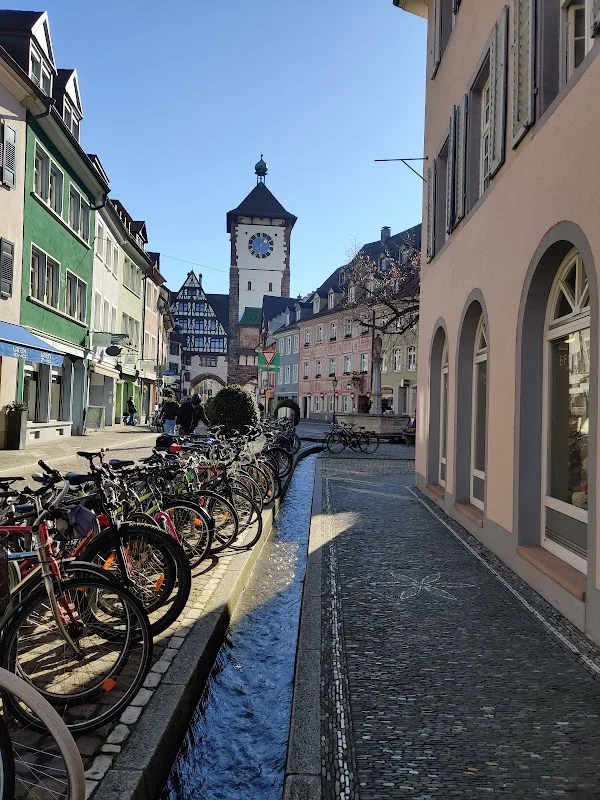
Freiburg im Breisgau
Altstadt, 79 Freiburg im Breisgau, Deutschland
Old Town | Freiburg Attractions & Parking
The Freiburg Old Town is the historical heart of the city and one of the densest experiences of history, everyday life, and urban living in the southwest. In a compact area, market, cathedral, commerce, gastronomy, culture, and short distances are closely intertwined. Those who follow the official city tour will experience a route of about 2.3 kilometers through around 900 years of city history; at the same time, the city center shows how vibrant a traditional urban core can be today. Because almost the entire city center is a pedestrian zone, walking, strolling, and discovering are at the forefront. This is exactly what makes the Old Town so attractive for visitors, locals, weekly market fans, and culture lovers. ([visit.freiburg.de](https://visit.freiburg.de/stadterlebnis-freiburg?utm_source=openai))
History and Urban Landscape of Freiburg's Old Town
Officially, the Old Town is designated as city district 11 and is divided into the areas of Old Town Center and Old Town Ring. This division helps to think of the historical core and the adjacent areas together, as much of what makes Freiburg's Old Town is interconnected in a small space: Town Hall Square, Cathedral Square, shopping axes, the squares at the edges, and the short paths in between. For guests, this is particularly pleasant because the main destinations in the city center can be easily combined on foot. ([fritz.freiburg.de](https://fritz.freiburg.de/pdf_grafiken/gebietsgliederung_freiburg.pdf?utm_source=openai))
The historical development of the Old Town is closely linked to Freiburg's long city history. The official city experience route speaks of 900 years of city history and leads through squares, alleys, and buildings that make this development visible. For this reason, the Old Town does not appear as a single monument, but as a walkable urban landscape where the Middle Ages, trade history, civic representation, and modern urban experiences come together. For orientation, it is important to note: Freiburg's Old Town is not a closed museum space, but a lively center with everyday life, visitor traffic, and urban use. ([visit.freiburg.de](https://visit.freiburg.de/stadterlebnis-freiburg?utm_source=openai))
A particular advantage is the historical substance that largely survived World War II. The Old Town was later renovated so carefully that Freiburg received an award from the state for exemplary Old Town renovation. This continues to shape the impact of the city center today: historical facades, narrow alleys, squares with high quality of stay, and a harmonious mix of preservation and development. Therefore, those who visit Freiburg's Old Town do not experience an artificially reconstructed backdrop, but a grown urban core that is consciously maintained and actively used. ([visit.freiburg.de](https://visit.freiburg.de/entdecken/sehenswuerdigkeiten/altstadt?utm_source=openai))
Cathedral Square, Historical Merchant House, and Major Attractions
The most visible landmark of the Old Town is the Freiburg Cathedral. Its west tower rises 116 meters high, towering over the entire city. Surrounding the cathedral, Cathedral Square opens up as a vibrant center where locals and guests meet, market life takes place, and small cafés further enliven the square. It is here that it becomes clear why Freiburg's Old Town is so strongly associated with the image of openness, life, and historical density. The square is not just a backdrop, but one of the places where urban life in Freiburg is most vividly displayed. ([visit.freiburg.de](https://visit.freiburg.de/muensterplatz?utm_source=openai))
Just a few steps away stands the Historical Merchant House, one of the most distinctive buildings in the city. It was built in 1520 directly at Cathedral Square and symbolizes the economic upswing under the Habsburgs. In the past, goods were stored, customs cleared, or traded here; today, the carefully restored rooms, the hall, the parlor, and the courtyard often serve as event venues. This connects the building's history and present in a special way and makes it one of the buildings that strongly anchor Freiburg's Old Town in memory. ([visit.freiburg.de](https://visit.freiburg.de/entdecken/sehenswuerdigkeiten/altstadt?utm_source=openai))
Other attractions also shape the tour through the Old Town. The Augustiner Museum originated from a former monastery and church ensemble of the Augustinian hermits; after renovations, the church became Germany's first city theater in 1823 and later a museum. Additionally, the Schwabentor and Martinstor serve as historical city gates, along with other squares and houses that frame the path through the Old Town. This mix of sacred buildings, civic architecture, museum culture, and city gates is what makes the charm of the historical center and ensures that a stroll here always opens up new perspectives. ([visit.freiburg.de](https://visit.freiburg.de/augustinermuseum?utm_source=openai))
Pedestrian Zone, Access, and Parking in the Old Town
The heart of Freiburg's Old Town is largely car-free. Therefore, those arriving by car should plan the city center as a destination with a parking garage and walking distance, not as a classic thoroughfare. Around the city center, there are 16 parking garages in three parking zones; a parking guidance system with 30 dynamic display boards informs about available spaces and directs directly to the appropriate parking garage. This is practical for visitors because parking search is significantly better organized than in many other old towns. At the same time, the system supports the idea of relieving the historical center and keeping the paths in the city center as pleasant as possible. ([innenstadt.freiburg.de](https://innenstadt.freiburg.de/anfahrt-parken/mit-dem-auto?utm_source=openai))
For pedestrians, Freiburg's city center is particularly comfortable. The official city website emphasizes that almost the entire city center is a pedestrian zone and that shops within the city center ring are easily accessible on foot. The tram also runs through the city center and brings guests directly into the pedestrian area. Those who experience the Old Town on foot quickly feel that Freiburg consciously prioritizes pedestrian traffic: short distances, many crossings between squares and streets, and a dense network of gastronomy, commerce, and culture make strolling very uncomplicated. ([freiburg.de](https://www.freiburg.de/pb/231560.html?utm_source=openai))
Bicycles also play a significant role. The city center has around 7,000 bicycle parking spaces, and cycling is allowed in most of the city center, provided one behaves considerately. At the same time, special rules apply at Bertoldsbrunnen because many people are present there, and parking bicycles is not allowed. This balance of openness and consideration is typical for Freiburg: the Old Town should remain accessible without losing its quiet and walkable character. Therefore, those arriving by bike can easily access the city center but should observe local rules. ([innenstadt.freiburg.de](https://innenstadt.freiburg.de/anfahrt-parken/mit-dem-fahrrad?utm_source=openai))
Bächle, Cobblestones, and Barrier-Free Paths
A distinctive feature of the Old Town is the Freiburg Bächle. In these narrow watercourses, water from the Dreisam flows through numerous alleys of the Old Town. They were established as early as the 12th century, at the time of the city's founding, and originally served to supply drinking, utility, and extinguishing water. Today, the Bächle are much more than a historical infrastructure element: they shape the urban landscape, create atmosphere, and are one of the details by which Freiburg is immediately recognized. For visitors, they are a charming symbol of the special lightness of the Old Town. ([visit.freiburg.de](https://visit.freiburg.de/freiburger-baechle?utm_source=openai))
The historical pavement is also part of the Old Town's image. The city describes the quartzite cobblestones as characteristic of the urban landscape but also points out that they can pose a challenge for people in wheelchairs, with walkers, mobility aids, or strollers. For this reason, Freiburg has been working for years to smooth central paths and improve accessibility to important locations. This means: the Old Town remains historically visible but is increasingly designed to be usable by as many people as possible. ([freiburg.de](https://www.freiburg.de/pb/231560.html?utm_source=openai))
Particularly helpful is the barrier-free route through the city center. It is about 2.5 kilometers long and leads from the main train station via Colombischlössle and Town Hall Square to Cathedral Square. In addition, the city lists three toilets in the Old Town that are equipped for mobility restrictions. This shows that Freiburg actively considers accessibility in the historical center, rather than treating it as a byproduct. For families with strollers, guests with disabilities, and anyone who prefers a relaxed route, this is a real advantage. ([freiburg.de](https://www.freiburg.de/infos/barrierefreiheit?utm_source=openai))
Cathedral Market, Cafés, and Shopping around the Old Town
The Cathedral Market is one of the strongest attractions of the Old Town. On weekdays in the morning, there is a colorful hustle and bustle in the square around the cathedral: fresh fruits, vegetables, flowers, and regional specialties attract residents and guests alike. The Long Red, Freiburg's legendary sausage, is particularly well-known. The market is therefore not just a shopping place but a piece of lived city identity, where enjoyment, regionality, and everyday life come together quite naturally. ([visit.freiburg.de](https://visit.freiburg.de/muenstermarkt-freiburg?utm_source=openai))
Strolling also plays a significant role around the market and along the main axes of the city center. Kaiser-Joseph-Strasse was still the Great Alley in the Middle Ages and today forms one of the central shopping axes. In addition, street cafés, small shops, department stores, and passages pleasantly interrupt the path between the attractions. This is practical for guests because shopping, coffee breaks, and sightseeing can be easily combined. Thus, the Old Town is not only a place for attractions but also for the ordinary city visit with time to stroll. ([freiburg.de](https://www.freiburg.de/pb/907673.html?utm_source=openai))
The Old Town also has many culinary facets. The official city center website invites you to snack, chat, and enjoy; it points to a wide range of gastronomic offerings in all directions. For wine enthusiasts, the Alte Wache as the House of Baden Wines is a natural stop, and around the Old Town, classic cafés, bakeries, and restaurants can also be easily combined with a market visit or a museum stop. The Old Town thus thrives on short distances between shopping, enjoyment, and encounters. ([innenstadt.freiburg.de](https://innenstadt.freiburg.de/?utm_source=openai))
Culture, Everyday Life, and Lively Squares in Freiburg's Center
Freiburg's city center is also a cultural heavyweight. The city describes it as a place of museums, cinemas, theaters, and diverse events, thus as a space where culture does not take place separately but right in the middle of everyday life. This is important for the Old Town: it is not only historical but also currently a place for encounters, performances, exhibitions, and urban experiences. Those who are here can often combine a shopping spree, a museum visit, and an evening at the theater without long distances. ([innenstadt.freiburg.de](https://innenstadt.freiburg.de/fuer-kultur?utm_source=openai))
The official tours show how closely the individual places are connected. The starting point is often Town Hall Square with the Old and New Town Hall; the New Town Hall served as the university's collegiate building until the end of the 19th century. This makes visible how administration, education, and city history overlap in the Old Town. The Augustiner Museum, which transformed from a former monastery building into a museum, also exemplifies the Old Town's ability to repurpose historical buildings for new uses without losing their character. ([visit.freiburg.de](https://visit.freiburg.de/stadterlebnis-freiburg?utm_source=openai))
Exactly therein lies the special quality of Freiburg's Old Town: it is not static but alive. Historical buildings, weekly markets, gastronomy, cultural sites, and everyday paths intertwine. The Historical Merchant House shows this connection particularly clearly, as it can today be used for events and can accommodate up to 350 guests depending on the format. This creates an urban core that not only informs visitors but invites them to stay, look, and truly experience the place. Therefore, those who visit Freiburg's Old Town find not only beautiful backdrops but a city center with real everyday life, strong images, and many reasons for a longer stay. ([historischeskaufhaus.freiburg.de](https://historischeskaufhaus.freiburg.de/?utm_source=openai))
Sources:
- City Experience Freiburg - Visit Freiburg
- The Best Tips for Freiburg's Old Town - Visit Freiburg
- Cycling in the Pedestrian Zone - City of Freiburg
- Driving to Freiburg's City Center - City Center Freiburg
- Freiburg Bächle - Visit Freiburg
- Barrier-Free in Freiburg - Visit Freiburg
- Cathedral Market Freiburg - Visit Freiburg
- Cathedral Square Freiburg - Visit Freiburg
- Area Division of the City of Freiburg i.Br. - City of Freiburg
- Experience Culture in Freiburg's City Center - City Center Freiburg
- Historical Merchant House Freiburg - Official Website
Show moreShow less
Old Town | Freiburg Attractions & Parking
The Freiburg Old Town is the historical heart of the city and one of the densest experiences of history, everyday life, and urban living in the southwest. In a compact area, market, cathedral, commerce, gastronomy, culture, and short distances are closely intertwined. Those who follow the official city tour will experience a route of about 2.3 kilometers through around 900 years of city history; at the same time, the city center shows how vibrant a traditional urban core can be today. Because almost the entire city center is a pedestrian zone, walking, strolling, and discovering are at the forefront. This is exactly what makes the Old Town so attractive for visitors, locals, weekly market fans, and culture lovers. ([visit.freiburg.de](https://visit.freiburg.de/stadterlebnis-freiburg?utm_source=openai))
History and Urban Landscape of Freiburg's Old Town
Officially, the Old Town is designated as city district 11 and is divided into the areas of Old Town Center and Old Town Ring. This division helps to think of the historical core and the adjacent areas together, as much of what makes Freiburg's Old Town is interconnected in a small space: Town Hall Square, Cathedral Square, shopping axes, the squares at the edges, and the short paths in between. For guests, this is particularly pleasant because the main destinations in the city center can be easily combined on foot. ([fritz.freiburg.de](https://fritz.freiburg.de/pdf_grafiken/gebietsgliederung_freiburg.pdf?utm_source=openai))
The historical development of the Old Town is closely linked to Freiburg's long city history. The official city experience route speaks of 900 years of city history and leads through squares, alleys, and buildings that make this development visible. For this reason, the Old Town does not appear as a single monument, but as a walkable urban landscape where the Middle Ages, trade history, civic representation, and modern urban experiences come together. For orientation, it is important to note: Freiburg's Old Town is not a closed museum space, but a lively center with everyday life, visitor traffic, and urban use. ([visit.freiburg.de](https://visit.freiburg.de/stadterlebnis-freiburg?utm_source=openai))
A particular advantage is the historical substance that largely survived World War II. The Old Town was later renovated so carefully that Freiburg received an award from the state for exemplary Old Town renovation. This continues to shape the impact of the city center today: historical facades, narrow alleys, squares with high quality of stay, and a harmonious mix of preservation and development. Therefore, those who visit Freiburg's Old Town do not experience an artificially reconstructed backdrop, but a grown urban core that is consciously maintained and actively used. ([visit.freiburg.de](https://visit.freiburg.de/entdecken/sehenswuerdigkeiten/altstadt?utm_source=openai))
Cathedral Square, Historical Merchant House, and Major Attractions
The most visible landmark of the Old Town is the Freiburg Cathedral. Its west tower rises 116 meters high, towering over the entire city. Surrounding the cathedral, Cathedral Square opens up as a vibrant center where locals and guests meet, market life takes place, and small cafés further enliven the square. It is here that it becomes clear why Freiburg's Old Town is so strongly associated with the image of openness, life, and historical density. The square is not just a backdrop, but one of the places where urban life in Freiburg is most vividly displayed. ([visit.freiburg.de](https://visit.freiburg.de/muensterplatz?utm_source=openai))
Just a few steps away stands the Historical Merchant House, one of the most distinctive buildings in the city. It was built in 1520 directly at Cathedral Square and symbolizes the economic upswing under the Habsburgs. In the past, goods were stored, customs cleared, or traded here; today, the carefully restored rooms, the hall, the parlor, and the courtyard often serve as event venues. This connects the building's history and present in a special way and makes it one of the buildings that strongly anchor Freiburg's Old Town in memory. ([visit.freiburg.de](https://visit.freiburg.de/entdecken/sehenswuerdigkeiten/altstadt?utm_source=openai))
Other attractions also shape the tour through the Old Town. The Augustiner Museum originated from a former monastery and church ensemble of the Augustinian hermits; after renovations, the church became Germany's first city theater in 1823 and later a museum. Additionally, the Schwabentor and Martinstor serve as historical city gates, along with other squares and houses that frame the path through the Old Town. This mix of sacred buildings, civic architecture, museum culture, and city gates is what makes the charm of the historical center and ensures that a stroll here always opens up new perspectives. ([visit.freiburg.de](https://visit.freiburg.de/augustinermuseum?utm_source=openai))
Pedestrian Zone, Access, and Parking in the Old Town
The heart of Freiburg's Old Town is largely car-free. Therefore, those arriving by car should plan the city center as a destination with a parking garage and walking distance, not as a classic thoroughfare. Around the city center, there are 16 parking garages in three parking zones; a parking guidance system with 30 dynamic display boards informs about available spaces and directs directly to the appropriate parking garage. This is practical for visitors because parking search is significantly better organized than in many other old towns. At the same time, the system supports the idea of relieving the historical center and keeping the paths in the city center as pleasant as possible. ([innenstadt.freiburg.de](https://innenstadt.freiburg.de/anfahrt-parken/mit-dem-auto?utm_source=openai))
For pedestrians, Freiburg's city center is particularly comfortable. The official city website emphasizes that almost the entire city center is a pedestrian zone and that shops within the city center ring are easily accessible on foot. The tram also runs through the city center and brings guests directly into the pedestrian area. Those who experience the Old Town on foot quickly feel that Freiburg consciously prioritizes pedestrian traffic: short distances, many crossings between squares and streets, and a dense network of gastronomy, commerce, and culture make strolling very uncomplicated. ([freiburg.de](https://www.freiburg.de/pb/231560.html?utm_source=openai))
Bicycles also play a significant role. The city center has around 7,000 bicycle parking spaces, and cycling is allowed in most of the city center, provided one behaves considerately. At the same time, special rules apply at Bertoldsbrunnen because many people are present there, and parking bicycles is not allowed. This balance of openness and consideration is typical for Freiburg: the Old Town should remain accessible without losing its quiet and walkable character. Therefore, those arriving by bike can easily access the city center but should observe local rules. ([innenstadt.freiburg.de](https://innenstadt.freiburg.de/anfahrt-parken/mit-dem-fahrrad?utm_source=openai))
Bächle, Cobblestones, and Barrier-Free Paths
A distinctive feature of the Old Town is the Freiburg Bächle. In these narrow watercourses, water from the Dreisam flows through numerous alleys of the Old Town. They were established as early as the 12th century, at the time of the city's founding, and originally served to supply drinking, utility, and extinguishing water. Today, the Bächle are much more than a historical infrastructure element: they shape the urban landscape, create atmosphere, and are one of the details by which Freiburg is immediately recognized. For visitors, they are a charming symbol of the special lightness of the Old Town. ([visit.freiburg.de](https://visit.freiburg.de/freiburger-baechle?utm_source=openai))
The historical pavement is also part of the Old Town's image. The city describes the quartzite cobblestones as characteristic of the urban landscape but also points out that they can pose a challenge for people in wheelchairs, with walkers, mobility aids, or strollers. For this reason, Freiburg has been working for years to smooth central paths and improve accessibility to important locations. This means: the Old Town remains historically visible but is increasingly designed to be usable by as many people as possible. ([freiburg.de](https://www.freiburg.de/pb/231560.html?utm_source=openai))
Particularly helpful is the barrier-free route through the city center. It is about 2.5 kilometers long and leads from the main train station via Colombischlössle and Town Hall Square to Cathedral Square. In addition, the city lists three toilets in the Old Town that are equipped for mobility restrictions. This shows that Freiburg actively considers accessibility in the historical center, rather than treating it as a byproduct. For families with strollers, guests with disabilities, and anyone who prefers a relaxed route, this is a real advantage. ([freiburg.de](https://www.freiburg.de/infos/barrierefreiheit?utm_source=openai))
Cathedral Market, Cafés, and Shopping around the Old Town
The Cathedral Market is one of the strongest attractions of the Old Town. On weekdays in the morning, there is a colorful hustle and bustle in the square around the cathedral: fresh fruits, vegetables, flowers, and regional specialties attract residents and guests alike. The Long Red, Freiburg's legendary sausage, is particularly well-known. The market is therefore not just a shopping place but a piece of lived city identity, where enjoyment, regionality, and everyday life come together quite naturally. ([visit.freiburg.de](https://visit.freiburg.de/muenstermarkt-freiburg?utm_source=openai))
Strolling also plays a significant role around the market and along the main axes of the city center. Kaiser-Joseph-Strasse was still the Great Alley in the Middle Ages and today forms one of the central shopping axes. In addition, street cafés, small shops, department stores, and passages pleasantly interrupt the path between the attractions. This is practical for guests because shopping, coffee breaks, and sightseeing can be easily combined. Thus, the Old Town is not only a place for attractions but also for the ordinary city visit with time to stroll. ([freiburg.de](https://www.freiburg.de/pb/907673.html?utm_source=openai))
The Old Town also has many culinary facets. The official city center website invites you to snack, chat, and enjoy; it points to a wide range of gastronomic offerings in all directions. For wine enthusiasts, the Alte Wache as the House of Baden Wines is a natural stop, and around the Old Town, classic cafés, bakeries, and restaurants can also be easily combined with a market visit or a museum stop. The Old Town thus thrives on short distances between shopping, enjoyment, and encounters. ([innenstadt.freiburg.de](https://innenstadt.freiburg.de/?utm_source=openai))
Culture, Everyday Life, and Lively Squares in Freiburg's Center
Freiburg's city center is also a cultural heavyweight. The city describes it as a place of museums, cinemas, theaters, and diverse events, thus as a space where culture does not take place separately but right in the middle of everyday life. This is important for the Old Town: it is not only historical but also currently a place for encounters, performances, exhibitions, and urban experiences. Those who are here can often combine a shopping spree, a museum visit, and an evening at the theater without long distances. ([innenstadt.freiburg.de](https://innenstadt.freiburg.de/fuer-kultur?utm_source=openai))
The official tours show how closely the individual places are connected. The starting point is often Town Hall Square with the Old and New Town Hall; the New Town Hall served as the university's collegiate building until the end of the 19th century. This makes visible how administration, education, and city history overlap in the Old Town. The Augustiner Museum, which transformed from a former monastery building into a museum, also exemplifies the Old Town's ability to repurpose historical buildings for new uses without losing their character. ([visit.freiburg.de](https://visit.freiburg.de/stadterlebnis-freiburg?utm_source=openai))
Exactly therein lies the special quality of Freiburg's Old Town: it is not static but alive. Historical buildings, weekly markets, gastronomy, cultural sites, and everyday paths intertwine. The Historical Merchant House shows this connection particularly clearly, as it can today be used for events and can accommodate up to 350 guests depending on the format. This creates an urban core that not only informs visitors but invites them to stay, look, and truly experience the place. Therefore, those who visit Freiburg's Old Town find not only beautiful backdrops but a city center with real everyday life, strong images, and many reasons for a longer stay. ([historischeskaufhaus.freiburg.de](https://historischeskaufhaus.freiburg.de/?utm_source=openai))
Sources:
- City Experience Freiburg - Visit Freiburg
- The Best Tips for Freiburg's Old Town - Visit Freiburg
- Cycling in the Pedestrian Zone - City of Freiburg
- Driving to Freiburg's City Center - City Center Freiburg
- Freiburg Bächle - Visit Freiburg
- Barrier-Free in Freiburg - Visit Freiburg
- Cathedral Market Freiburg - Visit Freiburg
- Cathedral Square Freiburg - Visit Freiburg
- Area Division of the City of Freiburg i.Br. - City of Freiburg
- Experience Culture in Freiburg's City Center - City Center Freiburg
- Historical Merchant House Freiburg - Official Website
Old Town | Freiburg Attractions & Parking
The Freiburg Old Town is the historical heart of the city and one of the densest experiences of history, everyday life, and urban living in the southwest. In a compact area, market, cathedral, commerce, gastronomy, culture, and short distances are closely intertwined. Those who follow the official city tour will experience a route of about 2.3 kilometers through around 900 years of city history; at the same time, the city center shows how vibrant a traditional urban core can be today. Because almost the entire city center is a pedestrian zone, walking, strolling, and discovering are at the forefront. This is exactly what makes the Old Town so attractive for visitors, locals, weekly market fans, and culture lovers. ([visit.freiburg.de](https://visit.freiburg.de/stadterlebnis-freiburg?utm_source=openai))
History and Urban Landscape of Freiburg's Old Town
Officially, the Old Town is designated as city district 11 and is divided into the areas of Old Town Center and Old Town Ring. This division helps to think of the historical core and the adjacent areas together, as much of what makes Freiburg's Old Town is interconnected in a small space: Town Hall Square, Cathedral Square, shopping axes, the squares at the edges, and the short paths in between. For guests, this is particularly pleasant because the main destinations in the city center can be easily combined on foot. ([fritz.freiburg.de](https://fritz.freiburg.de/pdf_grafiken/gebietsgliederung_freiburg.pdf?utm_source=openai))
The historical development of the Old Town is closely linked to Freiburg's long city history. The official city experience route speaks of 900 years of city history and leads through squares, alleys, and buildings that make this development visible. For this reason, the Old Town does not appear as a single monument, but as a walkable urban landscape where the Middle Ages, trade history, civic representation, and modern urban experiences come together. For orientation, it is important to note: Freiburg's Old Town is not a closed museum space, but a lively center with everyday life, visitor traffic, and urban use. ([visit.freiburg.de](https://visit.freiburg.de/stadterlebnis-freiburg?utm_source=openai))
A particular advantage is the historical substance that largely survived World War II. The Old Town was later renovated so carefully that Freiburg received an award from the state for exemplary Old Town renovation. This continues to shape the impact of the city center today: historical facades, narrow alleys, squares with high quality of stay, and a harmonious mix of preservation and development. Therefore, those who visit Freiburg's Old Town do not experience an artificially reconstructed backdrop, but a grown urban core that is consciously maintained and actively used. ([visit.freiburg.de](https://visit.freiburg.de/entdecken/sehenswuerdigkeiten/altstadt?utm_source=openai))
Cathedral Square, Historical Merchant House, and Major Attractions
The most visible landmark of the Old Town is the Freiburg Cathedral. Its west tower rises 116 meters high, towering over the entire city. Surrounding the cathedral, Cathedral Square opens up as a vibrant center where locals and guests meet, market life takes place, and small cafés further enliven the square. It is here that it becomes clear why Freiburg's Old Town is so strongly associated with the image of openness, life, and historical density. The square is not just a backdrop, but one of the places where urban life in Freiburg is most vividly displayed. ([visit.freiburg.de](https://visit.freiburg.de/muensterplatz?utm_source=openai))
Just a few steps away stands the Historical Merchant House, one of the most distinctive buildings in the city. It was built in 1520 directly at Cathedral Square and symbolizes the economic upswing under the Habsburgs. In the past, goods were stored, customs cleared, or traded here; today, the carefully restored rooms, the hall, the parlor, and the courtyard often serve as event venues. This connects the building's history and present in a special way and makes it one of the buildings that strongly anchor Freiburg's Old Town in memory. ([visit.freiburg.de](https://visit.freiburg.de/entdecken/sehenswuerdigkeiten/altstadt?utm_source=openai))
Other attractions also shape the tour through the Old Town. The Augustiner Museum originated from a former monastery and church ensemble of the Augustinian hermits; after renovations, the church became Germany's first city theater in 1823 and later a museum. Additionally, the Schwabentor and Martinstor serve as historical city gates, along with other squares and houses that frame the path through the Old Town. This mix of sacred buildings, civic architecture, museum culture, and city gates is what makes the charm of the historical center and ensures that a stroll here always opens up new perspectives. ([visit.freiburg.de](https://visit.freiburg.de/augustinermuseum?utm_source=openai))
Pedestrian Zone, Access, and Parking in the Old Town
The heart of Freiburg's Old Town is largely car-free. Therefore, those arriving by car should plan the city center as a destination with a parking garage and walking distance, not as a classic thoroughfare. Around the city center, there are 16 parking garages in three parking zones; a parking guidance system with 30 dynamic display boards informs about available spaces and directs directly to the appropriate parking garage. This is practical for visitors because parking search is significantly better organized than in many other old towns. At the same time, the system supports the idea of relieving the historical center and keeping the paths in the city center as pleasant as possible. ([innenstadt.freiburg.de](https://innenstadt.freiburg.de/anfahrt-parken/mit-dem-auto?utm_source=openai))
For pedestrians, Freiburg's city center is particularly comfortable. The official city website emphasizes that almost the entire city center is a pedestrian zone and that shops within the city center ring are easily accessible on foot. The tram also runs through the city center and brings guests directly into the pedestrian area. Those who experience the Old Town on foot quickly feel that Freiburg consciously prioritizes pedestrian traffic: short distances, many crossings between squares and streets, and a dense network of gastronomy, commerce, and culture make strolling very uncomplicated. ([freiburg.de](https://www.freiburg.de/pb/231560.html?utm_source=openai))
Bicycles also play a significant role. The city center has around 7,000 bicycle parking spaces, and cycling is allowed in most of the city center, provided one behaves considerately. At the same time, special rules apply at Bertoldsbrunnen because many people are present there, and parking bicycles is not allowed. This balance of openness and consideration is typical for Freiburg: the Old Town should remain accessible without losing its quiet and walkable character. Therefore, those arriving by bike can easily access the city center but should observe local rules. ([innenstadt.freiburg.de](https://innenstadt.freiburg.de/anfahrt-parken/mit-dem-fahrrad?utm_source=openai))
Bächle, Cobblestones, and Barrier-Free Paths
A distinctive feature of the Old Town is the Freiburg Bächle. In these narrow watercourses, water from the Dreisam flows through numerous alleys of the Old Town. They were established as early as the 12th century, at the time of the city's founding, and originally served to supply drinking, utility, and extinguishing water. Today, the Bächle are much more than a historical infrastructure element: they shape the urban landscape, create atmosphere, and are one of the details by which Freiburg is immediately recognized. For visitors, they are a charming symbol of the special lightness of the Old Town. ([visit.freiburg.de](https://visit.freiburg.de/freiburger-baechle?utm_source=openai))
The historical pavement is also part of the Old Town's image. The city describes the quartzite cobblestones as characteristic of the urban landscape but also points out that they can pose a challenge for people in wheelchairs, with walkers, mobility aids, or strollers. For this reason, Freiburg has been working for years to smooth central paths and improve accessibility to important locations. This means: the Old Town remains historically visible but is increasingly designed to be usable by as many people as possible. ([freiburg.de](https://www.freiburg.de/pb/231560.html?utm_source=openai))
Particularly helpful is the barrier-free route through the city center. It is about 2.5 kilometers long and leads from the main train station via Colombischlössle and Town Hall Square to Cathedral Square. In addition, the city lists three toilets in the Old Town that are equipped for mobility restrictions. This shows that Freiburg actively considers accessibility in the historical center, rather than treating it as a byproduct. For families with strollers, guests with disabilities, and anyone who prefers a relaxed route, this is a real advantage. ([freiburg.de](https://www.freiburg.de/infos/barrierefreiheit?utm_source=openai))
Cathedral Market, Cafés, and Shopping around the Old Town
The Cathedral Market is one of the strongest attractions of the Old Town. On weekdays in the morning, there is a colorful hustle and bustle in the square around the cathedral: fresh fruits, vegetables, flowers, and regional specialties attract residents and guests alike. The Long Red, Freiburg's legendary sausage, is particularly well-known. The market is therefore not just a shopping place but a piece of lived city identity, where enjoyment, regionality, and everyday life come together quite naturally. ([visit.freiburg.de](https://visit.freiburg.de/muenstermarkt-freiburg?utm_source=openai))
Strolling also plays a significant role around the market and along the main axes of the city center. Kaiser-Joseph-Strasse was still the Great Alley in the Middle Ages and today forms one of the central shopping axes. In addition, street cafés, small shops, department stores, and passages pleasantly interrupt the path between the attractions. This is practical for guests because shopping, coffee breaks, and sightseeing can be easily combined. Thus, the Old Town is not only a place for attractions but also for the ordinary city visit with time to stroll. ([freiburg.de](https://www.freiburg.de/pb/907673.html?utm_source=openai))
The Old Town also has many culinary facets. The official city center website invites you to snack, chat, and enjoy; it points to a wide range of gastronomic offerings in all directions. For wine enthusiasts, the Alte Wache as the House of Baden Wines is a natural stop, and around the Old Town, classic cafés, bakeries, and restaurants can also be easily combined with a market visit or a museum stop. The Old Town thus thrives on short distances between shopping, enjoyment, and encounters. ([innenstadt.freiburg.de](https://innenstadt.freiburg.de/?utm_source=openai))
Culture, Everyday Life, and Lively Squares in Freiburg's Center
Freiburg's city center is also a cultural heavyweight. The city describes it as a place of museums, cinemas, theaters, and diverse events, thus as a space where culture does not take place separately but right in the middle of everyday life. This is important for the Old Town: it is not only historical but also currently a place for encounters, performances, exhibitions, and urban experiences. Those who are here can often combine a shopping spree, a museum visit, and an evening at the theater without long distances. ([innenstadt.freiburg.de](https://innenstadt.freiburg.de/fuer-kultur?utm_source=openai))
The official tours show how closely the individual places are connected. The starting point is often Town Hall Square with the Old and New Town Hall; the New Town Hall served as the university's collegiate building until the end of the 19th century. This makes visible how administration, education, and city history overlap in the Old Town. The Augustiner Museum, which transformed from a former monastery building into a museum, also exemplifies the Old Town's ability to repurpose historical buildings for new uses without losing their character. ([visit.freiburg.de](https://visit.freiburg.de/stadterlebnis-freiburg?utm_source=openai))
Exactly therein lies the special quality of Freiburg's Old Town: it is not static but alive. Historical buildings, weekly markets, gastronomy, cultural sites, and everyday paths intertwine. The Historical Merchant House shows this connection particularly clearly, as it can today be used for events and can accommodate up to 350 guests depending on the format. This creates an urban core that not only informs visitors but invites them to stay, look, and truly experience the place. Therefore, those who visit Freiburg's Old Town find not only beautiful backdrops but a city center with real everyday life, strong images, and many reasons for a longer stay. ([historischeskaufhaus.freiburg.de](https://historischeskaufhaus.freiburg.de/?utm_source=openai))
Sources:
- City Experience Freiburg - Visit Freiburg
- The Best Tips for Freiburg's Old Town - Visit Freiburg
- Cycling in the Pedestrian Zone - City of Freiburg
- Driving to Freiburg's City Center - City Center Freiburg
- Freiburg Bächle - Visit Freiburg
- Barrier-Free in Freiburg - Visit Freiburg
- Cathedral Market Freiburg - Visit Freiburg
- Cathedral Square Freiburg - Visit Freiburg
- Area Division of the City of Freiburg i.Br. - City of Freiburg
- Experience Culture in Freiburg's City Center - City Center Freiburg
- Historical Merchant House Freiburg - Official Website
Upcoming Events
No events found
Frequently Asked Questions
Reviews
No reviews found