
Willy Millowitsch
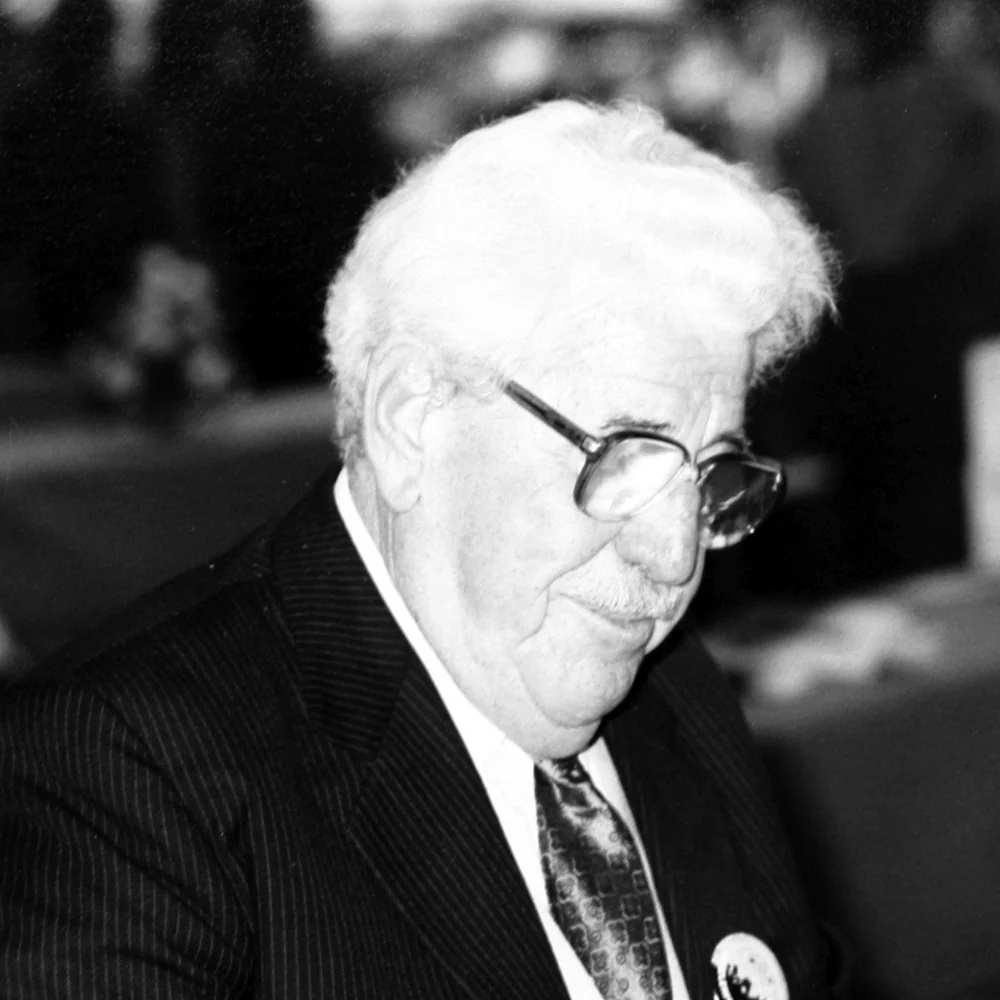
Image from Wikipedia
Image from Wikipedia
Willy Millowitsch – Cologne's Folk Theatre, Kölsch, and the Great Art of Popular Stage
A Life Portrait Between Theatre Tradition, Television History, and Rhineland Identity
Willy Millowitsch was one of the defining figures of German entertainment culture in the 20th century. Born on January 8, 1909, in Cologne, and passing away there in 1999, he combined acting, directing, and singing into a distinctive stage personality that reached far beyond the borders of the Rhineland. As the head of the private Millowitsch Theatre and a folk actor who performed just as comfortably in High German as in Kölsch, he became a symbol of Rhineland lifestyle. His musical career, film appearances, and television roles made him an artist whose name is still associated with popularity, proximity to the audience, and cultural recognition. (de.wikipedia.org)
Childhood in a Theatre Dynasty
Millowitsch came from a traditional Cologne family of actors, where the stage was not just a profession but a way of life. As a child, he stood on the boards of the family-owned theatre and grew up in an environment where theatre work, ensemble structure, and audience engagement were passed down through generations. This background profoundly influenced his artistic development: he learned early on that closeness to the people does not contradict professionalism, but arises from precise character work, timing, and direct address. The combination of familial tradition and local roots later became the core of his public impact. (zeit.de)
The Path to Folk Actor
In the post-war period, Millowitsch began an unparalleled career that turned him into a favorite among the audience during the economic miracle. A pivotal moment was the first live broadcast from a German theatre in October 1953 when the military comedy "Der Etappenhase" featuring Millowitsch was shown on television. This media moment transformed the Cologne theatre star into a nationally recognized figure and opened doors to film and television for him. Contemporary reports describe how he rose from a local stage artist to a household name across Germany. (zeit.de)
The Millowitsch Theatre as a Cultural Center
As the head of the private Cologne Millowitsch Theatre, he was not only a performer but also a theatrical entrepreneur and the artistic driving force of an entire institution. From 1940, he took over the management of the house and shaped its repertoire with popular farces, comedies, and folk plays that brought the Rhineland’s spirit of life to the stage. The theatre operation became a platform for where comedy, everyday life, and social observation converged. It is in this role that his authority shines: Millowitsch represented a theatre that did not appear elitist but reached people directly. (munzinger.de)
Film, Television, and the Expansion of the Stage Persona
With over 125 films and numerous television roles, Millowitsch demonstrated the breadth of his career. Among his films are "Drei Mann auf einem Pferd," "Zwei Herzen im Mai," "Scampolo," "Zum Teufel mit der Penne," and the Hollywood production "Hilfe, die Amis kommen." These roles depicted him not only as a comedic type but also as a reliable character actor with a keen sense for pace, punchlines, and the mechanics of popular entertainment. At the same time, he remained committed to the theatre and utilized his media presence to enhance his stage persona through new channels. (de.wikipedia.org)
The Music Career: Schlager, Kölsch, and Folk Presence
Millowitsch was not only an actor but also a singer and entertainer. He became particularly well-known through songs like "Wir sind alle kleine Sünderlein" and "Schnaps, das war sein letztes Wort," which established him as a pop star in the 1950s and 1960s. The song "Schnaps, das war sein letztes Wort," produced by himself, reached number 5 on the German charts in November 1960, showing that his musical endeavors extended beyond mere theatre additions. His songs thrived on simple, catchy melodies, cabaret-like addresses, and a strong connection to the Kölsch dialect. (de.wikipedia.org)
Musical Development and Stylistic Signature
His musical profile emerged at the intersection of Schlager, party songs, and Rhineland everyday culture. Millowitsch sang in both High German and Kölsch, creating a dual identity: on one hand, he was comprehensible to a broad German audience, while on the other, he remained deeply rooted in Cologne and the Rhineland. This mixture of linguistic closeness, humorous directness, and folk-like arrangement made his songs adaptable for radio, record, and stage situations. His music was never aimed at virtuosity in the narrow sense but at recognizability, audience proximity, and shared experiences. (de.wikipedia.org)
Discography, Reception, and Cultural Resonance
In the discography, Millowitsch mainly appears as an interpreter with several notable recordings closely linked to his public image. MusicBrainz documents titles such as "Wir Sind Alle Kleine Sünderlein," and later reissues show that his repertoire remained present even decades after his active time. On streaming platforms, remasters and new editions are still emerging today, emphasizing his enduring visibility in the digital music memory. Critically viewed, he is seen less as an innovative stylist and more as a formative figure of popular entertainment, whose cultural value lies in the connection of theatre, song, and local identity. (musicbrainz.org)
Acknowledgment, Honors, and Legacy
Millowitsch's significance extended far beyond entertainment. The city of Cologne awarded him honorary citizenship in 1989, and in his hometown, a square and a monument serve as a lasting public remembrance. These honors show that he was not just a successful actor and singer but a cultural symbol for Cologne and the Rhineland. Even in biographical retrospectives, he is described as the epitome of Rhineland cheerfulness, whose name became synonymous with Kölsch way of life. (dewiki.de)
Conclusion: Why Willy Millowitsch Continues to Fascinate Today
Willy Millowitsch remains intriguing because he united entertainment and a sense of home in a rarely clear way. He embodied a musical career and stage path based not on distance, but on closeness: to the audience, to language, to the city of Cologne. Those who discover his films, theatre performances, or songs encounter an artist who combined popularity with endurance and whose stage presence has shaped generations. For this reason, it is worth re-listening, re-watching his work, and appreciating it as part of German cultural history. (de.wikipedia.org)
Official Channels of Willy Millowitsch:
- Instagram: no official profile found
- Facebook: no official profile found
- YouTube: no official profile found
- Spotify: no official profile found
- TikTok: no official profile found
Sources:
- Wikipedia – Willy Millowitsch
- Portal Rheinische Geschichte – Willy Millowitsch
- DIE ZEIT – Willy Millowitsch
- Munzinger Biography – Willy Millowitsch
- German Biography – Millowitsch, Willy
- MusicBrainz – Willy Millowitsch
- Spotify – Willy Millowitsch
- Apple Music – Der will was von mir (Remastered 2025)
- Wikipedia: Image and text source