
Peter Weiss
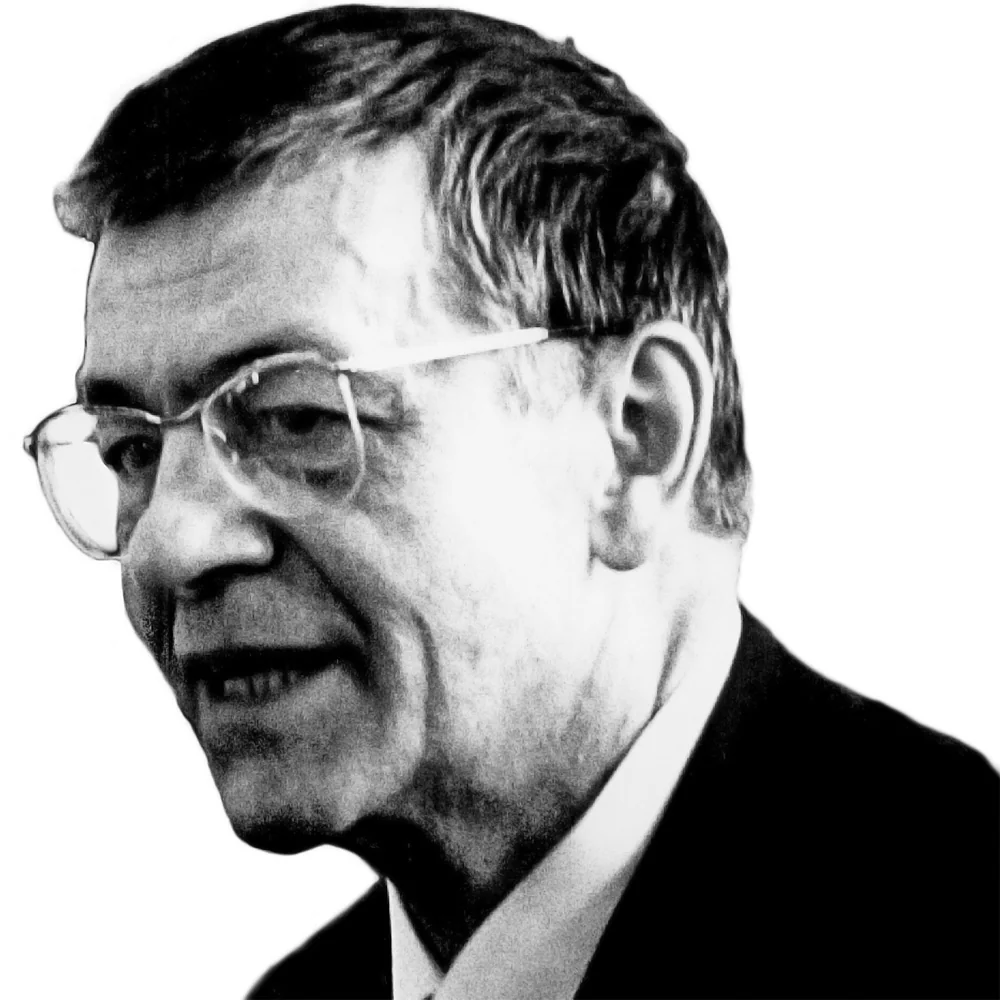
Image from Wikipedia
Image from Wikipedia
Peter Weiss: The Radical Spirit of Post-War Art Between Literature, Theater, and Political Aesthetics
An Artist Who Broke Boundaries and Shaped Debates
Peter Ulrich Weiss, born on November 8, 1916, in Nowawes near Potsdam and died on May 10, 1982, in Stockholm, is one of the most distinguished German-Swedish artistic figures of the 20th century. His work unites literature, painting, graphic art, and experimental film into an intellectually rich whole that has significantly shaped post-war culture. He became known as an avant-garde storyteller, autobiographical prose writer, and politically engaged playwright, whose texts combine aesthetic precision with historical urgency. (de.wikipedia.org)
Early Years, Emigration, and Artistic Influence
Weiss grew up in a German-Jewish family environment and experienced the political upheaval of the 1930s as an existential ordeal. In 1934, he emigrated to London with his parents, before attending the art academy in Prague from 1936 to 1938 and relocating to Sweden in 1939. These biographical breaks created the resonance space for his later work, in which loss, memory, and historical violence repeatedly appear as central motifs. (penguin.de)
As an early-trained visual artist, Weiss developed a language of accuracy, observation, and formal tension. His early surrealistically inspired works as a painter and experimental film director are considered less known, but they are crucial for understanding his later prose and drama. Even at this stage, his interest in structure, perspective, and perception is evident, forming the foundation of his entire oeuvre. (de.wikipedia.org)
Breakthrough in Post-War Literature
In German-language post-war literature, Peter Weiss established himself as a distinctive voice with an unmistakable style. His meticulous descriptive literature, which deeply engages both the surface of things and the inner conflicts of the characters, made him a frequently acknowledged avant-gardist. At the same time, he wrote autobiographical prose in which personal experience and political contemporary history are closely intertwined. (de.wikipedia.org)
His important prose works include Abschied von den Eltern and Fluchtpunkt, in which he addresses memory, exile, and identity with great formal discipline. The texts reveal an author who emphasizes condensation, precision, and the controlled intensification of experience rather than relying on effects. It is precisely from this that his authority as a literary chronicler of a broken epoch arose. (penguin.de)
Theater as a Political Art Form
Weiss achieved international fame with the play Marat/Sade, which was awarded the Tony Award and became one of the major theatrical events of the 1960s. The work connects historical situation, psychological extremes, and societal reflection into an uncompromising stage text. Through this, Weiss demonstrated that for him, theater is not merely representation but also a space for thought and a machine for conflict. (de.wikipedia.org)
Equally influential was the documentary play Die Ermittlung, which triggered extensive discussions about German memory politics as an "Auschwitz Oratorio." The impact of this text lay not only in its historical content but also in its form: Weiss condensed testimony, protocol, and moral confrontation into a theater of responsibility. This established him as a central figure in the debates on coming to terms with the past in the Federal Republic. (de.wikipedia.org)
The Main Work: The Aesthetics of Resistance
The central text of Peter Weiss is the three-volume novel Die Ästhetik des Widerstands, regarded as one of the most significant German-language works of the 1970s and 1980s. The work combines political theory, art history, and proletarian experience into a monumental space for reflection. In this, Weiss does not merely write a novel but rather an aesthetic and historical thought movement that continues to challenge readers today. (de.wikipedia.org)
In this work, his particular strength as a composer of linguistic structures is especially evident: the sentences operate with layering, repetition, and precise observation until individual images coalesce into a comprehensive understanding of the world. His literary method has been widely imitated and influenced other avant-garde authors. The influence extends far beyond German literature, as Weiss distilled the question of art and resistance into an international aesthetic of the political. (de.wikipedia.org)
Style, Method, and Artistic Signature
Peter Weiss combined a strict form with high emotional and political intensity in his writing. His works operate with exact observation, essayistic elements, and a language that does not decorate historical violence but makes it visible. This style rendered him an author whose texts are of extraordinary weight both literarily and culturally historically. (de.wikipedia.org)
His activities as a painter, graphic artist, and experimental filmmaker are also part of this signature, as they demonstrate a comprehensive understanding of art as a work on perception and structure. The view of Weiss thus broadens: he was not an artist of a single medium, but an experimenter across genres. His biography exemplifies a modernity in which art is always also a matter of attitude. (munzinger.de)
Reception, Impact, and Cultural Influence
Weiss's work sparked not only literary but also societal debates. His texts on war, fascism, memory, and resistance struck a chord in West German and international post-war culture. Precisely because he never separated aesthetic form from political analysis, his influence in literature, theater, and critical cultural thought remained exceptionally stable. (de.wikipedia.org)
His award of the Georg-Büchner-Prize in 1982 underscores the authority he enjoyed at the end of his life. Additionally, the lasting relevance of his works in research, theatrical practice, and journalistic engagement can be seen. Peter Weiss thus stands not only as a historical figure but as an author whose inquiries into art, politics, and memory continue to resonate in the 21st century. (penguin.de)
Discography, Music Projects, and Current Publications
No classic discography, hit singles, or music charts in the strict sense are recorded for Peter Weiss as a writer, painter, and playwright. Instead, web research revealed references to stage adaptations, radio plays, and theater adaptations, such as in the MusicBrainz entry for Marat/Sade, as well as in bibliographic and archival sources. Current music projects or new publications for 2024 or 2025 could not be verified. (musicbrainz.org)
A musical approach to Weiss therefore arises primarily through the reception of his theater texts and through his connection to documentary, choral, and rhythmically organized speaking forms. Especially Die Ermittlung and Marat/Sade exhibit a dramatic architecture that is almost musically conceived: voices, contrasts, repetitions, and arcs of tension shape an acoustically highly effective stage experience. In this sense, Weiss has an indirect yet significant impact on music and theater culture. (de.wikipedia.org)
Conclusion: Why Peter Weiss Continues to Fascinate
Peter Weiss fascinates because he never understood art as decoration but as a precise form of resistance. His works combine literary rigor, historical responsibility, and aesthetic radicality into a distinctive stance. Those who read him or experience him on stage encounter an artist who uniquely synthesizes thought and feeling. (de.wikipedia.org)
For this reason, Peter Weiss remains essential reading and a lasting influence for theater, literature, and cultural criticism. His texts open spaces where the past is not concluded but productively interrogated. Those who see his works live on stage do not witness mere drama, but an artistic engagement with history, memory, and responsibility. (de.wikipedia.org)
Official Channels of Peter Weiss:
- Instagram: No official profile found
- Facebook: No official profile found
- YouTube: No official profile found
- Spotify: No official profile found
- TikTok: No official profile found