
Martin Kaiser
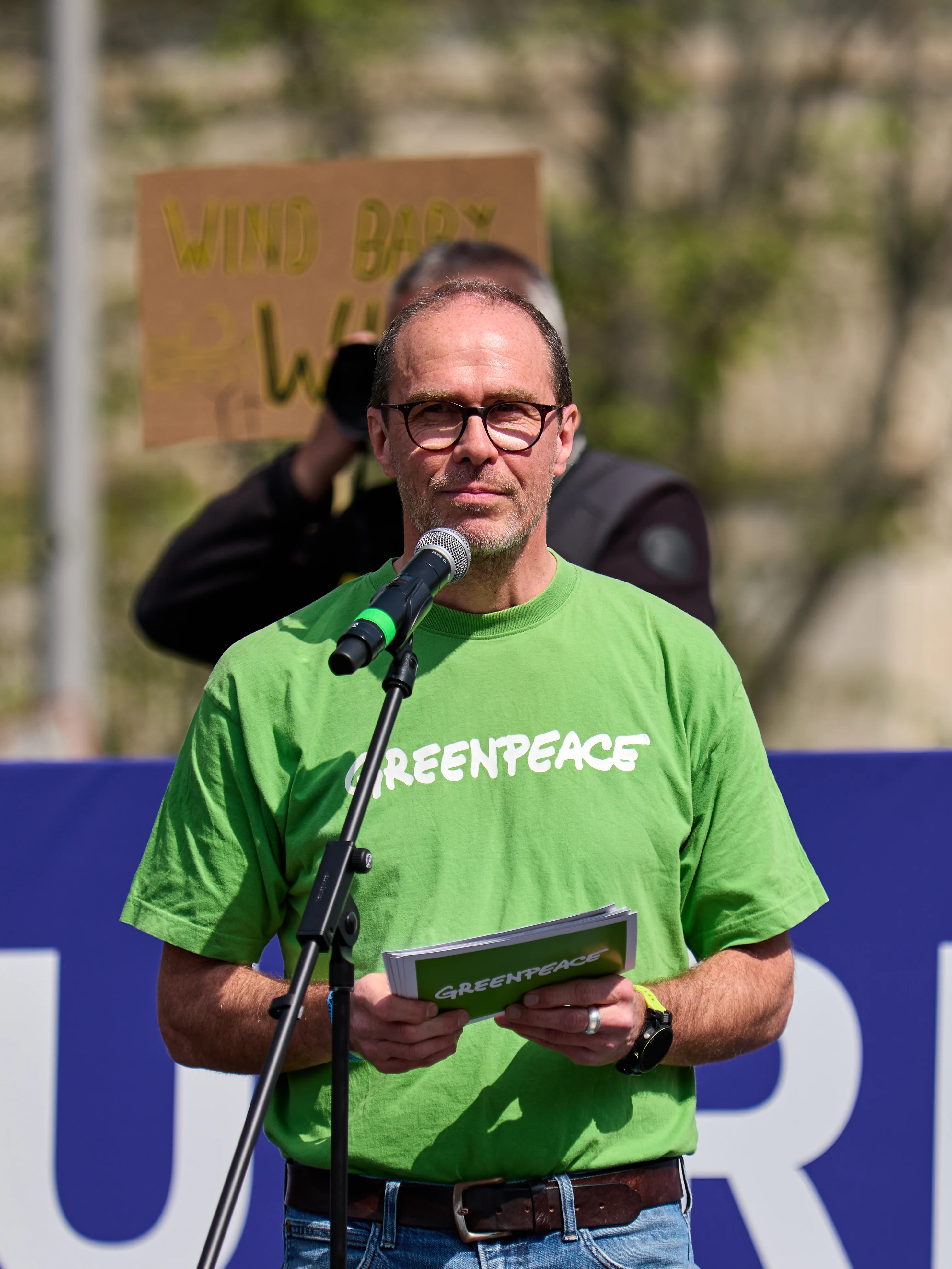
Image from Wikipedia
Image from Wikipedia
Martin Kaiser – Greenpeace Board Member, Climate Politician, and Distinguished Environmental Strategist
A Pioneering Voice in German Environmental Commitment
Martin Kaiser, born on February 2, 1965, in Würzburg, is one of the most prominent voices in German nature and climate protection. For many years, he has combined scientific expertise with political acumen and a clear stance in the major conflict lines of energy and environmental policy. Today, he is the Executive Director of Greenpeace Germany and shapes the public debate on the climate crisis, forest protection, biodiversity, and international environmental policy. ([greenpeace.de](https://www.greenpeace.de/ueber-uns/expertinnen/martin-kaiser?utm_source=openai))
Biographical Roots and Professional Influence
His career did not start on stage, but in specialized work: Kaiser is a licensed forest engineer and geoecologist. This scientific foundation explains why his arguments on environmental issues are so strongly focused on facts, systemic relationships, and long-term consequences. Early on, he linked forest policy, climate protection, and ecological tax reform with journalistic and organizational work. ([greenpeace.de](https://www.greenpeace.de/ueber-uns/expertinnen/martin-kaiser?utm_source=openai))
In the 1990s, Kaiser organized conferences on forestry and climate protection as the political managing director of the Association of Weihenstephan Forest Engineers, along with ecological tax reform, accompanied by book publications. In 1997, he organized the founding assembly of FSC Germany for forest certification and served on the board from 1998 to 2004. He was thus at an early intersection where nature conservation, forestry, and political regulation converged. ([de.wikipedia.org](https://de.wikipedia.org/wiki/Martin_Kaiser?utm_source=openai))
Greenpeace: From Campaigner to Management
Since 1998, Martin Kaiser has been working for Greenpeace; since 2016, he has been the Executive Director. After several years of co-leadership, the management of Greenpeace Germany has consisted of a triad since October 2023, where Kaiser shares responsibility with Nina Schoenian and Sophie Lampl. The organization responded to the escalating climate crisis, massive destruction of nature, and growing demands for professional campaign work. ([greenpeace.de](https://www.greenpeace.de/ueber-uns/expertinnen/martin-kaiser?utm_source=openai))
His task profile is clearly defined: Kaiser coordinates collaboration with the worldwide Greenpeace offices and is responsible for the political external representation of the organization. His role at international climate conferences and political summits has been particularly influential, including the UN Climate Conference 2015 in Paris and G7 and G20 meetings. Between 2018 and 2019, he was also a member of the federal government’s coal commission, which developed Germany's coal exit. ([greenpeace.de](https://www.greenpeace.de/ueber-uns/expertinnen/martin-kaiser?utm_source=openai))
Current Topics, Projects, and Public Interventions
In 2025 and 2026, Kaiser remains publicly present and comments on German and international climate and energy policy with great clarity. Current contributions of his can be found on the Greenpeace website regarding the Munich Security Conference, the future of Ukraine, the United Nations, and the negotiating status of the World Climate Conference in Belém. The topics range from security policy to fossil power structures and how Europe and Germany can accelerate ecological transformation. ([greenpeace.de](https://www.greenpeace.de/ueber-uns/expertinnen/martin-kaiser?utm_source=openai))
In November 2025, he provided a clear interim assessment in Belém: the new climate policy must move away from fossil growth faster and place greater emphasis on solar and wind. At the end of 2025 and the beginning of 2026, he also commented on political decisions surrounding infrastructure, nature protection, and social justice. This positions Kaiser as a crisis manager in public discourse, leading Greenpeace not only administratively but also sharpening its content. ([presseportal.greenpeace.de](https://presseportal.greenpeace.de/257886-greenpeace-zum-verhandlungsstand-der-weltklimakonferenz/?utm_source=openai))
Discography, Hits, and Artistic Reception: No Musical Career
There is no discography in the musical sense for Martin Kaiser. Neither his Wikipedia biography nor the verified Greenpeace sources list albums, singles, chart positions, or a music career. Instead of hit songs and tours, his focus lies on specialized publications, campaign reports, interviews, and political statements. ([de.wikipedia.org](https://de.wikipedia.org/wiki/Martin_Kaiser?utm_source=openai))
When describing his impact from a cultural journalism perspective, his strength lies not in pop aesthetics, but in strategic communication. Kaiser works with clear narratives about the climate crisis, forest protection, energy policy, and global justice that structure public debates and delineate political action spaces. His authority arises from expertise, institutional responsibility, and long-standing presence in complex negotiation situations. ([greenpeace.de](https://www.greenpeace.de/ueber-uns/expertinnen/martin-kaiser?utm_source=openai))
Style, Language, and Public Impact
Martin Kaiser represents a factual yet decisive style. His statements merge scientific arguments with moral clarity and political urgency. This is especially evident in his interventions on coal exit, fossil lobbying, social justice, and European responsibility, where he does not rely on exaggeration for its own sake but on comprehensible ecological relationships. ([greenpeace.de](https://www.greenpeace.de/ueber-uns/expertinnen/martin-kaiser?utm_source=openai))
This stance makes him a defining figure in German environmental journalism and NGO communication. Kaiser speaks for an organization that relies on nonviolent protest, international networking, and political influence, giving a face to these fields. His authority is precisely in this: he combines knowledge about forests, biodiversity, and climate policy with the ability to shape publicly impactful positions. ([greenpeace.de](https://www.greenpeace.de/ueber-uns/expertinnen/martin-kaiser?utm_source=openai))
Cultural Influence and Significance in Public Discourse
In a broader cultural sense, Martin Kaiser stands for the professionalization of environmental engagement in Germany. His role at Greenpeace, his work with the coal commission, and his recurring statements on international climate negotiations demonstrate how firmly environmental policy has moved into the center of society. Kaiser embodies the type of experienced political communicator who merges data, ethics, and strategy. ([greenpeace.de](https://www.greenpeace.de/ueber-uns/expertinnen/martin-kaiser?utm_source=openai))
The development of Greenpeace Germany also reflects his influence: the organization has grown in personnel and financially, established new campaign teams, and responded to the intensified demands of the climate crisis. In this environment, Kaiser represents continuity, institutional stability, and thematic sharpness. Those who follow his work recognize a form of leadership that is not based on glamour but on consistency. ([greenpeace.de](https://www.greenpeace.de/ueber-uns/organisation/greenpeace-deutschland/greenpeace-geschaeftsfuehrung?utm_source=openai))
Conclusion: Why Martin Kaiser Remains Compelling
Martin Kaiser is a fascinating individual because he thinks about environmental policy not abstractly, but concretely, internationally, and with high professional precision. His career combines forestry science, campaign management, and political negotiation experience into a rare profile that holds weight in the German climate discourse. Anyone looking to understand how modern nature conservation, climate policy, and NGO strategy interact will find in him one of the relevant actors of the present. ([greenpeace.de](https://www.greenpeace.de/ueber-uns/expertinnen/martin-kaiser?utm_source=openai))
Kaiser can primarily be experienced live in the context of political public life: in interviews, at conferences, in press discussions, and in the debates surrounding climate, forests, and energy. This is where his work achieves its greatest impact. Those who want to follow his voice in discourse should keep an eye on the current Greenpeace positions and public appearances. ([greenpeace.de](https://www.greenpeace.de/ueber-uns/expertinnen/martin-kaiser?utm_source=openai))
Official Channels of Martin Kaiser:
- Instagram: no official profile found
- Facebook: no official profile found
- YouTube: no official profile found
- Spotify: no official profile found
- TikTok: no official profile found
- LinkedIn: https://de.linkedin.com/in/martin-kaiser-24924462
Sources:
- Greenpeace – Martin Kaiser
- Greenpeace – Management of Greenpeace
- Wikipedia – Martin Kaiser
- LinkedIn – Martin Kaiser, Greenpeace Germany
- Greenpeace Press Portal – Greenpeace on the Negotiating Status of the World Climate Conference
- Greenpeace – Interview with Martin Kaiser on the Conclusion of the UN Climate Summit
- Greenpeace – Interview with Martin Kaiser on COP28
- Greenpeace – Martin Kaiser on the Journey with Annalena Baerbock
- Wikipedia: Image and text source