
Marlene Dietrich
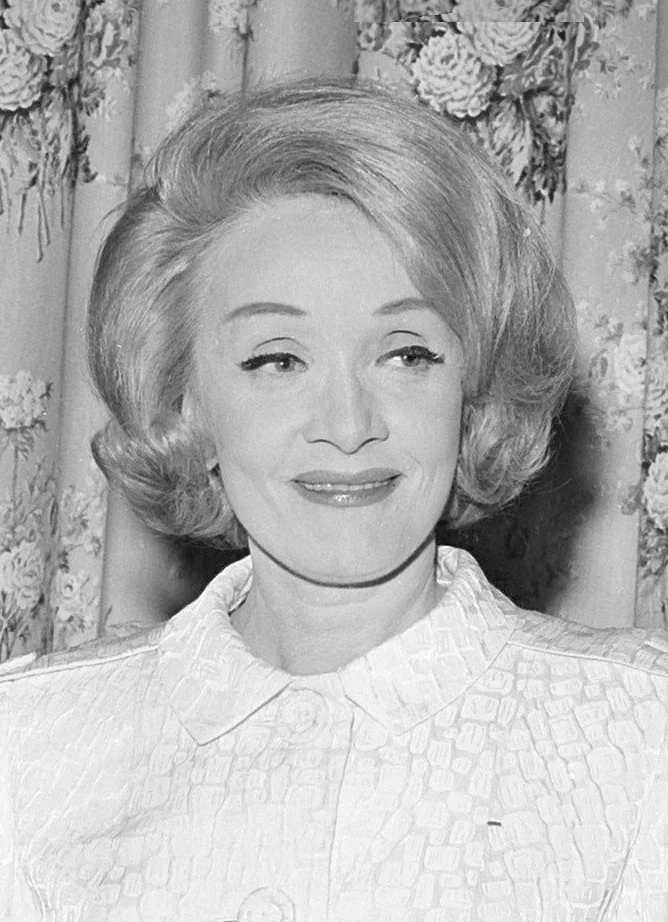
Image from Wikipedia
Image from Wikipedia
Marlene Dietrich – the Elegant Rebel Between Film, Chanson, and World Stage
An Icon Who Shaped the 20th Century
Marlene Dietrich is one of the few German-speaking artists whose name has become a worldwide myth. As an actress and singer, she fused glamour, poise, and a distinctive style into a stage persona that transcended her time. Her smoky, dark voice, the masculine elegance of her suits, and her confident presence made her one of the most formative figures in film and music history. ([britannica.com](https://www.britannica.com/biography/Marlene-Dietrich?utm_source=openai))
Early Years Between Berlin, Theatre, and Silent Film
Marlene Dietrich was born on December 27, 1901, in Schöneberg near Berlin. Her artistic journey began in the theatre world of the Weimar Republic, where she first made a name for herself in variety, stage, and film productions. This early phase shaped her approach to the stage: controlled, precise, often cool at first glance, but with great inner tension. The cultural milieu of Berlin in the 1920s provided her with the aesthetics from which her international aura later emerged. ([britannica.com](https://www.britannica.com/biography/Marlene-Dietrich?utm_source=openai))
Even in these years, Dietrich's special ability to transform was evident. She was not an artist who merely fit into a role; she shaped every role into a reflection of herself. This discipline, combined with a striking visual language, became a cornerstone of her career and explains why she was perceived not just as a performer, but as an icon. Her artistic development spanned from acting to singing and a strong visual signature from the very beginning. ([pbs.org](https://www.pbs.org/wnet/cinemasexiles/biographies/the-actors/biography-marlene-dietrich/104/?utm_source=openai))
The Breakthrough with The Blue Angel
The international breakthrough came in 1930 with her role as Lola-Lola in The Blue Angel directed by Josef von Sternberg. The film made Dietrich a star overnight and established the figure of the seductive, self-assured, yet vulnerable woman as her artistic trademark. With this role began one of the most legendary collaborations of early sound film, which permanently associated her name with Hollywood. ([britannica.com](https://www.britannica.com/biography/Marlene-Dietrich?utm_source=openai))
Von Sternberg took Dietrich to Hollywood, where she was signed by Paramount and appeared in a series of style-defining films. These include Morocco (1930), Shanghai Express (1932), and The Scarlet Empress (1934). These films shaped her image as a cool, modern, cosmopolitan woman, whose elegance was never merely decorative but always conveyed an attitude. For Morocco, she received an Oscar nomination for Best Actress, further solidifying her status as an international screen figure. ([britannica.com](https://www.britannica.com/biography/Marlene-Dietrich?utm_source=openai))
Hollywood, Style, and the Invention of Her Own Legend
Dietrich's years in Hollywood represent a rare combination of image control and acting precision. She mastered the art of arrangement not only in a cinematic sense but also as part of her public persona: lighting, wardrobe, posture, and voice formed a tightly composed overall appearance. It was precisely this controlled art figure that made her the protagonist of a new understanding of stardom, uniquely combining eroticism, distance, and self-presentation. ([britannica.com](https://www.britannica.com/biography/Marlene-Dietrich?utm_source=openai))
Her contribution to fashion was particularly impactful. Her suits were considered provocative in the 1930s and later became a symbol of female sovereignty. Dietrich thus transcended the boundaries of film and music, becoming a cultural reference for emancipation, androgyny, and modern elegance. Her style influenced generations of female artists, designers, and performers. ([britannica.com](https://www.britannica.com/biography/Marlene-Dietrich?utm_source=openai))
Stance in War: Exile, Resistance, and Political Consequence
During the National Socialist era, Dietrich refused to support the regime and took American citizenship in 1939. Instead of allowing herself to be co-opted for propaganda, she stood with the Allies and performed for US troops during World War II. More than 500 performances for soldiers made her an artist who intertwined entertainment with moral stance. For this commitment, she received the Freedom Medal from President Harry S. Truman in 1947. ([britannica.com](https://www.britannica.com/summary/Marlene-Dietrich?utm_source=openai))
This historical dimension is central to understanding her significance. Dietrich embodied not only glamour but also resistance and loyalty to democratic values. Her life story thus tells a political tale: that of a German artist who stood against co-opting and campaigned internationally for freedom, dignity, and self-determination. ([britannica.com](https://www.britannica.com/summary/Marlene-Dietrich?utm_source=openai))
The Singer: Chanson, Cabaret, and Stage Magnetism
From the 1950s onwards, Marlene Dietrich mainly took to the stage as a singer. Her concerts and club performances made it clear that her art did not end on the film set but gained a new intensity in immediate encounters with the audience. Her voice was not a classical beautiful voice, but an instrument with character, friction, and emotion, making the lyrics resonate like personal confessions. ([britannica.com](https://www.britannica.com/summary/Marlene-Dietrich?utm_source=openai))
Among her most famous songs are Ich bin von Kopf bis Fuß auf Liebe eingestellt, Lili Marleen, Ich hab noch einen Koffer in Berlin, and Sag mir, wo die Blumen sind. These songs became signatures of her career and showcase the range of her repertoire between Berlin cabaret, wartime ballads, and international chanson. Especially Lili Marleen gained immense popularity during the war and became a song with almost mythical resonance. ([en.wikipedia.org](https://en.wikipedia.org/wiki/Marlene_Dietrich_discography?utm_source=openai))
Discography and Artistic Reception
Dietrich's discography includes recordings from more than six decades, from the late 1920s until 1988. Her recordings have been repeatedly compiled in compilations and re-releases, highlighting the lasting relevance of her musical legacy. Particularly her early German-language titles and her later stage recordings show an artist who shaped language, phrasing, and atmosphere with great precision. ([en.wikipedia.org](https://en.wikipedia.org/wiki/Marlene_Dietrich_discography?utm_source=openai))
Music critics and cultural-historical classifications regularly emphasize Dietrich's special impact as a performer. She was perceived not just as a singer, but as a totality in which singing, gesture, and imagery formed an inseparable unity. Her reception ranges from film criticism and pop culture to cultural-historical analyses that describe her as a key figure in modern star presentation. ([nmz.de](https://www.nmz.de/kritik/rezensionen/noten/schwarzmarkt-der-illusionen?utm_source=openai))
Late Film Roles, Withdrawal, and Lasting Legacy
Even in later decades, Dietrich remained present, as seen in Witness for the Prosecution (1957) and Judgment at Nuremberg (1961). These roles demonstrated that her acting skills reached far beyond the myth of her early years. She proved once again discipline, authority, and a strong screen presence that worked without grand gestures. ([britannica.com](https://www.britannica.com/summary/Marlene-Dietrich?utm_source=openai))
In the late 1970s, she withdrew from show business and lived reclusively in Paris, where she died on May 6, 1992. Yet her influence remained alive: in fashion, film, chanson, and pop culture. The fact that the American Film Institute named her one of the greatest female screen legends in 1999 affirms her lasting rank in cultural history. ([afi.com](https://www.afi.com/afis-100-years-100-stars/?utm_source=openai))
Conclusion: Why Marlene Dietrich Continues to Fascinate
Marlene Dietrich remains compelling because she never understood beauty merely as a surface, but as an expression of attitude, intelligence, and artistic control. She was an actress, singer, style icon, and political personality all at once. Those who discover her work encounter an artist who not only accompanied the 20th century but visibly shaped it. Her life and performances reveal how powerful personality can become on stage and in front of the camera. ([britannica.com](https://www.britannica.com/biography/Marlene-Dietrich?utm_source=openai))
This is precisely why it is worth experiencing her films, recordings, and live moments anew time and again. Marlene Dietrich represents a rare combination of elegance, resilience, and musical aura that continues to resonate. Those who engage with her will discover a legend that does not age, but rather shines anew with each generation. ([pbs.org](https://www.pbs.org/wnet/cinemasexiles/biographies/the-actors/biography-marlene-dietrich/104/?utm_source=openai))
Official Channels of Marlene Dietrich:
- Instagram: no official profile found
- Facebook: no official profile found
- YouTube: no official profile found
- Spotify: no official profile found
- TikTok: no official profile found