
Marc Bauder
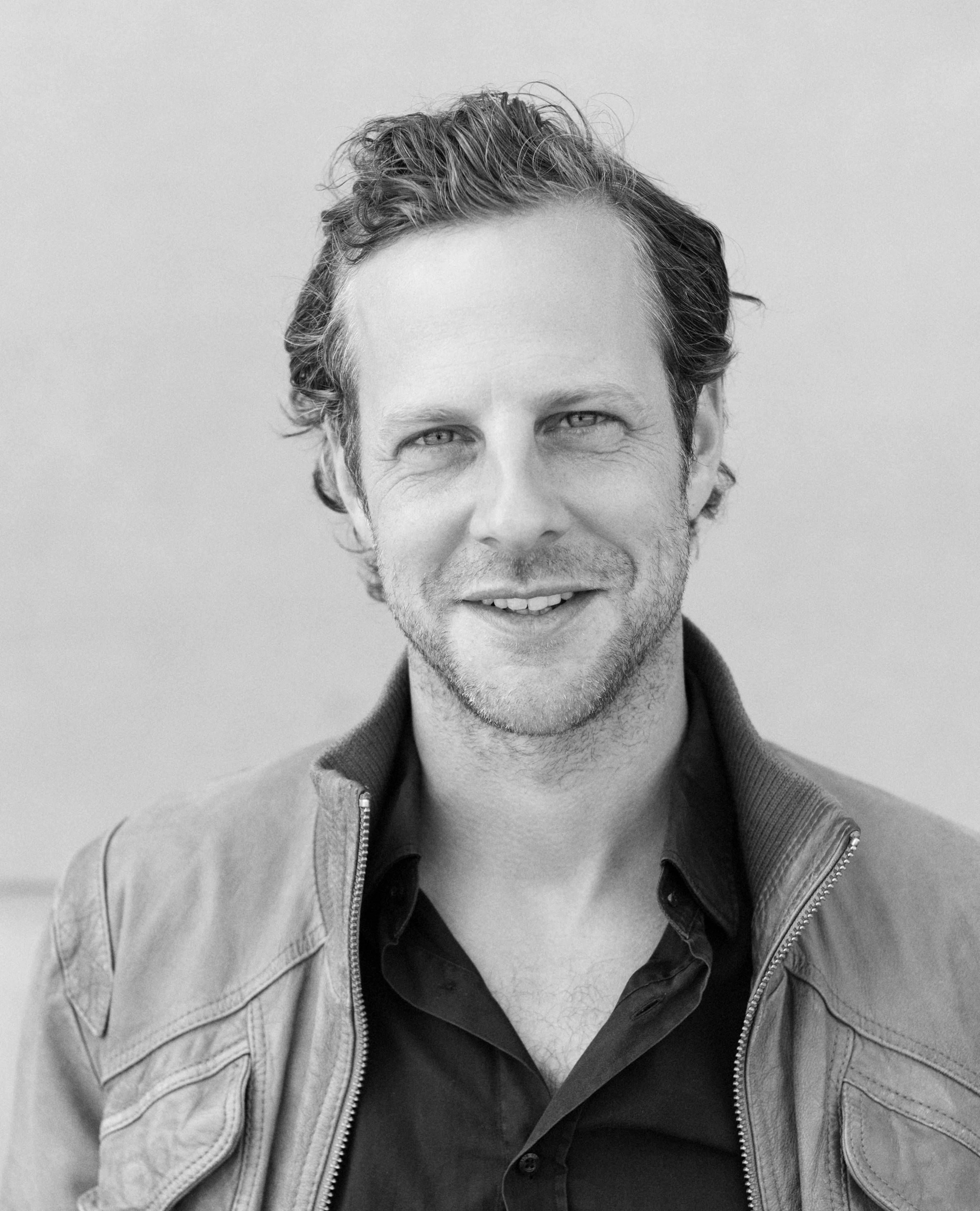
Image from Wikipedia
Image from Wikipedia
Marc Bauder: The German Director Who Dissects Economy, Society, and Visions of the Future with Cinematic Precision
A Filmmaker Between Analysis, Atmosphere, and Societal Perspective
Marc Bauder, born on December 21, 1974, in Stuttgart, is one of those German directors and producers whose work consistently grapples with the big questions of our time. His films navigate between documentary and feature film, between detached observation and poetic condensation, and it is precisely from this blend that they draw their strength. Those who engage with Bauder will discover an artist who not only tells stories but also makes structures visible: power, economy, media, work, future, and the fragile order of our life world. ([de.wikipedia.org](https://de.wikipedia.org/wiki/Marc_Bauder?utm_source=openai))
His career is closely tied to the production company bauderfilm, which he co-founded in 1999 with Dörte Franke. He began working as a director even during his studies; later, he dropped out of another program at HFF Konrad Wolf after three semesters to fully dedicate himself to directing. This decision marked a crucial step in an analogous yet cinematic development of a music career: a clear focus, a distinctive tone, and a body of work that continuously intensifies over the years. ([bauderfilm.com](https://www.bauderfilm.com/?utm_source=openai))
Biographical Roots and Academic Influences
Bauder studied business administration in Cologne, St. Gallen, and New York. This academic background is clearly palpable in his later work, as few German directors exhibit such a pronounced interest in economic systems, institutional logics, and societal power relations. His films emerge not from mere distance but from analytical proximity; they perceive complexity as a starting point rather than an obstacle. ([bauderfilm.com](https://www.bauderfilm.com/?utm_source=openai))
From this foundation develops an artistic signature that early on distanced itself from conventional narrative patterns. Bauder thinks in contrasts: glass facades and invisible violence, global systems and individual biographies, documentary observation and dramatic condensation. His work thus stands in a tradition of politically conscious, visually precise German author cinema. ([srf.ch](https://www.srf.ch/kultur/film-serien/film-serien-spannende-entmystifizierung-der-finanzwelt?utm_source=openai))
The Breakthrough: From Early Documentaries to an Award-Winning Signature
Among Bauder's early works are documentaries such as Grow or Go, Jeder schweigt von etwas anderem, and Last to Know. These projects already showcase the thematic field that would shape his work: societal systems, friction points between the individual and structure, as well as the question of how to visually manifest reality in film. The collaboration with Dörte Franke and the founding of bauderfilm established the organizational and creative foundation for this endeavor. ([bauderfilm.com](https://www.bauderfilm.com/grow-or-go?utm_source=openai))
The significant boost in attention came with Master of the Universe in 2013. The documentary about the financial crisis from the viewpoint of banker Rainer Voss received strong international acclaim and is regarded as one of the most notable cinematic examinations of the banking world. Rotten Tomatoes summarizes the reception with consistent praise, while critics have described the film as compelling, unsettling, and analytically sharp. ([de.wikipedia.org](https://de.wikipedia.org/wiki/Master_of_the_Universe?utm_source=openai))
Feature Films and Documentaries: A Body of Work with a Clear Thematic Line
In 2011, Bauder made his feature film debut with Das System. The film addresses East German biographies and economic upheavals through a presentation that focuses on tension, social specificity, and psychological depth. The production side of bauderfilm describes the work as an award-winning debut and references the festivals where the film was shown. This also established Bauder as a director with a clear stance and controlled visual language in the feature film domain. ([bauderfilm.com](https://www.bauderfilm.com/the-system?utm_source=openai))
In 2017, he continued this line with Dead Man Working. The film is seen as further proof that Bauder does not depict societal systems decoratively but confrontationally. A contemporary review highlights that hardly anyone stages the implosion of closed financial systems as impressively as he does, and the Grimme Prize underscored the film's significance within the German-speaking television and cultural context. ([bauderfilm.de](https://www.bauderfilm.de/dead-man-working/?utm_source=openai))
Current Projects and Recent Presence
Among his recent publicly documented works is Wer wir waren, which had its world premiere at the Berlinale in 2021 and has been awarded the Hessian Film Prize according to bauderfilm and Wikipedia. The film stems from Roger Willemsen's future text and broadens Bauder's perspective on planetary, historical, and ecological questions. This shifts his focus even more strongly towards contemporary diagnosis and reflections on the future. ([bauderfilm.com](https://www.bauderfilm.com/who-we-were?utm_source=openai))
In the current program context, Marc Bauder will appear as a guest at events in 2026, marking his continued visibility in the cultural discourse. The official bauderfilm site also continues to refer to ongoing developments and a body of work that does not seem complete but rather appears as an open process. This very continuity makes his position in German cinema so relevant: Bauder remains productive, observant, and thematically alert. ([dff.film](https://www.dff.film/wp-content/uploads/2026/04/RZ_DFF_Kinoprogramm_2026-05_WEB.pdf?utm_source=openai))
Style, Staging, and Cultural Influence
Marc Bauder's cinema thrives on precision. His films employ exact observation, clear forms, and a visual language that simultaneously creates distance and intimacy. Whether in the glass office towers of Frankfurt, in socially tense spaces, or in futuristic perspectives on the state of humanity: Bauder always seeks images that do not simplify complexity but concentrate it. ([srf.ch](https://www.srf.ch/kultur/film-serien/film-serien-spannende-entmystifizierung-der-finanzwelt?utm_source=openai))
Particularly notable is his ability to translate documentary reality into dramatic tension. Reviews of Master of the Universe praised the film's radical transparency and its disturbing proximity to a system that operates in secrecy. This blend of analysis and atmosphere also characterizes his feature films, which never remain purely illustrative but always open up a second, societal layer. ([rottentomatoes.com](https://www.rottentomatoes.com/m/master_of_the_universe?utm_source=openai))
Bauder has also left a mark culturally: He represents a German cinema that does not treat economics as a niche topic but as the central drama of our time. His membership in the European and German Film Academies underscores his authority within the industry, while the awards for his films highlight his international relevance. ([bauderfilm.com](https://www.bauderfilm.com/?utm_source=openai))
Filmography in Cinematic Terms: The Key Works of Marc Bauder
Marc Bauder does not have a classical discography; however, his filmography operates similarly to a consistently developed artistic oeuvre. Key works include Grow or Go, Jeder schweigt von etwas anderem, Last to Know, Das System, Master of the Universe, Dead Man Working, and Wer wir waren. These works form a thematically closely related overall picture that ranges from economic analysis to societal friction to existential questions about the future. ([bauderfilm.com](https://www.bauderfilm.com/grow-or-go?utm_source=openai))
In addition, the art installation Lichtgrenze, developed by Marc Bauder together with his brother Christopher for the 25th anniversary of the fall of the Berlin Wall, demonstrates that his work is not confined to cinema but also exerts a strong visual and memory-cultural impact in public space. In this way, Bauder expands his portfolio to include a form of collective memory that bridges art, history, and societal ritual. ([bauderfilm.com](https://www.bauderfilm.com/lichtgrenze?utm_source=openai))
Conclusion: A Director for the Present and Its Fractures
Marc Bauder is compelling because he understands cinema as a tool for insight. His films consider not only characters but systems; not only emotions but their causes. This is precisely where his strength lies as a director, producer, and culturally critical observer: he combines analytical clarity with atmospheric depth, creating works that resonate long after viewing. ([bauderfilm.de](https://www.bauderfilm.de/?utm_source=openai))
Anyone interested in demanding German cinema should definitely keep an eye on Marc Bauder. His works show how vibrant, relevant, and worthy of discussion author cinema can be today. Particularly in live cinema, his films unleash their full force, as they achieve the greatest presence, the most direct tension, and the strongest societal resonance. ([bauderfilm.com](https://www.bauderfilm.com/who-we-were?utm_source=openai))
Official Channels of Marc Bauder:
- Instagram: No official profile found
- Facebook: No official profile found
- YouTube: No official profile found
- Spotify: No official profile found
- TikTok: No official profile found
Sources:
- bauderfilm.com – Official Website
- bauderfilm.de – Official Website
- Wikipedia – Marc Bauder
- bauderfilm.de – About Us / Team
- bauderfilm.de – Das System
- bauderfilm.com – Who We Were
- bauderfilm.de – Dead Man Working
- bauderfilm.de – Lichtgrenze
- Rotten Tomatoes – Master of the Universe
- critic.de – Master of the Universe, Review
- SRF Kultur – Exciting Demystification of the Financial World
- derStandard – Posthumanist Cinema: Marc Bauder's Who We Were
- WELT – Dead Man Working on ARD
- Wikipedia: Image and Text Source