
Lyonel Feininger
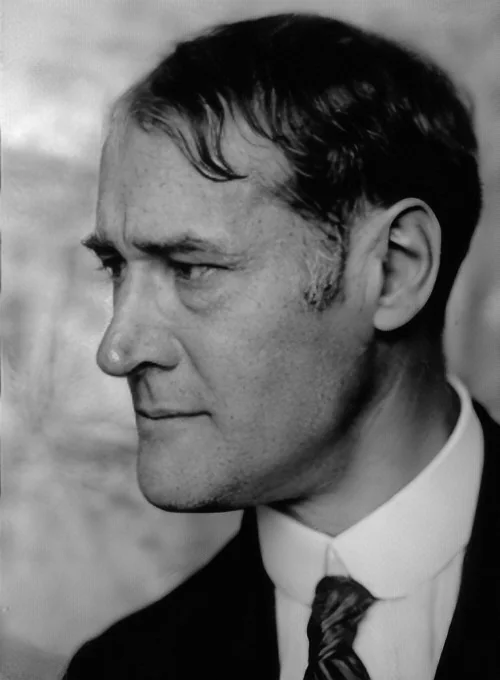
Image from Wikipedia
Image from Wikipedia
Lyonel Feininger: The Architect of Light and the Crystalline Modern
An Artist Between Cartoon, Bauhaus, and Great Form
Lyonel Feininger (1871–1956) is one of the defining figures of Classical Modernism, merging in his work American origins, German art history, and the radical visual language of the avant-garde. Born in New York as the son of German descent musicians, he only turned to painting after a long phase as a cartoonist and illustrator, developing a distinctive and rigorously composed pictorial world. His career did not follow a straight path but resembled an artistic self-inquiry marked by high discipline, leading him from a commercial illustrator to a Bauhaus master and internationally recognized modernist. ([museum-feininger.de](https://www.museum-feininger.de/en/museum/lyonel-feininger/?utm_source=openai))
The Early Years: From Illustrator to Independent Image Author
Feininger's journey into art did not begin in the painting studio, but rather in graphic and illustrative work. The Museum Lyonel Feininger documents his training in Hamburg, Berlin, and Paris and his early activities as a freelance illustrator and cartoonist for newspapers and magazines. It was precisely this phase that shaped his perspective on contour, rhythm, and density: from the quick punchline of the cartoon, he developed a visual language that later translated into clear surfaces, sharp lines, and architectural order in his paintings. ([museum-feininger.de](https://www.museum-feininger.de/en/museum/lyonel-feininger/?utm_source=openai))
Importantly, Feininger never saw the transitions between popular culture and high art as a break. His early comic works and illustrations are not peripheral to his oeuvre but rather represent the laboratory of his artistic development. The SCHIRN highlights that his visual world is characterized by crystalline structures, prism-like forms, clear lines, and simultaneously grotesque figures; it is precisely this tension that makes his work so present today. ([feininger.schirn.de](https://feininger.schirn.de/en/?utm_source=openai))
The Breakthrough as a Painter and the Language of Abstraction
Although Feininger came to painting relatively late, his development progressed remarkably quickly. Sources identify his true breakthrough around 1907 to 1913, when he broke away from cartooning and developed an unmistakably recognizable formal language. His images abstract objects and landscapes without completely abandoning them; this creates a pictorial logic between visibility and construction that renders him so significant for modernity. ([museum-feininger.de](https://www.museum-feininger.de/museum-ausstellungen/becoming-feininger/?utm_source=openai))
Feininger became a member of the Berlin Secession in 1909 and soon found himself within expressionist and avant-garde circles. His artistic significance intensified with his participation in the legendary exhibition and program history of modernity, including connections to Herwarth Walden's gallery Der Sturm and the circle of Der Blaue Reiter. The museums in Quedlinburg and the SCHIRN describe him as an artist who rose to become one of the most important representatives of modernism within a few years. ([museum-feininger.de](https://www.museum-feininger.de/museum-ausstellungen/becoming-feininger/?utm_source=openai))
Bauhaus: Form, Teaching, and the Focus on Structure
From 1919, Feininger became a key figure at the Bauhaus. The official Bauhaus site notes that his woodcut work of a cathedral adorned the cover of the founding manifesto; thus, his visual thinking acquired a programmatic function in the school's history. Feininger embodied at the Bauhaus the combination of craftsmanship, construction, and intellectual precision that shaped the institutional self-understanding of the movement. ([bauhaus.de](https://www.bauhaus.de/en/discover/article/the-bauhaus-idea-and-programme/?utm_source=openai))
The Museum Lyonel Feininger and the Bauhaus Archive emphasize his role as a master of form theory and as a teacher who imparted not just tools but a thinking in structure, surfaces, and reduction. His graphic cycles and woodcuts particularly showcase the intensity of this approach: the world is not depicted but translated into concise order. This combination of didactic clarity and poetic rigor makes his Bauhaus phase a highlight of his artistic biography. ([museum-feininger.de](https://www.museum-feininger.de/museum-ausstellungen/becoming-feininger/?utm_source=openai))
Motifs, Places, and the Great Landscape of Memory
Feininger's most famous pictorial themes revolve around churches, village centers, coastlines, ships, and cityscapes. His works exploring the sites of the Weimar region, including Gelmeroda, Niedergrunstedt, Possendorf, or Oberweimar, showcase how consistently he varied and numbered individual motifs. The motifs do not return merely as repetitions but as analytical approaches to form, light, and perspective. ([de.wikipedia.org](https://de.wikipedia.org/wiki/Lyonel_Feininger?utm_source=openai))
His drawings and images of small-town idylls in Ribnitz and Damgarten are also among the works that made him famous. The SCHIRN further describes the transition from observing nature through the mobility of modern vision to exile; it shows how much Feininger understood space not as static but as a tension between movement, memory, and construction. His view of landscape is therefore never merely pastoral but is always imbued with internal order and formal concentration. ([de.wikipedia.org](https://de.wikipedia.org/wiki/Lyonel_Feininger?utm_source=openai))
Late Works, Exile, and Lasting Relevance
The political situation in 1933 forced many Bauhaus artists to reorient; Feininger moved with his family to the USA in 1937. There, he unfolded his late works during a phase marked by reflection, condensation, and renewed engagement with light and space. The Museum Feininger describes his journey after the Nazi seizure of power and his artistic rebirth in America as a decisive rupture in his biography. ([museum-feininger.de](https://www.museum-feininger.de/museum-ausstellungen/becoming-feininger/?utm_source=openai))
The ongoing attention to Feininger is also reflected in current exhibitions and museum projects. For 2023/2024, the SCHIRN presented a major retrospective, while the Museum Lyonel Feininger in 2024 and 2025 will continue to reveal the breadth of his oeuvre with changing presentations, program notes, and special exhibitions. This continuous reception underscores that Feininger is not only historically significant but also serves as a reference point of modernity to this day. ([schirn.de](https://www.schirn.de/en/exhibitions/2023/lyonel_feininger/?utm_source=openai))
Critical Reception and Art Historical Significance
The art historical reception highlights Feininger's formal discipline, strong expression, and lyrical treatment of color and light. Britannica emphasizes that his painting and teaching at the Bauhaus brought a new compositional rigor and a lyrical engagement with color to German Expressionism. The art community thus reads Feininger as a key figure bridging Expressionism, Cubism, graphic art, and abstract modernism. ([britannica.com](https://www.britannica.com/biography/Lyonel-Feininger?utm_source=openai))
Collection and exhibition texts from Quedlinburg, Frankfurt, and other institutions also make it clear that Feininger's works are appreciated today both for their independence and their influence on subsequent generations of artists. His paintings feel both controlled and vibrating, constructed and breathing, strict and sensitive. This very tension explains why Feininger holds such enduring authority in art history. ([museum-feininger.de](https://www.museum-feininger.de/en/museum/?utm_source=openai))
Conclusion: Why Lyonel Feininger Remains Fascinating Today
Lyonel Feininger is intriguing because his work brings together multiple worlds: cartoon and high art, American origin and German modernity, pedagogical rigor and poetic openness. He transformed architecture, landscape, and city into crystalline compositions that act like visual scores. Viewing his images not only involves experiencing art history but also offers a school of seeing that remains modern to this day. ([museum-feininger.de](https://www.museum-feininger.de/en/museum/lyonel-feininger/?utm_source=openai))
Experiencing Feininger live in an exhibition introduces you to an artist whose sense of form, clarity, and internal tension resonate particularly strongly in the original. His works invite viewers to read details, lines, and spatial relationships slowly, allowing them to feel the power of classical modernity directly. A visit to Feininger is therefore always an encounter with the genesis of modern pictorial language. ([museum-feininger.de](https://www.museum-feininger.de/en/museum/exhibitions/shape-color-feininger-an-exhibition-to-participate/?utm_source=openai))
Official Channels of Lyonel Feininger:
- Instagram: No official profile found
- Facebook: No official profile found
- YouTube: No official profile found
- Spotify: No official profile found
- TikTok: No official profile found
Sources:
- Museum Lyonel Feininger - Cultural Foundation of Saxony-Anhalt
- Becoming Feininger - Museum Lyonel Feininger
- Museum Lyonel Feininger - Cultural Foundation of Saxony-Anhalt
- LYONEL FEININGER at the SCHIRN - SCHIRN Kunsthalle Frankfurt
- The Bauhaus: The Idea Behind the School and Its Educational Programme - Bauhaus-Archiv / Museum für Gestaltung
- Graphic Art - Holdings - Bauhaus-Archiv / Museum für Gestaltung
- Britannica - Lyonel Feininger
- Wikipedia: Lyonel Feininger - Image and Text Source