
Hilde Domin
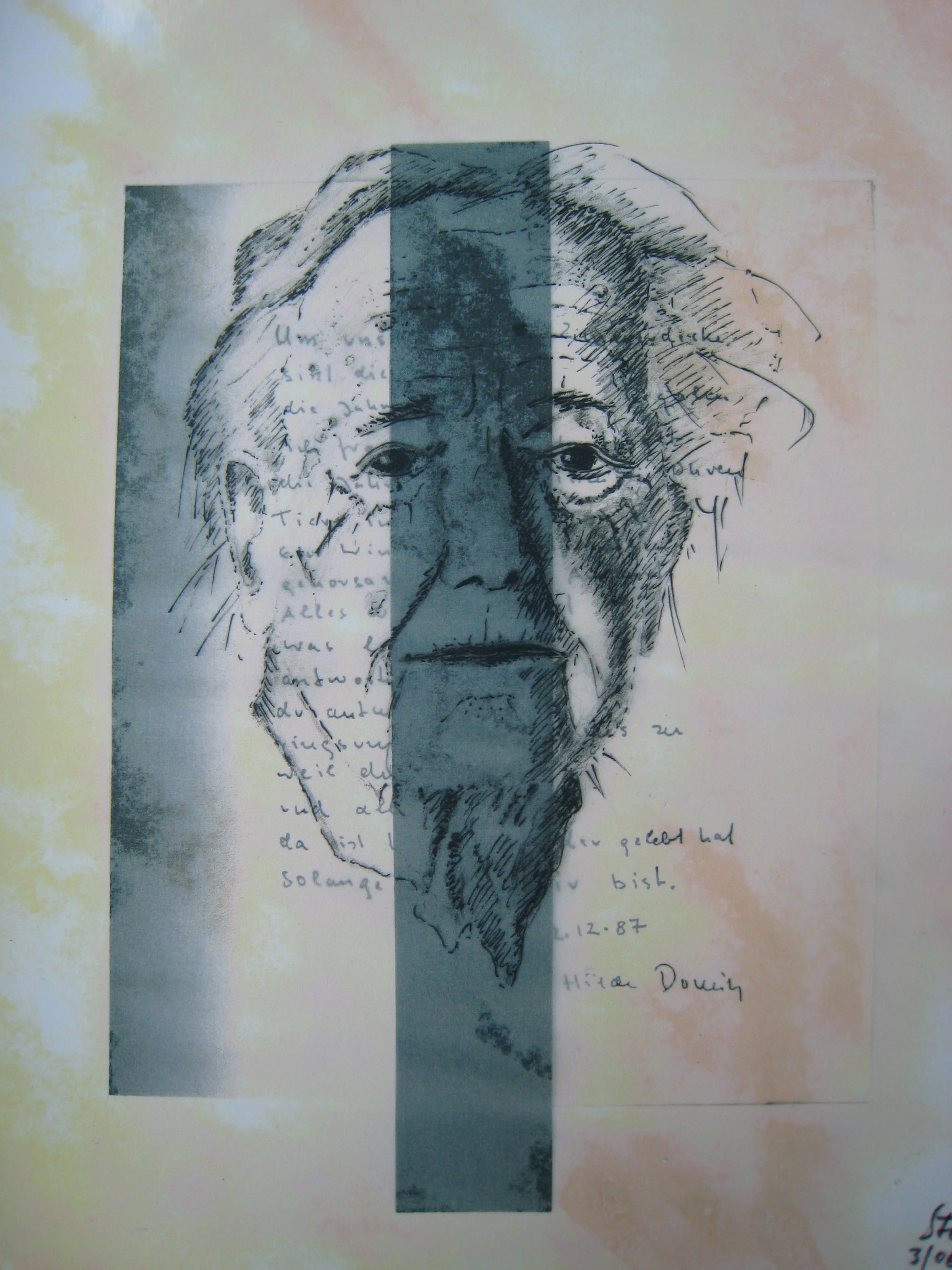
Image from Wikipedia
Image from Wikipedia
Hilde Domin: The Great Voice of Hope, Exile, and Clear Language
A poetess of rare presence, whose work resonates to this day
Hilde Domin, born as Hildegard Dina “Hilde” Palm, née Löwenstein, is considered one of the defining lyrical voices of post-war German literature. Her biography is inextricably linked to displacement, exile, return, and the struggle for language. From this, the poetic energy arose that makes her poems resonate so directly and timelessly even today. ([de.wikipedia.org](https://de.wikipedia.org/wiki/Hilde_Domin?utm_source=openai))
Although she became known primarily as a lyricist, her work possesses a clear musical quality: rhythm, concentration, sound, and breath carry her verses. Hilde Domin wrote against fear and shaped a language of hope from loss. Her literary profile combines intellectual precision with emotional warmth, making her an author who not only informs readers but touches them existentially. ([de.wikipedia.org](https://de.wikipedia.org/wiki/Hilde_Domin?utm_source=openai))
From Cologne to the World: Origins, Education, and Early Influences
Hilde Domin was born on July 27, 1909, in Cologne and grew up in an assimilated Jewish family. She studied law at Heidelberg, Bonn, and Berlin, later turning to national economics, sociology, and philosophy. Early on, she combined academic education with a keen awareness of society, history, and language. ([deutsche-biographie.de](https://www.deutsche-biographie.de/118526634.html?language=de&utm_source=openai))
The takeover of the National Socialists shattered her life path in Germany. In 1932, she left the country with her later husband, Erwin Walter Palm, first going to Rome and later into exile in Great Britain and then to the Dominican Republic in 1941. There, she taught German, worked as a teacher, lecturer, translator, and photographer, and adopted the name "Domin" in memory of her exile country. ([deutsche-biographie.de](https://www.deutsche-biographie.de/downloadPDF?url=sfz109428.pdf&utm_source=openai))
Exile as the Artistic Core: The Path to Poetry
It was only after years of exile that Hilde Domin began writing poetry herself. In 1954, she returned to Germany, published her first texts, and ultimately found her distinctive voice in poetry that is rooted in experience, uprootedness, and hope. In 1959, she published Nur eine Rose als Stütze, her first collection of poems, which established her significance as a central author of the post-war period. ([wwwalt.phil.hhu.de](https://wwwalt.phil.hhu.de/frauenarchiv/fka_neu/gedichte/articles/domin/?utm_source=openai))
Her literary breakthrough was not based on effects but on clarity. Domin consciously distanced herself from hermetic post-war lyricism, opting for comprehensibility, precision, and a language that remains open while working in high density. This balance made her poems accessible to a broad audience without diminishing their literary depth. ([uni-goettingen.de](https://www.uni-goettingen.de/de/711033.html?utm_source=openai))
Important Works and Literary Development
Her significant publications include, in addition to Nur eine Rose als Stütze, Rückkehr der Schiffe (1962), Hier (1964), Höhlenbilder (1968), Von der Natur nicht vorgesehen (1970), and Der Baum blüht trotzdem (1999). Prose texts, autobiographical writings, and poetological reflections are also part of her oeuvre. Her development from exile poetry toward a more socially and existentially reflective poetry is particularly evident in this body of work. ([vfr.mww-forschung.de](https://vfr.mww-forschung.de/web/transatlantischer-bucherverkehr/fallbeispiel-hilde-domin?utm_source=openai))
The early poems revolve around loss, estrangement, and the fragile relationship between language and homeland. In later works, themes of memory, trust, hope, and the responsibility of speaking become more pronounced. Domin did not write ornamentally but existentially: her verses seek stability without covering up the wound that birthed them. ([uni-goettingen.de](https://www.uni-goettingen.de/de/711033.html?utm_source=openai))
Poetics, Tone, and Stylistic Signature
Hilde Domin's poetry is characterized by free rhythms, clear imagery, and high linguistic concentration. Natural images such as trees, landscapes, birds, or water become carriers of experience and inner movement in her work. This imagery is never decorative but always functional: it creates resonance spaces for memory, loss, and courage to live. ([de.wikipedia.org](https://de.wikipedia.org/wiki/Hilde_Domin?utm_source=openai))
Her poetological texts, such as Wozu Lyrik heute and Das Gedicht als Augenblick von Freiheit, also demonstrate her awareness of literature's societal task. Domin understood the poem as a concentrated moment in which language tests freedom. In this attitude lies her unique authority: she is not only a significant poetess but also a precise thinker about the possibilities of poetry. ([snl.no](https://snl.no/Hilde_Domin?utm_source=openai))
Return, Recognition, and Literary Authority
After her return to Germany, Hilde Domin lived permanently in Heidelberg from 1961 onwards, a city that became her spiritual and biographical center. There, her public presence as an author further developed, accompanied by readings, lectures, and increasing recognition. Her works were translated into numerous languages, further underscoring her international impact. ([heidelberg.de](https://www.heidelberg.de/1031854.html?utm_source=openai))
Her accolades include the Meersburg Droste Prize, the Heine Medal, the Roswitha Prize, the Rilke Prize, the Nelly Sachs Prize, the Literature Prize of the Konrad Adenauer Foundation, and honorary citizenship of the city of Heidelberg. These honors mark not only a late fame but the lasting recognition of a body of work that has left a profound imprint on German literature. ([fischerverlage.de](https://www.fischerverlage.de/autor/hilde-domin-1000176?utm_source=openai))
Cultural Influence and Reception
Hilde Domin became an important voice of exile poetry and literary memory culture. Her texts are still read, interpreted, and recontextualized today in educational, university, and literary scholarly contexts. Her poems connect personal experience with historical truth, making them relevant for contemporary debates about migration, belonging, and language. ([de.wikipedia.org](https://de.wikipedia.org/wiki/Hilde_Domin?utm_source=openai))
Critics repeatedly highlight her comprehensibility, clarity, and the special tension between simplicity and depth. This is where her literary greatness lies: Domin writes against silence, without pathos, but with moral and aesthetic authority. Those who read her work encounter a language that does not evade but carries. ([uni-goettingen.de](https://www.uni-goettingen.de/de/711033.html?utm_source=openai))
Current Assessment and Lasting Presence
Hilde Domin passed away in Heidelberg in 2006, but her texts remain present because they respond to fundamental experiences that do not age. Her poems speak of loss and return, vulnerability and trust, of the strength to continue speaking despite everything. Thus, her work possesses a contemporaneity that reaches far beyond its time of origin. ([de.wikipedia.org](https://de.wikipedia.org/wiki/Hilde_Domin?utm_source=openai))
Even in the literary memory of the 21st century, Hilde Domin remains a significant author. The fact that her name continues to live on in research portals, publishing programs, anthologies, and memorial initiatives demonstrates the stability of her canon. Anyone engaged with German-language poetry, exile literature, and poetic clarity cannot overlook her. ([heidelberg.de](https://www.heidelberg.de/1031854.html?utm_source=openai))
Conclusion: Why Hilde Domin Still Fascinates Today
Hilde Domin is intriguing because her life and work form a rare unity. Her biography speaks of loss, flight, and new beginnings; her poems of dignity, hope, and linguistic precision. From this emerges an author whose work is not just read but experienced. Those who open her texts encounter a voice that is quiet, clear, and enduringly strong. ([de.wikipedia.org](https://de.wikipedia.org/wiki/Hilde_Domin?utm_source=openai))
Anyone who loves literature as a living art form should rediscover Hilde Domin in readings, stage programs, or poetic evenings. Her language possesses a rare intensity that unfolds in the moment and resonates long after. This is where her greatness lies: she transforms experience into sound, memory into form, and hope into literature. ([wwwalt.phil.hhu.de](https://wwwalt.phil.hhu.de/frauenarchiv/fka_neu/gedichte/articles/domin/?utm_source=openai))
Official Channels of Hilde Domin:
- Instagram: No official profile found
- Facebook: No official profile found
- YouTube: No official profile found
- Spotify: No official profile found
- TikTok: No official profile found
Sources:
- Wikipedia – Hilde Domin
- Deutsche Biographie – Domin, Hilde
- Deutsche Nationalbibliothek – Catalog Entry for Hilde Domin
- Store norske leksikon – Hilde Domin
- Literaturportal Bayern – Accents / Reception of Hilde Domin
- Heidelberg City Library – Hilde Domin
- S. Fischer Verlag – Hilde Domin
- Goethe Institute – Context Exile and Cultural Memory