
Håkon Kornstad
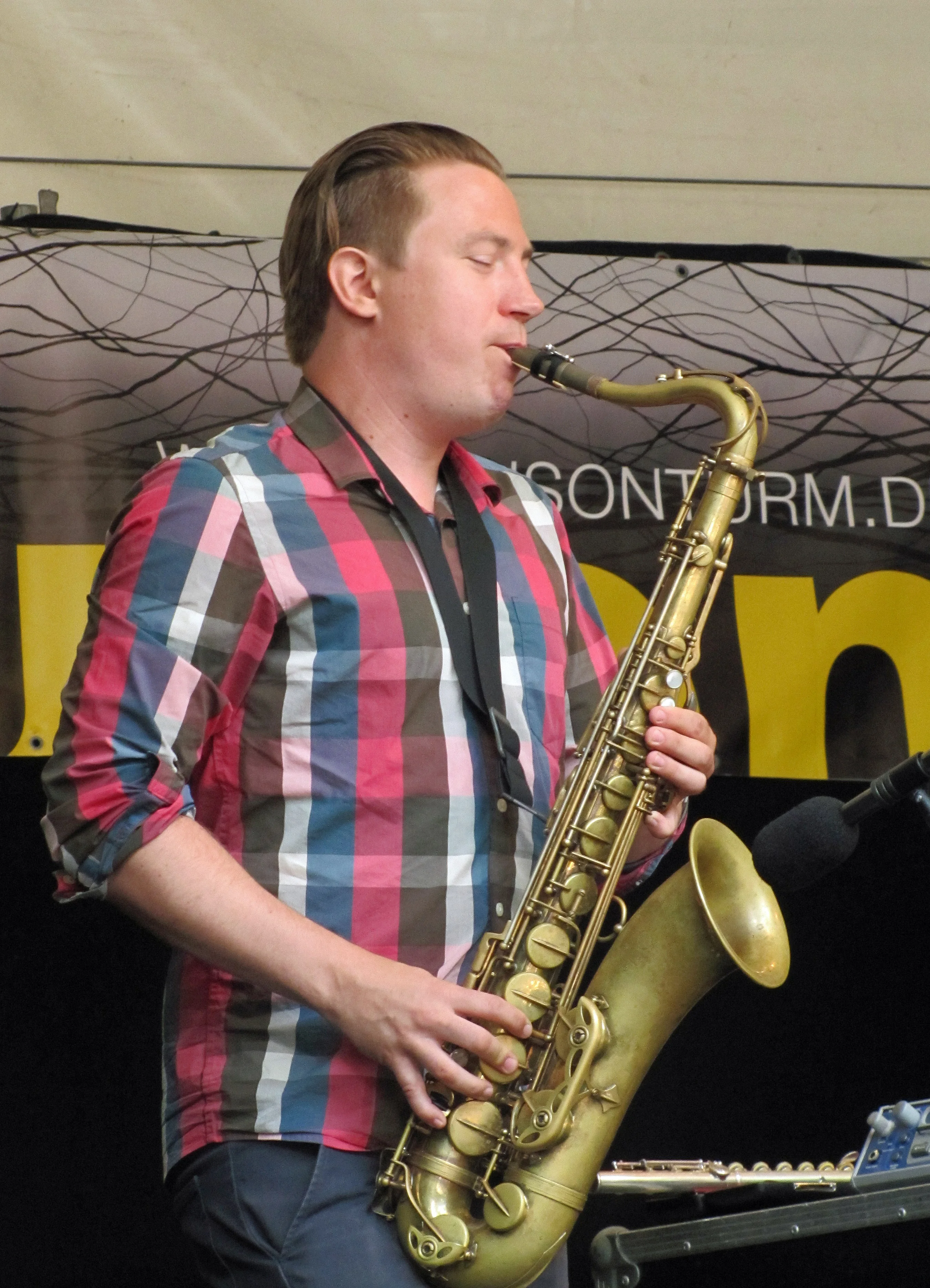
Image from Wikipedia
Image from Wikipedia
Håkon Kornstad – The Norwegian Jazz Saxophonist Who Merges Jazz and Opera into a Unique Sound Language
An Artist Between Improvisation, Opera, and Nordic Melancholy
Håkon Kornstad, born on April 5, 1977, in Oslo, is one of the most unique voices in European jazz. As a Norwegian jazz saxophonist, tenor, and musical boundary-pusher, he has established a music career that transcends traditional genre limits. His work combines the expressive freedom of jazz with the lyrical expansiveness of opera and a deep Nordic sound aesthetic. ([de.wikipedia.org](https://de.wikipedia.org/wiki/H%C3%A5kon_Kornstad?utm_source=openai))
Early Years and Musical Influence
Kornstad began playing the clarinet during his school years before switching to the saxophone and studying at the Jazz Conservatory in Trondheim. There, his interest in collective improvisation, rhythmic textures, and a sound that is not only virtuosic but also narrative developed early on. Even then, he exhibited a musician's understanding of the instrument as a means for atmospheric composition and spontaneous drama rather than mere technicality. ([kornstad.com](https://www.kornstad.com/uploads/2/4/2/1/24210121/kornstad_bio_english.pdf))
The Breakthrough with Wibutee and Early Trio Formations
Kornstad made his first notable strides with Triangle and later with Wibutee, a group that gained significant attention at the Bergen Nattjazz Festival in 1998. Their debut album, Newborn Thing, was released in 1999, followed by further releases positioning Kornstad at the intersection of modern jazz, electronic elements, and open improvisation. In parallel, he developed a distinctive style through Tri-Dim and the Kornstad Trio, which was seen as bold, experimental, and melodic from an early point. ([de.wikipedia.org](https://de.wikipedia.org/wiki/H%C3%A5kon_Kornstad?utm_source=openai))
Jazzland Recordings, Solo Work, and the Search for a Personal Sound
After returning to Oslo, Bugge Wesseltoft signed him to Jazzland Recordings, a crucial step for his further development. In 2007, he released Single Engine, his first fully realized solo album, regarded as a turning point: Kornstad consolidated years of ensemble work, solo experiments, and studio experience into an individual sound world. Critics described him as a musician with a wide range of expression, merging percussive beats, multi-layered sound textures, and lyrical arcs into a distinctive aesthetic. ([kornstad.com](https://www.kornstad.com/uploads/2/4/2/1/24210121/kornstad_bio_english.pdf))
Following this, he released Dwell Time, Symphonies in My Head, Tenor Battle, Out of the Loop, Im Treibhaus, and finally For You Alone, as well as Out of the Loop in 2021 on the official website. This discography illustrates an artist who does not settle for a single style but views his music career as an ongoing expansion of expression. This is particularly evident in his solo works, where Kornstad transforms the saxophone, flute, loop techniques, and vocal lines into poetic soundscapes. ([kornstad.com](https://www.kornstad.com/))
The Radical Step to Opera and the Second Artistic Career
In 2009, while in New York, Kornstad discovered opera and began studying singing. From 2011 to 2014, he completed a bachelor's and master's program at the Opera School in Oslo and subsequently appeared in professional opera productions. Roles such as Werther and Rodolfo mark this rare dual path, where jazz saxophone and opera tenor coexist not as opposites but as mutual enhancers. ([bno.no](https://www.bno.no/eng/people/hakon-kornstad))
It is precisely in this duality that the cultural significance of his work lies: Kornstad does not reject jazz but expands it with the vocal articulation of European art music. In interviews and program notes, it becomes clear that he draws melodic substance, breath control, and formal tension from opera, while jazz provides him the freedom of variation and moment creation. From this interplay emerged a unique concept known as Tenor Battle. ([mondaviarts.org](https://www.mondaviarts.org/news/tenor-who-plays-tenor-returns))
Tenor Battle: Where Saxophone and Voice Challenge Each Other
With Tenor Battle, Kornstad developed an ensemble where he performs simultaneously as a singer and saxophonist. The 2015 album Tenor Battle became the centerpiece of this artistic invention: opera arias, lyrical quotes, and jazz improvisation intertwine without losing their respective origins. The lineup featuring Per Zanussi, Sigbjørn Apeland, Øyvind Skarbø, and Lars Henrik Johansen grounds the project in the Nordic improvisation scene and lends it chamber music transparency. ([mondaviarts.org](https://www.mondaviarts.org/news/tenor-who-plays-tenor-returns))
This approach has been described in reviews as unusual yet convincing: Kornstad uses the classic forms not as museum pieces but as material for a new dramaturgy. His voice acts not as an addition but as a second instrument that mirrors, comments on, and expands the lines of the saxophone. It is precisely from this that the fascination of his stage presence arises: a musician who excels both as a soloist and a storyteller. ([kornstad.com](https://www.kornstad.com/uploads/2/4/2/1/24210121/symphonies_press.pdf))
Current Projects, Concerts, and Artistic Presence
In recent years, Kornstad has remained active and visible. The program for the 2025 Kongsberg Jazz Festival features the project Daydream + Håkon Kornstad: The Music of Duke Ellington, along with a commissioned work in the festival lineup. The MaiJazz archive also lists Håkon Kornstad og Oslo jazzensemble – Mid Atlantic for 2025, confirming his involvement in large-scale and collaborative projects. ([kongsbergjazz.no](https://kongsbergjazz.no/en/events/daydream-hakon-kornstad-the-music-of-duke-ellington/))
In 2026, the Mondavi Center in California announced a return of Kornstad to the USA, with performances in Minneapolis, San Francisco, and Davis. The accompanying text underscores his continued fascination with the intersection of jazz, opera, and Nordic song traditions, as well as his work with extended playing techniques and loop technology. Kornstad remains not only a historical figure in Scandinavian jazz but also an actively working artist with an international reach. ([mondaviarts.org](https://www.mondaviarts.org/news/tenor-who-plays-tenor-returns))
Discography and Reception: Recognized in the Scene, Respected Internationally
The discographic development spans from Wibutee and Tri-Dim to the Kornstad Trio and solo albums under Jazzland Recordings. The official website lists titles such as For You Alone, Out of the Loop, Im Treibhaus, Tenor Battle, Live in Sarajevo, Symphonies in My Head, Dwell Time, and Single Engine; the Bandcamp page further enriches this list with entries like Oslo, Bremen, Waking Arp, and Petrus. This demonstrates a remarkable range between trio work, solo formats, and stylistically open projects. ([kornstad.com](https://www.kornstad.com/))
The critical reception has long described Kornstad as an original, technically proficient, and stylistically autonomous voice. Early writings emphasized his ability to construct soundscapes between percussive energy and melodic detailing; later reports highlight the combination of modern improvisation with operatic material and Nordic song tradition. Awards such as the Buddy Prize 2015 and a Grammy nomination for Dwell Time underscore his authority within the Norwegian jazz landscape. ([kornstad.com](https://www.kornstad.com/uploads/2/4/2/1/24210121/kornstad_bio_english.pdf))
Cultural Influence and Musical Classification
Kornstad exemplifies a generation of Scandinavian musicians who view jazz not as a closed stylistic world but as an open system. His collaborations with Wesseltoft, Endresen, Aarset, Reiersrud, Bjørnstad, and others shape a network in which improvisation, song forms, chamber music, and electronic textures intertwine. Particularly, his transitions between saxophone and operatic singing make him an extraordinary figure that does not replicate but expands jazz history. ([bno.no](https://www.bno.no/eng/people/hakon-kornstad))
His significance also lies in how he conceptualizes the live experience. Kornstad works with long arcs, subtle crescendos, and a stage presence that simultaneously creates intimacy and formal tension. Those who experience him live witness not merely a crossover effect, but a serious artistic evolution where technique, emotion, and musical knowledge interplay at the highest level. ([mondaviarts.org](https://www.mondaviarts.org/news/tenor-who-plays-tenor-returns))
Conclusion: An Artist Who Transforms Boundaries in Music
Håkon Kornstad fascinates because he does not juxtapose two musical worlds; instead, he merges them into a unique language. His journey from Norwegian jazz saxophonist to opera tenor and back is not a subplot, but the core of his art. For this reason, he remains equally intriguing to jazz lovers, opera fans, and cultural audiences alike. Those who see him live encounter not just an excellent musician but an artist who turns each performance into a distinctive event. ([bno.no](https://www.bno.no/eng/people/hakon-kornstad))
Official Channels of Håkon Kornstad:
- Instagram: no official profile found
- Facebook: no official profile found
- YouTube: no official profile found
- Spotify: no official profile found
- TikTok: no official profile found
Sources:
- Håkon Kornstad – Official Website
- Håkon Kornstad Biography – Press PDF
- Bergen National Opera – Håkon Kornstad
- Mondavi Center – The Tenor Who Plays Tenor Returns
- Kongsberg Jazz Festival – Daydream + Håkon Kornstad: The Music of Duke Ellington
- MaiJazz – Archive
- Store norske leksikon – Håkon Kornstad
- Wikipedia: Image and text source