
Bläck Fööss
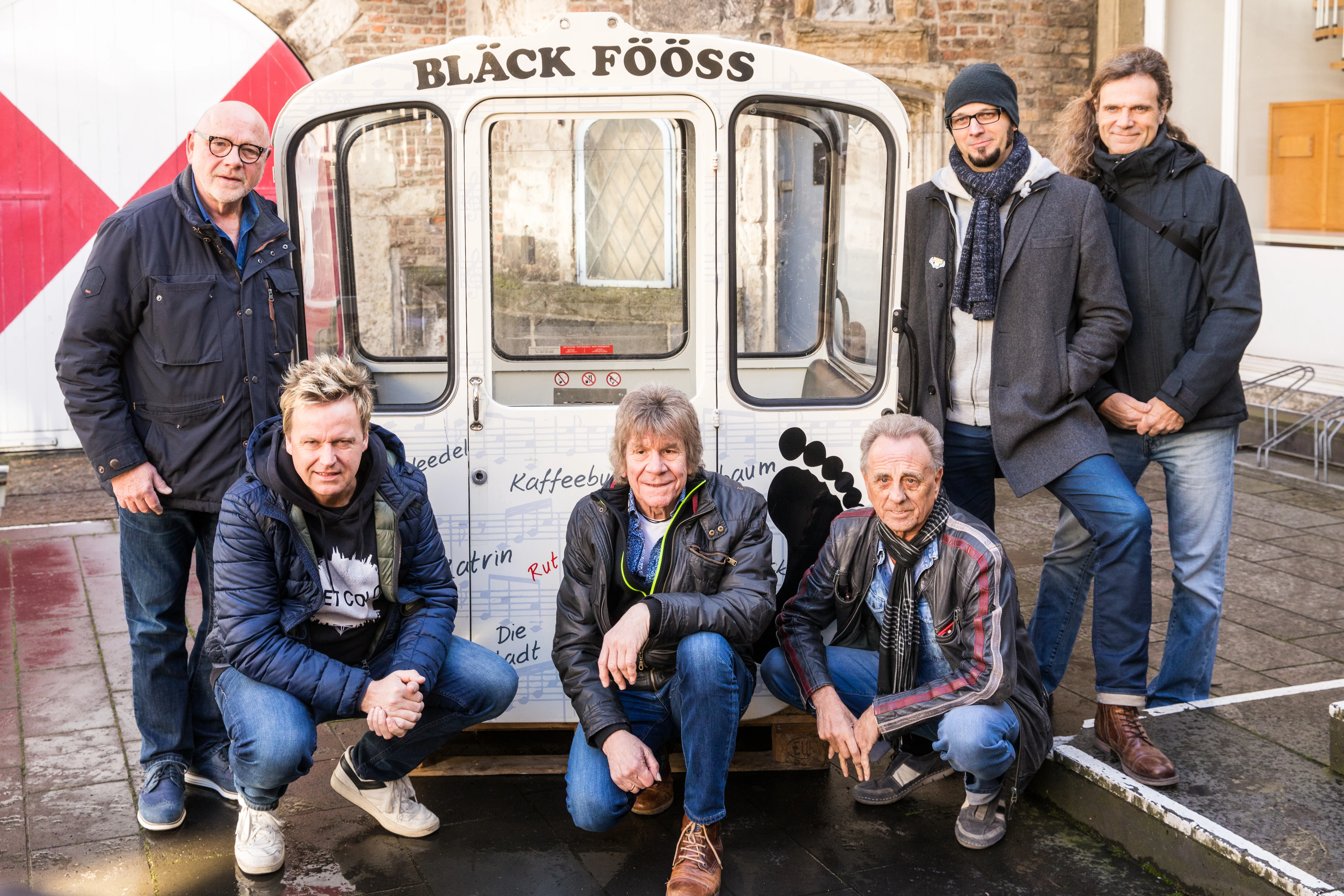
Image from Wikipedia
Image from Wikipedia
Bläck Fööss – the Cologne band that made dialect music history
A Cologne legend between carnival, pop, rock, and Rhineland identity
Since 1970, Bläck Fööss have been one of the most influential music groups in Cologne and are among the longest-lasting and most successful dialect bands in the German-speaking world. The Kölsch expression for "naked feet" became a name that stands for musical independence, humor, relevance to life, and an unmistakable stage presence. Their repertoire goes far beyond classic carnival songs, blending Schlager, pop, jazz, blues, rock, rock’n’roll, disco, funk, reggae, and Krätzchengesang into a unique, culturally rooted language of sound. (de.wikipedia.org)
Biography: From Cologne Beat to a Cologne institution
Before its formation, the future band members played in various Cologne beat groups such as Singing End, The Stowaways, and The Beat Stones. In 1970, the ensemble consciously chose Kölsch lyrics and released their first single "Rievkooche-Walzer / Selverhuhzick" on October 22, 1970. The new name Bläck Fööss combined local identity with a slightly English-sounding profile and marked the beginning of a career that would sustainably change the musical landscape of the Cologne carnival. (de.wikipedia.org)
In the 1970s, the group developed into a musical fixture of the city through catchy melodies, humorous lyrics, and social observations. The connection between dialect, relevance to everyday life, and contemporary sound made the band more than just a typical carnival formation. Bläck Fööss became storytellers of the Kölsch way of life without limiting themselves to folklore. (de.wikipedia.org)
The breakthrough: Songs that shaped Cologne
Among their best-known tracks are "Drink doch eine met" from 1971, as well as "En unserem Veedel" and "Mer losse d’r Dom en Kölle" from 1973. These songs became cultural reference points because they connect the local color of Cologne with remarkable emotional depth. Especially "Drink doch eine met" is regarded as the song with which the band not only broke into the music business but also modernized the carnival stylistically. (de.wikipedia.org)
Looking back, it becomes clear that the success of Bläck Fööss is rooted not only in cheerful party music but also in a precise observation of the social environment. The band wrote about neighborhoods, community, loss, home, and joy of life with a directness that had become rare in the context of carnival. It is from this that their authority arose: from lyrics that entertain while also shaping a collective memory. (de.wikipedia.org)
Musical development: Versatility as a hallmark
The stylistic spectrum of Bläck Fööss is remarkably broad. Throughout their career, the band combined popular forms with jazzy colors, bluesy harmonies, rocky energy, and funky grooves, without losing the Kölsch flair. It was precisely this mixture that gave their work a distinctiveness that few groups in the German-speaking music scene have achieved. (de.wikipedia.org)
The ensemble and arrangement also contributed to the complexity. Guitars, banjo, mandolin, violin, bouzouki, keyboards, accordion, and multi-part vocals created an arrangement that alternates between street music, band sound, and stage revue. Bläck Fööss never remained static: generational changes, new voices, and shifting roles ensured that the band's musical career remained vibrant for decades. (de.wikipedia.org)
Line-up changes and continuity
The band's history is closely tied to its frontmen. Tommy Engel led the group until 1994, followed by "Kafi" Biermann until 2016; since 2017, Mirko Bäumer has been at the center of singing. Further changes affected positions on keyboards and drums; for example, Andreas Wegener and later Alex Vesper joined the formation. Despite these changes, the core idea of the band remained intact: Kölsch music as a vibrant, contemporary form. (de.wikipedia.org)
This continuity despite change is what makes Bläck Fööss particularly appealing. They do not come across as a nostalgic project but as a band that continuously reinterprets its own tradition. The stage remains their natural habitat, and their musical career illustrates how durable a clear artistic identity can be. (de.wikipedia.org)
Discography: A body of work between studio, live energy, and best-of culture
The discography of Bläck Fööss documents an extraordinarily extensive output. The official website lists albums such as "Heimweh nach Köln" (1975), "Bei uns doheim" (1976), "Links eröm – rächs eröm" (1977), "Wenn et jöck" (1981), "Mir klääve am Lääve" (1983), "Schöne Bescherung" (1985), "Nix es ömesöns" (1991), "Rheinhotel" (1994), "Loss mer uns verdrare" (2001), "Freiheit Alaaf" (2016), "Su schön wie augenblecklich" (2018), "5Ö – Das Jubiläumsalbum" (2020), and "50+2 – Wie fröher - nur späder" (2022). This series demonstrates a rare mix of continuity, live culture, and updated dialect aesthetics. (blaeckfoeoess.de)
A critical view of the discography suggests a band that cannot be reduced to a single recipe for success. Best-of releases, live albums, and anniversary projects enhance the studio works and underscore their status as a repertoire band with a substantial cultural memory. It is particularly noticeable that many later compilations continually reframe the most famous songs, documenting their enduring popularity. (blaeckfoeoess.de)
Charts, success, and critical reception
In the German charts, the band made its first entry in 1985 with "Katrin," which reached number 25. The subsequent title "Frankreich, Frankreich" became the band's biggest hit, reaching number 9 and selling 190,000 copies; overall, five of their albums placed in the German top ten. These figures show that the group had an impact not only regionally but also nationally. (de.wikipedia.org)
Music journalists often describe the band as an institution that modernized Kölsch songs and provided the carnival with a pop-cultural foundation. Cologne media emphasizes that Bläck Fööss presented a diversity of rock’n’roll, pop, and gospel that later groups had to measure up to. The official biography on the label context and the high presence in the live realm also attest to this exceptional status. (universal-music.de)
Current projects and live presence
Even in 2026, the band remains active. The official website highlights new singles such as "Sommernaach am Rhing," "Alles hät sing Zick," and "Du kriss Kölle nit us mir"; additionally, the tour section points to numerous current dates in Aachen, Koblenz, Cologne, Euskirchen, Ulmen, Siegburg, Schwelm, and Mönchengladbach. The 50th Tanzbrunnen Open Air was celebrated on August 29, 2026, emphasizing how much Bläck Fööss continues to write their history live. (blaeckfoeoess.de)
Style and cultural influence
The cultural influence of Bläck Fööss goes beyond the repertoire of individual hits. They have established Kölsch as a music language in the pop context, proving that dialect can sound highly modern rather than provincial. Their work combines images of home, societal observation, and collective memory into a distinct form of Rhineland music culture. (de.wikipedia.org)
For Cologne, they are more than just a band: they are part of the city's self-understanding. Their songs accompany community life, carnival, everyday life, and generational change without losing their freshness. Therefore, when one listens to Bläck Fööss, one also hears a piece of city history, wrapped in melodic accessibility and meticulously arranged music. (de.wikipedia.org)
Conclusion: Why Bläck Fööss remain exciting to this day
Bläck Fööss remain exciting because they do not merely manage tradition but musically develop it. Their career demonstrates how a Kölsch dialect idea transformed into a lasting brand with artistic depth, chart successes, and strong stage presence. Anyone who wants to understand how closely music, city, and identity can be connected will find a prime example here. And those seeking live music with collective energy, humor, and heart should definitely experience Bläck Fööss on stage. (de.wikipedia.org)
Voices of the fans
The official social media channels primarily reflect anticipation for new songs, a strong connection to Cologne, and great enthusiasm for the band's live moments. On Instagram, the current work of the formation is visibly accompanied; the resonance aligns with a group that has emotionally reached its audience for decades across generations. (blaeckfoeoess.de)
Official channels of Bläck Fööss:
- Instagram: https://www.instagram.com/foeoessbook/
- Facebook: No official profile found
- YouTube: No official profile found
- Spotify: No official profile found
- TikTok: No official profile found
Sources:
- BLÄCK FÖÖSS – Kölsche Musik seit 1970 - official artist website
- Discography of BLÄCK FÖÖSS - official artist website
- Wikipedia: Bläck Fööss - Image and text source
- Universal Music - Bläck Fööss | Biography
- Kölner Stadt-Anzeiger - The 11 best songs of Bläck Fööss, 2025
- Spotify - Bläck Fööss Top Tracks
- Munzinger - Bläck Fööss Biography
- laut.de - Bläck Fööss
- Wikipedia: Image and text source