
Birgit Weyhe
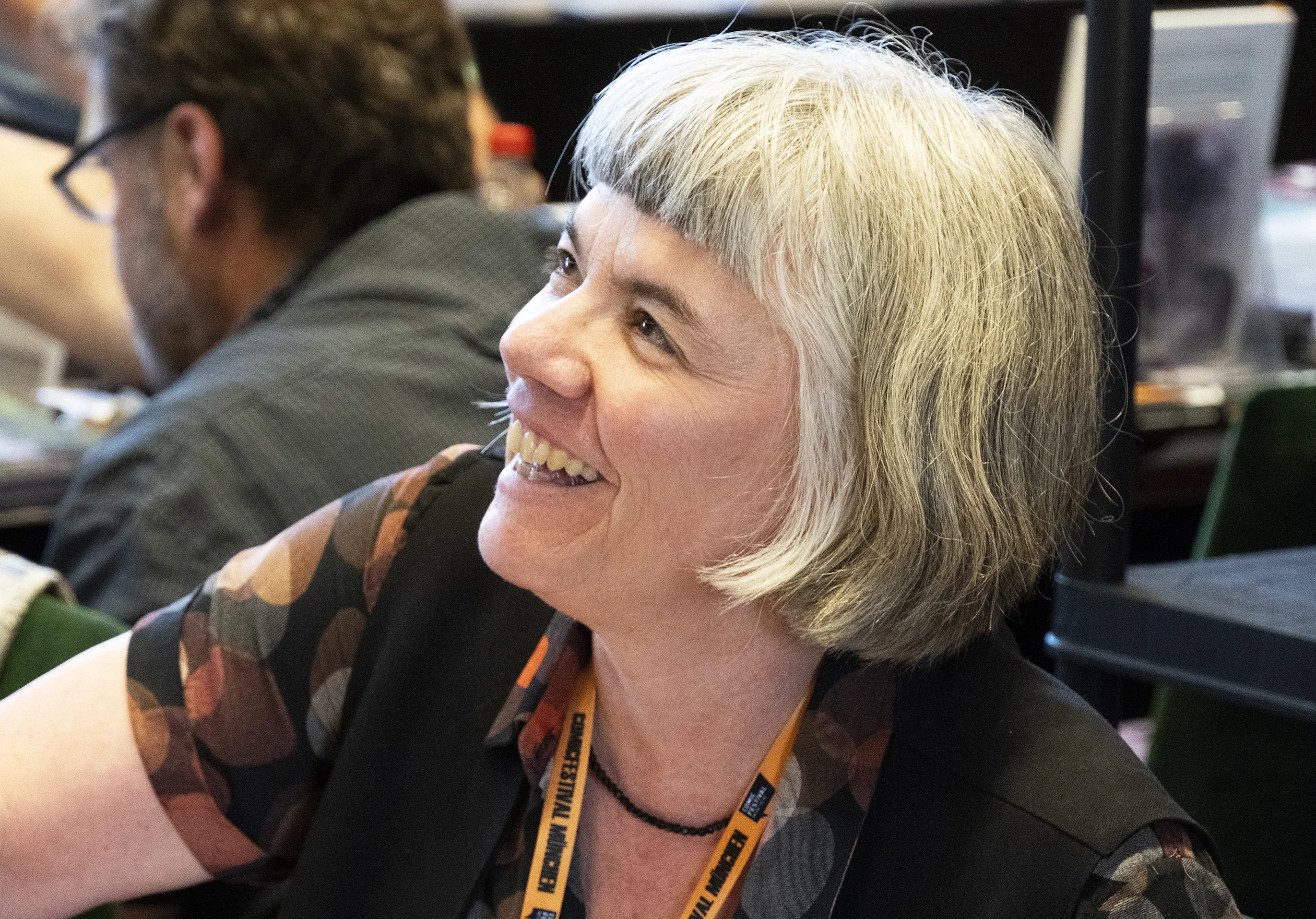
Image from Wikipedia
Image from Wikipedia
Birgit Weyhe: The Great Chronicler of Illustrated Memory
Graphic Novel Art Between Biography, History, and Political Sensitivity
Birgit Weyhe is one of the defining voices in the German-speaking graphic novel scene. Born in 1969 in Munich and raised in East Africa, she combines personal experience, historical research, and a distinctive visual language in her artistic work, creating comics that go far beyond mere entertainment. Her books explore topics of identity, origin, memory, and the fault lines within societies; it is precisely here that her particular radiance lies. ([birgit-weyhe.de](https://birgit-weyhe.de/wp-content/uploads/2021/12/Birgit-Weyhe_about.pdf?utm_source=openai))
Early Influences: Between Munich and East Africa
Weyhe's journey through life has been shaped early on by movement and shifts in perspective. She spent her childhood in East Africa, returned to Germany, and studied literature and history in Konstanz and Hamburg before dedicating herself to illustration at the Hamburg University of Applied Sciences. This academic dual background explains much of her later work: Weyhe thinks historically precise and simultaneously narrates with a keen sense of the emotional density of images. ([birgit-weyhe.de](https://birgit-weyhe.de/wp-content/uploads/2021/12/Birgit-Weyhe_about.pdf?utm_source=openai))
Since completing her diploma, she has been working as a comic artist in Hamburg. Her understanding of the narrative power of comics as not only illustration but as an independent literary form is evident in the consistency of her oeuvre. Her works arise from careful research, conversations, fragments of memory, and a compositional clarity that transforms each page into an independent visual argument. ([birgit-weyhe.de](https://birgit-weyhe.de/wp-content/uploads/2021/12/Birgit-Weyhe_about.pdf?utm_source=openai))
The Breakthrough with Complex Narrative Spaces
Among the early and significant milestones in her career is Reigen, a work in which a golden baptismal chain connects the fates of several individuals across continents and generations. The book already displays those qualities that would later characterize Weyhe's name: an original narrative architecture, precise observation, and the ability to convey historical tensions in an equally elegant and readable form. The response was accordingly strong; critics praised the stylistic sovereignty and original structure of the work. ([birgit-weyhe.de](https://birgit-weyhe.de/reigen/?utm_source=openai))
With Madgermanes, Weyhe reached a new level of public attention. The graphic novel reconstructs the lives of former Mozambican contract workers in the GDR and erects a literary and politically powerful monument to those affected. The work received the Comic Book Award from the Berthold Leibinger Stiftung and the Max und Moritz Prize for Best German-Language Comic. This finally established Weyhe as an author who does not merely illustrate societal memory but actively shapes it. ([birgit-weyhe.de](https://birgit-weyhe.de/madgermanes/?utm_source=openai))
Style and Handwriting: Drawing as a Form of Thought
Birgit Weyhe's style is expressive, clear, and multi-layered. Her works combine text and image in a way that not only illustrates but shifts, condenses, and expands meanings. The Avant-Verlag describes her works as pieces that often incorporate autobiographical elements or African myths and engage with identity, home, and culture. It is precisely within this tension that the energy of her comics lies: they are comprehensible, yet never banal; poetic, yet never distant. ([avant-verlag.de](https://www.avant-verlag.de/artist/birgit-weyhe/?utm_source=openai))
Characteristically, she has the ability to transform complex historical and cultural questions into graphic form. In her books, objects of remembrance, postures, visual perspectives, and ornamental repetitions become foundational elements of the composition. Weyhe employs the medium of comics not as a mere vehicle but as a precise instrument of understanding. This results in sequences of images that are both emotionally accessible and intellectually challenging. ([birgit-weyhe.de](https://birgit-weyhe.de/madgermanes/?utm_source=openai))
Thematic World: Memory, Identity, and Political Responsibility
A common thread throughout Weyhe's work is the engagement with biographies that are overshadowed by history. In Lebenslinien, a series published in Tagesspiegel, she portrays different life paths and shows how personal experiences are intertwined with larger societal upheavals. This work has been described as a plea for an open, unbiased approach to one another, emphasizing Weyhe's interest in people beyond stereotypical thinking. ([birgit-weyhe.de](https://birgit-weyhe.de/lebenslinien/?utm_source=openai))
Rude Girl continues this line but adds a self-reflective layer. The work addresses cultural appropriation, privilege, racism, and the question of how a white author can portray black realities without appropriating them. The graphic novel has been recognized as a finalist and nominee in several prestigious awards, including the Comic Book Prize from Berthold Leibinger Stiftung, the Max und Moritz Prize, the Hamburg Literature Prize, and the Leipzig Book Fair Prize. This highlights the seriousness with which Weyhe's work is treated in the literary field. ([birgit-weyhe.de](https://birgit-weyhe.de/lebenslinien-2/?utm_source=openai))
Reception: Awards, Recognition, and Cultural Resonance
Weyhe's work is not only recognized in Germany but also internationally. According to her biography, her graphic novels have been nominated in several countries, her works have been exhibited nationally and internationally, and they have been published in international magazines as well as anthologies. Additionally, she has been active for the Goethe-Institut in many countries as a lecturer and workshop leader. This international presence confirms her status as an author whose work resonates beyond the German-speaking realm. ([birgit-weyhe.de](https://birgit-weyhe.de/wp-content/uploads/2021/12/Birgit-Weyhe_about.pdf?utm_source=openai))
The cultural significance of her books is also reflected in their use in educational and institutional contexts. The Goethe-Institut Poland recommends Im Himmel ist Jahrmarkt as material for learning German, which points to the literary and linguistic quality of her works. Such forms of reception are more than mere recognition; they indicate that Weyhe's comics are read as mediators between history, language, and cultural understanding. ([de.wikipedia.org](https://de.wikipedia.org/wiki/Birgit_Weyhe?utm_source=openai))
Current Projects and Recent Works
In recent times, Weyhe remains productive and thematically engaged. The artist's website mentions projects like Grenzlinien, Colonial Man-Eaters, and her involvement in Wie geht es dir? – Zeichner*innen gegen Antisemitismus, Hass und Rassismus. Particularly the latter project makes it clear that Weyhe applies her artistic skills in socially urgent contexts. Her art remains close to the present while preserving its historical depth. ([avant-verlag.de](https://www.avant-verlag.de/artist/birgit-weyhe/?utm_source=openai))
With Rude Girl and her more recent thematic works, Weyhe demonstrates that she is continuously evolving her visual language. Her comics are not static monuments but lively engagements with memory culture, power dynamics, and visibility. This is where the strength of her artistic development lies: she does not repeat herself but expands her repertoire with each new book. ([birgit-weyhe.de](https://birgit-weyhe.de/lebenslinien-2/?utm_source=openai))
Tribute to an Extraordinary Comic Author
Birgit Weyhe is exciting because she perceives comics as a serious art form while also imbuing them with an extraordinary human warmth. Her works address migration, colonial history, familial disruptions, and political responsibility without reducing her characters to mere theses. Those interested in contemporary graphic novels will find in her work a rare combination of formal elegance, intellectual sharpness, and emotional depth. Weyhe's books deserve attention on the shelf, on the stages of literary critique, and in conversations about the future of comics. ([birgit-weyhe.de](https://birgit-weyhe.de/madgermanes/?utm_source=openai))
Anyone experiencing Birgit Weyhe live at readings, discussions, or exhibitions encounters an artist who represents her medium with calm determination and great clarity. Because her works convey so much about memory, perspective, and social responsibility, they unfold a special impact in direct contact. Her graphic novels invite closer observation, attentive listening, and an understanding of history as a living process. ([birgit-weyhe.de](https://birgit-weyhe.de/wp-content/uploads/2021/12/Birgit-Weyhe_about.pdf?utm_source=openai))
Official Channels of Birgit Weyhe:
- Instagram: No official profile found
- Facebook: No official profile found
- YouTube: No official profile found
- Spotify: No official profile found
- TikTok: No official profile found
Sources:
- Birgit Weyhe – Official Website
- Birgit Weyhe – Imprint
- Birgit Weyhe – Contact
- Birgit Weyhe – Reigen
- Birgit Weyhe – Madgermanes
- Birgit Weyhe – Lebenslinien
- Birgit Weyhe – Rude Girl
- Birgit Weyhe – Unterm Birnbaum
- avant-verlag – Birgit Weyhe
- NDR – Birgit Weyhe: Hamburger Comic Artist in Portrait
- Deutschlandfunk – Interview on Autobiographical Comics
- DIE ZEIT – Birgit Weyhe: Stripes and Pretzel Tiger
- Wikipedia – Birgit Weyhe
- Wikipedia: Image and Text Source