
Bernhard Strigel
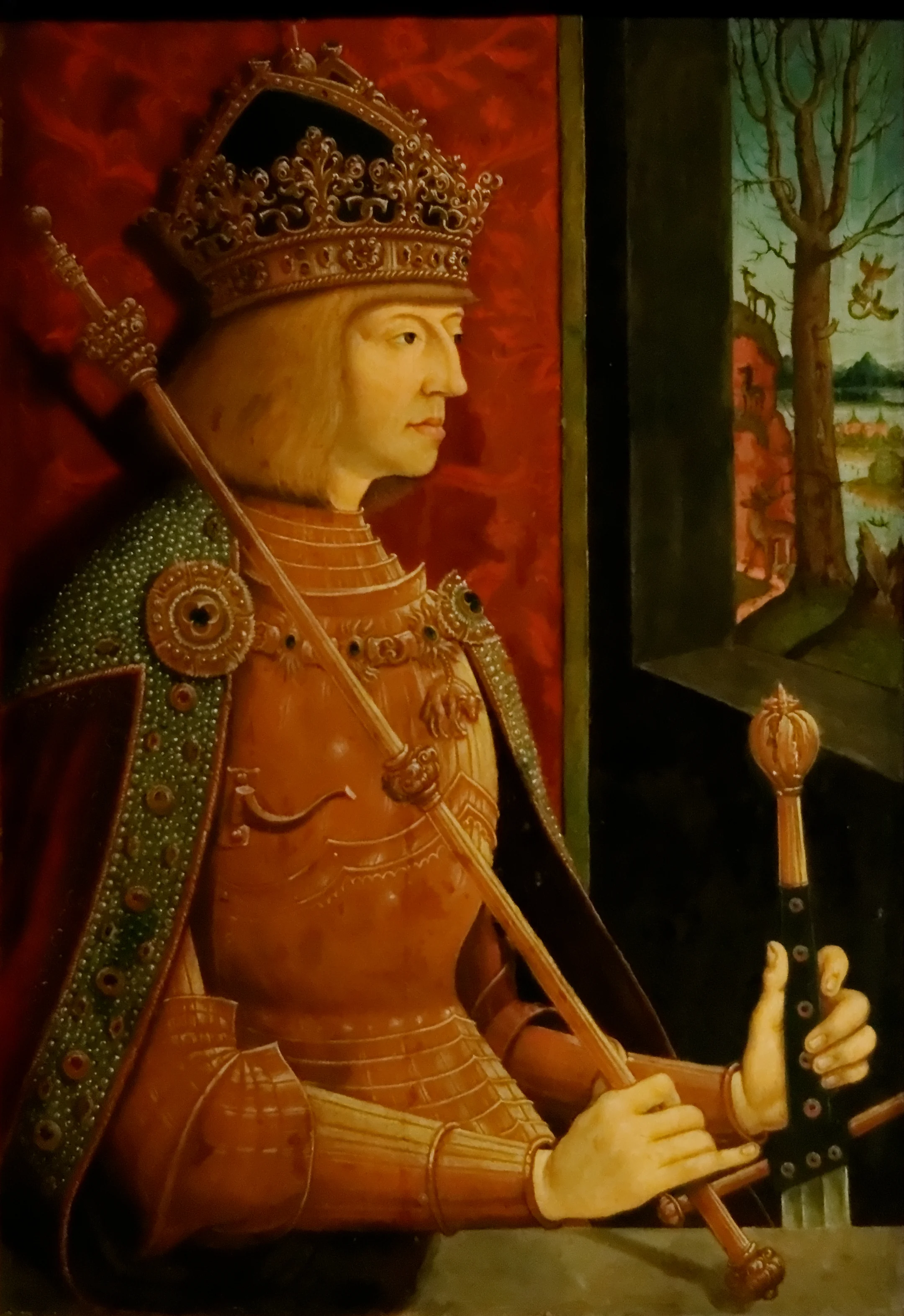
Image from Wikipedia
Image from Wikipedia
Bernhard Strigel – Master of the Memmingen School between Late Gothic and Renaissance
An Artist on the Threshold of a New Iconography
Bernhard Strigel (* circa 1460 in Memmingen; † May 4, 1528 there) is considered one of the prominent German painters of the transitional period from the Late Gothic to the Renaissance. As a scion of the South German artist family Strigel, he shaped the Memmingen School rooted in Upper Swabia and developed a visual language that remarkably combines piety, courtly representation, and humanistic portrait art. His works demonstrate how painting transitioned in the late 15th and early 16th centuries from linear devotion to spatially conceived, psychologically nuanced imagery. ([de.wikipedia.org](https://de.wikipedia.org/wiki/Bernhard_Strigel?utm_source=openai))
Origins, Workshop, and Early Influences
Strigel came from an artist family that was engaged in religious image production and altar construction in Memmingen for generations. He is documented to have worked in the workshop of his relative Ivo Strigel in the 1480s and participated in the painting of wings and cases for carved altarpieces for Graubünden. Early on, he combined local workshop traditions with influences from the Upper German region; the digital collection of the Städel Museum points to connections with the Ulm School and the use of templates from print graphics and Dutch art. ([deutsche-biographie.de](https://www.deutsche-biographie.de/downloadPDF?url=sfz81727.pdf&utm_source=openai))
This workshop foundation is crucial to Strigel's artistic development. It explains why his paintings exhibit both the craftsmanship of South German Late Gothic and a new clarity in space and figure arrangement. It is precisely in this dual movement that his historical significance lies: He does not represent an abrupt stylistic break but instead a controlled yet profound modernization of imagery. ([museothyssen.org](https://www.museothyssen.org/en/collection/artists/strigel-bernhard?utm_source=openai))
The Rise to a Sought-After Portrait Artist
Strigel became especially influential as a portrait painter. The Museo Nacional Thyssen-Bornemisza explicitly describes him as a respected portraitist, whose services were sought not only by nobility and patricians but also by the monarchy. He worked as a court painter in the service of Emperor Maximilian and was involved in several imperial projects, thus playing a significant role in the visual self-representation of the ruler. ([museothyssen.org](https://www.museothyssen.org/en/collection/artists/strigel-bernhard/portrait-man?utm_source=openai))
His most famous body of work is dynastic group portrait art. The family portrait of Emperor Maximilian and his descendants, created around 1515, is considered an outstanding example of his ability to combine political representation, familial bonds, and formal rigor into a compelling whole. In this type of work, Strigel translated the religious motif of the Holy Kinship into a secular, courtly visual idea and turned genealogical order into a visual program of authority and intimacy. ([museothyssen.org](https://www.museothyssen.org/en/collection/artists/strigel-bernhard/portrait-man?utm_source=openai))
Religious Panel Painting and the Richness of Altars
In addition to portraiture, Strigel remained closely connected to religious panel painting. The Thyssen-Bornemisza collection emphasizes that his early works were influenced by Hans Strigel, Martin Schongauer templates, and the Ulm School, while later works, influenced by Dutch art, showcased a more modern spatial composition and virtuoso coloring. He expanded the traditional altarpiece with a clearer depth layering and stronger atmospheric effects. ([museothyssen.org](https://www.museothyssen.org/en/collection/artists/strigel-bernhard?utm_source=openai))
A particularly important aspect is the depiction of religious scenes with narrative clarity. Works such as the Annunciation panels or representations of the Holy Family demonstrate how Strigel places figures and architecture in an ordered yet dynamic relationship. The Kunsthistorisches Museum and the collections of Thyssen-Bornemisza confirm that his works are now present in significant European museums and continue to serve as references for the South German Renaissance. ([khm.at](https://www.khm.at/en/objectdb/detail/1850/?utm_source=openai))
Artistic Handwriting: Space, Color, and Psychological Presence
Strigel's painting thrives on a calm, controlled architectural composition. The figures often appear clearly delineated, securely anchored in space, and meticulously rendered in their materiality and physiognomy. The Thyssen Museum highlights that his portraits create a remarkable closeness to reality through the treatment of the face and gaze direction; at the same time, he uses color contrasts to separate spatial levels and create depth. ([museothyssen.org](https://www.museothyssen.org/en/collection/artists/strigel-bernhard/portrait-man?utm_source=openai))
It is precisely this combination of accuracy and restraint that makes his style so enduring. Strigel avoids overloaded gestures and instead focuses on a precise staging of posture, garments, and gaze. As a result, his images convey less dramatic movement and more quiet authority. His art illustrates how the Renaissance in Southern Germany did not manifest as a sudden adoption of Italian forms but as a careful adaptation to local image traditions. ([museothyssen.org](https://www.museothyssen.org/en/collection/artists/strigel-bernhard?utm_source=openai))
Maximilian I, Court Culture, and Political Image Power
Strigel's proximity to Emperor Maximilian I is one of the central chapters of his career. The Städel database refers to the mention of his ties to the emperor, who appointed him as his court painter and, according to sources, elevated him to the nobility. This connection granted Strigel a rank that extended beyond the local workshop, placing him among those artists who decisively shaped the self-representation of the early modern age. ([sammlung.staedelmuseum.de](https://sammlung.staedelmuseum.de/de/person/strigel-bernhard?utm_source=openai))
Within the courtly environment, the portrait acquired a new function: it became an instrument of dynastic memory and political legitimacy. Strigel had a fine sense for balancing dignity and individuality in fulfilling this function. His portraits never appear merely representative but maintain a quiet attentiveness to individuality, age, rank, and familial context. This is precisely where their art historical quality and lasting fascination lie. ([museothyssen.org](https://www.museothyssen.org/en/collection/artists/strigel-bernhard/portrait-man?utm_source=openai))
Reception, Collections, and Art Historical Significance
Strigel's works are currently represented in significant collections, including the Kunsthistorisches Museum in Vienna, the Museo Nacional Thyssen-Bornemisza in Madrid, the Städel Museum, and other institutions across Europe. The presence of these works in renowned museums underscores the artist's standing in the canon of the German Renaissance. At the same time, the Strigel Museum in Memmingen shows how closely his work remains connected to his hometown. ([khm.at](https://www.khm.at/en/objectdb/detail/1850/?utm_source=openai))
Art historically, Strigel is not a marginal figure. Deutsche Biographie describes him as a painter and diplomat, emphasizing his role in workshop practice in the 1480s as well as the later elevation of landscape elements in his paintings. This illustrates that Strigel was not only an excellent portraitist but also an important mediator between workshop culture, courtly art, and the changing conceptions of imagery in his time. ([deutsche-biographie.de](https://www.deutsche-biographie.de/downloadPDF?url=sfz81727.pdf&utm_source=openai))
Conclusion: A Quiet Innovator of the South German Renaissance
Bernhard Strigel remains intriguing because he did not simply leave the language of Late Gothic behind but transformed it into a new, courtly image culture. His portraits possess dignity, precision, and psychological presence; his altarpieces showcase an artist who organizes space, color, and composition with sure hands. Anyone seeking to understand the art of the South German Renaissance cannot overlook Strigel. His work merits direct engagement in the museum, where his quiet mastery is most vividly felt. ([museothyssen.org](https://www.museothyssen.org/en/collection/artists/strigel-bernhard/portrait-man?utm_source=openai))
Official Channels of Bernhard Strigel:
- Instagram: No official profile found
- Facebook: No official profile found
- YouTube: No official profile found
- Spotify: No official profile found
- TikTok: No official profile found
Sources:
- Wikipedia – Bernhard Strigel
- Museo Nacional Thyssen-Bornemisza – Bernhard Strigel
- Museo Nacional Thyssen-Bornemisza – Portrait of a Man
- Museo Nacional Thyssen-Bornemisza – The Virgin of the Annunciation / The Angel of the Annunciation
- Kunsthistorisches Museum – The Holy Family
- Städel Museum – Bernhard Strigel
- Liechtenstein Collections – Portrait of a Man
- Cultural Foundation of the States – Press Release on Acquisition of Johannes Cuspinian and His Family
- Deutsche Biographie – Bernhard Strigel
- Wikipedia – Strigel Museum