Dog Meadow & Animal-Friendly Exercise Areas in Freiburg
Dog Exercise in Freiburg: Preview of Planned Off-Leash Areas & Upcoming Rules (Future Developments Only)
In Freiburg, the question of reliable, low-conflict options for dog exercise is increasingly being discussed politically and in planning: Where will dogs be able to run off-leash in the future, under control, without dangerous situations arising on bike paths, play lawns, or in heavily frequented parks? And what could new, clearly defined off-leash areas look like that would relieve both dog owners and local residents?
This outlook summarizes future developments as typically provided for in urban pilot projects and in the updating of green space and usage rules: from possible locations to expected usage principles to what is likely to remain unchanged for popular walking areas (e.g., Seepark, Mooswald, Lorettoberg). For binding details, only official publications of the city and the respective applicable regulations are authoritative.
Planned Off-Leash Areas: What Freiburg is Likely to Introduce or Expand
When cities plan new off-leash areas for dogs, they usually pursue three goals: more safety, fewer usage conflicts, and a clear place for social contact among dogs. For Freiburg, it can be expected in the upcoming planning and participation rounds that new offerings will be created where:
- Residential neighborhoods are growing (more dogs, fewer private gardens),
- Bicycle and pedestrian traffic is dense (greater need for clear separations),
- Green spaces are heavily frequented (higher likelihood of conflict between off-leash use, play, and lounging lawns).
Such projects are also typically implemented step by step: First, areas are checked (suitability, noise, nature conservation, traffic), then follows a phase with rules, signage, and evaluation (usage, cleanliness, safety). Whether and where Freiburg actually establishes new dog meadows ultimately depends on decisions, land availability, and the respective protection and usage requirements.
Concept, Zones, Equipment: How Modern Dog Meadows Will Be Designed in the Future
For newly planned dog meadows, municipalities are increasingly relying on a concept instead of "just a meadow". This is intended to make the stay safer and reduce overwhelm—especially when many dogs are present at the same time.
Expected Zoning
A common model expected in future projects is the division into at least two areas:
- Main area for most dogs with enough space for movement,
- Separate area for very small or particularly sensitive dogs, so that encounters can be more controlled.
Possible Equipment (Practical, Low-Conflict)
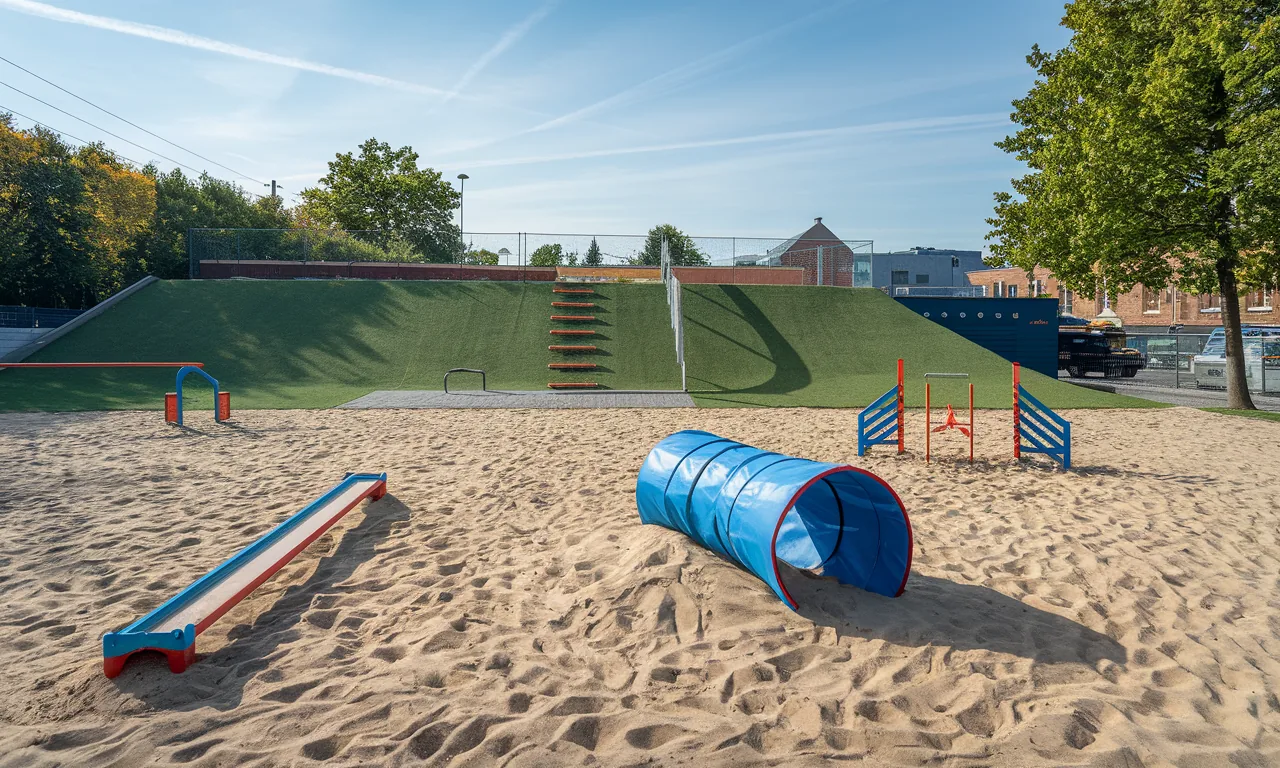
To prevent an off-leash area from becoming a pure "race track," many urban plans include elements that structure movement and enable activity without being dangerous:
- Clear path layout and clearly recognizable entrance areas,
- Small terrain modeling (e.g., gentle hills) for variety,
- Robust balance and slalom elements with sufficient spacing,
- Digging area (e.g., sand) to focus digging behavior,
- Seating outside of bottlenecks, so groups do not "pile up" at gates.
What matters is not "more equipment" but good sightlines, safe materials, and enough space to create distance—because in practice, distance is one of the most effective means of de-escalation.
Rules & Safety: What Is Typically Established for New Dog Meadows
New dog meadows only work in the long term with understandable rules that are clearly posted on site and cover the main risk sources (conflicts, hygiene, exits into traffic). For future Freiburg off-leash areas, experience shows that rulebooks will at least include these points:
1) Who May Run Off-Leash?
- Only socially compatible, reliably recallable dogs: Off-leash is a privilege tied to control.
- No off-leash use in case of increased conflict risk: e.g., if a dog repeatedly harasses others or owners cannot manage the situation.
2) Health, Protection, and Responsibility
- No presence with contagious diseases: This protects all dogs from avoidable infections.
- Pay attention to stress signals: Future information signs often include brief notes on body language and conflict avoidance (e.g., distance instead of "sitting it out").
3) Hygiene and Cleanliness Rules
- Dispose of feces immediately: This is not only considerate but often also legally required.
- Avoid litter: Packaging and food scraps are particularly conflict-prone in off-leash areas (resource guarding).
4) Safe Entry and Exit
If an off-leash area is near bike paths, roads, or heavily used footpaths, new concepts usually emphasize:
- Leash the dog before leaving (outside, the regular rule applies),
- Close gates quickly and do not form "gate meeting points",
- Stagger encounters at the entrance (wait briefly, keep distance, only then enter).
Note on legal situation: Whether and where a leash requirement applies is usually specified by municipal ordinances, signage, and, if applicable, nature conservation requirements. For the planning and later use of new areas, the current official regulation is always decisive.
Seepark, Mooswald & Co.: What Will Remain Important in Popular Exercise Areas
Even if new dog meadows are added, classic Freiburg walking destinations will likely continue to play a central role—especially for quiet walks, leash training, and habituation to environmental stimuli.
Seepark: Continued High Usage Pressure, Therefore Likely Clear Expectations of Consideration
City parks like Seepark are typically multipurpose areas: walks, sports, families, events, water areas with wildlife. In such areas, no "major off-leash liberalization" is usually expected for the future, but rather:
- Consistent enforcement of existing rules (e.g., where a leash requirement is ordered),
- Protection of sensitive areas (shorelines, wildlife resting zones),
- More guidance through notices to reduce usage conflicts.
Mooswald & Lorettoberg: Nature and Forest Paths Remain Attractive, but with Sensitivity Zones
Forest and edge areas remain the most important exercise option for many teams—especially for longer distances. At the same time, in nature or wildlife-rich areas, notices on leash use and seasonally sensitive times (e.g., breeding and rearing season) may become more prominent in the future, as the interests of nature conservation, hunting, forestry, and recreation are particularly closely linked there.
Escholzpark, Stühlinger Kirchplatz & Urban Places: More "Everyday Training" than Off-Leash
In parks and squares near the city center, the focus will continue to be on controlled encounters (leash handling, impulse control, calm training), while off-leash use—if at all—will be shifted to clearly designated areas.
Practical Tips: How to Prepare for New Offerings and Rules
- Prioritize official information: Before using a newly designated area, check the signage on site and the city's current notices (rules may change during pilot phases).
- Keep the first meeting short: Plan your first visit to a future dog meadow as a short "orientation visit"—less is often more, so your dog doesn't get overexcited.
- End conflicts early: If your dog repeatedly harasses others or is stressed, it's better to leave the area early and practice distance and recall signals elsewhere.
- Don't bring resources: In many off-leash groups, food, balls, or tug toys are triggers for disputes—when in doubt, leave them at home.
- Consideration is key: Off-leash only works if owners actively lead—even without a leash.